
Add real warmth to your Floyd County home—without a chimney.
Mild winters and no gas line don't have to mean cold rooms. Find the right electric fireplace or insert for your Rome, Cave Spring, or Lindale home, and get matched with a local dealer who installs it right.
Every Project Starts From One of These Five Situations
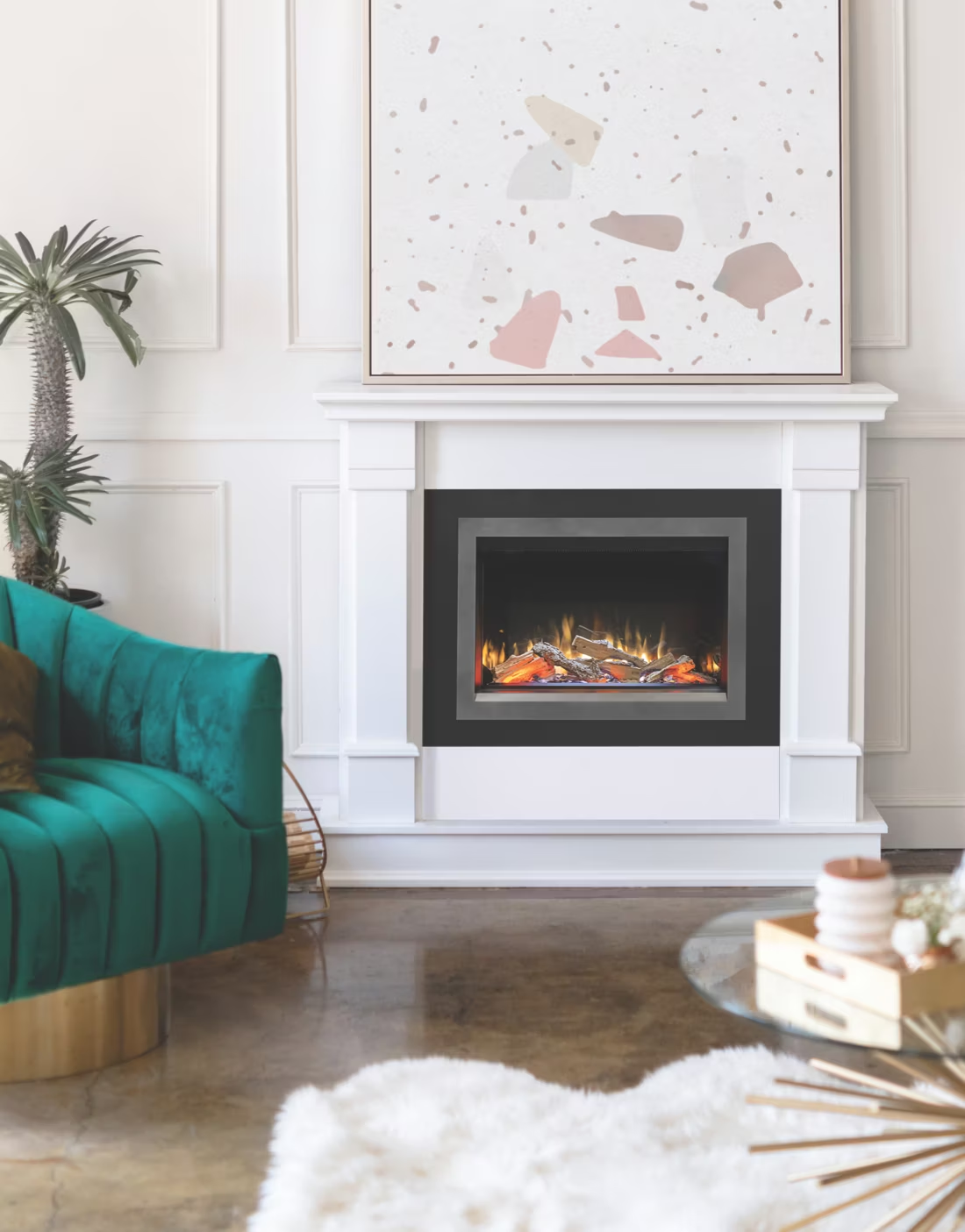
A simple, no-mess way to add heat and ambiance.
Floyd County sits in Georgia's Climate Zone 4A, with average winter lows around 30°F and roughly 3,248 heating degree days a year—a fraction of what a place like Duluth or Bismarck sees, and mild enough that most homes don't need a whole-house wood or gas system to stay comfortable. What Rome, Cave Spring, and Lindale households usually need is targeted heat: a chilly sunroom, a converted garage, a bonus room over the garage that the HVAC never quite reaches, or a living room that just needs a focal point on a cold January evening.
That's where electric fireplaces earn their keep. There's no chimney to build, no gas line to run, and no wood to split and stack from the oak, pine, and hickory that grow throughout the county. A plug-in unit can go in an afternoon; a built-in linear model or a insert that replaces an old masonry firebox takes a little more planning but still skips the venting and combustion-air requirements that come with wood or gas. For older Rome homes with fireplaces that haven't burned wood in years, or newer construction in Silver Creek and Armuchee where a masonry chimney was never built, electric is often the most direct path to a real fireplace look with real heat.
Three steps. No salesperson until you're ready.
Tell us about your project
Your zip code, your situation, and the fuel you're leaning toward—or let the answers point you to one.
See what's actually available
The brands dealers within 100 miles genuinely carry—real options, never a catalog mirage.
Get your dealer & Project Guide
A trusted local dealer, plus the free Project Guide & Parts List that names every component of the job.
Frequently Asked Questions
How much does an electric fireplace installation cost in Floyd County?
Costs vary widely by unit type. A plug-in freestanding or mantel-style electric fireplace typically runs $300 to $1,200 installed, since it just needs a standard outlet—no electrician required in most cases. A built-in linear electric fireplace or an insert that replaces an existing masonry firebox usually runs $1,200 to $3,500, and often calls for a licensed electrician to run a dedicated 15- or 20-amp circuit, especially for larger units with higher wattage heaters. Custom surrounds, mantels, or shiplap or stone facing work add to the total. A local dealer can give you a firm number once they know your unit choice and whether your home already has power near the install location.
Is an electric fireplace enough heat for a Floyd County winter?
For most rooms in Floyd County, yes. With average winter lows around 30°F and a modest 3,248 heating degree days, this isn't a climate that demands 24/7 primary heat from a fireplace. Most electric units are rated to supplement or zone-heat 400 to 1,000 square feet, which covers a typical living room, sunroom, or bonus room. Where electric falls short is as a sole heat source for a large, open, poorly insulated space, or as backup heat during a power outage—since electric fireplaces, unlike wood stoves, stop working the moment the power does. For most Rome and Lindale homes using an electric unit alongside central HVAC, it performs exactly as intended: ambiance plus real, immediate warmth in the room you're actually in.
Should I get an electric insert, a built-in, or a freestanding unit?
If you have an existing masonry fireplace—common in older Rome and Cave Spring homes that used to burn oak or hickory—an electric insert is usually the simplest upgrade. It slides into the existing firebox, plugs into a nearby outlet or a new circuit, and instantly turns a cold, unused fireplace into working heat with a flip of a switch. A built-in linear electric fireplace is the choice for new construction or remodels where you're framing a wall from scratch and want a wide, modern look. A freestanding or mantel-style unit is the fastest and least invasive option—good for renters, or anyone who wants heat and ambiance in a bonus room or apartment without any construction at all.
Do I need a permit to install an electric fireplace in Floyd County?
A plug-in electric fireplace that uses an existing outlet typically doesn't require a permit. If your unit needs a new dedicated circuit—common for larger built-in or insert models—the electrical work itself falls under standard electrical permitting, and any licensed electrician working in Floyd County or the City of Rome will handle that as part of the job. There's no combustion, so there's no equivalent to the gas-line or chimney permitting that wood and gas installs require. If you're unsure whether your specific unit needs new wiring, a local dealer can tell you during an in-home or virtual consultation.
What's the difference between an electric fireplace and a space heater?
A basic space heater is built for heat output only. An electric fireplace is built to do both—most models pair a realistic flame effect (LED, often with adjustable color and brightness) with a heater that can typically be run independently of the flame, so you can enjoy the visual on a mild Floyd County evening without running the heat at all. Better electric fireplaces also include thermostatic control, timers, and safety features like auto shutoff if tipped, which most cheap space heaters skip. For a room you actually want to sit in and look at, an electric fireplace is the more livable choice; for a garage or workshop where looks don't matter, a space heater is the cheaper option.
How much does it cost to run an electric fireplace in Floyd County?
Most electric fireplaces draw around 1,500 watts on the heat setting (roughly 750-1,000 watts at half power) and closer to 100 watts or less for the flame effect alone. At typical Georgia Power residential rates, running the heater on high for an evening costs somewhere in the range of 20 to 30 cents per hour—noticeably cheaper than running a space heater in an entire room with the door open, since most fireplace units are designed to heat efficiently at close range. Running just the flame effect for ambiance, without heat, costs only a few cents an hour, which is part of why a lot of Floyd County homeowners run theirs year-round.
Can I convert my existing wood fireplace to electric?
Yes, and it's one of the more common projects local dealers see in older Rome and Cave Spring homes. An electric insert slides into your existing masonry firebox—the same one that may have burned oak, pine, or hickory for decades—without any demolition. You lose the option to burn wood again unless you remove the insert, but you gain instant heat, no ash, no chimney maintenance, and no need to pull a Cherokee National Forest cutting permit ($20 per cord, May through October) just to keep a fire going. It's a popular choice for homeowners who like the look of a working fireplace but don't want the upkeep.
Electric vs. gas fireplace—which is right for my Floyd County home?
Gas fireplaces deliver more consistent, higher-output heat and can be installed as a real backup heat source in some configurations. But they require either a natural gas line or a propane tank, plus venting in most cases—real construction with real cost. Electric fireplaces skip all of that: no gas line, no venting, no combustion byproducts to worry about. For a Floyd County home that doesn't already have gas service nearby, or for a secondary room where running a new gas line isn't worth the cost, electric is usually the faster and cheaper path to a working fireplace. For a primary living space in a home already plumbed for gas, gas inserts remain worth considering for the heat output.
Electric vs. wood—which makes more sense here?
Wood heat has deep roots in Floyd County, with oak, pine, and hickory all common locally and Cherokee National Forest cutting permits available for $20 per cord during the May-to-October season. Wood also keeps working during a power outage, which electric can't do. But with winter lows averaging around 30°F and a relatively light 3,248 heating degree days, most Floyd County homes don't need wood as a primary heat source the way a home in a harsher climate might. Electric wins on convenience—no splitting, stacking, ash, or chimney maintenance—and it's usually the better fit for a secondary room, a rental property, or anyone who wants the look of a fire without the labor.
Can I put a TV above my fireplace?
Yes—with an asterisk. Fireplaces are hot and TVs don't like heat. Either put a mantel between them to deflect rising warmth, or choose a fireplace with heat-management technology that creates a cool zone on the wall above—the wall stays around 125 degrees, barely warm, while the room still gets full heat. If you like clean lines and don't want a mantel, heat management is the answer.
Does an electric fireplace need a vent or chimney?
No—that's its superpower. An electric fireplace needs a wall and an outlet, period. No vent pipe, no gas line, no clearances to design around, which is why it works in bedrooms, offices, apartments, and walls where venting a gas or wood unit would be impractical or impossible. Installation is typically the simplest and least expensive of any fireplace type.
How much should I budget for a fireplace?
For an average home—covering the fireplace, the vent pipe, and basic installation—a budget between $3,900 and $5,500 gives you a lot of options across wood, gas, and pellet. By the time you add finish work, gas line, and electrical, the average complete installation lands between $5,000 and $12,000 all-in. In a remodel or new build, a good rule is to put about 2.5% of the total project cost toward the fireplace.
Can a fireplace actually lower my heating bill?
Yes—by creating a comfort zone. A furnace heats every square foot of the house just to warm the one room you're in; a gas fireplace on low burns roughly a sixth of the gas a typical furnace does. Set the furnace around 55–60 degrees as a baseline, then heat the rooms your family actually uses. Families who heat this way commonly save $20–$60 a month.
Stove and Fireplace Dealers in Floyd County
Find your electric fireplace in Floyd County.
Tell us about your Rome, Cave Spring, or Lindale home and we'll match you with a trusted local dealer, plus send a free Project Guide & Parts List—the specific electric fireplace or insert, mounting hardware, and circuit details for your space.
Find Your Fireplace →