
Keep Your Family Warm and Safe—No Matter What
With winter lows averaging 34°F, wood isn't how most Flowery Branch homes stay warm—but for lake cabins, backup heat, and fireside ambiance, it still has a place. We'll match you with a local dealer who knows the difference.
Every Project Starts From One of These Five Situations
Why wood is the exception in Flowery Branch.
Flowery Branch sits in climate zone 4A at just 1,137 feet elevation, with a mild, short heating season and winter lows that average 34°F. That's a fraction of the heating load a place like Duluth, MN carries—Duluth's winter heating season runs more than three times as long as Hall County's. In practice, that means the typical Flowery Branch home never needs a wood stove to survive the winter. Central heat pumps and gas furnaces handle the job on all but the coldest nights.
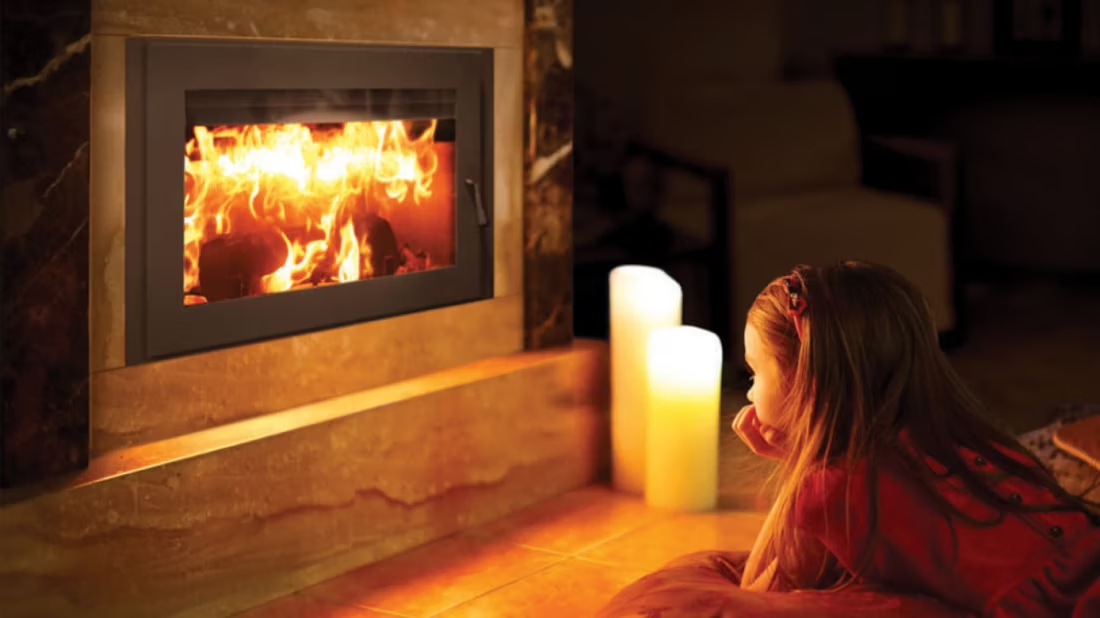
That said, wood isn't absent here. Hall County has plenty of oak, pine, and hickory, and Georgia does see the occasional ice storm that knocks out power for days—a real reason some homeowners keep a wood stove or fireplace insert as backup heat that doesn't depend on Georgia Power staying online. Others want one purely for the fire itself: a lake house on Lanier, a finished basement, a screened porch. If either describes you, a wood stove is still a reasonable project—it's just not the default heating strategy it would be further north.
Three steps. No salesperson until you're ready.
Tell us about your project
Your zip code, your situation, and the fuel you're leaning toward—or let the answers point you to one.
See what's actually available
The brands dealers within 100 miles genuinely carry—real options, never a catalog mirage.
Get your dealer & Project Guide
A trusted local dealer, plus the free Project Guide & Parts List that names every component of the job.
Frequently Asked Questions
Is wood heat actually common in Flowery Branch?
Not really, and we'd rather tell you that upfront than pretend otherwise. With a mild, short heating season and winter lows averaging 34°F, Flowery Branch has a mild climate compared to almost anywhere wood heat is a primary strategy—think Burlington, VT or Bozeman, MT, both of which see two to three times the winter heating load. Most homes here rely on electric heat pumps through Georgia Power or natural gas. Wood stoves and fireplaces still get installed, but usually as a secondary or backup feature rather than the main heat source.
So why would anyone install a wood stove here?
The two most common reasons we see: backup heat during power outages, and ambiance. Hall County gets the occasional ice storm severe enough to take down power lines for several days, and a wood stove keeps running with zero electricity—something a heat pump or even most gas fireplaces can't do without a battery backup. The other big driver is lake properties around Lanier, where a wood-burning fireplace or stove adds the cabin feel people want in a weekend house, even if it's rarely load-bearing heat.
What does a wood stove installation cost in Flowery Branch?
Because wood heat is a niche request here rather than a routine one, pricing varies more than in colder markets with dozens of specialized installers. As a general range, expect somewhere in the $3,000-$7,500 territory for a freestanding stove or insert with proper Class A chimney venting, depending on the unit and whether you're retrofitting an existing masonry fireplace or starting from scratch. Because fewer local shops stock wood-burning inventory day to day, it's worth getting a firm quote from a dealer who actually installs these regularly rather than a big-box estimate.
What firewood works best locally—oak, pine, or hickory?
All three grow throughout Hall County, and each burns differently. Hickory is the standout for heat output and long, hot coals—it's a favorite where people do burn wood seriously. Oak is the reliable all-around choice once it's properly seasoned, usually a full year or more given Georgia's humidity. Pine lights easily and is often what's cheapest or most available locally, but it burns fast and resinous, so it needs to be well-seasoned to avoid heavy creosote buildup in the flue—something worth mentioning to whoever sweeps your chimney.
Do I need a permit to install a wood stove in Flowery Branch?
Yes—a new solid-fuel appliance install requires a building permit through the Hall County building department (or the City of Flowery Branch, depending on your address), and the unit itself needs to meet current EPA emissions standards. Most dealers who install wood stoves in this area handle the permit paperwork as part of the job, so it's rarely something you manage yourself. Because this isn't a high-volume request locally, it's worth confirming your installer has actually pulled a wood-stove permit before, not just a gas one.
Wood stove or insert—which makes more sense for occasional backup heat?
If your home already has a masonry fireplace, an insert is usually the better call—it uses the chimney you've already got and turns an inefficient open hearth into a real heat source that can carry a room during an outage. If you don't have an existing fireplace, a freestanding stove is more flexible to place, though it requires running new Class A pipe. For a lake house or weekend cabin near Lanier being built or renovated from scratch, a freestanding stove is often simpler to plan for since there's no existing masonry to work around.
Are there any air quality restrictions on wood burning in Flowery Branch?
No—Hall County doesn't have the winter inversion or non-attainment issues that trigger burn bans in some parts of the country. There's no seasonal curtailment schedule to plan around here. The main practical consideration is just neighborly: in the tighter subdivisions common around Flowery Branch, smoke drifting toward a neighbor's yard is more likely to draw a complaint than any regulatory violation, so a properly seasoned, well-drafting setup matters as much for goodwill as for performance.
Would gas make more sense than wood for my home?
For most Flowery Branch homes, honestly, yes. Gas is a standard, well-supported option here—instant heat, no wood handling, and it pairs cleanly with the central systems most homes already have. Wood tends to make sense in narrower cases: you want off-grid backup heat for ice-storm outages, or you specifically want the fire itself, not just the warmth, at a lake cabin or in a den you're building out. If you're simply trying to add supplemental heat to a living space, it's worth having a local dealer walk you through both before you commit to venting a wood stove.
Where can I source firewood in the Flowery Branch area?
Because this isn't Forest Service country the way parts of the Pacific Northwest or Rockies are, most firewood here comes from local tree services, landscapers clearing lots, or dedicated firewood sellers rather than public-land cutting permits. Oak and hickory are the better buys if you can find them seasoned—ask how long it's been split and stacked, since Georgia's humidity slows drying considerably compared to drier climates. Pine is often available cheaper but needs a full season under cover before it's ready to burn cleanly.
Why won't my new wood stove get going like my old one?
New wood stoves are 70%+ efficient, so far less heat goes up the flue—which also means less draft to get a fire established. The rule: build a genuinely hot fire for about 45 minutes before you choke it down. Skip that and you get smoke in the room, creosote in the chimney, and a fire that never takes off. Most performance complaints trace straight back to this.
Why is my open fireplace making my house colder?
Open fireplaces suck—literally. As the fire burns, it consumes air your furnace already paid to heat and pulls it out through the chimney, so the house is actually colder after the fire goes out than before you lit it. An insert fixes this: it seals the chimney, puts fixed glass across the front, and turns that hole in your house into a real heat source.
How much should I budget for a fireplace?
For an average home—covering the fireplace, the vent pipe, and basic installation—a budget between $3,900 and $5,500 gives you a lot of options across wood, gas, and pellet. By the time you add finish work, gas line, and electrical, the average complete installation lands between $5,000 and $12,000 all-in. In a remodel or new build, a good rule is to put about 2.5% of the total project cost toward the fireplace.
Can a fireplace actually lower my heating bill?
Yes—by creating a comfort zone. A furnace heats every square foot of the house just to warm the one room you're in; a gas fireplace on low burns roughly a sixth of the gas a typical furnace does. Set the furnace around 55–60 degrees as a baseline, then heat the rooms your family actually uses. Families who heat this way commonly save $20–$60 a month.
Nearby Dealers
Hearth shops serving Flowery Branch and the surrounding area. Every listing shows whether it is a WhyFire partner, a dealer we have verified as authorized for the brands we recommend, or a local business carrying hearth products. No manufacturer pays for placement. How we verify dealers →
North Atlanta Fireplace Grill & Patio
Blossman Gas And Appliance
Extreme Chimneys
Atlanta's Top Chimney Sweep
The Luck Cricket
Alley-Cassetty
Bolton Fireplace
Tara Residential
EarthCore Industries
Graves Fireplaces Inc.
Maddox Feed & Seed
Fireplace Depot
The Mad Hatter
Builder Specialties, Inc.
Get matched with a Flowery Branch wood stove dealer.
Tell us about your home—main heat, backup heat, or lake house ambiance—and we'll connect you with a trusted local dealer and a free Project Guide & Parts List built around your specific wood project in Flowery Branch.
Find Your Fireplace →