
Flip a Switch, Not a Woodpile.
Instant, reliable warmth for Flowery Branch homes near Lake Lanier—built to handle the occasional ice storm as well as a chilly evening on the porch. Find the right unit and get matched with a trusted local dealer.
Every Project Starts From One of These Five Situations
Convenient heat for a mild but occasionally rough Georgia winter.
Flowery Branch sits in climate zone 4A at just over 1,100 feet, with an average winter low near 34°F and a winter heating season that's pretty light overall—mild compared to a place like Duluth, Minnesota, where furnaces run nearly nonstop from October through April. Most Hall County homes don't need heavy-duty primary heat. But winter here isn't nothing: ice storms roll through the Lake Lanier area most years, and Georgia Power outages that follow can leave homes cold for a day or two at a time. That's the gap gas fireplaces fill—not constant heating load, but dependable, on-demand warmth when the grid or the weather doesn't cooperate.
Natural gas service through Atlanta Gas Light reaches parts of the city, but plenty of homes in unincorporated Hall County and around the lake run on propane instead, supplied by regional delivery companies. Either fuel works fine in a modern direct-vent fireplace or insert. Because heating demand here is light, wood and pellet stoves are genuinely uncommon in Flowery Branch—most local fireplace projects are gas, sized less for BTU output and more for ambiance, backup heat, and the kind of instant-on convenience that fits a lake town where people entertain in their living rooms as much as they heat them.
Three steps. No salesperson until you're ready.
Tell us about your project
Your zip code, your situation, and the fuel you're leaning toward—or let the answers point you to one.
See what's actually available
The brands dealers within 100 miles genuinely carry—real options, never a catalog mirage.
Get your dealer & Project Guide
A trusted local dealer, plus the free Project Guide & Parts List that names every component of the job.
Frequently Asked Questions
How much does a gas fireplace installation cost in Flowery Branch?
Most gas fireplace installations in the Flowery Branch area run roughly $3,500 to $9,000. A direct-vent insert going into an existing masonry fireplace with gas already run to the house sits at the lower end. A new built-in unit for a remodel or new construction—with framing, venting, and a fresh gas line—lands in the middle to upper range. If your home is on propane rather than Atlanta Gas Light service and needs a new tank set, budget extra for the tank installation and line run from the propane supplier. A local dealer can give you a firm number after seeing the space.
Is my home on natural gas or propane, and does it matter for a fireplace?
It depends on where you are in Hall County. Homes closer to the city core may have Atlanta Gas Light service, while many properties around Lake Lanier and in unincorporated areas run on propane with a tank on the property. Both fuels work in the same fireplace models—your installer just sets the correct orifice and regulator for whichever you have. If you're not sure which you're on, check your existing appliances (water heater, range, furnace) or ask a local hearth dealer to confirm before you shop for a unit.
Can I convert my existing wood-burning fireplace to gas?
Yes, and it's a common request here. Older Flowery Branch homes often have a masonry fireplace originally built to burn local oak or hickory; converting it to gas usually means installing a direct-vent or vented gas insert that uses the existing chimney with a liner. Expect somewhere in the $3,500 to $8,000 range depending on whether the home is on natural gas or propane and whether the chimney needs relining work. The upgrade keeps the look of the fireplace while removing the ash, smoke, and wood-stacking that a lot of homeowners are trying to get away from.
Will a gas fireplace still work if the power goes out?
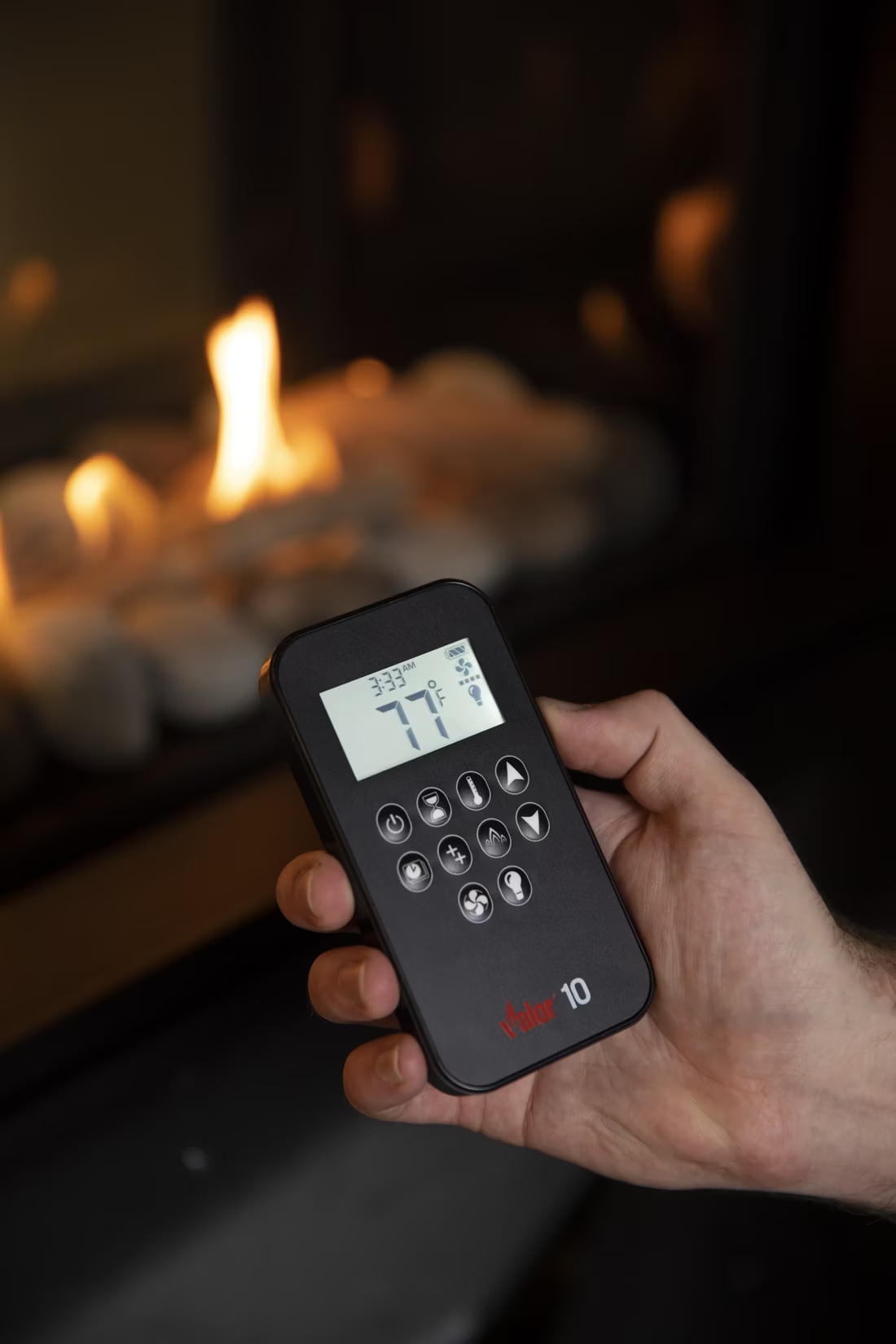
Most will, which matters here—ice storms are the main cause of Georgia Power outages in Hall County, and they tend to hit right when you'd want the fireplace most. Units with intermittent pilot ignition (IPI) run on a small battery backup that kicks in the moment power drops, so the fireplace lights and operates normally. Valor units go a step further: their pilot generates its own electricity through the thermocouple, so there's no battery to remember at all. Ask your local dealer which ignition system a unit uses before you buy if outage backup matters to you.
What's the difference between a gas fireplace, insert, and stove?
A gas fireplace is a built-in unit framed into a wall—the right call for new construction or a full remodel. A gas insert drops into an existing masonry firebox and uses your current chimney as the vent path, which is the more common project in Flowery Branch's older homes. A gas stove is a freestanding cast-iron or steel unit that sits out on the floor, useful when you want heat in a room without an existing fireplace or the framing for a built-in. Most homeowners here with an existing fireplace go with an insert; new rooms or additions usually call for a built-in or freestanding stove instead.
Do I need a permit to install a gas fireplace in Flowery Branch?
Yes. Depending on whether the property is inside city limits or in unincorporated Hall County, you'll need a building permit and a gas line permit through the City of Flowery Branch or the Hall County Building Department, and the gas connection itself has to be run by a licensed gas fitter. A certified hearth dealer typically pulls these permits as part of the installation and coordinates the gas work with the venting and framing, which saves you from managing separate trades yourself.
Should I get a vented or vent-free gas fireplace?
Vented (direct-vent or B-vent) units draw combustion air from outside and exhaust it back outside—they're the standard, code-compliant choice everywhere including Georgia. Vent-free units burn directly into the room and are legal here, but they release water vapor as a byproduct of combustion, which is worth thinking twice about in a humid Southeast climate like Hall County's—extra indoor moisture on top of Georgia summers and shoulder-season humidity isn't ideal for a room's finishes or air quality. For most Flowery Branch homes, a vented direct-vent unit is the better long-term choice; ask a local dealer to walk through both if you're weighing the tradeoff.
How often does a gas fireplace need to be serviced?
Plan on an annual inspection, ideally before the first cold snap of the season. A technician checks the burner, pilot assembly, venting, and gas connections, and cleans the glass and interior. It's a much lighter service than a wood chimney sweep, but skipping it is how small problems—a dirty pilot, a failing thermocouple—turn into a fireplace that won't light on the one cold, powerless night you actually need it. Local gas appliance service providers typically charge $125 to $225 for this visit.
Should I consider a wood or pellet stove instead of gas?
For most homes in Flowery Branch, honestly, no. With such a light overall heating season and winter lows averaging in the mid-30s, there's rarely enough sustained cold to justify the wood handling, chimney maintenance, or pellet hopper upkeep that those systems require—which is why wood and pellet appliances are genuinely uncommon in Hall County outside of a few rural or hunting-cabin type properties. Some homeowners with access to local oak or hickory still install a wood-burning fireplace purely for ambiance or as a hedge against long outages, but for year-round convenience and reliable backup heat, gas is the fuel almost everyone in this market ends up choosing.
Is my gas fireplace wasting gas?
If it was installed more than 15 years ago, probably. Older gas fireplaces keep a standing pilot light burning all the time, and that little flame can cost a couple hundred dollars a year. Newer models use pilot-on-demand ignition—the pilot lights only when you use the fireplace and goes out when you turn it off.
Are new gas fireplaces really better than old ones?
Two ways, and they're both big. Looks: modern gas fireplaces are realistic enough that it's hard to believe they aren't burning wood. Cost: old units burn a standing pilot year-round (roughly $200 a year), while new ones use pilot-on-demand ignition and modern burners. Add remote controls and thermostat operation, and the day-to-day experience isn't close.
What is an in-home preview and do I need one?
It's a visit where a hearth professional measures your space, confirms the model you picked actually works in your home, and walks the specs—framing, gas line, venting, finish work—before anything is ordered. Some details you just can't know until you see the house. Never make a down payment without one; it's the single most-skipped step that burns buyers.
How much should I budget for a fireplace?
For an average home—covering the fireplace, the vent pipe, and basic installation—a budget between $3,900 and $5,500 gives you a lot of options across wood, gas, and pellet. By the time you add finish work, gas line, and electrical, the average complete installation lands between $5,000 and $12,000 all-in. In a remodel or new build, a good rule is to put about 2.5% of the total project cost toward the fireplace.
Nearby Dealers
Hearth shops serving Flowery Branch and the surrounding area. Every listing shows whether it is a WhyFire partner, a dealer we have verified as authorized for the brands we recommend, or a local business carrying hearth products. No manufacturer pays for placement. How we verify dealers →
North Atlanta Fireplace Grill & Patio
Blossman Gas And Appliance
Extreme Chimneys
Atlanta's Top Chimney Sweep
The Luck Cricket
Alley-Cassetty
Bolton Fireplace
Tara Residential
EarthCore Industries
Graves Fireplaces Inc.
Maddox Feed & Seed
Fireplace Depot
The Mad Hatter
Builder Specialties, Inc.
Find your gas fireplace in Flowery Branch.
Tell us a bit about your home and we'll match you with a trusted local dealer and send over a free Project Guide & Parts List—the right gas fireplace or insert for your space, the exact parts including the vent kit, and who to call to install it.
Find Your Fireplace →