
Clean-Burning Heat That Fits Douglasville's Mild Winters.
Efficient, low-mess heat for Douglas County homes—sized right for our short heating season, not overbuilt for it. Find the right pellet stove and connect with a trusted local dealer.
Every Project Starts From One of These Five Situations
A smart supplemental heat source for the Piedmont's short winters.
Douglasville sits in the Georgia Piedmont at just under 1,000 feet elevation, with average winter lows around 32°F and roughly 3,051 heating degree days a year—a fraction of what a place like Duluth, MN sees in a single season. That milder profile is exactly why pellet stoves make sense here: instead of running around the clock as a home's only heat source, they're typically installed to zone-heat a family room, finished basement, or sunroom, with the central HVAC system handling the rest.
Hardwood pellets are easy to source locally—Hamer Pellet Fuel, a Georgia-based producer, along with Lignetics and Greenway Renewable Energy, are all commonly stocked at hearth shops and farm supply stores in the metro Atlanta area, often milled from Southern pine, oak, and hickory byproduct. Douglas County isn't a non-attainment area, so there are no local air quality restrictions on burning. One thing worth knowing up front: pellet stoves need continuous electricity to run the auger and blower, so they don't function as grid-down backup heat the way a wood stove does. Whether you're on Georgia Power or GreyStone Power (the electric co-op serving much of rural western Douglas County), that's a factor to plan around if outages are a concern.
Three steps. No salesperson until you're ready.
Tell us about your project
Your zip code, your situation, and the fuel you're leaning toward—or let the answers point you to one.
See what's actually available
The brands dealers within 100 miles genuinely carry—real options, never a catalog mirage.
Get your dealer & Project Guide
A trusted local dealer, plus the free Project Guide & Parts List that names every component of the job.
Frequently Asked Questions
How much does a pellet stove installation cost in Douglasville?
Most pellet stove installations in the Douglasville area run $3,000 to $6,500, which is generally lower than wood stove installs because pellet units vent through small-diameter PL pipe rather than a full masonry chimney—many installs use a simple sidewall vent through an exterior wall. Pellet inserts placed into an existing masonry fireplace typically land in the same range, with cost driven mainly by the stove model and any hearth pad or wall-shield work needed for clearance. A local dealer can give you a firm number after seeing the room and existing venting situation.
What size pellet stove do I need for my Douglasville home?
Because our winters are mild compared to colder parts of the country, most Douglasville homeowners size a pellet stove for the specific room or zone they want to heat rather than the whole house. A small unit (rated for 500–1,000 sq ft) comfortably handles a family room or finished basement, while a mid-size stove (1,000–1,800 sq ft) can cover an open-concept main floor. Oversizing is a common mistake here—with only about 3,000 heating degree days a year, a large-capacity stove built for a Northern climate will often run at low settings that reduce efficiency and increase soot buildup on the glass. A local dealer can size the unit to your actual square footage and insulation level.
Do I need a permit to install a pellet stove in Douglasville?
In most cases, yes—a building permit is required for a new pellet stove installation, whether you're inside city limits (City of Douglasville) or in unincorporated Douglas County, since the work involves wall penetration for venting and sometimes a dedicated electrical circuit. Most hearth dealers pull the permit as part of the installation and coordinate the inspection, so it's rarely something you have to manage yourself. It's worth confirming with your installer which jurisdiction applies to your address before work begins.
Where can I buy wood pellets in Douglasville?
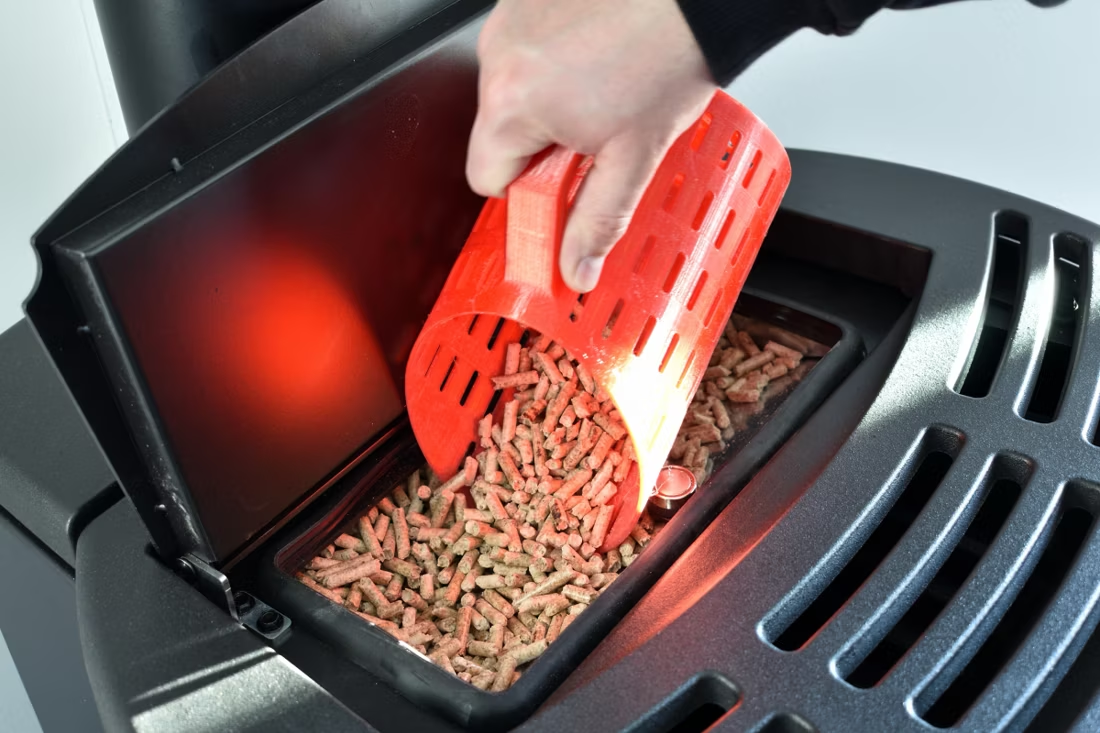
Wood pellets are widely available at hearth retailers, farm supply stores, and home improvement centers throughout the metro Atlanta area, including bags from Lignetics, Hamer Pellet Fuel, and Greenway Renewable Energy—all regional producers. Premium hardwood pellets typically run in the $250–$320 per ton range locally, sold in 40-lb bags (a ton is usually 50 bags). Because Douglasville's heating season is short, many homeowners get through a winter on 1–2 tons for supplemental use, versus 4+ tons for whole-home heating in colder regions.
Will my pellet stove work during a power outage?
Not without backup power. Pellet stoves rely on an electric auger to feed fuel and a blower to distribute heat and exhaust combustion gases, so a standard unit shuts down the moment power drops—whether you're served by Georgia Power or GreyStone Power. Some homeowners pair a pellet stove with a small battery backup or portable generator specifically to keep it running through storm-related outages, which are the more likely outage scenario in this part of Georgia compared to sustained winter cold. If outage-proof heat is your top priority, a wood stove or vent-free gas option is worth comparing against pellet.
What's the best pellet stove for Douglasville's climate?
Given our mild winters, a mid-efficiency pellet stove in the 40,000–50,000 BTU range is plenty for most Douglasville homes—you don't need the maximum-output units built for sustained sub-zero climates. Look for a stove with a wide turndown range (the ability to run efficiently on low settings), since most nights here won't call for a stove running at full output. Local dealers carrying Lignetics-compatible and other regional pellet-fed models can walk you through options that match your room size rather than over-spec'ing for weather Douglasville rarely sees.
How often does a pellet stove need to be cleaned and serviced?
Pellet stoves need more frequent attention than gas units but far less than a wood-burning chimney. Plan on emptying the ash pan every few days during regular use, cleaning the burn pot weekly, and having a full professional inspection and cleaning of the venting and hopper mechanism once a year, ideally before the fall heating season starts. Because Douglasville's season is shorter, many owners find their stove needs only one deep clean per year rather than mid-season service, unlike homes running a stove continuously through a long Northern winter.
Pellet stove vs. wood stove—which is right for my home?
Wood stoves burn local oak, pine, or hickory, work without electricity, and give you the traditional fire experience—but they need a proper chimney, regular sweeping, and hands-on tending. Pellet stoves are more convenient (load the hopper, set it, forget it), burn cleaner with less ash, and vent through a simple sidewall pipe instead of a full chimney, but they depend on grid power to run. For a Douglasville household that wants low-maintenance supplemental heat for a family room or basement and isn't relying on it for outage backup, pellet is usually the easier fit. If backup heat during storm outages matters more than convenience, wood is worth a closer look.
Pellet stove vs. gas fireplace—which makes more sense here?
Gas fireplaces offer instant on-off heat with no fuel to load or ash to empty, and many models include battery-backup ignition that keeps working during outages. Pellet stoves trade that convenience for lower fuel cost per BTU and a more traditional visible flame, but they require regular hopper loading and depend on electricity to run. For a Douglasville home already set up with natural gas or propane, a gas insert is often the lower-hassle choice for daily use. For homeowners who want a wood-like ambiance with easier upkeep than cordwood and don't mind refilling a hopper every few days, pellet is the better match. A local dealer can walk through both options based on your existing fuel hookups.
Why is a fireplace insert so efficient?
An insert does two things: it seals the chimney completely, so you stop losing air you already paid to heat, and it radiates warmth into the room through the firebox and glass. Most add a heat-exchange fan that pulls cool room air underneath, wraps it around the hot firebox, and pushes it back out warm. Your home is more efficient before you've even lit the first fire.
How often does a pellet stove need cleaning?
A clean pellet stove is a happy pellet stove. Plan on cleaning the burn pot about once a week when you're burning regularly—ash and clinkers gum up the air holes just like a pellet barbecue. Most pellet stove problems trace back to skipped cleaning that nobody explained up front. Some designs make it easy with a trapdoor burn pot: pull a lever and the gunk drops into the ash pan.
Can I install a fireplace myself?
If you're putting a fire in your house on purpose, it's best to work with an expert. Unless you're genuinely experienced in framing, gas line, vent pipe, and the national code on clearances to combustibles, have a professional do it—and ideally the same company that sells you the fireplace, so warranty, service, and liability all live under one roof.
Does a fireplace add value to my home?
On average, a fireplace adds back to the home about the same amount you spent installing it. Add the monthly savings from heating the rooms you actually use instead of the whole house—often hundreds of dollars a year—and the value case is strong before you even count what a fire does for how your family uses the room.
Nearby Dealers
Hearth shops serving Douglasville and the surrounding area.
Pellet Brands Stocked Around Douglasville
Manufacturers will point you to the nearest stocking dealer.
Find your pellet stove in Douglasville.
Tell us a bit about your home and we'll put together a free Project Guide & Parts List—the right pellet stove, the vent kit it needs, and a trusted local Douglasville dealer to install it.
Find Your Fireplace →