
Real ambiance, zero venting, in Douglasville.
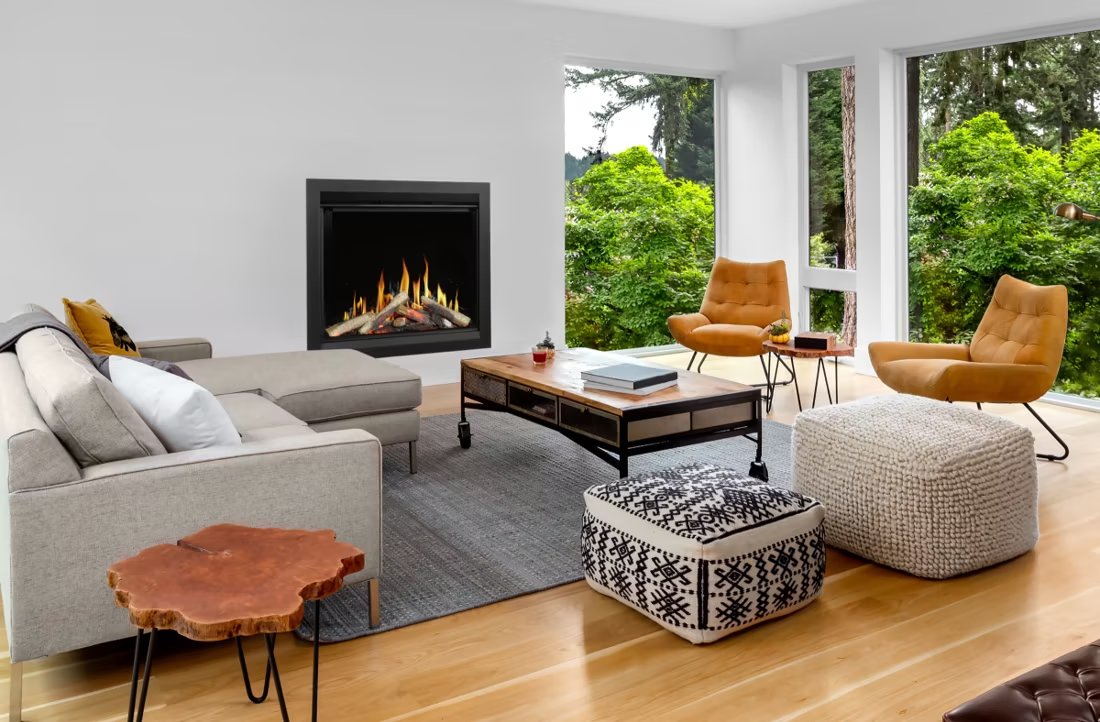
Mild winters and no chimney required—an electric fireplace or insert gets you the look and the supplemental warmth without permits or gas lines. Find the right unit and connect with a trusted local dealer.
Every Project Starts From One of These Five Situations
A mild-winter climate built for plug-in heat.
Douglasville sits in climate zone 3A with an average winter low around 32°F and a short, mild heating season—a fraction of what a place like Duluth, MN sees. Winters here are short and generally mild, which means most homes don't need a whole-home wood or gas heating solution just to get through January. That's exactly the profile where electric fireplaces do their best work: they add real ambiance and useful supplemental heat to a den, bonus room, or master bedroom without the chimney, gas line, or combustion venting that wood and gas units require.
Electric service here comes from Georgia Power or GreyStone Power Corporation depending on where you land in the county, with residential rates running roughly $0.12 to $0.15 per kWh—on the lower end nationally, which keeps day-to-day operating costs modest even for units run several hours a night. Because there's no venting to size and no combustion byproducts to manage, installation is dramatically simpler than a wood or gas project: many electric inserts and mantels are a standard 120V plug-in, and even a hardwired unit is typically a same-day electrician job rather than a multi-trade build.
Three steps. No salesperson until you're ready.
Tell us about your project
Your zip code, your situation, and the fuel you're leaning toward—or let the answers point you to one.
See what's actually available
The brands dealers within 100 miles genuinely carry—real options, never a catalog mirage.
Get your dealer & Project Guide
A trusted local dealer, plus the free Project Guide & Parts List that names every component of the job.
Frequently Asked Questions
How much does an electric fireplace installation cost in Douglasville?
Most electric fireplace and insert installations in Douglasville run between $400 and $1,200. Plug-in units—wall-mounted electric fireplaces, mantel packages, and inserts that fit into an existing masonry opening—sit at the lower end since they just need a standard outlet. Larger built-in electric fireplaces or units requiring a dedicated 240V circuit run higher, mainly for the electrician's time to run a new line from the panel. Because there's no chimney, gas line, or venting to install, electric is consistently the least expensive hearth project in Douglas County.
Do I need a permit to install an electric fireplace in Douglasville?
Usually not for the fireplace itself. A plug-in electric fireplace or insert that uses an existing outlet typically doesn't trigger a building permit through Douglas County or the City of Douglasville. If your installer needs to add a new dedicated circuit or run wiring for a built-in unit, that electrical work should be pulled and inspected under a standard electrical permit—most licensed electricians in the area handle this as a routine part of the job. There's no combustion appliance involved, so none of the venting or clearance-to-combustible rules that apply to wood or gas units come into play.
Will an electric fireplace actually heat my room, or is it just for looks?
Both, within limits. Most electric fireplaces and inserts include a built-in fan-forced heater rated around 1,500 watts, which is enough to comfortably supplement heat in a single room—a den, bedroom, or bonus room—especially given Douglasville's mild winters and short heating season. What they won't do is replace your central HVAC as a whole-home heat source. Think of it the way most local buyers do: a good-looking focal point that also takes the edge off a cool evening without running the furnace, rather than a primary heating appliance.
What's the difference between an electric insert, a wall-mount unit, and a built-in electric fireplace?
An electric insert is sized to slide into an existing masonry fireplace opening, instantly converting an old wood-burning fireplace into a plug-in unit with flame effects and heat—a popular choice for older Douglasville homes with fireplaces that no longer get used for wood. A wall-mount unit hangs on the wall like a large flat-screen TV and needs no existing fireplace at all. A built-in electric fireplace is framed into a wall or cabinetry during a remodel for a more custom, seamless look. For most homeowners here with an existing but unused masonry fireplace, an insert is the fastest and most cost-effective upgrade.
Which is cheaper to run—Georgia Power or GreyStone Power for an electric fireplace?
It depends on your service address rather than your choice, since Douglasville is split between Georgia Power and GreyStone Power Corporation territory and residential rates vary by provider and rate plan—generally in the $0.12 to $0.15 per kWh range locally. Running a 1,500-watt electric fireplace for a few hours a night typically adds somewhere between $5 and $15 a month to your bill at these rates, which is modest compared to running supplemental space heaters or letting a gas insert idle. A local dealer can help you estimate operating cost based on your actual utility and usage pattern.
Can I install an electric fireplace myself, or do I need a professional?
Plug-in electric fireplaces and inserts are genuinely DIY-friendly for the unit itself—mounting a wall unit or sliding an insert into an existing fireplace opening doesn't require a licensed trade. Where we recommend bringing in a pro is anything involving new wiring: adding a dedicated circuit for a larger built-in unit, relocating an outlet, or any work inside a wall. A local hearth dealer can also make sure the unit is properly sized for your room and mounted at a safe distance from flammable materials, which matters even without real combustion involved.
How long do electric fireplaces last, and what maintenance do they need?
Quality electric fireplaces typically last 10 to 15 years with minimal upkeep—there's no chimney to sweep and no gas lines to inspect. Maintenance is mostly dusting the vents and occasionally replacing the LED flame bulbs on older models (most current units use long-life LEDs that rarely need replacement). The fan-forced heater element is the part most likely to need eventual repair or replacement, and local dealers can usually source parts directly from the manufacturer rather than requiring a full unit swap.
Is an electric fireplace a good fit for a Douglasville rental or condo?
Yes—it's often the best fit for exactly that situation. Renters and condo owners frequently can't add a wood-burning appliance or run a new gas line, but a plug-in electric insert or wall-mount unit requires no permanent modification and can move with you. For an unused masonry fireplace in an older rental property, an electric insert restores the look and function of the fireplace without any combustion, venting, or landlord approval for gas or wood-burning work—worth checking your lease, but it's a far lower hurdle than the alternatives.
Electric vs. gas vs. wood—which makes sense for my Douglasville home?
Given Douglasville's mild climate—a short heating season and winter lows that rarely drop far below freezing—most homes here don't need wood or gas as a primary heat source the way a colder climate would. Wood (oak, pine, and hickory are all common locally) offers real ambiance and works during power outages, but requires chimney maintenance and fuel handling. Gas delivers instant, higher-output heat and can also run during outages with the right ignition system, but needs a gas line and venting. Electric skips both the venting and the fuel handling entirely, trading some heat output for the simplest install and lowest upfront cost—which is why it's a common choice for supplemental warmth and ambiance in secondary rooms across the area. A local dealer can walk through your specific room and existing fireplace, if you have one, to make the call.
Can I put a TV above my fireplace?
Yes—with an asterisk. Fireplaces are hot and TVs don't like heat. Either put a mantel between them to deflect rising warmth, or choose a fireplace with heat-management technology that creates a cool zone on the wall above—the wall stays around 125 degrees, barely warm, while the room still gets full heat. If you like clean lines and don't want a mantel, heat management is the answer.
Do electric fireplaces actually produce heat?
Yes—most put out around 4,800–5,000 BTUs from a standard outlet, which comfortably warms a bedroom, office, or den as a comfort-zone heater. What they won't do is carry a whole house the way wood, gas, or pellet can. Think of electric as ambiance-first with honest supplemental heat: flames on with no heat in July, flames plus warmth in January.
What is an in-home preview and do I need one?
It's a visit where a hearth professional measures your space, confirms the model you picked actually works in your home, and walks the specs—framing, gas line, venting, finish work—before anything is ordered. Some details you just can't know until you see the house. Never make a down payment without one; it's the single most-skipped step that burns buyers.
Can a fireplace actually lower my heating bill?
Yes—by creating a comfort zone. A furnace heats every square foot of the house just to warm the one room you're in; a gas fireplace on low burns roughly a sixth of the gas a typical furnace does. Set the furnace around 55–60 degrees as a baseline, then heat the rooms your family actually uses. Families who heat this way commonly save $20–$60 a month.
Nearby Dealers
Hearth shops serving Douglasville and the surrounding area.
Electric Service in Douglasville
An electric fireplace's heater draws about 1,500 watts—pennies per hour at local rates.
Georgia Power Co
Greystone Power Corporation
Find your electric fireplace in Douglasville.
Tell us a bit about your home and we'll match you with the right electric fireplace or insert, plus a free Project Guide & Parts List with your recommended local dealer in Douglasville.
Find Your Fireplace →