
Find your pellet stove in Dodge County.
Clean, automated heat for Middle Georgia's short winters—from Eastman to Chauncey to Rhine. Find the right pellet stove or insert and connect with a trusted local dealer.
Every Project Starts From One of These Five Situations
Convenient heat for Middle Georgia's mild winters.
Dodge County sits in climate zone 3A, with an average winter low around 38°F and a short, mild heating season—a fraction of what colder states see. Winters here are short, generally mild, and punctuated by the occasional cold snap into the 20s that catches homeowners off guard. In that kind of climate, most local pellet installations serve as supplemental or zone heat rather than a full-time furnace replacement—a warm room on a cold January night without splitting the oak, pine, or hickory that grows all over the county.
Dodge County also sits close to some of the country's biggest pellet production, with mills like Lignetics, Hamer Pellet Fuel, and Greenway Renewable Energy operating regionally. That's a real advantage: homeowners here aren't paying long-haul freight premiums that drive up pellet costs in places without local production. A pellet stove or insert gives you a clean glass-front fire, thermostat-controlled output, and none of the ash and creosote upkeep of a wood-burning setup—a fit for homeowners who want the look of a fire without the wood-hauling that comes with it.
Three steps. No salesperson until you're ready.
Tell us about your project
Your zip code, your situation, and the fuel you're leaning toward—or let the answers point you to one.
See what's actually available
The brands dealers within 100 miles genuinely carry—real options, never a catalog mirage.
Get your dealer & Project Guide
A trusted local dealer, plus the free Project Guide & Parts List that names every component of the job.
Frequently Asked Questions
How much does a pellet stove installation cost in Dodge County?
Most pellet stove and insert installations in Dodge County run in the $3,000 to $6,000 range, depending on the unit, whether it's a freestanding stove or an insert going into an existing fireplace opening, and the length of the vent pipe run. Because pellet appliances vent through a small-diameter pipe rather than a full masonry chimney, installation costs are typically lower here than for a wood stove of similar size. A local dealer will give you a firm number after walking your space and confirming the vent path and any electrical work needed for the hopper motor.
What size pellet stove do I need for my home?
Given Dodge County's mild winters—an average low around 38°F and a short, mild heating season—most homes here don't need a stove sized for extreme cold. Small to mid-size pellet stoves (rated for 1,000 to 1,800 square feet) comfortably heat a den, living room, or open-concept main floor for most of the burning season. Larger units make sense mainly for older farmhouses with less insulation or homeowners who want the pellet stove to handle whole-home heating during the county's occasional hard freezes. A local dealer will size the unit to your square footage and insulation rather than just your home's total footprint.
Where can I find certified pellet stove installers near me?
Look for installers with NFI (National Fireplace Institute) certification, which covers proper venting, clearances, and electrical hookup for pellet appliances. Local hearth dealers serving Dodge County typically handle both the sale and the install, which keeps warranty coverage and code compliance under one roof. Since pellet stoves need a dedicated electrical circuit for the auger and combustion blower, it's worth confirming your installer coordinates that wiring rather than leaving it to a separate electrician after the fact.
What's the difference between a pellet stove and a pellet insert?
A pellet stove is a freestanding unit that sits on its own hearth pad and vents through a wall or existing chimney—it can go almost anywhere in a room with the right clearances. A pellet insert is built to slide into an existing masonry fireplace opening, turning an old wood-burning fireplace into an automated, thermostat-controlled heat source using the existing chimney as part of the vent path. For Dodge County homes with an older brick fireplace that rarely gets used, an insert is often the simpler upgrade. Homes without an existing fireplace opening are better suited to a freestanding stove.
Do I need a permit to install a pellet stove in Dodge County?
Most jurisdictions in Dodge County require a building permit for a new pellet stove installation, issued through the Dodge County Building Department for unincorporated areas or the relevant city office inside Eastman city limits. Pellet appliances also need to meet current EPA emissions standards. Most local dealers handle the permit paperwork as part of the installation, so it's rarely something the homeowner has to manage directly—worth confirming with your installer before work begins.
What's the best pellet stove for Dodge County's climate?
Because Dodge County winters rarely demand 24-hour, whole-home heat output, a mid-BTU pellet stove from a brand like Harman, Englander, or US Stove typically covers the job without running the hopper dry on mild nights. Look for a model with a wide burn-rate range so it can throttle down on a 50-degree evening and still hold heat during the county's occasional cold snaps into the 20s. Since regional pellet producers like Lignetics and Greenway Renewable Energy supply the area, fuel availability is generally consistent—worth confirming with your dealer which brand of pellet the stove is calibrated for.
How much maintenance does a pellet stove need?
Pellet stoves need more frequent light maintenance than wood stoves but far less heavy cleaning. Expect to empty the ash pan every few days during regular use, clean the burn pot weekly, and vacuum the hopper and auger area periodically to prevent jams. The vent pipe should get a professional inspection and cleaning once a year, similar to a chimney sweep for wood appliances—local hearth dealers or chimney service providers in the area typically offer this. Given Dodge County's shorter burning season, annual service before the first cold snap of the year is usually sufficient.
Where can I buy pellets in Dodge County?
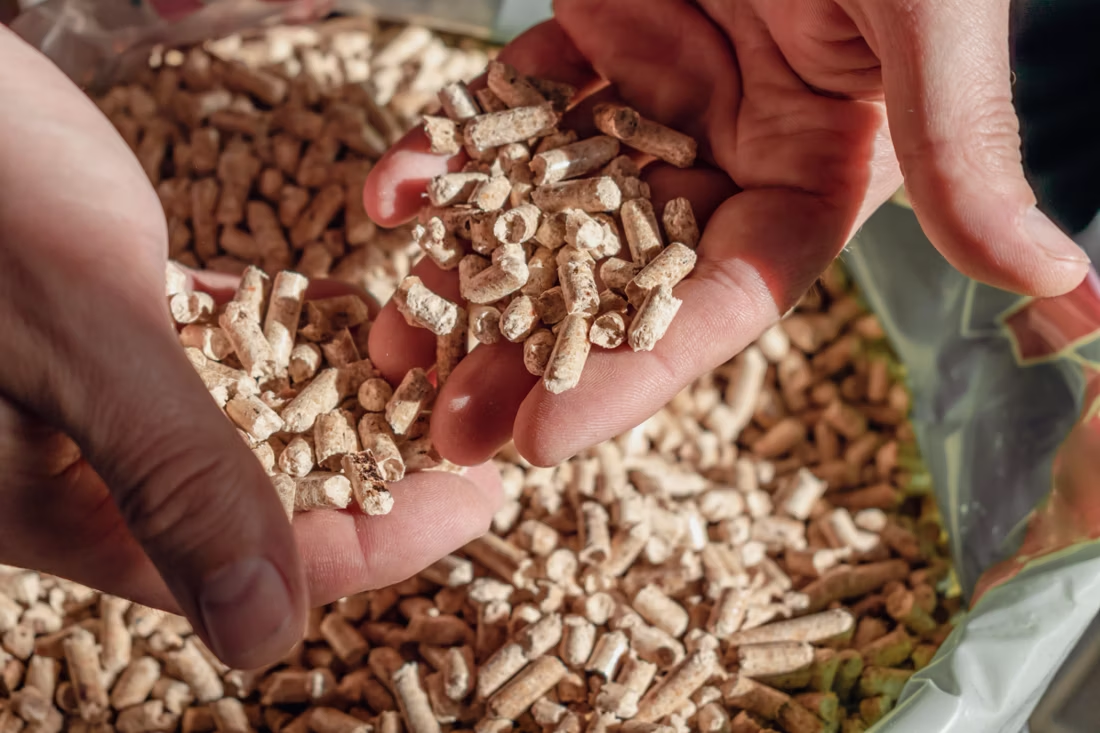
Bagged pellets from regional producers like Lignetics, Hamer Pellet Fuel, and Greenway Renewable Energy are typically stocked at farm supply stores, co-ops, and hardware retailers throughout the area, especially heading into the fall. Because several of these brands manufacture within trucking distance of Middle Georgia, Dodge County generally sees more stable pellet pricing and availability than regions that rely on pellets shipped long distances. Buying a season's supply early—before the first cold snap—is still the best way to avoid the temporary shortages that can hit any pellet market during a hard freeze.
Pellet stove vs. wood stove—which is right for my home?
Wood stoves burn cordwood, work without electricity, and pair naturally with Dodge County's abundant oak, pine, and hickory for homeowners with land or access to cheap firewood. Pellet stoves are more hands-off—load the hopper, set the thermostat, and let the auger do the rest—but they need electricity to run the auger and blower, so they won't provide heat during a power outage without a battery backup. Given how mild Dodge County winters usually run, many homeowners here lean toward pellet for the convenience and cleaner burn, while those with woodlot access or a taste for tending a fire stick with wood. Either fuel is a reasonable fit for this climate—it comes down to how hands-on you want to be.
Why is a fireplace insert so efficient?
An insert does two things: it seals the chimney completely, so you stop losing air you already paid to heat, and it radiates warmth into the room through the firebox and glass. Most add a heat-exchange fan that pulls cool room air underneath, wraps it around the hot firebox, and pushes it back out warm. Your home is more efficient before you've even lit the first fire.
What's the difference between an insert and a zero-clearance fireplace?
An insert is a fireplace that slides into a pre-existing wood-burning fireplace—if you don't have one, there's nothing to insert it into. A zero-clearance fireplace is built into a framed wall, which makes it the answer for remodels and new construction. Simple test: existing masonry fireplace means insert; blank or framed wall means zero-clearance.
What is an in-home preview and do I need one?
It's a visit where a hearth professional measures your space, confirms the model you picked actually works in your home, and walks the specs—framing, gas line, venting, finish work—before anything is ordered. Some details you just can't know until you see the house. Never make a down payment without one; it's the single most-skipped step that burns buyers.
Does a fireplace add value to my home?
On average, a fireplace adds back to the home about the same amount you spent installing it. Add the monthly savings from heating the rooms you actually use instead of the whole house—often hundreds of dollars a year—and the value case is strong before you even count what a fire does for how your family uses the room.
Pellet Brands Stocked Around Dodge County
Manufacturers will point you to the nearest stocking dealer.
Find your pellet stove in Dodge County.
Tell us a bit about your home and we'll put together your free Project Guide & Parts List—the right pellet stove or insert, the exact parts including the vent kit, and a trusted local dealer to install it.
Find Your Fireplace →