
The easiest fireplace upgrade for Dodge County homes.
With winters this mild across Eastman, Chauncey, Rhine, and Milan, an electric fireplace often does exactly what a Dodge County home needs—instant ambiance and a little extra warmth on the coldest mornings, without a chimney or gas line. Find the right unit and connect with a trusted local dealer.
Every Project Starts From One of These Five Situations
Electric fits Dodge County's mild winter reality.
Dodge County sits in south-central Georgia's coastal plain, home to about 8,767 people spread across Eastman, Chauncey, Rhine, Milan, and a lot of farmland in between. This is climate zone 3A—average winter lows sit around 38°F, and the county's winter heating need is light, just a fraction of what a place like Duluth, MN or Burlington, VT sees in a single hard winter. Most Dodge County homes don't need a heating appliance that can carry a whole house through months of sub-zero nights; they need something that takes the edge off a chilly December morning and looks good doing it.
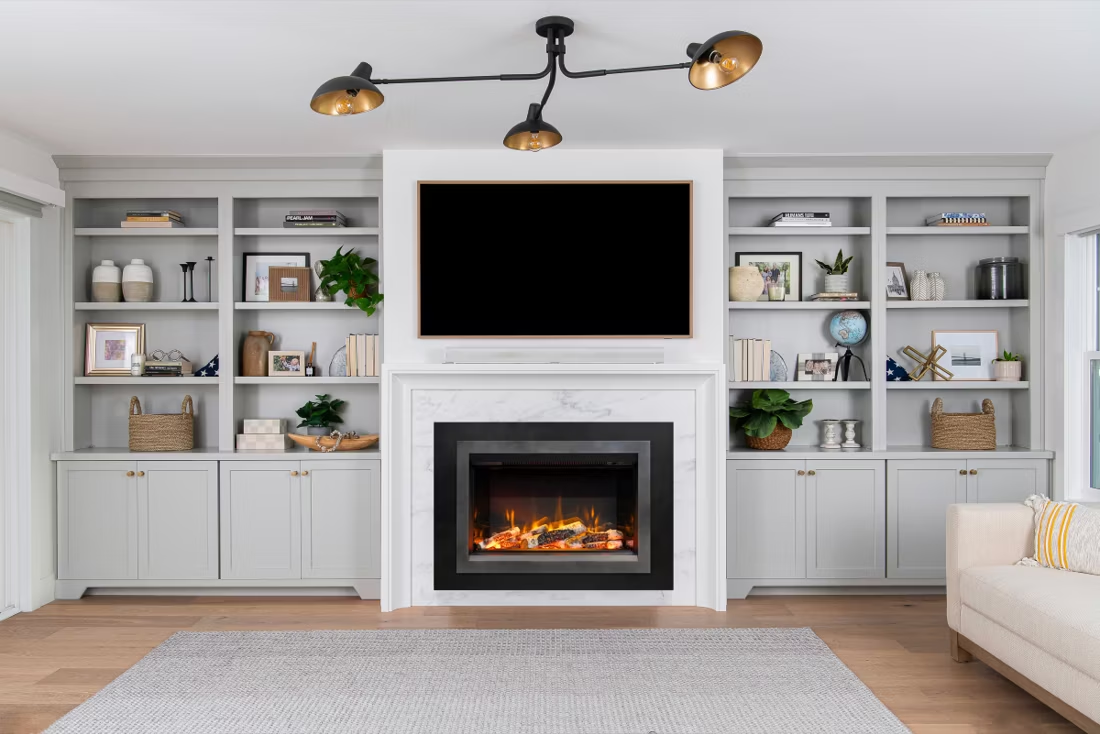
That's exactly the gap an electric fireplace fills. No chimney, no gas line, no venting to plan around—which matters in a county where a good share of the housing stock is manufactured or mobile homes that aren't set up for masonry or direct-vent gas work. A plug-in insert or a hardwired wall unit gives you real zone heat for a bedroom or living room and the visual warmth of a fire, with none of the code complexity of a wood or gas install. The honest tradeoff: electric units need power to run, so they're not a backup heat source during an outage the way a wood stove is—worth keeping in mind in a county where oak, pine, and hickory are all locally abundant if you want a fuel-independent backup.
Three steps. No salesperson until you're ready.
Tell us about your project
Your zip code, your situation, and the fuel you're leaning toward—or let the answers point you to one.
See what's actually available
The brands dealers within 100 miles genuinely carry—real options, never a catalog mirage.
Get your dealer & Project Guide
A trusted local dealer, plus the free Project Guide & Parts List that names every component of the job.
Frequently Asked Questions
How much does an electric fireplace installation cost in Dodge County?
Costs vary a lot by unit type. A plug-in electric insert or freestanding stove that drops into an existing fireplace opening typically runs a few hundred dollars for the unit itself, with no installation labor required beyond plugging it in. A built-in wall unit or mantel package, wired into a dedicated circuit by a licensed electrician, is a bigger project—usually landing somewhere between $1,000 and $2,500 depending on the unit, wall framing, and any electrical panel work needed. Local dealers can size the right option to your room and give you a firm number after seeing the space.
Do I need a permit to install an electric fireplace in Dodge County?
A simple plug-in insert or stove generally doesn't require a permit—it's treated like any other appliance you plug into an outlet. A built-in wall unit that gets hardwired into a new dedicated circuit is a different story: that electrical work typically needs to be pulled through Dodge County's building department and performed by a licensed electrician, since it involves running new circuit wiring rather than using an existing outlet. Ask your local dealer which category your chosen unit falls into before you budget the project.
Will an electric fireplace heat my whole house?
No, and that's a fair question given how mild Dodge County winters run. A typical electric fireplace puts out around 1,500 watts of heat, enough to comfortably warm a single room of 300 to 500 square feet—plenty for the handful of nights each winter when the temperature dips into the 30s. With such a light winter heating need here, most homeowners use electric fireplaces as zone heat for a specific room rather than as a whole-home heating strategy, and pair them with existing central HVAC for the rest of the house.
Electric vs. wood—which makes more sense for my Dodge County home?
Wood has deep roots in this part of Georgia—oak, pine, and hickory are all common locally, and a wood stove or insert works with zero electricity, which matters if you lose power during a summer storm. But given how mild the winters are here, most households don't need wood as a primary heat source the way a colder-climate home would. Electric wins on convenience: flip a switch, no ash, no wood stacking, no chimney maintenance. Many Dodge County homeowners land on electric for daily ambiance and easy heat, with wood reserved as a backup plan for extended outages.
What's the difference between an electric fireplace, insert, and stove?
An electric insert is built to slide into an existing fireplace opening, giving an old masonry firebox new life without any venting work. An electric fireplace is typically a built-in wall unit or mantel-surround package designed for a room without an existing fireplace. An electric stove is a freestanding cabinet-style unit that mimics the look of a wood stove but plugs into a standard outlet. For Dodge County homes with an existing but unused fireplace, an insert is usually the simplest upgrade; for a bedroom or den with no fireplace at all, a built-in wall unit or freestanding stove is the better fit.
Will my electric fireplace still work if the power goes out?
No—electric fireplaces are entirely dependent on grid power, so they'll go dark along with everything else during an outage. That's the main tradeoff against wood heat in a county where storm-related outages happen from time to time. If backup heat during outages matters to you, many Dodge County homeowners pair an electric fireplace for everyday convenience with a wood stove or insert—using local oak or hickory—as a genuine off-grid backup.
What's the best electric fireplace for Dodge County's climate?
Since winter lows here average around 38°F rather than the single digits, you don't need a unit engineered for maximum BTU output the way a colder-climate home would. Most Dodge County homeowners do well with a mid-range unit that offers adjustable heat settings and a realistic LED flame—brands like Dimplex and ClassicFlame are common choices carried by regional dealers. The bigger decision is usually about looks and room fit rather than raw heating capacity, since the unit's job here is mostly ambiance plus occasional supplemental warmth.
Are electric fireplaces a good fit for manufactured or mobile homes in Dodge County?
Yes—this is one of the strongest cases for electric heat in a rural county like Dodge, where manufactured and mobile homes make up a meaningful share of the housing stock. These homes typically aren't built to accommodate a masonry chimney or a direct-vent gas line without significant modification, but a plug-in electric insert or a properly rated wall unit can go in with minimal structural change. Just confirm the unit is rated for the wall or space you're installing it in, and check that your home's electrical panel has capacity if you're adding a hardwired unit.
Electric vs. gas—which is right for my home?
Gas fireplaces produce more heat output and give you that traditional real-flame look, but they require either a natural gas line or a propane tank, plus venting work for most models—a bigger project and bigger cost. Electric fireplaces skip all of that: no gas line, no venting, no combustion byproducts to worry about, and a much lower install cost, but they top out at lower heat output and won't run without power. Given how mild Dodge County winters are, a lot of homeowners find electric delivers enough warmth for the actual conditions here without the added infrastructure a gas install requires.
Can I put a TV above my fireplace?
Yes—with an asterisk. Fireplaces are hot and TVs don't like heat. Either put a mantel between them to deflect rising warmth, or choose a fireplace with heat-management technology that creates a cool zone on the wall above—the wall stays around 125 degrees, barely warm, while the room still gets full heat. If you like clean lines and don't want a mantel, heat management is the answer.
Does an electric fireplace need a vent or chimney?
No—that's its superpower. An electric fireplace needs a wall and an outlet, period. No vent pipe, no gas line, no clearances to design around, which is why it works in bedrooms, offices, apartments, and walls where venting a gas or wood unit would be impractical or impossible. Installation is typically the simplest and least expensive of any fireplace type.
What is an in-home preview and do I need one?
It's a visit where a hearth professional measures your space, confirms the model you picked actually works in your home, and walks the specs—framing, gas line, venting, finish work—before anything is ordered. Some details you just can't know until you see the house. Never make a down payment without one; it's the single most-skipped step that burns buyers.
Does a fireplace add value to my home?
On average, a fireplace adds back to the home about the same amount you spent installing it. Add the monthly savings from heating the rooms you actually use instead of the whole house—often hundreds of dollars a year—and the value case is strong before you even count what a fire does for how your family uses the room.
Find your electric fireplace in Dodge County.
Tell us a bit about your home and we'll put together a free Project Guide & Parts List—the right electric fireplace or insert for your space, the parts you'll need, and a trusted local dealer to install it.
Find Your Fireplace →