
Add real ambiance to your DeKalb County home—no chimney required.
With mild winters and a short, light heating season each year, DeKalb County homes rarely need a furnace-grade heat source in the living room—they need warmth and glow without venting, gas lines, or masonry work. Find the right electric fireplace and connect with a trusted local dealer serving Decatur, Dunwoody, Brookhaven, Stonecrest, and every DeKalb community in between.
Every Project Starts From One of These Five Situations
Mild winters, maximum flexibility.
DeKalb County sits in climate zone 3A—mixed-humid, with an average winter low around 32°F and a short, mild heating season each year. That's a fraction of what a place like Duluth, MN or Fargo, ND deals with, and it means most DeKalb homes never need a primary wood or pellet heat source to survive winter. It's also why wood-burning and pellet stoves see essentially no real market here—plenty of DeKalb homeowners have oak, pine, or hickory in the backyard, but it goes into a fire pit or a rarely-used masonry fireplace, not a heating appliance. Between the mild climate and DeKalb's dense mix of townhomes, condos, and small-lot ranch and Craftsman homes inside and around I-285, there's simply not the same case for cordwood heat you'd find in the mountains or the Midwest.
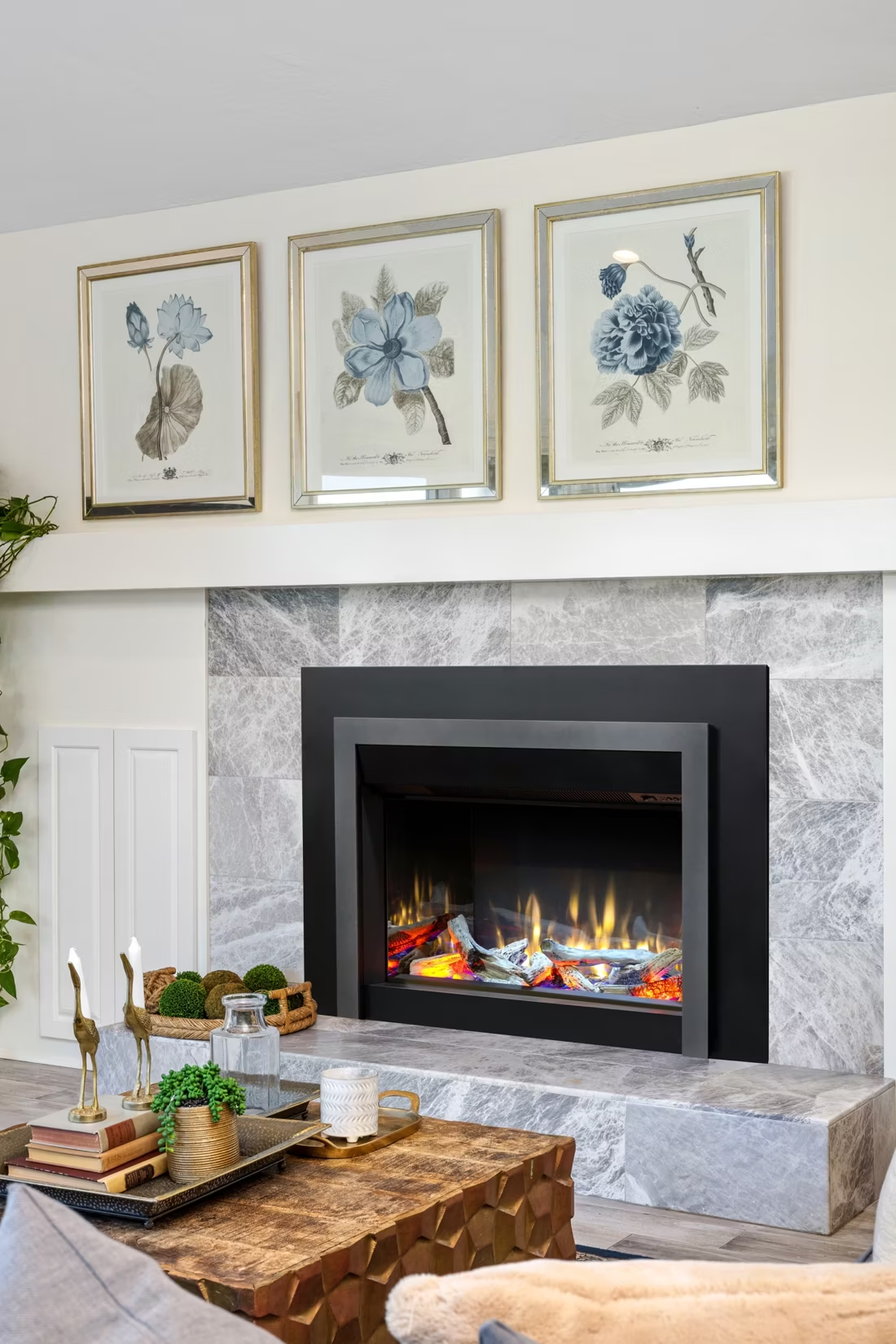
Electric fireplaces fill a different and genuinely useful role here. They install with no chimney, no flue, and in most cases no gas line—which matters in a county full of HOA-governed communities, finished basements, and older homes where running new gas or rebuilding a flue isn't practical. Many DeKalb homeowners in Decatur, Avondale Estates, and Stone Mountain use an electric insert to convert a disused wood-burning fireplace into something that actually gets used year-round. Georgia Power serves most of the county, and because electric fireplaces run on a standard outlet or a simple dedicated circuit rather than a service upgrade, they're often the fastest and least disruptive project a local installer handles all year.
Three steps. No salesperson until you're ready.
Tell us about your project
Your zip code, your situation, and the fuel you're leaning toward—or let the answers point you to one.
See what's actually available
The brands dealers within 100 miles genuinely carry—real options, never a catalog mirage.
Get your dealer & Project Guide
A trusted local dealer, plus the free Project Guide & Parts List that names every component of the job.
Frequently Asked Questions
How much does an electric fireplace installation cost in DeKalb County?
A plug-in electric insert or wall-mounted unit that drops into an existing fireplace opening typically runs $300 to $1,500 installed, since there's no venting or gas line to run. Built-in electric fireplaces set into new framing, or units that need a dedicated 20-amp circuit run by a licensed electrician, land closer to $1,500 to $4,000 depending on cabinetry and finish work. Because DeKalb's older housing stock includes plenty of existing masonry fireplace openings—especially in Decatur, Clarkston, and Stone Mountain bungalows—converting an existing opening is usually the cheapest path to a working, good-looking fireplace.
Do I need a permit to install an electric fireplace in DeKalb County?
Most plug-in electric fireplaces and inserts don't require a permit since they're treated like any other appliance on an existing outlet. If your installation needs a new dedicated circuit or panel work, DeKalb County's Department of Planning & Sustainability requires an electrical permit, and that work needs to be pulled by a licensed electrician—which most local hearth dealers coordinate as part of the install. Built-in units in new construction or additions typically fall under the same building permit as the surrounding framing and electrical work.
Will an electric fireplace actually heat a room in DeKalb's climate?
For DeKalb County's mild winters—an average low around 32°F and a heating season that stays short and light—yes, for the room it's in. Most electric fireplaces put out 4,000 to 5,000 BTU of supplemental heat, enough to take the chill off a bedroom, basement, or sunroom on DeKalb's coldest nights. That's a very different equation than a place like Bozeman, MT, where an electric unit alone would never keep pace with a real winter. Here, it's a legitimate secondary heat source for most rooms, paired with central HVAC for the rest of the house.
Can I convert my existing wood-burning fireplace to electric?
Yes, and it's one of the more common projects local dealers see in DeKalb's older neighborhoods—Decatur, Avondale Estates, Clarkston, and the ranch-home stock around Stone Mountain all have plenty of masonry fireplaces that rarely get used for an actual wood fire. An electric insert slides into the existing opening, the flue gets capped and sealed for efficiency, and you're left with real flame-effect ambiance and supplemental heat with zero smoke, zero venting maintenance, and no wood to source or store. It's a popular choice for landlords and renovation flips for the same reason—it's fast, clean, and low-maintenance.
Electric vs. gas—which is right for my DeKalb County home?
Gas fireplaces put out more heat, deliver a more authentic flame, and make sense where natural gas service is already run to the house—common in much of incorporated DeKalb through Atlanta Gas Light. But gas installs require venting or careful vent-free sizing, plus a gas line if one isn't already in place. Electric skips all of that: no venting, no gas line, no combustion byproducts, and a far simpler install in condos, HOA communities, and finished basements where running a flue isn't an option. For a primary living room fireplace with real heat output, gas often wins. For a bedroom, basement, apartment, or a fast fireplace-opening conversion, electric is usually the more practical call.
Why aren't wood or pellet stoves more common in DeKalb County?
It comes down to climate and housing stock rather than availability. DeKalb's short, mild heating season and 32°F average winter low simply don't create the same demand for a wood-burning primary heat source you'd see in a colder region—there's no real need to keep a fire going overnight to survive the winter. Add in DeKalb's density inside and near the Perimeter, with a large share of condos, townhomes, and HOA-governed communities where wood storage and chimney maintenance aren't practical, and wood heat ends up limited to backyard fire pits rather than home heating. Pellet stoves see the same pattern—regional brands like Lignetics, Hamer Pellet Fuel, and Greenway Renewable Energy supply pellets to more rural parts of Georgia, but there's little market for pellet heating appliances inside DeKalb's suburbs.
Which rooms in a DeKalb County home are best suited to an electric fireplace?
Finished basements are one of the most common spots, since they often lack an existing chimney and electric requires none. Primary bedrooms, sunrooms, and home offices are also popular—spaces where a homeowner wants ambiance and a bit of supplemental warmth without the cost or disruption of running gas or venting. In condos and townhomes across Dunwoody, Brookhaven, and Chamblee, electric is frequently the only fireplace option HOA rules and building layout will actually allow.
What features should I look for in an electric fireplace?
Flame realism varies significantly between brands—look at units from manufacturers like Dimplex, Napoleon, and Amantii in person before deciding, since photos rarely capture the difference between a mirror-and-LED flicker and a true multi-layer flame effect. Beyond that, decide whether you want an insert (fits an existing fireplace opening), a built-in (framed into a wall, often with a linear or widescreen format), or a freestanding mantel unit. Heater output, remote or app control, and whether the flame effect can run independently of the heat (useful in DeKalb's warmer months) are the other main differences worth comparing with a local dealer.
Why use a local dealer instead of buying an electric fireplace online?
A big-box or online purchase leaves you guessing on sizing, clearance requirements, and whether your existing fireplace opening or wall cavity will actually fit the unit—and if it doesn't, you're the one dealing with returns and rework. A trusted local dealer measures your space, confirms electrical requirements before you buy anything, and stands behind the install with a warranty that actually means something. That matters even for a project as comparatively simple as electric, where the difference between a clean built-in and an awkward retrofit often comes down to someone who's done it before in a DeKalb County home like yours.
Can I put a TV above my fireplace?
Yes—with an asterisk. Fireplaces are hot and TVs don't like heat. Either put a mantel between them to deflect rising warmth, or choose a fireplace with heat-management technology that creates a cool zone on the wall above—the wall stays around 125 degrees, barely warm, while the room still gets full heat. If you like clean lines and don't want a mantel, heat management is the answer.
Does an electric fireplace need a vent or chimney?
No—that's its superpower. An electric fireplace needs a wall and an outlet, period. No vent pipe, no gas line, no clearances to design around, which is why it works in bedrooms, offices, apartments, and walls where venting a gas or wood unit would be impractical or impossible. Installation is typically the simplest and least expensive of any fireplace type.
Can I install a fireplace myself?
If you're putting a fire in your house on purpose, it's best to work with an expert. Unless you're genuinely experienced in framing, gas line, vent pipe, and the national code on clearances to combustibles, have a professional do it—and ideally the same company that sells you the fireplace, so warranty, service, and liability all live under one roof.
How much should I budget for a fireplace?
For an average home—covering the fireplace, the vent pipe, and basic installation—a budget between $3,900 and $5,500 gives you a lot of options across wood, gas, and pellet. By the time you add finish work, gas line, and electrical, the average complete installation lands between $5,000 and $12,000 all-in. In a remodel or new build, a good rule is to put about 2.5% of the total project cost toward the fireplace.
Stove and Fireplace Dealers in DeKalb County
Listings include WhyFire partner dealers, dealers we have verified as authorized for the brands we recommend, and established local businesses that carry hearth products. Every listing shows which one it is. The ones marked Preferred run on WhyFire's software, so they can show you real pricing and book your appointment right here. No manufacturer pays for placement. How we verify dealers →
North Atlanta Fireplace Grill & Patio
Construction Resources - Decatur
Atlanta Chimney Worx
The Man Cave Store
Cr Design Center - Westside
Authenteak
Builder Specialties, Inc.
Fireplace Depot
Fireplaces By Mike
Tara Residential
EarthCore Industries
C & P Fireplaces
Bolton Fireplace
Old Hat Chimney
Find your electric fireplace in DeKalb County.
Tell us a bit about your home and we'll match you with a trusted local DeKalb County dealer and send over a free Project Guide & Parts List—a plan for your electric fireplace project with the exact parts and their recommendation, at no cost to you.
Find Your Fireplace →