
The Easiest Fireplace Upgrade in Tucker, Georgia.
With mild DeKalb County winters and no chimney or venting required, electric is the fastest way to add real ambiance and zone heat to a Tucker home. Find the right unit and connect with a trusted local dealer.
Every Project Starts From One of These Five Situations
Mild winters, modern convenience.
Tucker sits at just over 1,000 feet in DeKalb County, in climate zone 3A, where winter lows average around 33°F and the whole heating season is light overall—just a fraction of the winter heating load a place like Duluth, MN sees in a single winter. That mild heating load means most Tucker homes don't need a high-BTU wood or pellet appliance to stay comfortable; they need supplemental warmth for the occasional cold snap and a good-looking focal point for the room. That's exactly the gap electric fireplaces fill.
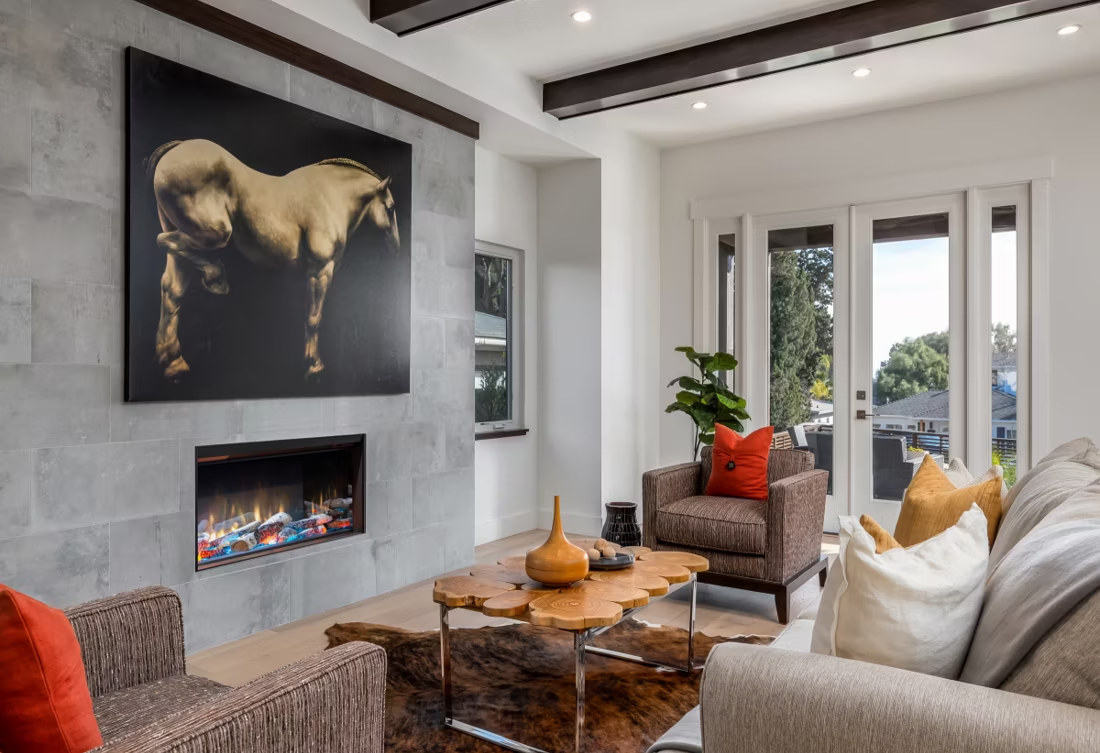
With no chimney, no gas line, and no venting to plan around, electric units go into almost any wall, mantel, or existing masonry opening in Tucker's mix of postwar ranch homes, in-town bungalows, and newer townhome construction near 30084 and 30087. Georgia Power serves the area at a residential rate around 15.49 cents per kWh, so running costs are predictable and low for occasional use. It's also the simplest option for renters, HOA-restricted properties, and condos where a wood or gas appliance isn't allowed or practical.
Three steps. No salesperson until you're ready.
Tell us about your project
Your zip code, your situation, and the fuel you're leaning toward—or let the answers point you to one.
See what's actually available
The brands dealers within 100 miles genuinely carry—real options, never a catalog mirage.
Get your dealer & Project Guide
A trusted local dealer, plus the free Project Guide & Parts List that names every component of the job.
Frequently Asked Questions
How much does an electric fireplace installation cost in Tucker?
Plug-in freestanding and tabletop units need no installation at all—you're looking at $150 to $600 for the unit itself. A built-in electric fireplace set into a wall or media console, including a dedicated circuit if one isn't already present, typically runs $800 to $2,500 installed in the Tucker area. Converting an existing masonry fireplace to an electric insert usually falls in the $500 to $1,500 range depending on the insert's features and whether new wiring is needed. A local dealer can give you a firm number after seeing the space.
How much does it cost to run an electric fireplace in Tucker?
Most electric fireplace heaters draw about 1,500 watts on high. At Georgia Power's residential rate of roughly $0.1549 per kWh, that works out to about 23 cents an hour to run the heater at full output. Many owners run the flame effect alone—with the heater off—for ambiance, which draws only a few watts and costs next to nothing. Compared to firing up a wood stove or running a whole-house gas furnace, electric is by far the cheapest way to take the chill off a single room in Tucker's mild winters.
Do I need a permit for an electric fireplace in Tucker?
A plug-in freestanding unit that runs off a standard outlet requires no permit. A built-in electric fireplace that needs a new dedicated 120V or 240V circuit typically requires an electrical permit through DeKalb County, since it involves new wiring by a licensed electrician. Most local dealers coordinate this as part of the installation, so it's rarely something you have to manage yourself. Either way, there's no chimney inspection, no gas line permit, and no venting code to satisfy—one of the main reasons electric installs move faster than wood or gas projects in Tucker.
Built-in, insert, or freestanding—which electric fireplace is right for my home?
A built-in unit frames into a wall or entertainment center for a permanent, flush look—common in newer Tucker construction and remodels. An electric insert is sized to slide into an existing masonry firebox, letting you keep a fireplace's original look while eliminating the smoke, ash, and chimney maintenance of wood burning. A freestanding or wall-mount unit is the most flexible and rentable-friendly option, since it needs no modification to the home at all. For DeKalb County renters and condo owners, freestanding units are usually the practical choice; homeowners doing a remodel often prefer the built-in look.
Is a wood or pellet stove a realistic option in Tucker instead of electric?
Not really, and that's by design of the local climate. With no significant air quality restrictions but only a light overall heating load and winter lows averaging 33°F, Tucker simply doesn't have the sustained cold that makes a wood or pellet stove's heat output worth the chimney, venting, and fuel handling. Oak, pine, and hickory are common regional firewood species for the occasional outdoor fire pit or fireplace ambiance, but they're not a practical primary heat source here the way they are in colder parts of the country. Electric and gas cover the realistic range of options for most Tucker homes.
Electric vs. gas fireplace—which should I choose in Tucker?
Gas delivers more visible flame and real heat output, and natural gas service is widely available through the local utility providers serving DeKalb County, making it a strong option for a primary living-room fireplace. Electric skips the gas line and venting entirely, costs less to install, and is the only realistic option for renters, condos, or rooms where running a gas line isn't feasible. For a Tucker home already on natural gas that wants a true focal-point fireplace, gas is often the better long-term investment. For flexibility, lower upfront cost, and easy installation in any room, electric wins.
Can I install an electric fireplace in a rental or condo in Tucker?
Yes—this is one of the strongest use cases for electric in a city like Tucker, which has a growing mix of townhomes, condos, and HOA-governed communities. A freestanding or wall-mount electric fireplace plugs into a standard outlet, requires no permit, and can be removed without leaving a trace when you move. Even built-in models can sometimes be installed in a way that doesn't alter the structure, depending on the unit and your lease or HOA guidelines. It's worth checking with your property manager or HOA before a built-in install, but plug-in units are almost always fair game.
What electrical circuit does an electric fireplace need?
Most plug-in electric fireplaces run on a standard 15- or 20-amp 120V household circuit, the same as any space heater, and shouldn't share that circuit with other high-draw appliances. Larger built-in units, especially those over 1,500 watts or with add-on features like blowers, sometimes call for a dedicated circuit to avoid tripping breakers—this is something a licensed electrician sizes during installation. Georgia Power's standard residential service handles either setup without issue; the sizing question is really about your home's existing panel capacity and what else is on that circuit.
How realistic is an electric fireplace as a heat source during a Georgia Power outage?
It isn't—electric fireplaces need grid power to run, so they're out of commission during an outage, unlike a wood stove. In Tucker's climate, this is a modest tradeoff: winter lows average around 33°F and outages tend to be short, so most homeowners treat electric as a convenience and ambiance appliance rather than emergency backup heat. If backup heat during outages is a priority for your household, that's worth discussing with a local dealer—some homes pair an electric fireplace for daily use with a small gas or propane appliance for true grid-independent heat.
Can I put a TV above my fireplace?
Yes—with an asterisk. Fireplaces are hot and TVs don't like heat. Either put a mantel between them to deflect rising warmth, or choose a fireplace with heat-management technology that creates a cool zone on the wall above—the wall stays around 125 degrees, barely warm, while the room still gets full heat. If you like clean lines and don't want a mantel, heat management is the answer.
Do electric fireplaces actually produce heat?
Yes—most put out around 4,800–5,000 BTUs from a standard outlet, which comfortably warms a bedroom, office, or den as a comfort-zone heater. What they won't do is carry a whole house the way wood, gas, or pellet can. Think of electric as ambiance-first with honest supplemental heat: flames on with no heat in July, flames plus warmth in January.
How much should I budget for a fireplace?
For an average home—covering the fireplace, the vent pipe, and basic installation—a budget between $3,900 and $5,500 gives you a lot of options across wood, gas, and pellet. By the time you add finish work, gas line, and electrical, the average complete installation lands between $5,000 and $12,000 all-in. In a remodel or new build, a good rule is to put about 2.5% of the total project cost toward the fireplace.
What is an in-home preview and do I need one?
It's a visit where a hearth professional measures your space, confirms the model you picked actually works in your home, and walks the specs—framing, gas line, venting, finish work—before anything is ordered. Some details you just can't know until you see the house. Never make a down payment without one; it's the single most-skipped step that burns buyers.
Nearby Dealers
Hearth shops serving Tucker and the surrounding area. Every listing shows whether it is a WhyFire partner, a dealer we have verified as authorized for the brands we recommend, or a local business carrying hearth products. No manufacturer pays for placement. How we verify dealers →
North Atlanta Fireplace Grill & Patio
The Man Cave Store
Construction Resources - Decatur
Builder Specialties, Inc.
Atlanta Chimney Worx
Cr Design Center - Westside
Authenteak
Fireplace Depot
Tara Residential
Bolton Fireplace
EarthCore Industries
Fireplaces By Mike
C & P Fireplaces
The Mad Hatter
Old Hat Chimney
Electric Service in Tucker
An electric fireplace's heater draws about 1,500 watts—pennies per hour at local rates.
Georgia Power Co
Find your electric fireplace in Tucker.
Tell us a bit about your home and we'll match you with the right electric fireplace or insert, then send you a free Project Guide & Parts List and connect you with a trusted local Tucker dealer to handle the installation.
Find Your Fireplace →