
Ambiance and Warmth, No Chimney Required.
Scottdale's mild DeKalb County winters make electric heat an easy, low-hassle choice. Find the right unit for your space and connect with a trusted local dealer.
Every Project Starts From One of These Five Situations
Mild winters make electric heat the practical call.
Scottdale sits in climate zone 3A with a fairly mild, short heating season and an average winter low around 33°F—a fraction of what a true cold-climate city like Duluth, MN sees with its long, harsh winters. That mild profile is exactly why wood and pellet heat never really took hold here: this isn't a place where you need 20 hours of overnight burn time from a catalytic stove. It's a place where a few weeks of genuinely cold nights call for something simpler.
Electric fireplaces fit that reality well. Scottdale's housing stock is a mix of early-1900s bungalows near the historic Scottdale Mill village, mid-century ranches, and newer townhomes in the DeKalb design district—many without an existing masonry chimney to work with. An electric insert or wall-mount drops into an existing mantel opening or new-construction wall with no venting, no gas line, and no combustion byproducts to manage. Georgia Power serves the area at roughly $0.1549 per kWh, so running one for supplemental zone heat in a bedroom or den costs pennies compared to heating the whole house.
Three steps. No salesperson until you're ready.
Tell us about your project
Your zip code, your situation, and the fuel you're leaning toward—or let the answers point you to one.
See what's actually available
The brands dealers within 100 miles genuinely carry—real options, never a catalog mirage.
Get your dealer & Project Guide
A trusted local dealer, plus the free Project Guide & Parts List that names every component of the job.
Frequently Asked Questions
How much does an electric fireplace installation cost in Scottdale?
Plug-in freestanding electric fireplaces and mantel inserts typically run $150 to $800 for the unit, and since they plug into a standard outlet, there's often no installation cost beyond placement. Built-in wall-mounted or recessed models—common in the newer townhomes going up around the DeKalb design district—run $800 to $2,500 including a licensed electrician to run a dedicated 20-amp circuit, which DeKalb County requires a permit for. Compare that to a gas insert with venting and a gas line, and electric is the lowest-friction option on the table.
Do I need a permit to install an electric fireplace in DeKalb County?
For a plug-in unit that uses an existing outlet, no permit is needed—there's no combustion, no venting, and no structural change involved. If your installer is adding a dedicated circuit for a built-in or wall-recessed unit, that electrical work requires a permit pulled by a licensed electrician through DeKalb County. It's a much lighter lift than the building and mechanical permits a gas or wood installation would need, which is part of why electric is popular for retrofits into older Scottdale bungalows that were never plumbed for gas.
What's the difference between an electric fireplace, insert, and wall-mount?
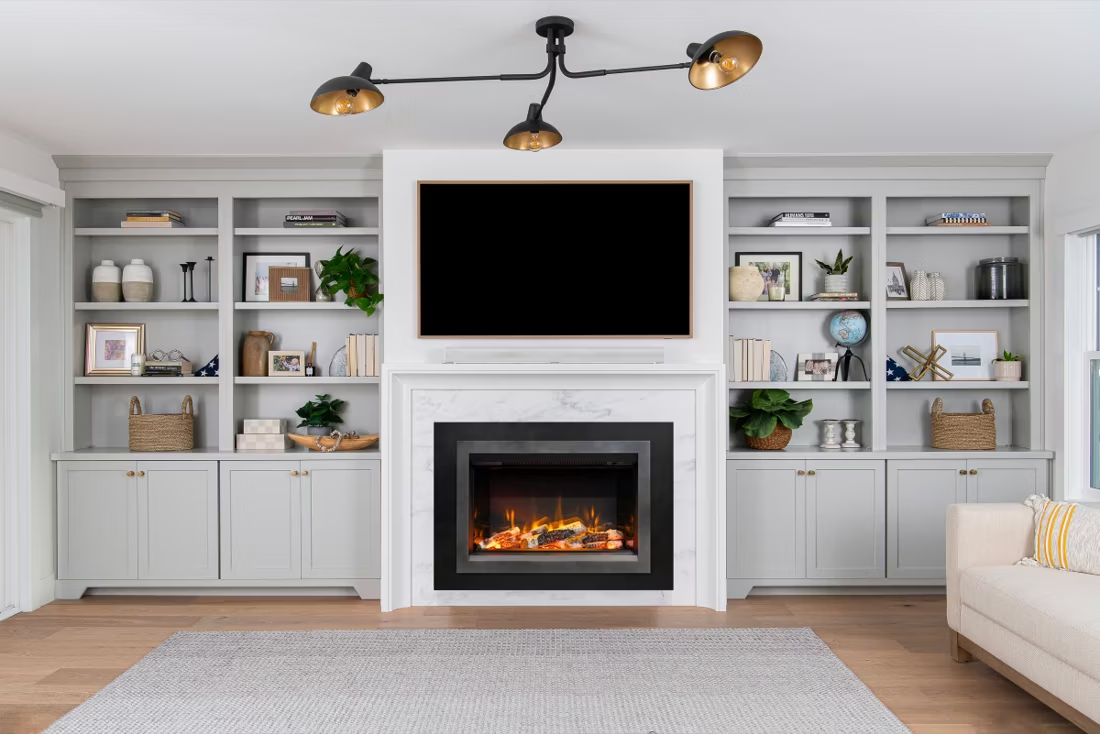
An electric insert is built to slide into an existing fireplace opening—a good option if you have an old, unused masonry firebox in one of Scottdale's older homes and want to reclaim it without chimney work. A wall-mount hangs flush or recessed into drywall like a flat-screen TV, popular in newer townhome construction. A freestanding electric fireplace is a self-contained cabinet unit you place anywhere near an outlet, no installation required at all. All three produce the same flame effect and, on most models, the same 1,500-watt heater output—the choice mostly comes down to your existing layout.
How much does it cost to run an electric fireplace with Georgia Power rates?
At Georgia Power's residential rate of about $0.1549 per kWh, a typical 1,500-watt electric fireplace running on heat costs roughly $0.23 an hour. Used for a few hours most evenings through Scottdale's shorter, milder heating season, that adds up to somewhere around $15 to $35 a month for a room that would otherwise need supplemental heat. Run it for flame effect only, without the heater engaged, and the draw drops to under 100 watts—a few cents an hour.
Why isn't wood heat common in Scottdale—should I consider it instead?
Wood heat is essentially not a fit for Scottdale's climate. With only a fairly mild, short heating season and winter lows averaging 33°F, this area doesn't have the sustained cold that makes a wood stove's long, radiant burn worthwhile the way it would in a place like Burlington, VT. Most Scottdale and DeKalb County homes also lack the masonry chimneys wood stoves need, and local insurance carriers and HOAs in the townhome developments around the design district tend to favor non-combustion options. Electric or gas covers the occasional cold snap without the firewood, chimney maintenance, or clearance requirements wood demands.
What size electric fireplace do I need for my Scottdale home?
Because Scottdale's mild climate means an electric fireplace is almost always supplemental heat rather than your only heat source, sizing is more about the room and the look than raw BTU output. A compact 400-1,000 watt unit suits a bedroom or home office up to around 400 square feet. A standard 1,500-watt insert or wall-mount handles most living rooms and open-concept great rooms in the area's ranch and bungalow floor plans. For anything larger, talk to a local dealer about a multi-unit or higher-output model—but don't expect any electric fireplace to replace your HVAC system on the coldest nights.
Can I install an electric fireplace if I rent or live in a Scottdale townhome?
Yes, and it's one of the reasons electric is popular in the townhome and condo developments around the DeKalb design district. A freestanding or plug-in wall-mount unit requires no permanent alteration, no venting through a shared wall, and no open flame—which means landlords and HOAs that would never approve a wood stove or gas insert are typically fine with electric. If you want a flush-mounted, built-in look, check with your HOA before any electrical work, since a dedicated circuit does involve opening a wall.
Electric vs. gas fireplace—which is right for my Scottdale home?
Gas is also a standard, well-supported option in Scottdale, and it puts out more consistent heat for larger rooms if you want a fireplace that can genuinely take the edge off a cold January night. But given the area's fairly mild, short heating season, most homeowners here aren't heating a whole room with the fireplace—they want ambiance with occasional real warmth, and electric delivers that without a gas line, venting, or the annual service a gas unit needs. If you already have natural gas service to the house and want the closest thing to a real flame, gas is worth a look. If simplicity, safety, and lower upfront cost matter more, electric is usually the better fit.
How much maintenance does an electric fireplace need?
Very little. There's no chimney to sweep, no gas lines to inspect, and no combustion byproducts to worry about. Most upkeep is dusting the unit and occasionally replacing an LED module after years of use—LED flame effects are typically rated for 20,000+ hours. Compare that to the annual chimney inspection a wood stove needs or the yearly burner service recommended for gas units, and electric is by far the lowest-maintenance option available to Scottdale homeowners.
Can I put a TV above my fireplace?
Yes—with an asterisk. Fireplaces are hot and TVs don't like heat. Either put a mantel between them to deflect rising warmth, or choose a fireplace with heat-management technology that creates a cool zone on the wall above—the wall stays around 125 degrees, barely warm, while the room still gets full heat. If you like clean lines and don't want a mantel, heat management is the answer.
Does an electric fireplace need a vent or chimney?
No—that's its superpower. An electric fireplace needs a wall and an outlet, period. No vent pipe, no gas line, no clearances to design around, which is why it works in bedrooms, offices, apartments, and walls where venting a gas or wood unit would be impractical or impossible. Installation is typically the simplest and least expensive of any fireplace type.
Can I install a fireplace myself?
If you're putting a fire in your house on purpose, it's best to work with an expert. Unless you're genuinely experienced in framing, gas line, vent pipe, and the national code on clearances to combustibles, have a professional do it—and ideally the same company that sells you the fireplace, so warranty, service, and liability all live under one roof.
Does a fireplace add value to my home?
On average, a fireplace adds back to the home about the same amount you spent installing it. Add the monthly savings from heating the rooms you actually use instead of the whole house—often hundreds of dollars a year—and the value case is strong before you even count what a fire does for how your family uses the room.
Nearby Dealers
Hearth shops serving Scottdale and the surrounding area. Every listing shows whether it is a WhyFire partner, a dealer we have verified as authorized for the brands we recommend, or a local business carrying hearth products. No manufacturer pays for placement. How we verify dealers →
North Atlanta Fireplace Grill & Patio
Construction Resources - Decatur
Atlanta Chimney Worx
The Man Cave Store
Cr Design Center - Westside
Authenteak
Builder Specialties, Inc.
Fireplace Depot
Fireplaces By Mike
Tara Residential
EarthCore Industries
Bolton Fireplace
C & P Fireplaces
Old Hat Chimney
The Mad Hatter
Electric Service in Scottdale
An electric fireplace's heater draws about 1,500 watts—pennies per hour at local rates.
Georgia Power Co
Find your electric fireplace in Scottdale.
Tell us about your home and we'll put together a free Project Guide & Parts List—the right electric fireplace or insert for your space, the exact parts needed, and a trusted local Scottdale-area dealer to install it.
Find Your Fireplace →