
Pellet stoves are rare in Crisp County—here's what to know.
With average winter lows around 36°F and just over 2,000 heating degree days a year, most Crisp County homes never need a dedicated pellet stove. For the few who do want one—a hunting camp, a workshop, a backup unit—we'll connect you with a local dealer who'll tell you the truth about what fits.
Every Project Starts From One of These Five Situations
Crisp County's mild winters don't call for a pellet stove.
Crisp County sits in climate zone 3A, with an average winter low around 36°F and only about 2,085 heating degree days a year—a fraction of what a place like Bozeman, Montana or Duluth, Minnesota sees in a single hard month. Around Cordele, Arabi, and the rest of the county's roughly 11,000 residents, primary heat is almost always natural gas or an electric heat pump, sized for occasional cold snaps rather than a long, sustained heating season. A pellet stove—designed to run for hours a day feeding a hopper—simply doesn't have a job to do in most of these homes most winters.
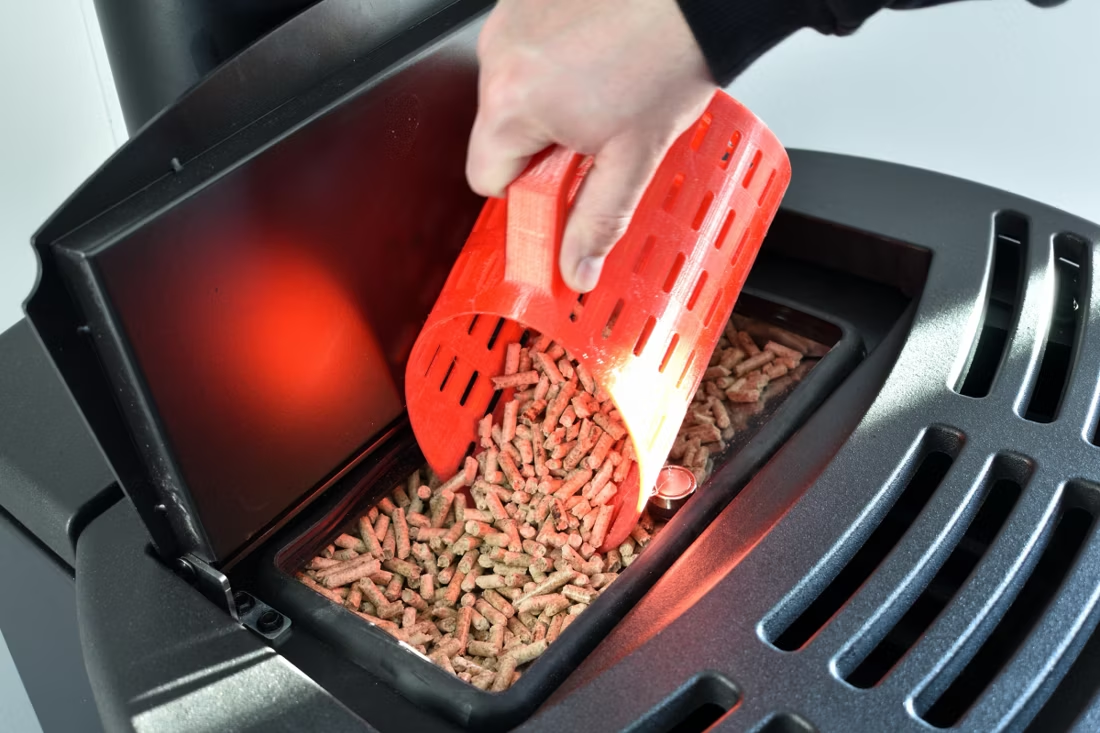
That said, Georgia has real pellet manufacturing in its backyard. Hamer Pellet Fuel and Greenway Renewable Energy both operate pellet plants in the state, and Lignetics distributes regionally, drawing on the same pine timberland that also produces the oak, pine, and hickory firewood locals burn outdoors. Most of that pelletized wood leaves the state for export or industrial use, not for Crisp County living rooms—but it does mean pellets themselves aren't hard to source if you decide a stove makes sense for a specific building. If that's you—a hunting lodge, a detached workshop, or a backup unit for the occasional ice storm—a local dealer can tell you honestly whether it's worth it before you spend a dollar.
Three steps. No salesperson until you're ready.
Tell us about your project
Your zip code, your situation, and the fuel you're leaning toward—or let the answers point you to one.
See what's actually available
The brands dealers within 100 miles genuinely carry—real options, never a catalog mirage.
Get your dealer & Project Guide
A trusted local dealer, plus the free Project Guide & Parts List that names every component of the job.
Frequently Asked Questions
Are pellet stoves actually used in Crisp County?
Not commonly, and I'd rather tell you that upfront than sell you on something that doesn't fit. With average winter lows near 36°F and only about 2,085 heating degree days a year, Crisp County's heating season is short and mild compared to most of the country—natural gas and electric heat pumps handle the job in the vast majority of homes around Cordele and Arabi. The homeowners who do install pellet stoves here are usually heating a detached space—a hunting camp, a garage workshop, a pole barn—or want a backup heat source for the occasional winter storm that knocks out power to the grid but not to a battery-run hopper feed.
How much does a pellet stove installation cost in Crisp County?
Because pellet stoves are installed so infrequently in Crisp County, there isn't a well-established local price pattern the way there is for gas or electric fireplace work. Costs depend heavily on venting (pellet stoves need a small-diameter vent through a wall or roof, not a full masonry chimney), hearth pad requirements, and whether electrical work is needed to power the auger and blower. Get a firm, itemized quote from a local dealer who actually installs these units regularly—given how rare they are here, that's the only way to know your real number.
What size pellet stove would I even need in this climate?
Almost certainly a smaller unit than you'd see recommended in a cold-climate guide. In Crisp County's zone 3A climate, a pellet stove is far more likely to be supplemental or occasional heat for a single room, workshop, or outbuilding than a whole-home solution. Oversizing is a real risk here—a stove sized for a Minnesota winter will run far too hot and cycle inefficiently against Georgia's mild lows. A local dealer should size to the specific space you're heating, not to a generic degree-day chart.
Where can I buy pellet fuel near Crisp County?
Georgia actually produces a fair amount of wood pellet fuel—Hamer Pellet Fuel and Greenway Renewable Energy both run pellet plants in the state, and Lignetics bags are distributed regionally through farm supply and hardware stores. Most of that production is aimed at export markets or industrial biomass rather than the retail bag you'd load into a home hopper, so availability can be inconsistent locally. If you do install a stove, ask your dealer where they source bags—they'll usually have a standing relationship with a regional distributor even if the county itself doesn't stock much.
Why doesn't Crisp County have many pellet stove dealers?
Simple economics—dealers stock and staff for what sells. With average winter lows around 36°F and a heating season a fraction of the length of a place like Fargo or Burlington, most Crisp County homeowners are buying gas fireplaces, electric units, or relying on their heat pump, not pellet stoves. That means fewer local dealers carry pellet inventory or train technicians on hopper and auger systems. It's not that pellet stoves don't work here—they're just a niche request, so expect to look a little further afield or wait longer for parts and service than you would in a colder market.
Would a pellet stove make sense for a hunting camp or cabin in Crisp County?
This is actually one of the more sensible use cases for pellet heat here. A camp or cabin that's occupied intermittently benefits from a pellet stove's thermostat control and long burn times without needing someone to tend a wood fire around the clock—you load the hopper, set it, and it runs. The tradeoff is that pellet stoves need electricity to run the auger and blower, so a generator or battery backup matters if the camp isn't on reliable grid power. A local dealer can walk through venting options for a rustic or off-grid structure specifically.
Is wood heat a better fit than pellet in Crisp County?
Neither is a mainstream choice here, honestly. Wood stoves are also uncommon in Crisp County for the same reason pellet stoves are—mild winters (2,085 heating degree days, average lows near 36°F) simply don't generate enough demand for dedicated wood heat, even with plenty of oak, pine, and hickory available regionally. Where wood does show up locally, it's mostly outdoor fire pits, smokers, and the occasional decorative fireplace rather than a primary heat source. If you want the ritual of a real fire without the daily commitment, a gas fireplace tends to be the more practical local choice; pellet edges it out for people who specifically want the hopper-fed, low-maintenance burn without a wood pile.
What's the standard heat source in Crisp County if not pellet?
Natural gas fireplaces and electric heat pumps are the standard around Cordele and the rest of Crisp County. Both fuel types are rated "standard" for this climate—gas gives homeowners instant, clean heat for the handful of genuinely cold nights each winter, and electric systems (heat pumps and electric fireplaces) handle the rest efficiently given how few heating degree days the county racks up. Pellet stoves remain the exception, reserved for specific situations like outbuildings or backup heat rather than daily primary use.
Do I need a permit to install a pellet stove in Crisp County?
Yes—any new fuel-burning appliance, pellet stoves included, typically requires a building permit through the Crisp County Building & Codes Department, along with sign-off on venting and clearances. Because installs are infrequent, it's worth confirming directly with the permit office rather than assuming a contractor has handled the exact paperwork before—pellet stove permitting isn't a routine request the way a gas fireplace or HVAC swap is in this county.
Why is a fireplace insert so efficient?
An insert does two things: it seals the chimney completely, so you stop losing air you already paid to heat, and it radiates warmth into the room through the firebox and glass. Most add a heat-exchange fan that pulls cool room air underneath, wraps it around the hot firebox, and pushes it back out warm. Your home is more efficient before you've even lit the first fire.
What do I measure to size a fireplace insert?
Four numbers tell you what fits: the front width, the front height, the back width, and the overall depth of your existing fireplace opening. Grab a tape measure, jot those down, and snap a photo of the wall—those two things do more to move your project forward than anything else you can do today.
Can I install a fireplace myself?
If you're putting a fire in your house on purpose, it's best to work with an expert. Unless you're genuinely experienced in framing, gas line, vent pipe, and the national code on clearances to combustibles, have a professional do it—and ideally the same company that sells you the fireplace, so warranty, service, and liability all live under one roof.
Can a fireplace actually lower my heating bill?
Yes—by creating a comfort zone. A furnace heats every square foot of the house just to warm the one room you're in; a gas fireplace on low burns roughly a sixth of the gas a typical furnace does. Set the furnace around 55–60 degrees as a baseline, then heat the rooms your family actually uses. Families who heat this way commonly save $20–$60 a month.
Pellet Brands Stocked Around Crisp County
Manufacturers will point you to the nearest stocking dealer.
Find your pellet stove in Crisp County.
Tell us about your space—a home, a cabin, a workshop—and if a pellet stove genuinely makes sense for Crisp County's climate, we'll match you with a local dealer and send over a free Project Guide & Parts List with the exact parts, vent kit, and installer recommendation for your project.
Find Your Fireplace →