
Warmth and ambiance for Crisp County's mild south Georgia winters.
With an average winter low near 36 degrees and just over 2,000 heating degree days a year, Crisp County doesn't need a furnace-grade heat source most days—but a cold snap off Lake Blackshear or an ice storm that trips the power still calls for real heat. I'll match you with a trusted local dealer who can tell you what actually fits your home.
Every Project Starts From One of These Five Situations
A supplemental heat source for short, mild winters.
Crisp County sits in climate zone 3A around Cordele, the self-declared Watermelon Capital of the World, and Lake Blackshear, the reservoir that draws lake-house owners and weekend residents from across middle Georgia. At 2,085 heating degree days a year, the county's heating load is a fraction of what a northern climate carries—Fargo, ND runs closer to 9,700 HDD in a typical winter—and most Crisp County homes get by on a heat pump or central system for the handful of genuinely cold nights each year. Oak, pine, and hickory grow throughout the county and show up in plenty of older fireplaces, but with winters this short, wood is more decorative than functional for most households here, and pellet appliances see little demand for the same reason. Gas is the fuel that actually earns its place: a direct-vent fireplace or insert gives you instant heat on the nights that dip into the 20s, without asking a homeowner to source, split, and stack cordwood for a six-week season.
Inside Cordele city limits, natural gas service from the city's gas department reaches most established neighborhoods, so a gas line to the fireplace location is often a straightforward tie-in. Outside the city—the farmland and lake communities around Lake Blackshear, Arabi, and the rest of unincorporated Crisp County—there's no natural gas main, and propane from a regional bulk supplier is the standard fuel, either off an existing tank or a new one your propane company sets. Either way, a properly sized direct-vent gas fireplace gives Crisp County homeowners something a heat pump can't during an ice storm: real flame heat that keeps running when the power at a lake house or rural property goes out, no smoke to manage, and no chimney maintenance to worry about in a climate that rarely gets cold enough to justify one.
Three steps. No salesperson until you're ready.
Tell us about your project
Your zip code, your situation, and the fuel you're leaning toward—or let the answers point you to one.
See what's actually available
The brands dealers within 100 miles genuinely carry—real options, never a catalog mirage.
Get your dealer & Project Guide
A trusted local dealer, plus the free Project Guide & Parts List that names every component of the job.
Frequently Asked Questions
How much does a gas fireplace installation cost in Crisp County?
Most gas fireplace and insert installations in Crisp County run roughly $3,500 to $9,000. A direct-vent insert going into an existing masonry fireplace on a home already served by Cordele's natural gas system tends to land on the lower end. A new propane installation at a Lake Blackshear property—where a tank set, a longer gas line run, and fresh venting may all be needed—sits higher. A local dealer will walk your space and give you a firm number, but expect propane sites outside city limits to cost more than in-town natural gas hookups simply because of the added tank and line work.
Can I convert my existing wood-burning fireplace to gas?
Yes, and it's a common upgrade in Crisp County's older Cordele homes, many of which have original masonry fireplaces built for oak, pine, or hickory that rarely get used given how short the burning season is here. A gas insert drops into the existing firebox and vents through a stainless liner run up the current chimney, so you keep the fireplace opening but gain a heat source you can flip on with a switch instead of stacking wood for a handful of cold nights a year. Budget $4,000 to $8,000 depending on whether the home is on natural gas or needs a propane setup.
Is natural gas or propane the better option for my home?
It comes down to where your home sits. Inside Cordele, the city's natural gas system serves most established neighborhoods, so if your home already runs a gas water heater or range, extending that line to a fireplace is usually the simplest path. Outside city limits—the farmland stretches around Arabi and the homes and cabins ringing Lake Blackshear—there's no gas main, and propane from a regional supplier is the standard fuel. Propane appliances perform identically to natural gas ones once the orifice and regulator are set correctly; the difference is just fuel delivery and tank ownership, which your local dealer will sort out during installation.
Will a gas fireplace still work if the power goes out?
Most will, which matters in Crisp County given how often a winter ice event or summer storm can knock out power to rural stretches of the county or lake properties served by longer line runs. Units with intermittent pilot ignition (IPI) carry a battery backup that takes over automatically when power drops, so the fireplace still lights on demand. Valor fireplaces go further, generating their own electricity through the pilot's thermocouple so there's no battery at all. If backup heat during an outage is a priority—especially for a Lake Blackshear property that sits empty part of the week—ask your dealer about the ignition system before you choose a model.
What's the difference between vented and vent-free gas fireplaces?
Vented, or direct-vent, gas fireplaces pull combustion air from outside and exhaust it back outside through a sealed pipe, so nothing from the burn enters the room. Vent-free units burn directly into the living space and are legal in Georgia within room-sizing limits and an oxygen depletion sensor, and they're sometimes used in Crisp County for a den or sunroom addition without an easy vent path. Since Crisp County doesn't carry the air quality restrictions some parts of the country do, either option is workable here—but most local dealers still lean toward direct-vent for full-time living areas, since it heats just as well without adding humidity or combustion byproducts to the room.
Gas fireplace, insert, or stove—which fits my home?
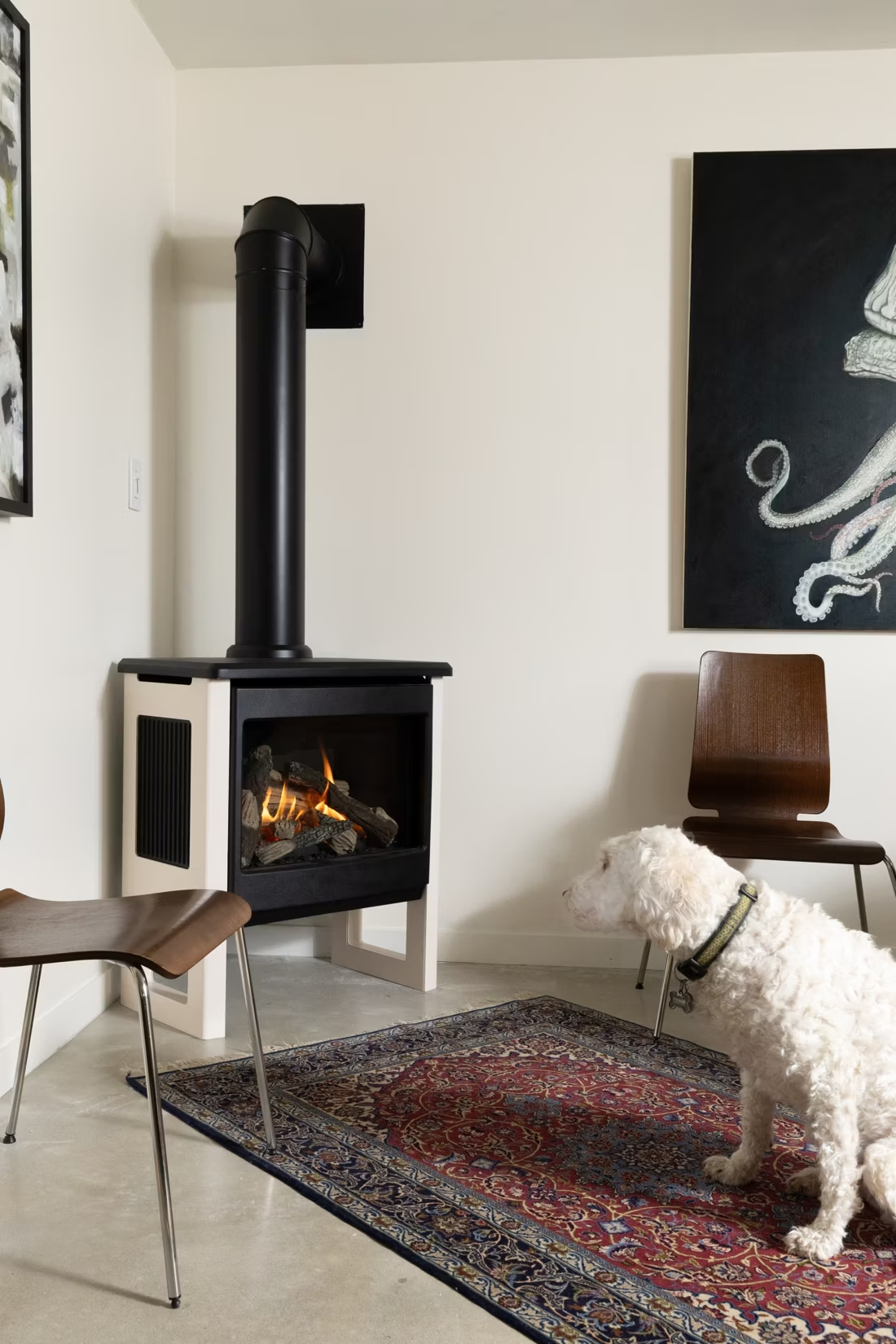
A gas fireplace is a fully framed-in unit, the right call for new construction or a remodel that doesn't already have a firebox. A gas insert slides into an existing masonry fireplace and uses the current chimney as its vent path—the common choice in Crisp County's older Cordele homes built with a working wood fireplace. A gas stove is a freestanding cabinet unit that sits on the floor, useful for a room, addition, or manufactured home with no existing chimney to tie into. A local dealer can look at your space and tell you which configuration actually works.
Do I need a permit to install a gas fireplace in Crisp County?
Yes. New gas fireplace installations require a building permit and a gas line permit through the Crisp County Building Department, or the City of Cordele if your home is inside city limits. The gas line work has to be done by a licensed gas-fitter, which is one reason to go through a full-service hearth dealer rather than a handyman—they coordinate the gas connection, venting, and inspection sign-off as one job instead of leaving you to schedule separate trades.
How often does a gas fireplace need to be serviced?
Plan on an annual inspection, ideally before the first cool nights hit in late fall. A technician checks the burner, pilot assembly, gas connections, and venting, and cleans the glass—a quick visit, typically $150 to $250. This matters even in a mild climate like Crisp County's, since fireplaces that sit unused for most of the year, especially at seasonal Lake Blackshear properties, are more prone to pilot issues or insect nesting in the venting than units running daily through a long winter.
Gas or electric—which makes more sense for a Crisp County home?
Both work here, and the choice usually comes down to what you already have. A gas fireplace or insert delivers real heat output and keeps running during a power outage with the right ignition system—a genuine advantage during an ice storm or a summer line-crew delay on a rural stretch of the county. An electric fireplace installs almost anywhere with just a standard outlet, no gas line or venting required, which makes it a fast, low-cost option for a bonus room or a home without gas service nearby, but it offers no backup heat if the power itself goes out. For a primary living space where storm outages are a real concern, gas is usually the stronger pick in Crisp County; for supplemental ambiance in a spare room, electric is hard to beat on cost and simplicity.
Can I put a TV above my fireplace?
Yes—with an asterisk. Fireplaces are hot and TVs don't like heat. Either put a mantel between them to deflect rising warmth, or choose a fireplace with heat-management technology that creates a cool zone on the wall above—the wall stays around 125 degrees, barely warm, while the room still gets full heat. If you like clean lines and don't want a mantel, heat management is the answer.
Why is my open fireplace making my house colder?
Open fireplaces suck—literally. As the fire burns, it consumes air your furnace already paid to heat and pulls it out through the chimney, so the house is actually colder after the fire goes out than before you lit it. An insert fixes this: it seals the chimney, puts fixed glass across the front, and turns that hole in your house into a real heat source.
How much should I budget for a fireplace?
For an average home—covering the fireplace, the vent pipe, and basic installation—a budget between $3,900 and $5,500 gives you a lot of options across wood, gas, and pellet. By the time you add finish work, gas line, and electrical, the average complete installation lands between $5,000 and $12,000 all-in. In a remodel or new build, a good rule is to put about 2.5% of the total project cost toward the fireplace.
What is an in-home preview and do I need one?
It's a visit where a hearth professional measures your space, confirms the model you picked actually works in your home, and walks the specs—framing, gas line, venting, finish work—before anything is ordered. Some details you just can't know until you see the house. Never make a down payment without one; it's the single most-skipped step that burns buyers.
Get your free Project Guide & Parts List for a gas fireplace in Crisp County.
Tell me a bit about your home—whether you're on Cordele's natural gas system or propane out toward Lake Blackshear—and I'll match you with a trusted local dealer and send over a free Project Guide & Parts List: the exact equipment, vent kit, and recommended installer for your gas project.
Find Your Fireplace →