
Pellet heat for Clinch County's rare cold nights.
With just 1,847 heating degree days and winter lows that average 38°F, Clinch County rarely needs solid-fuel heat. For the handful of homeowners who still want a pellet stove—for ambiance, a hunting camp, or backup on the coldest nights—we'll connect you with a real local dealer who can size it right.
Every Project Starts From One of These Five Situations
A mild climate that rarely calls for solid fuel heat.
Clinch County sits in Climate Zone 2A on the edge of the Okefenokee Swamp, home to about 3,179 people around the county seat of Homerville. With an average winter low of 38°F and only 1,847 heating degree days a year—a fraction of what a place like Duluth, MN or Fargo, ND racks up in a single January—most homes here are built and heated for cooling, not for wringing out every degree of winter warmth. Central heat pumps and gas furnaces handle the occasional cold snap, and pellet stoves simply aren't part of the everyday hearth landscape the way they are farther north.
That said, a small number of Clinch County homeowners still want a pellet stove—for the ambiance of a real flame in the main living room, for a hunting camp or cabin near the Suwannee River, or as supplemental heat for the two or three genuinely cold weeks each winter. It's worth knowing going in that pellet stoves run on electricity to feed the auger and blower, so they won't help during the power outages that follow South Georgia's tropical storms the way a wood stove or vented gas unit can. If pellet heat still fits your plans, regional pellet supply comes through brands like Lignetics, Hamer Pellet Fuel, and Greenway Renewable Energy, which sources bagged pellets from Georgia's own pine forests—though dedicated hearth dealers who install pellet appliances are scarce in the county itself, and most homeowners end up working with an installer based in Waycross or Valdosta.
Three steps. No salesperson until you're ready.
Tell us about your project
Your zip code, your situation, and the fuel you're leaning toward—or let the answers point you to one.
See what's actually available
The brands dealers within 100 miles genuinely carry—real options, never a catalog mirage.
Get your dealer & Project Guide
A trusted local dealer, plus the free Project Guide & Parts List that names every component of the job.
Frequently Asked Questions
How much does a pellet stove installation cost in Clinch County?
Because so few homes in Clinch County run pellet appliances, there isn't a deep local pricing history the way there is for gas or electric heat. Nationally, a pellet stove installation with a top-vent or side-wall pellet vent kit typically runs $3,000 to $6,500 depending on the unit and whether new venting through an exterior wall is required. In Clinch County, expect the installer's travel time from Waycross or Valdosta to factor into the quote, since there isn't a dedicated pellet dealer based in Homerville. Ask for a firm, itemized quote that includes the vent kit—that's the part homeowners in low-demand markets like this one most often get shorted on.
Does a pellet stove actually make sense in Clinch County's climate?
For most homes, not as a primary heat source. With only 1,847 heating degree days a year and winter lows averaging 38°F, the county's heating season is short and mild compared to a Northern climate—the kind of place where a Blaze King or Lopi holds a fire for 20 hours through single-digit nights. Here, a pellet stove is more realistic as supplemental or ambiance heat: something to run on the handful of nights when temperatures dip into the 20s, or in a room that stays chilly despite central heat. If you're weighing solid-fuel heat against a gas insert, which is far more common locally, a local dealer can walk you through both against your actual usage pattern.
Where can I buy pellet fuel near Clinch County?
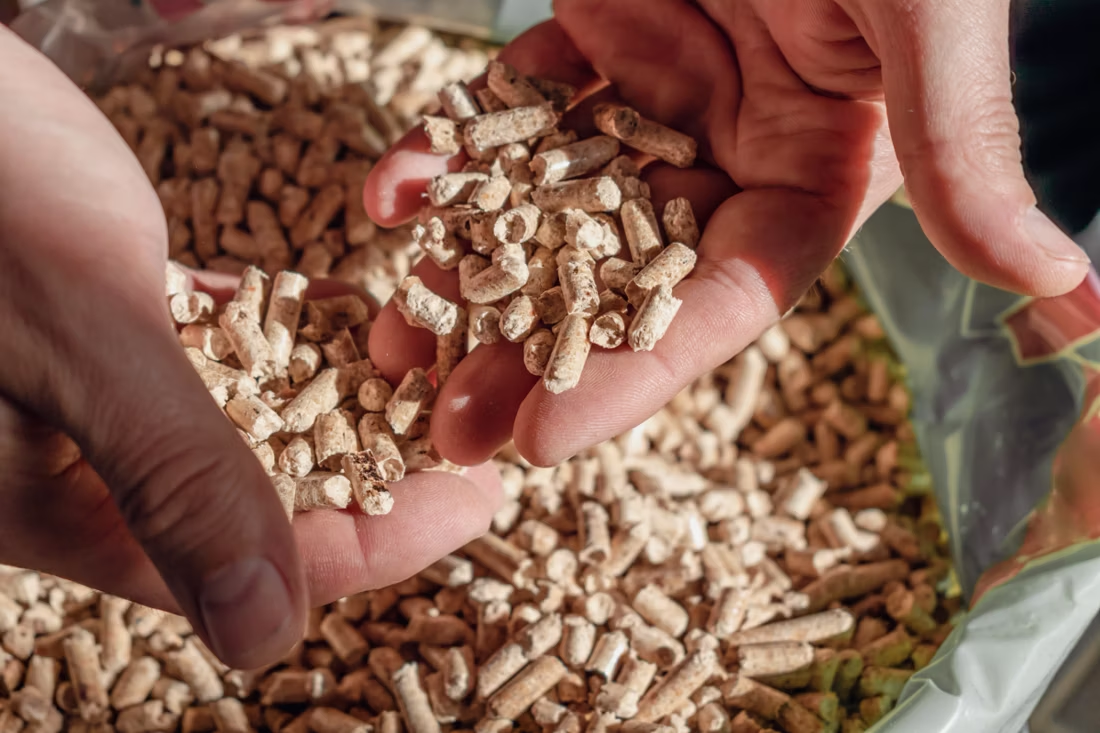
Bagged pellets from Lignetics, Hamer Pellet Fuel, and Greenway Renewable Energy circulate through farm and feed stores and larger home centers in Waycross and Valdosta, both within reasonable driving distance of Homerville. Because pellet stoves are uncommon here, don't count on Clinch County retailers to stock pellets year-round—it's worth buying a season's supply (roughly 100-150 bags for a light-use stove given the mild winters) when you find it in stock, rather than trying to restock mid-cold-snap.
Will a pellet stove keep working during a power outage?
No—this is the tradeoff worth understanding before you buy. Pellet stoves rely on an electric auger to feed fuel and a blower to circulate heat, so they shut down when the power goes out. That matters in Clinch County, where tropical storm remnants moving up from the Gulf can knock out power for days at a time. If backup heat during outages is a priority, a wood stove or a gas fireplace with battery-backed ignition is a better fit than pellet. If your goal is efficient, low-maintenance supplemental heat on ordinary cold nights, a pellet stove still works well—you'll just want a separate outage plan.
What size pellet stove do I need for a Clinch County home?
Given the county's mild heating load—1,847 heating degree days is closer to a Gulf Coast climate than a true Northern one—most homes here are better served by a small pellet stove (rated for 1,000 to 1,500 square feet) run as supplemental heat rather than a large unit sized for whole-home heating. Oversizing is a common mistake in mild climates: a stove sized for Minneapolis winters will run inefficiently and short-cycle in a Homerville living room. A local installer can size against your actual square footage and insulation rather than a generic chart.
Do I need a permit to install a pellet stove in Clinch County?
Yes—a new solid-fuel appliance installation, including a pellet stove, typically requires a building permit through the Clinch County Building Department, along with a plan review to confirm clearances and venting meet code. Because pellet installations are infrequent here, it's worth confirming directly with the building department before work starts, and choosing an installer who has pulled pellet stove permits in South Georgia before, since the office may see this appliance type far less often than gas or electric heat requests.
How often does a pellet stove need to be cleaned and serviced?
Even with light seasonal use, manufacturers recommend an annual cleaning of the burn pot, exhaust venting, and hopper before each heating season starts—typically late fall. In a mild climate like Clinch County's, where a stove might only run a few dozen nights a year, it's tempting to skip a season, but ash buildup and venting blockages can happen regardless of hours burned. Since a dedicated pellet technician may not be based in the county, plan the service call for early fall alongside your installer, before the first cold front of the season arrives.
Which pellet stove brands are actually available through local dealers?
Because pellet heat is a niche request in Clinch County, expect a narrower selection than you'd find in a colder-climate market. Dealers serving the area from Waycross or Valdosta typically carry mainstream brands like Harman, Englander, and US Stove Company, alongside bagged fuel from regional producers like Lignetics, Hamer Pellet Fuel, and Greenway Renewable Energy. Ask any installer up front what they actually stock and service locally—a stove that requires parts shipped from out of state can mean a long wait if something breaks mid-winter.
Pellet stove vs. gas fireplace—which makes more sense for my Clinch County home?
For most Clinch County homeowners, a gas fireplace or insert is the more practical choice: gas is a standard, well-supported fuel option locally, it lights instantly, and with the right ignition system it can even operate during a power outage—something a pellet stove can't do. Pellet heat makes more sense if you specifically want the look and radiant feel of a real flame fed by fuel rather than a gas line, or if you're heating a cabin or hunting camp without gas service at all. Given how mild the county's winters are, either option will likely serve as supplemental rather than primary heat—a local dealer can help you weigh the two against your actual home and habits.
How often does a pellet stove need cleaning?
A clean pellet stove is a happy pellet stove. Plan on cleaning the burn pot about once a week when you're burning regularly—ash and clinkers gum up the air holes just like a pellet barbecue. Most pellet stove problems trace back to skipped cleaning that nobody explained up front. Some designs make it easy with a trapdoor burn pot: pull a lever and the gunk drops into the ash pan.
Why is my open fireplace making my house colder?
Open fireplaces suck—literally. As the fire burns, it consumes air your furnace already paid to heat and pulls it out through the chimney, so the house is actually colder after the fire goes out than before you lit it. An insert fixes this: it seals the chimney, puts fixed glass across the front, and turns that hole in your house into a real heat source.
What is an in-home preview and do I need one?
It's a visit where a hearth professional measures your space, confirms the model you picked actually works in your home, and walks the specs—framing, gas line, venting, finish work—before anything is ordered. Some details you just can't know until you see the house. Never make a down payment without one; it's the single most-skipped step that burns buyers.
Can a fireplace actually lower my heating bill?
Yes—by creating a comfort zone. A furnace heats every square foot of the house just to warm the one room you're in; a gas fireplace on low burns roughly a sixth of the gas a typical furnace does. Set the furnace around 55–60 degrees as a baseline, then heat the rooms your family actually uses. Families who heat this way commonly save $20–$60 a month.
Pellet Brands Stocked Around Clinch County
Manufacturers will point you to the nearest stocking dealer.
Find your pellet stove in Clinch County.
Tell us a bit about your home and your reasons for wanting pellet heat, and we'll match you with a trusted local dealer and send over a free Project Guide & Parts List—sized and vented correctly for your Clinch County home, no big-box guesswork.
Find Your Fireplace →