
Warm up your Clinch County home without the chimney.
Clinch County winters rarely test a heating system—an average low near 38°F and just 1,847 heating degree days a year. An electric fireplace gives Homerville-area homes real ambiance and quick zone heat with no venting, no gas line, and no wood to haul. I'll match you with a trusted local dealer who knows what actually works here.
Every Project Starts From One of These Five Situations
Mild winters, modern convenience.
Clinch County sits in USDA climate zone 2A on the edge of the Okefenokee Swamp, and its winter profile is about as mild as heating climates get in the continental U.S.—an average low around 38°F and only 1,847 heating degree days per year, a fraction of what a place like Bismarck, ND or Duluth, MN sees in a single month of January. That's exactly why wood and pellet heating are marked not-applicable for this county: with true cold snaps short and infrequent, there's little practical case for a dedicated cordwood or pellet-burning heating system in most Clinch County homes, even though oak, pine, and hickory grow all around the county's timberland.
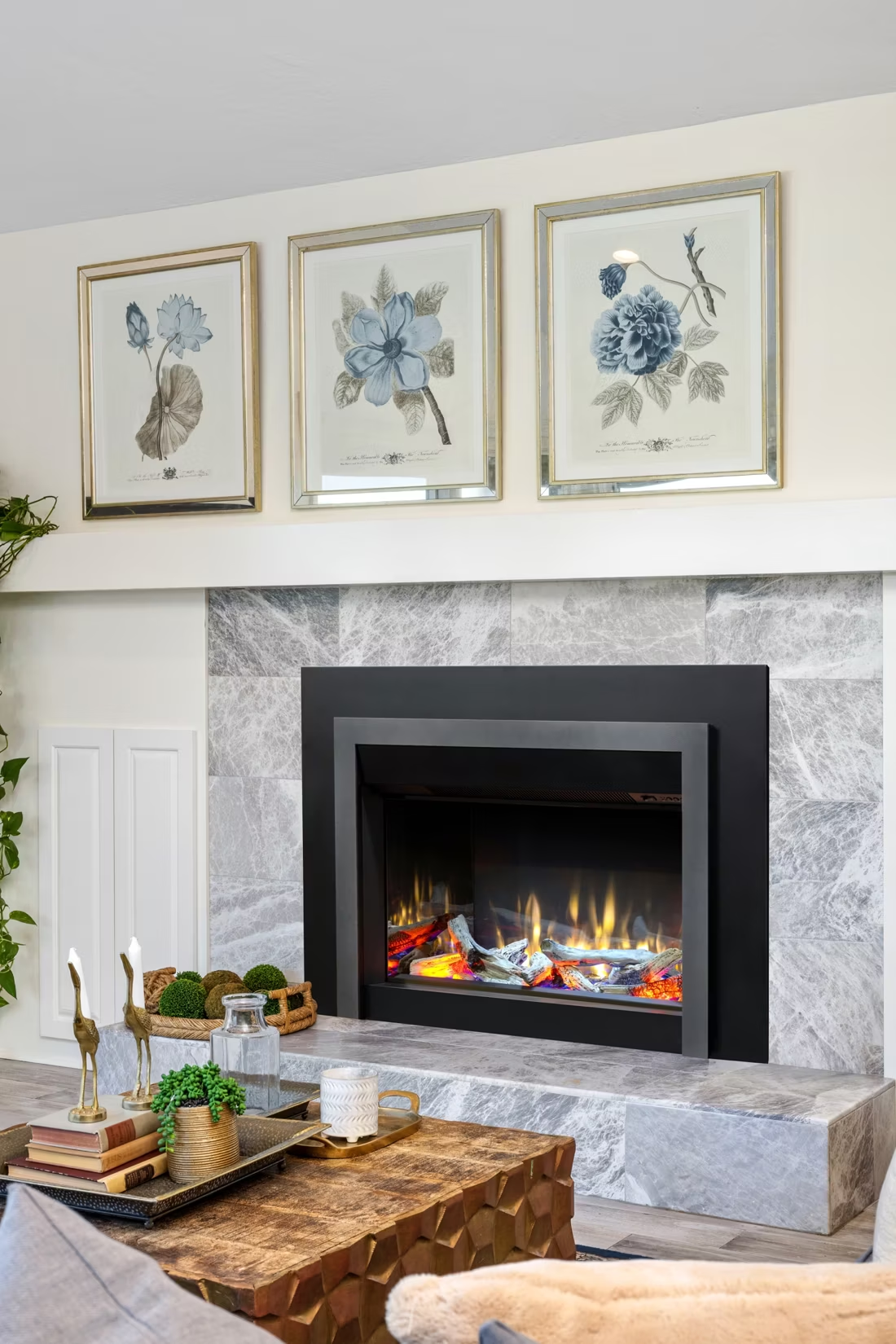
Electric fireplaces fill the gap differently. They install with a standard outlet or a simple dedicated circuit, work in the manufactured and mobile homes that make up a large share of Clinch County's housing stock, and don't require a chimney, gas line, or Okefenokee REMC service upgrade. For most homeowners here, an electric unit isn't the primary heat source for the house—it's ambiance in the living room and reliable spot heat on the handful of nights each winter that actually dip into the 20s. With no combustion and nothing to vent, there are no local air quality or burn-ban concerns to navigate either—Clinch County has none on record.
Three steps. No salesperson until you're ready.
Tell us about your project
Your zip code, your situation, and the fuel you're leaning toward—or let the answers point you to one.
See what's actually available
The brands dealers within 100 miles genuinely carry—real options, never a catalog mirage.
Get your dealer & Project Guide
A trusted local dealer, plus the free Project Guide & Parts List that names every component of the job.
Frequently Asked Questions
How much does an electric fireplace installation cost in Clinch County?
Plug-in units—freestanding stoves, mantel packages, and small inserts that use a standard 120V outlet—typically run $150 to $600 for the unit itself, with no real installation cost beyond mounting. Built-in and wall-mount linear models that need a dedicated circuit run higher, generally $1,500 to $4,000 including a licensed electrician's time to run new wiring, which is common in older Homerville-area homes and in manufactured housing where panel capacity can be limited. A local dealer can tell you within a few minutes whether your existing electrical service can handle the unit you want or whether a panel upgrade is needed first.
Will an electric fireplace actually keep a room warm here, or is it just for looks?
Both, depending on the unit. Most electric fireplaces top out around 1,500 watts (roughly 5,000 BTU), which is enough to comfortably heat a single room in the 200–400 square foot range—plenty for the kind of cold Clinch County actually sees. With only 1,847 heating degree days a year and lows rarely dropping much past the 20s, an electric fireplace can realistically serve as the primary heat source for a living room or bonus room on cold nights, while central heat or a heat pump handles the rest of the house. It's not designed to replace whole-home heating in a harder winter climate, but Clinch County's mild profile is exactly the kind of climate where that limitation rarely matters.
Do I need a permit to install an electric fireplace in Clinch County?
A plug-in unit that uses an existing outlet doesn't require a permit—it's no different than plugging in any other appliance. If your installer needs to run a new dedicated circuit or open up a wall for a built-in unit, that electrical work typically requires a permit through the Clinch County building department, and any licensed electrician handling the job will pull it as part of the install. This is a much simpler process than the venting and clearance permits required for wood or gas installations, which is part of why electric is an easy fit for a quick living-room upgrade.
What's the difference between electric fireplace inserts, mantel packages, and wall-mount units?
A mantel package is a freestanding cabinet with the firebox built in—plug it in, set it against a wall, done. An insert is designed to slide into an existing masonry fireplace opening, which works well for older Homerville homes that already have a wood-burning fireplace they no longer use. A wall-mount linear unit hangs flat against the wall like a TV, which is a popular choice in manufactured and modular homes around the county where floor space is tight and there's no existing fireplace opening to fill. A local dealer can walk your specific room and tell you which format actually fits.
Will my electric fireplace work if the power goes out?
No—electric fireplaces require power to run, and that's worth planning around. Clinch County sits in a part of southeast Georgia that can see outages during summer thunderstorms and the occasional tropical system moving up from the Gulf or Atlantic, and Okefenokee REMC crews sometimes need time to restore rural lines after a bad storm. Because Clinch County's mild winters make a dedicated wood stove impractical for most households, the more common backup plan here is a portable propane or kerosene heater and a generator for the freezer and well pump, rather than installing wood-burning equipment solely for outage insurance.
Wood fireplaces are common in the South—why isn't wood a bigger option here?
Oak, pine, and hickory are all abundant in and around Clinch County, and plenty of homes still have an old masonry fireplace they'll light occasionally for the smell and the look of a real fire. But with only 1,847 heating degree days a year, the county simply doesn't get the sustained cold that makes a dedicated wood stove or insert worth the investment the way it would in a place like Fargo, ND. Most local use of wood is occasional and ambiance-driven rather than a serious heating strategy, which is why wood is flagged as not-applicable for a whole-house heating recommendation here.
What about pellet stoves—I've seen bags of Lignetics or Hamer Pellet Fuel at stores nearby?
Bags of pellets from brands like Lignetics, Hamer Pellet Fuel, and Greenway Renewable Energy do show up at regional farm and hardware stores, but that's mostly serving demand from neighboring counties with colder winters or from folks heating a workshop or outbuilding rather than a primary residence. Pellet stoves need a steady electrical supply for the auger and blower and a meaningful heating season to justify the equipment cost—neither of which lines up well with Clinch County's mild climate zone 2A profile. It's not that pellet heat doesn't work here; it's that the math rarely favors it over a simple electric unit for most households.
Should I get a gas fireplace instead of electric?
Gas is a legitimate option in Clinch County, especially for homeowners who want a real flame and more heat output than an electric unit can produce—most rural properties here run on propane rather than natural gas, since there's no municipal gas line serving the county. A propane fireplace or insert delivers meaningfully more BTUs than electric and can double as backup heat during an outage if it's not solely electronic-ignition dependent. The tradeoff is a propane tank, gas line work, and a higher install cost. For a straightforward ambiance upgrade with no fuel storage and no venting, electric remains the simpler and cheaper route—a local dealer can lay out both costs side by side for your specific room.
How much does it cost to run an electric fireplace on my Okefenokee REMC bill?
A typical 1,500-watt electric fireplace costs roughly 15 to 20 cents per hour to run at Okefenokee REMC's residential rates, translating to a few dollars for an evening of use. Because Clinch County's mild winters mean these units are rarely run for extended stretches—mostly evenings and the occasional cold front rather than around the clock—most homeowners see a modest bump on their bill during the winter months rather than a major cost increase. That efficiency, paired with no fuel to buy or haul, is a big part of why electric is a practical fit for supplemental heat here.
Does an electric fireplace need a vent or chimney?
No—that's its superpower. An electric fireplace needs a wall and an outlet, period. No vent pipe, no gas line, no clearances to design around, which is why it works in bedrooms, offices, apartments, and walls where venting a gas or wood unit would be impractical or impossible. Installation is typically the simplest and least expensive of any fireplace type.
Do electric fireplaces actually produce heat?
Yes—most put out around 4,800–5,000 BTUs from a standard outlet, which comfortably warms a bedroom, office, or den as a comfort-zone heater. What they won't do is carry a whole house the way wood, gas, or pellet can. Think of electric as ambiance-first with honest supplemental heat: flames on with no heat in July, flames plus warmth in January.
Does a fireplace add value to my home?
On average, a fireplace adds back to the home about the same amount you spent installing it. Add the monthly savings from heating the rooms you actually use instead of the whole house—often hundreds of dollars a year—and the value case is strong before you even count what a fire does for how your family uses the room.
Can a fireplace actually lower my heating bill?
Yes—by creating a comfort zone. A furnace heats every square foot of the house just to warm the one room you're in; a gas fireplace on low burns roughly a sixth of the gas a typical furnace does. Set the furnace around 55–60 degrees as a baseline, then heat the rooms your family actually uses. Families who heat this way commonly save $20–$60 a month.
Find your electric fireplace in Clinch County.
Tell me a little about your home—manufactured, site-built, existing fireplace opening or none—and I'll put together a free Project Guide & Parts List for your Clinch County electric fireplace project, then match you with a trusted local dealer who can install it right.
Find Your Fireplace →