
Steady, set-and-forget heat for Chattahoochee County's mild winters.
From Cusseta to the Fort Moore area along the Chattahoochee River, pellet stoves give west Georgia homes clean, thermostat-controlled heat without the wood-stacking or chimney upkeep. Find the right unit and connect with a trusted local dealer.
Every Project Starts From One of These Five Situations
A modern fit for a mild-winter county.
Chattahoochee County is small—just over 9,400 people spread across a rural stretch of west Georgia anchored by Cusseta and the Fort Moore military community along the Chattahoochee River. The climate here is Zone 3A, mixed-humid, with an average winter low around 32°F and only about 2,288 heating degree days a year—a fraction of what a place like Bismarck, ND or Duluth, MN racks up in a single hard month. That means most homes here don't need a furnace-replacing wood stove; they need a reliable way to take the edge off cool nights and shoulder-season chill from roughly November through February.
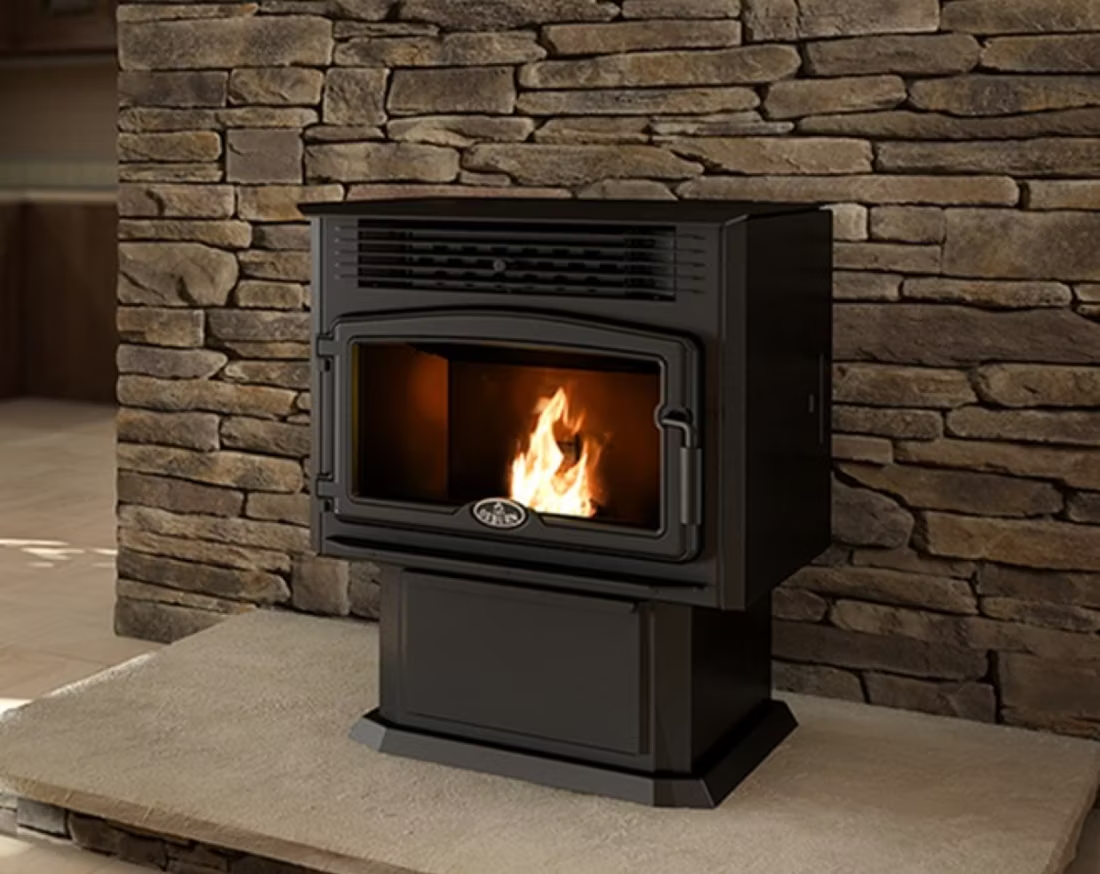
That's exactly where pellet appliances shine. There are no air quality restrictions or burn curtailment periods to navigate in Chattahoochee County, so the appeal of pellet stoves here is less about emissions rules and more about convenience: load the hopper, set the thermostat, and let the auger do the rest. It also helps that the fuel is regional—Lignetics, Hamer Pellet Fuel, and Greenway Renewable Energy all draw on the same Southern pine and hardwood supply that fills the oak, pine, and hickory stands along the Chattahoochee River bottomlands, so pellets sold locally aren't shipped in from across the country. For Fort Moore families who relocate every few years and don't want to build a woodpile, or for longtime Cusseta homeowners who want zone heat for a den or sunroom, a pellet stove is often the lowest-hassle way to add real warmth to a Georgia winter.
Three steps. No salesperson until you're ready.
Tell us about your project
Your zip code, your situation, and the fuel you're leaning toward—or let the answers point you to one.
See what's actually available
The brands dealers within 100 miles genuinely carry—real options, never a catalog mirage.
Get your dealer & Project Guide
A trusted local dealer, plus the free Project Guide & Parts List that names every component of the job.
Frequently Asked Questions
How much does a pellet stove installation cost in Chattahoochee County?
A freestanding pellet stove with a fresh-air vent kit typically installs for $3,000 to $6,500 in a market like Chattahoochee County, depending on the stove's hopper size, hearth pad requirements, and how far the vent run has to travel through an exterior wall. A pellet insert dropped into an existing masonry fireplace usually comes in on the lower end of that range since it reuses the chimney chase rather than requiring new wall penetrations. Because Chattahoochee County is a small rural county, most installers coordinate directly with the county building department or the City of Cusseta on permitting rather than leaving homeowners to chase it down themselves. A local dealer will give you a firm number after seeing your home.
What size pellet stove do I need for a Chattahoochee County home?
With only about 2,288 heating degree days a year and average winter lows sitting right around freezing, most homes here don't need a whole-home-rated pellet furnace—they need a stove sized to comfortably heat a den, living room, or open main floor. Small to medium units (rated for 1,000 to 1,800 square feet) cover the vast majority of Chattahoochee County homes, including the older farmhouses and ranch homes common around Cusseta. Larger, draftier homes or properties heating an addition without ductwork may want a mid-size unit with a bigger hopper for longer unattended burns. A local dealer can size this correctly in an in-home visit—oversizing a pellet stove in a mild climate like this one just means you're cycling the auger on low settings constantly instead of running it efficiently.
Where does pellet fuel come from for Chattahoochee County homes?
Pellet fuel sold in and around Chattahoochee County typically comes from regional producers—Lignetics, Hamer Pellet Fuel, and Greenway Renewable Energy all operate in the Southeast and mill pellets from the same oak, pine, and hickory sawmill byproducts common to this part of Georgia. That regional sourcing matters for two reasons: pellets don't have to travel far to reach local hardware stores and hearth dealers, and supply tends to hold up better in a short heating season like this one, when demand is lighter than in colder states. Expect to buy pellets by the 40-pound bag, typically sold by the pallet (usually 50 bags) for the best per-bag price if you're heating through a full winter.
Pellet stove vs. wood stove—which makes more sense in Chattahoochee County?
Wood is genuinely abundant here—oak, pine, and hickory line the Chattahoochee River bottomlands, and plenty of longtime residents already have a chainsaw and a place to stack a cord. A wood stove burns that fuel for free or near-free if you're cutting it yourself, and it works without electricity. A pellet stove trades that self-sufficiency for convenience: no splitting, no stacking, no creosote-heavy chimney sweep, just a hopper you fill every day or two and a thermostat that holds a steady room temperature. For Fort Moore families rotating through on a few years' assignment, or anyone who wants heat without the wood-handling labor, pellet is usually the easier fit. For homes with an existing woodpile and someone willing to tend a fire, wood still has its place.
Will my pellet stove work if the power goes out?
Not without help—pellet stoves rely on electricity to run the auger that feeds fuel, the igniter, and the combustion blower, so a power outage stops the stove even if the hopper is full. Much of Chattahoochee County is served by Diverse Power, and like anywhere, storms can knock out power for hours at a time. Homeowners who want pellet heat as backup during outages typically pair the stove with a small battery backup unit or a portable generator sized to run the stove's low electrical draw (most units pull well under 500 watts). If backup heat during outages is the priority over daily convenience, that's worth discussing with your dealer before you pick a model.
Do I need a permit to install a pellet stove in Chattahoochee County?
Yes—a building permit is standard for a new hearth appliance installation, whether that's through the Chattahoochee County building department or the City of Cusseta depending on where the home sits. There's no air quality non-attainment designation or burn curtailment period affecting Chattahoochee County, so the permit process here is about verifying clearances, venting, and hearth pad requirements rather than navigating emissions restrictions. Most local dealers handle the permit paperwork as part of the installation, so it's rarely something homeowners have to manage on their own.
What's the best pellet stove for a climate like Chattahoochee County's?
Because winter lows here hover around 32°F rather than the single digits you'd see farther north, the priority isn't maximum BTU output—it's a stove with a good low-burn setting so it doesn't overheat a room on a mild 45-degree evening. Look for models with a wide turn-down range and reliable auto-ignition, since you'll likely be starting and stopping the stove more often across a shorter heating season than a homeowner in a colder state would. Brands commonly stocked by dealers in this part of the Southeast—including Harman and England's Stove Works—build stoves well suited to that kind of intermittent, moderate-climate use. Your local dealer can match a specific model to your room size and how often you plan to run it.
How often does a pellet stove need to be serviced?
Pellet stoves need less maintenance than wood stoves but aren't maintenance-free. Plan on cleaning the burn pot and ash pan every few days during regular use, a deeper clean of the exhaust fan and heat exchanger tubes monthly, and a full annual service—vent inspection, gasket check, auger and motor once-over—before each heating season starts. Because Chattahoochee County's burn season is shorter than in colder climates, a single pre-season service each fall is usually enough for most households, rather than the mid-season cleanings that heavier wood-burning homes in colder states often need.
Pellet stove vs. gas fireplace—which is right for my home?
Gas fireplaces offer instant on-off operation with no fuel storage at all, which appeals to homeowners without room for a pallet of pellets. Pellet stoves burn a renewable, regionally sourced fuel, offer a more visible flame and real heat output for the square footage, and tend to cost less to run per BTU than propane, which is the common gas option in this part of rural Georgia. If you already have a propane tank and want the simplest possible operation, gas is worth a look. If you want a stronger heat source for a den or main living area and don't mind restocking fuel a few times a winter, pellet is usually the better value in a county with a heating season as short as Chattahoochee's.
How often does a pellet stove need cleaning?
A clean pellet stove is a happy pellet stove. Plan on cleaning the burn pot about once a week when you're burning regularly—ash and clinkers gum up the air holes just like a pellet barbecue. Most pellet stove problems trace back to skipped cleaning that nobody explained up front. Some designs make it easy with a trapdoor burn pot: pull a lever and the gunk drops into the ash pan.
Are pellet stoves loud?
They make some noise—there are two fans running plus an auger motor that turns as it feeds pellets. But there's a real range: premium models are engineered quiet, and the best offer a whisper-quiet mode you can comfortably watch TV next to. If noise matters in your room, ask to hear a stove running before you buy—it's a five-minute test that saves years of annoyance.
Does a fireplace add value to my home?
On average, a fireplace adds back to the home about the same amount you spent installing it. Add the monthly savings from heating the rooms you actually use instead of the whole house—often hundreds of dollars a year—and the value case is strong before you even count what a fire does for how your family uses the room.
Can a fireplace actually lower my heating bill?
Yes—by creating a comfort zone. A furnace heats every square foot of the house just to warm the one room you're in; a gas fireplace on low burns roughly a sixth of the gas a typical furnace does. Set the furnace around 55–60 degrees as a baseline, then heat the rooms your family actually uses. Families who heat this way commonly save $20–$60 a month.
Pellet Brands Stocked Around Chattahoochee County
Manufacturers will point you to the nearest stocking dealer.
Find your pellet stove in Chattahoochee County.
Tell us a bit about your home and we'll match you with the right pellet stove or insert, plus a free Project Guide & Parts List—and connect you with a trusted local dealer serving Cusseta and the rest of the county.
Find Your Fireplace →