
Instant warmth for Chattahoochee County's mild winters.
With winter lows that rarely dip much below freezing, an electric fireplace gives Cusseta and Fort Moore-area homes real ambiance and supplemental warmth—no chimney, no gas line, no venting. We'll match you with a trusted local dealer who installs it right.
Every Project Starts From One of These Five Situations
Low heating demand, high flexibility.
Chattahoochee County sits in climate zone 3A, with an average winter low around 32°F and roughly 2,288 heating degree days a year—a fraction of what colder parts of the country see. That's a mild season by any measure, closer to the demands of a Gulf Coast winter than a mountain one. The county's oak, pine, and hickory forests have supported generations of wood heat, and with no air quality restrictions or burn bans on the books, wood is still a fine option here. But for a lot of the roughly 9,400 residents—many connected to Fort Moore or living in Cusseta rental housing—an electric unit is simply the more practical fit for how mild and short the heating season actually runs.
Electric fireplaces don't need a chimney, a gas line, or a masonry opening—they plug into a standard outlet or a dedicated circuit, and they heat a single room effectively without asking your central system to work overtime. That matters in a county where a large share of housing turns over with military rotations at Fort Moore: an electric insert or wall unit is easy to install, easy to remove, and doesn't tie a tenant or homeowner to permanent venting work. A trusted local dealer will size the unit to your room, confirm whether your circuit can handle it, and if it's a built-in model, coordinate the wiring and permit with the Chattahoochee County Building Department.
Three steps. No salesperson until you're ready.
Tell us about your project
Your zip code, your situation, and the fuel you're leaning toward—or let the answers point you to one.
See what's actually available
The brands dealers within 100 miles genuinely carry—real options, never a catalog mirage.
Get your dealer & Project Guide
A trusted local dealer, plus the free Project Guide & Parts List that names every component of the job.
Frequently Asked Questions
How much does an electric fireplace installation cost in Chattahoochee County?
Most electric fireplace projects in Chattahoochee County run between $400 and $1,500. A plug-in insert or mantel package that drops into an existing opening sits at the low end—you're mainly paying for the unit and a straightforward hookup. A built-in wall unit or a linear electric fireplace that requires a new dedicated circuit, wall framing, or drywall patching runs toward the higher end once an electrician is involved. Because Chattahoochee County's winters are mild, most homeowners here aren't trying to heat a whole house with the unit—they're paying for a focused heat source in one room, which keeps the project smaller and more affordable than a wood or gas install.
Will an electric fireplace actually heat a room, or is it just for looks?
A quality electric fireplace with a built-in heater—typically a 1,500-watt unit putting out around 5,000 BTUs—will comfortably take the chill off a single room, which is exactly the kind of heating job most Chattahoochee County homes need. With an average winter low near 32°F and only about 2,288 heating degree days a year, the county doesn't see the sustained deep-cold stretches that demand a whole-home heat source. Most owners run the flame year-round for ambiance and flip on the heater only during the occasional cold snap, using it to supplement a central system rather than replace it.
Do I need a permit for an electric fireplace in Chattahoochee County?
A plug-in electric fireplace or insert that runs off an existing standard outlet doesn't require a permit—it's treated like any other appliance. If you're installing a built-in wall unit that needs a new dedicated circuit, additional wiring, or framing changes, that electrical work does require a permit through the Chattahoochee County Building Department, and it should be pulled by a licensed electrician. This is one of the easier permitting paths in hearth products, but skipping it on a hardwired unit can create issues at resale or with insurance if there's ever an electrical incident.
Is electric a good fit for rental housing or Fort Moore-area military housing?
Yes—it's often the best fit. A large share of Chattahoochee County's housing turns over regularly with Fort Moore rotations, and electric fireplaces are the one hearth option that moves with you. A freestanding or insert-style unit can be unplugged and taken to the next assignment, and even a wall-mount model can typically be removed without leaving structural damage behind. There's no chimney to maintain, no gas line to cap, and no wood storage to manage—practical advantages for anyone who isn't planning to stay in one house for decades.
What's the difference between an electric insert, a wall-mount unit, and a freestanding electric stove?
An electric insert is built to slide into an existing fireplace opening, replacing an old wood-burning firebox (or a fireplace you never use) with a clean, low-maintenance heat source. A wall-mount or linear electric fireplace is a built-in unit set into new framing or a media wall—common in newer Chattahoochee County construction where there's no existing fireplace to work with. A freestanding electric stove sits on the floor like a traditional wood stove but plugs into an outlet, which works well in homes without any masonry opening at all. For most county homes with an existing fireplace, an insert is the simplest upgrade; new construction and remodels tend to lean toward wall-mount units.
Electric vs. wood—which makes more sense for my Chattahoochee County home?
Wood still has a real place here—the county's oak, pine, and hickory supply is abundant, there are no air quality restrictions or burn bans to work around, and a wood stove keeps working during a power outage, which an electric unit cannot. But given how mild the winters run—average lows around 32°F and roughly 2,288 heating degree days—most homes don't need wood's heat output to get through the season. Electric wins on convenience: no ash, no chimney maintenance, no permit hassle for a plug-in unit, and it's a much easier fit for rental and Fort Moore-area housing that changes hands often. If you want a genuine backup heat source for storm season, wood or a vented gas unit is the better call; if you want low-maintenance warmth and ambiance, electric is hard to beat.
Electric vs. gas—which is right for my home?
Gas fireplaces put out more consistent, higher heat output and can run on propane where natural gas isn't available, which matters more in a county without extensive natural gas infrastructure. Electric fireplaces are simpler and cheaper to install, require no venting or gas line, and work anywhere there's an outlet—but they're best suited to supplemental heat in one room rather than serious heating output. In a climate as mild as Chattahoochee County's, that lower output is rarely a drawback. If you're renovating a room with no existing gas access and just want reliable ambiance and light supplemental heat, electric is usually the more cost-effective path; if you want a fireplace that can genuinely carry a room's heating load, gas is worth the extra install cost.
What should I look for in an electric fireplace for this climate?
Since the unit's heater is mainly there for shoulder-season chill rather than deep-winter heating, prioritize flame realism and room fit over raw heat output—brands like Dimplex, Napoleon, and Touchstone all make well-regarded units in insert, wall-mount, and freestanding styles. Look for a thermostat with adjustable heat settings so you can run flame-only during Chattahoochee County's long mild stretches and add heat only when a cold front actually comes through. A local dealer can also confirm whether your planned location needs a dedicated circuit before you buy, which avoids a surprise electrical bill after the fact.
How do I find a trustworthy installer for an electric fireplace near me?
For a simple plug-in insert, any competent handyman can handle the physical installation, but for a built-in wall unit that needs new wiring, you want a licensed electrician—ideally one who has coordinated with the Chattahoochee County Building Department on similar permits before. A hearth dealer who regularly works in the county can tell you quickly whether your fireplace opening or wall cavity will fit a given model, size the heater to your room, and flag any circuit limitations before installation day rather than after the drywall's back up.
Do electric fireplaces actually produce heat?
Yes—most put out around 4,800–5,000 BTUs from a standard outlet, which comfortably warms a bedroom, office, or den as a comfort-zone heater. What they won't do is carry a whole house the way wood, gas, or pellet can. Think of electric as ambiance-first with honest supplemental heat: flames on with no heat in July, flames plus warmth in January.
Can I put a TV above my fireplace?
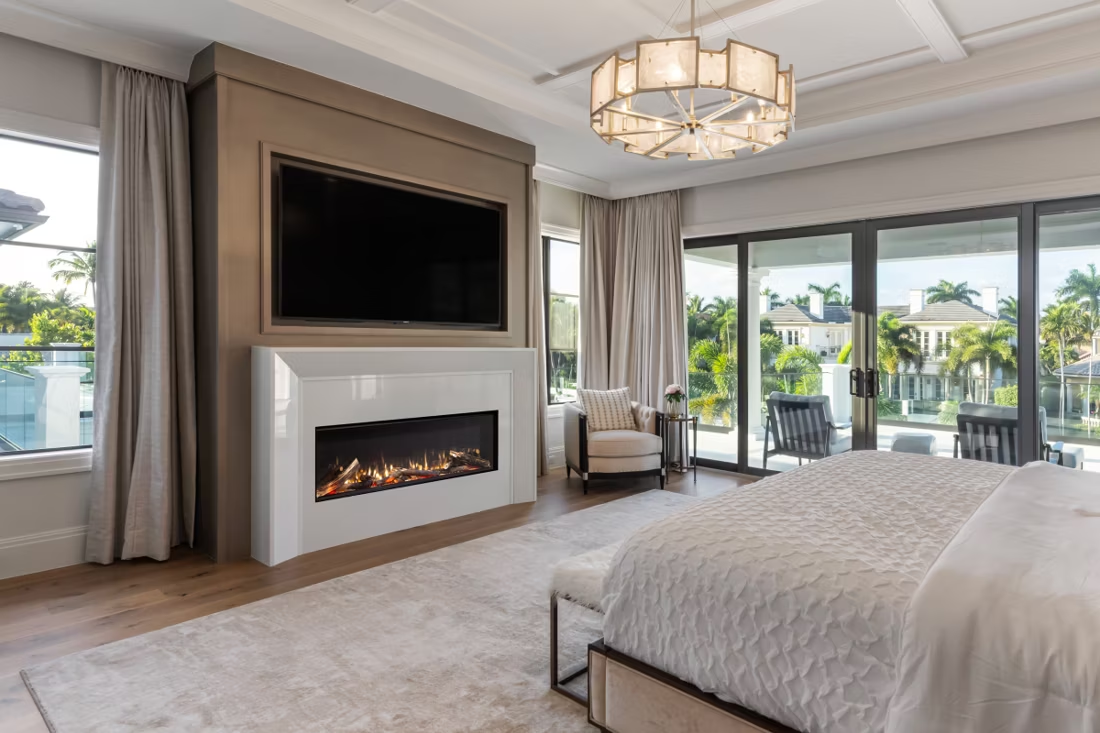
Yes—with an asterisk. Fireplaces are hot and TVs don't like heat. Either put a mantel between them to deflect rising warmth, or choose a fireplace with heat-management technology that creates a cool zone on the wall above—the wall stays around 125 degrees, barely warm, while the room still gets full heat. If you like clean lines and don't want a mantel, heat management is the answer.
Can a fireplace actually lower my heating bill?
Yes—by creating a comfort zone. A furnace heats every square foot of the house just to warm the one room you're in; a gas fireplace on low burns roughly a sixth of the gas a typical furnace does. Set the furnace around 55–60 degrees as a baseline, then heat the rooms your family actually uses. Families who heat this way commonly save $20–$60 a month.
Does a fireplace add value to my home?
On average, a fireplace adds back to the home about the same amount you spent installing it. Add the monthly savings from heating the rooms you actually use instead of the whole house—often hundreds of dollars a year—and the value case is strong before you even count what a fire does for how your family uses the room.
Find your electric fireplace in Chattahoochee County.
Tell us a bit about your home and we'll put together a free Project Guide & Parts List—the right electric fireplace or insert for your room, the wiring and mounting details, and a trusted local dealer near Cusseta or Fort Moore to install it.
Find Your Fireplace →