
A Niche Fit For Carrollton's Mild Winters.
Pellet heat isn't the default here the way it is in colder parts of the country, but for the right home and the right reason, it still has a place. We'll help you figure out if it's yours.
Every Project Starts From One of These Five Situations
Pellet stoves aren't the default heat source here.
Carrollton sits in climate zone 3A at just over 1,000 feet elevation, with an average winter low around 32°F and a mild, short heating season each year. Compare that to a place like Duluth, MN, which sees a heating season nearly three times as long and severe, and you can see why most Carroll County homes are built around gas furnaces or electric heat pumps rather than a dedicated solid-fuel heating appliance. A pellet stove sized for a hard winter in the Upper Midwest would be badly oversized for the handful of genuinely cold weeks Carrollton sees each year.
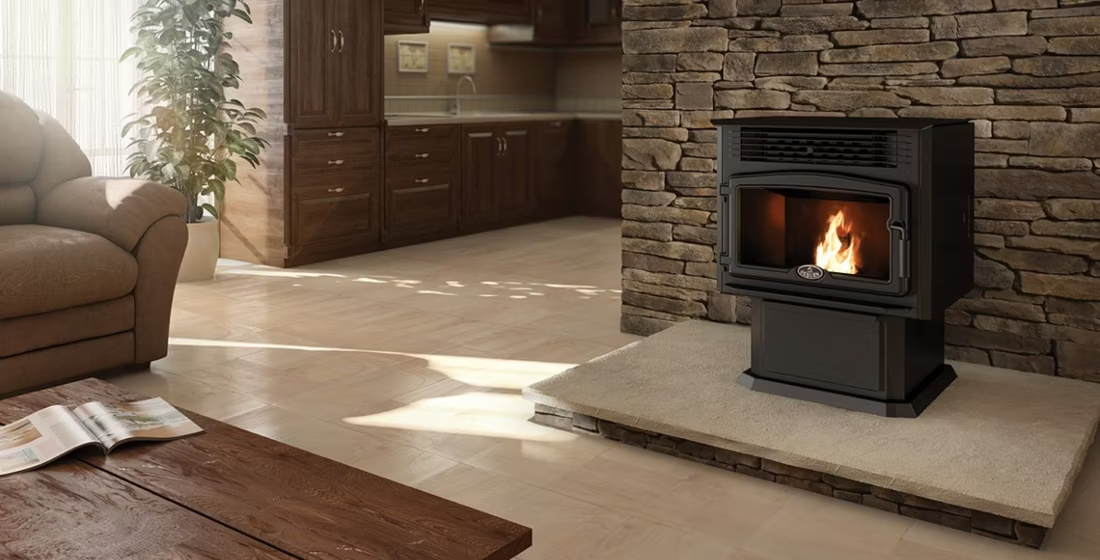
That said, pellet stoves and inserts do show up here—usually as a secondary heat source for a sunroom, a converted basement, an older farmhouse with an underperforming fireplace, or simply because a homeowner likes the look of a real flame without stacking and seasoning firewood. Pellets themselves aren't hard to find; Southeastern producers like Lignetics, Hamer Pellet Fuel out of Baxley, and Greenway Renewable Energy all distribute into Georgia. And because Carrollton has no listed air quality restrictions on solid-fuel appliances, there's no burn-ban season to plan around the way there is in parts of the West.
Three steps. No salesperson until you're ready.
Tell us about your project
Your zip code, your situation, and the fuel you're leaning toward—or let the answers point you to one.
See what's actually available
The brands dealers within 100 miles genuinely carry—real options, never a catalog mirage.
Get your dealer & Project Guide
A trusted local dealer, plus the free Project Guide & Parts List that names every component of the job.
Frequently Asked Questions
How much does a pellet stove installation cost in Carrollton?
Because pellet stoves are a specialty install rather than a standard one in this market, expect to pay in the range most installers quote nationally for a freestanding unit or insert with proper venting—typically $3,000 to $6,000 depending on the model, chimney or wall-vent configuration, and whether an existing masonry fireplace needs to be adapted. There are fewer dedicated pellet installers in Carroll County than there would be in a colder climate, so it's worth confirming a dealer has actually installed pellet appliances before, not just gas or wood units.
Are pellet stoves actually common in Carrollton, or am I an outlier for wanting one?
You'd be in the minority, and it's worth going in with clear eyes about that. With only a mild, short heating season each year and winter lows that average 32°F, most Carroll County homes heat with a gas furnace or an electric heat pump from Georgia Power or Carroll EMC—a full-time wood-pellet heating system doesn't pencil out for most households here the way it does in a place like Fargo, ND. Where pellet stoves do make sense locally is as a secondary or occasional-use appliance: a sunroom, a workshop, an older home with drafty rooms, or simply for homeowners who want the ambiance and control of a real-flame appliance without the wood storage that comes with a traditional wood stove.
Where can I buy pellet fuel near Carrollton?
Pellets aren't stocked on every hardware store shelf in this part of Georgia the way they are farther north, but they're not hard to source. Lignetics and Hamer Pellet Fuel (produced in Baxley, GA) both distribute into the region, and Greenway Renewable Energy is a Southeastern producer as well. Farm supply stores and some hearth retailers in the Carrollton area special-order or stock bags seasonally. Pricing runs roughly $250 to $350 per ton in the Southeast, though it's smart to call ahead in early fall—demand and inventory can be inconsistent when pellet stoves are a smaller share of the local heating market.
Will a pellet stove keep my house warm if the power goes out?
No—this is one of the most important things to understand before choosing pellet over wood. A pellet stove's auger and combustion blower both run on household electricity, so a power outage shuts it down even with a full hopper. Some models accept a battery backup or small generator, but that's an add-on, not a default feature. If backup heat during a Georgia Power or Carroll EMC outage is your main concern, a wood stove or a battery-free gas fireplace with a standing pilot is a more reliable choice than pellet.
Pellet stove vs. gas fireplace—which fits a Carrollton home better?
For most homes in Carrollton, gas is the more natural fit. Gas fireplaces and inserts turn on instantly, need no fuel storage, and pair easily with the natural gas or propane service already common in the area. A pellet stove requires a hopper you refill regularly, ash removal, and a dedicated 120V outlet nearby—more maintenance for a climate that only asks for supplemental heat a few weeks a year. Pellet still wins for homeowners who specifically want the look and control of a solid-fuel fire without cutting or stacking wood, but it's a preference-driven choice here, not a climate-driven one.
Do I need a permit to install a pellet stove in Carrollton?
Most likely yes—a building permit through the Carroll County Building Department (or the City of Carrollton, depending on your address) is standard for any new solid-fuel appliance installation, covering the appliance clearances and vent termination. Because pellet installs are less common locally, ask your installer directly whether they're pulling the permit as part of the job—with wood and gas being far more frequent requests, it's worth confirming this step doesn't get skipped.
What size pellet stove do I need for a Carrollton home?
Given the mild climate here, oversizing is the more common mistake. A small pellet stove (rated around 40,000–50,000 BTU) is plenty for a sunroom, den, or single large living area in a Carroll County home—you rarely need a unit sized for whole-home primary heat the way a homeowner in Bismarck, ND, might. If you're hoping to offset your Georgia Power or Carroll EMC bill in a specific room during the coldest weeks of January and February, a smaller unit paired with a programmable thermostat setting is usually the more practical and comfortable choice.
How much maintenance does a pellet stove need?
Pellet stoves need the ash pan emptied every few days of regular use, the burn pot scraped weekly, and the glass wiped down periodically—plus an annual professional cleaning of the exhaust venting and combustion blower. Given that Carrollton's mild winters mean lighter, more occasional use than in colder states, many local owners find their maintenance schedule stretches longer than the manufacturer's cold-climate guidelines assume—but the annual inspection before the appliance sits idle for eight or nine months a year is still worth keeping on the calendar.
Pellet vs. electric heat—which makes more sense in a mild climate like Carrollton's?
For whole-home heating, electric usually wins here. With Georgia Power residential rates around $0.155/kWh and Carroll EMC closer to $0.134/kWh, a heat pump is efficient and requires zero fuel handling—a strong match for a climate with only a mild, short heating season each year. Pellet makes more sense as a supplemental, zone-heating choice: warming a specific room during a cold snap, adding ambiance, or reducing reliance on the central system for the handful of genuinely cold nights Carroll County sees each winter. Neither is really a backup for power-outage heat, since both pellet stoves and heat pumps depend on electricity to run.
How often does a pellet stove need cleaning?
A clean pellet stove is a happy pellet stove. Plan on cleaning the burn pot about once a week when you're burning regularly—ash and clinkers gum up the air holes just like a pellet barbecue. Most pellet stove problems trace back to skipped cleaning that nobody explained up front. Some designs make it easy with a trapdoor burn pot: pull a lever and the gunk drops into the ash pan.
Why is a fireplace insert so efficient?
An insert does two things: it seals the chimney completely, so you stop losing air you already paid to heat, and it radiates warmth into the room through the firebox and glass. Most add a heat-exchange fan that pulls cool room air underneath, wraps it around the hot firebox, and pushes it back out warm. Your home is more efficient before you've even lit the first fire.
What is an in-home preview and do I need one?
It's a visit where a hearth professional measures your space, confirms the model you picked actually works in your home, and walks the specs—framing, gas line, venting, finish work—before anything is ordered. Some details you just can't know until you see the house. Never make a down payment without one; it's the single most-skipped step that burns buyers.
How much should I budget for a fireplace?
For an average home—covering the fireplace, the vent pipe, and basic installation—a budget between $3,900 and $5,500 gives you a lot of options across wood, gas, and pellet. By the time you add finish work, gas line, and electrical, the average complete installation lands between $5,000 and $12,000 all-in. In a remodel or new build, a good rule is to put about 2.5% of the total project cost toward the fireplace.
Nearby Dealers
Hearth shops serving Carrollton and the surrounding area.
Pellet Brands Stocked Around Carrollton
Manufacturers will point you to the nearest stocking dealer.
Find your pellet stove in Carrollton.
Tell us a bit about your home and how you plan to use it, and we'll match you with a trusted local dealer plus a free Project Guide & Parts List—sized right for a Carrollton home, not a Northern one.
Find Your Fireplace →