
Steady, clean-burning heat for Carroll County homes.
From Carrollton and Villa Rica out to Temple, Bowdon, and Whitesburg, a pellet stove gives west Georgia homes an easy, thermostat-simple heat source. Tell us about your home and we'll match you with a local dealer who can size it right.
Every Project Starts From One of These Five Situations
A clean, low-fuss option for west Georgia winters.
Carroll County sits along the I-20 corridor in west Georgia, home to Carrollton, Villa Rica, and the University of West Georgia, with about 61,853 residents spread across a mix of college-town neighborhoods and rural acreage toward Bowdon and Roopville. Winters here are mild by national standards—average lows around 32°F and a winter heating load that's just a fraction of what a place like Duluth, MN sees in a single season. Most Carroll County homes lean on heat pumps or central HVAC for the bulk of the winter, which is exactly the kind of climate where a pellet stove earns its keep as targeted, supplemental heat rather than a whole-home necessity.
Local hearth shops in the region carry pellet fuel from brands like Lignetics, Hamer Pellet Fuel, and Greenway Renewable Energy, so keeping a hopper stocked through a Georgia winter isn't a supply problem. With no air quality non-attainment restrictions in Carroll County, homeowners have flexibility to choose between pellet and wood—oak, pine, and hickory are all common locally—but pellet stoves win out for people who want consistent heat without splitting, stacking, or sweeping a chimney. A pellet insert or freestanding unit also skips the masonry requirement entirely, which makes it a realistic retrofit even in newer Carroll County subdivisions that were never built with a fireplace.
Three steps. No salesperson until you're ready.
Tell us about your project
Your zip code, your situation, and the fuel you're leaning toward—or let the answers point you to one.
See what's actually available
The brands dealers within 100 miles genuinely carry—real options, never a catalog mirage.
Get your dealer & Project Guide
A trusted local dealer, plus the free Project Guide & Parts List that names every component of the job.
Frequently Asked Questions
How much does a pellet stove installation cost in Carroll County?
Pellet stove installations in Carroll County typically run in the $3,000 to $6,000 range, depending on the unit, whether it's a freestanding stove or an insert going into an existing fireplace opening, and how much venting work is required. Because pellet stoves vent through a small-diameter pipe rather than a full masonry chimney, install costs generally land lower than a comparable wood-burning setup. A local dealer will give you a firm number after walking your home and confirming the venting path.
What size pellet stove do I need for my Carroll County home?
Given the region's mild winters, most Carroll County homeowners are heating a specific zone—a den, a great room, an addition—rather than trying to replace central heat entirely. A small to mid-size pellet stove (rated for 1,000-1,800 sq ft) is enough for most single rooms or open floor plans in the area, and it's common to undersize slightly here compared to what a dealer in a colder climate would recommend, since you're supplementing a heat pump rather than fighting single-digit nights. A local retailer can size it based on your actual layout and how you plan to use it—daily supplemental heat versus occasional-use backup.
Where can I find a qualified pellet stove installer near me?
Look for installers with NFI (National Fireplace Institute) pellet-specific certification—it's a distinct credential from wood or gas certification and covers the auger, hopper, and combustion-blower systems unique to pellet appliances. Dealers serving Carrollton and Villa Rica typically cover the rest of the county, including Temple, Bowdon, and Whitesburg, sometimes with a small travel charge for the more rural addresses. Because pellet stoves are electrically dependent and mechanically more complex than a simple wood stove, it's worth choosing an installer who also handles warranty service, not just the initial setup.
What's the difference between a pellet stove and a pellet insert?
A pellet stove is a freestanding unit that sits on its own hearth pad and can go almost anywhere in a room with the right clearances and a vent run to the exterior. A pellet insert is built to slide into an existing masonry fireplace opening, using the existing chimney chase (with a proper liner) for venting. For Carroll County homes with an older fireplace that rarely gets used, an insert is often the simpler upgrade—it reuses infrastructure you already have. Homes without a fireplace, including many newer builds around Carrollton and Villa Rica, are better suited to a freestanding stove.
Do I need a permit to install a pellet stove in Carroll County?
In most cases, yes—a new solid-fuel or pellet-burning appliance installation requires a building permit. If your home is within Carrollton, Villa Rica, or another incorporated city, check with that city's permitting office; in unincorporated Carroll County, the county building department handles it. Most local hearth dealers pull the permit as part of the installation and coordinate the inspection, so it's rarely something the homeowner has to manage directly.
What's the best pellet stove for a Carroll County home?
Because Carroll County winters are mild—average lows near 32°F rather than sustained deep freezes—you don't need the biggest catalytic-style unit on the market. Mid-size stoves from mainstream pellet manufacturers pair well here, and fuel is easy to keep on hand: Lignetics, Hamer Pellet Fuel, and Greenway Renewable Energy all supply the region, so you're not dependent on a single source. Look for a unit with a reliable auger feed and an easy-clean burn pot, since most Carroll County owners run these seasonally rather than around the clock. A local dealer can point you toward the specific models they stock and service.
How much maintenance does a pellet stove actually need?
Less than a wood stove, but it's not zero-maintenance. Expect to empty the ash pan every few days during regular use, clean the burn pot and glass weekly, and have the unit professionally serviced once a year—typically before the start of the season in early fall. Annual service includes cleaning the exhaust venting, checking the auger and blower motors, and inspecting gaskets. Given Carroll County's short, mild burning season, most homeowners here find one annual service call is plenty.
Where can I buy pellet fuel in Carroll County?
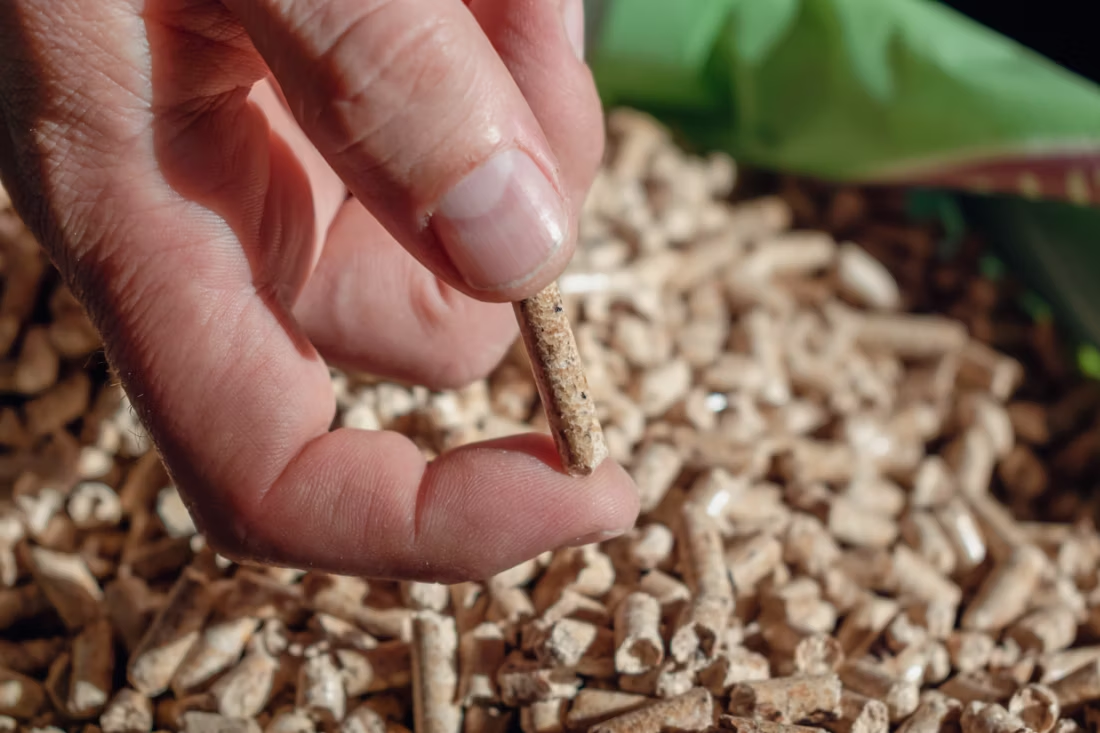
Wood pellets from brands like Lignetics, Hamer Pellet Fuel, and Greenway Renewable Energy are stocked seasonally at hearth shops and some hardware and farm-supply stores throughout the region, sold by the 40-lb bag or by the ton. Buying a full ton (about fifty bags) ahead of the season, rather than bag-by-bag as needed, is usually the better value and guarantees you're not scrambling to find fuel during a cold snap. Your local dealer can tell you which brands they stock and whether they offer seasonal pre-buy pricing.
Pellet stove vs. wood stove—which makes more sense in Carroll County?
Wood is the traditional choice here—oak, pine, and hickory are all common locally, and with no air quality restrictions in Carroll County, there's no regulatory reason to avoid it. Wood also keeps working during a power outage, which matters when an ice storm knocks out electricity, since pellet stoves need power to run the auger and combustion blower. Pellet stoves win on convenience—no splitting or stacking, a thermostat-controlled burn, and a cleaner, lower-maintenance appliance day to day. For most Carroll County homes using a stove as supplemental heat rather than an emergency backup, pellet is the easier fit; for homes that specifically want off-grid heat during outages, wood is worth a serious look.
What's the difference between an insert and a zero-clearance fireplace?
An insert is a fireplace that slides into a pre-existing wood-burning fireplace—if you don't have one, there's nothing to insert it into. A zero-clearance fireplace is built into a framed wall, which makes it the answer for remodels and new construction. Simple test: existing masonry fireplace means insert; blank or framed wall means zero-clearance.
How often does a pellet stove need cleaning?
A clean pellet stove is a happy pellet stove. Plan on cleaning the burn pot about once a week when you're burning regularly—ash and clinkers gum up the air holes just like a pellet barbecue. Most pellet stove problems trace back to skipped cleaning that nobody explained up front. Some designs make it easy with a trapdoor burn pot: pull a lever and the gunk drops into the ash pan.
Can I install a fireplace myself?
If you're putting a fire in your house on purpose, it's best to work with an expert. Unless you're genuinely experienced in framing, gas line, vent pipe, and the national code on clearances to combustibles, have a professional do it—and ideally the same company that sells you the fireplace, so warranty, service, and liability all live under one roof.
Should the dealer who sells my fireplace also install it?
Ideally, yes. A fireplace project involves vent pipe, gas line, electrical, and often tile or stone. Hire three or four separate trades and you own the liability and the game of telephone between them. One company selling and installing means one accountable party, start to finish—ask about factory training, on-time completion records, and what happens if an inspection fails.
Stove and Fireplace Dealers in Carroll County
Pellet Brands Stocked Around Carroll County
Manufacturers will point you to the nearest stocking dealer.
Find your pellet stove in Carroll County.
Tell us about your home and how you plan to use it, and we'll match you with a trusted local dealer plus a free Project Guide & Parts List—the exact parts, including the vent kit, for your Carroll County pellet stove project.
Find Your Fireplace →