
Consistent, low-fuss heat built for Burke County's short winters.
With average winter lows around 34°F and just 2,447 heating degree days, Burke County doesn't need a wood-fired furnace running around the clock—it needs a stove that turns on, holds a steady temperature, and turns off. Find the right pellet unit and connect with a trusted local dealer.
Every Project Starts From One of These Five Situations
Steady heat without turning heating into a daily chore.
Burke County sits in the Central Savannah River Area southwest of Augusta, a rural stretch of timberland and farmland anchored by Waynesboro. Climate zone 3A means hot, humid summers and winters that rarely turn brutal—the 34°F average winter low and 2,447 heating degree days are a fraction of what a place like Duluth, MN sees in a single cold month. That's exactly the profile where a pellet stove earns its keep: enough cold nights to want real supplemental heat in a den, sunroom, or workshop, but not enough sustained cold to justify a wood-burning setup sized for round-the-clock use.
The county's oak, pine, and hickory timberland also puts it in good company—Georgia is one of the largest wood pellet-producing states in the country, and that regional manufacturing base helps keep supply steady at farm stores and hearth dealers throughout the CSRA. Local shelves typically carry Lignetics, Hamer Pellet Fuel, and Greenway Renewable Energy bags, so running out mid-February isn't the concern it can be in colder, more remote parts of the country. And with no air quality non-attainment designations or winter inversion advisories in Burke County, there are no curtailment days to plan around—you burn when you want heat.
Three steps. No salesperson until you're ready.
Tell us about your project
Your zip code, your situation, and the fuel you're leaning toward—or let the answers point you to one.
See what's actually available
The brands dealers within 100 miles genuinely carry—real options, never a catalog mirage.
Get your dealer & Project Guide
A trusted local dealer, plus the free Project Guide & Parts List that names every component of the job.
Frequently Asked Questions
How much does a pellet stove installation cost in Burke County?
A freestanding pellet stove installation in Burke County typically runs $3,500 to $7,000, depending on the unit, whether you need a new through-wall vent kit run, and any hearth pad work required for clearance. Because pellet stoves vent through a smaller-diameter pipe than wood stoves and don't require a full masonry chimney, installs are often faster and less expensive than a comparable wood setup—especially in a newer Burke County home without an existing chimney to work around. A local dealer will give you a firm number after seeing your wall or room layout in person.
What size pellet stove do I need for my home?
Given Burke County's mild winter profile, most homes do fine with a small to mid-size pellet stove rather than a large primary-heat unit. A stove in the 1,000–1,800 sq ft range covers most single-story homes and doubles as reliable heat for a den or great room, while smaller units are plenty for a sunroom, workshop, or converted outbuilding. Because the region rarely sees sustained sub-freezing stretches, oversizing is the more common mistake locally—a stove sized for a much colder climate will cycle on low output more than it should. A local dealer can walk through your square footage and insulation to land on the right BTU range.
Where can I find certified pellet stove installers near me?
Look for installers familiar with NFI (National Fireplace Institute) pellet specialty certification, which covers the electrical, venting, and clearance requirements specific to pellet appliances. Dealers serving Burke County and the wider CSRA typically handle both the sale and the install, which keeps warranty coverage and code compliance under one roof. Because pellet stoves are less common here than in colder parts of the country, it's worth confirming the installer has actually set up pellet units before—not just wood stoves or gas inserts—since the auger, hopper, and vent-kit requirements are different enough to matter.
What's the difference between a pellet stove and a pellet insert?
A pellet stove is a freestanding unit that sits on a hearth pad and vents through a wall or existing chimney—it can go almost anywhere with a nearby electrical outlet and a short vent run. A pellet insert is built to slide into an existing masonry fireplace opening, which is a common upgrade for older Burke County farmhouses that have an open fireplace they rarely use because it barely heats the room. Either way, both require electricity to run the auger and combustion blower, so they're not a stand-in for a wood stove during an extended power outage.
Do I need a permit to install a pellet stove in Burke County?
Yes—a new pellet stove installation generally requires a building permit through the Burke County Building Department, covering the appliance clearance, hearth pad, and vent termination location. Most local dealers include the permit paperwork as part of the installation, so you're not filing it yourself. There are no air quality curtailment periods to worry about in Burke County, unlike in wildfire-prone or inversion-prone western regions—once the unit is permitted and installed, you're free to run it whenever you want heat.
What's the best pellet stove for Burke County's climate?
Because Burke County's heating season is short and rarely severe, a mid-efficiency pellet stove with a good low-burn setting matters more here than maximum BTU output. Look for models with a wide feed-rate range so the stove can idle efficiently on a 45°F evening instead of just blasting full output—brands like Harman, Englander, and Lopi all offer units with that flexibility. A local dealer familiar with the region's mild-winter demand can point you toward a model that won't feel oversized on the average January night.
How much maintenance does a pellet stove need?
Pellet stoves need more routine attention than a gas unit but less than a wood stove. Plan on emptying the ash pan every few days during regular use, a full glass and burn-pot cleaning weekly, and an annual professional service to check the auger motor, combustion blower, and venting. Given Burke County's shorter burning season compared to colder parts of the country, most homeowners here get by with lighter overall maintenance simply because the stove logs fewer total hours per winter.
Where can I buy pellets locally in Burke County?
Regional brands including Lignetics, Hamer Pellet Fuel, and Greenway Renewable Energy are commonly stocked at farm supply stores and hearth dealers throughout the CSRA, with bagged pellets typically running in the $5–$7 per 40-lb bag range, or roughly $250–$300 per ton when bought by the pallet. Because Georgia has a substantial wood pellet manufacturing base tied to its oak, pine, and hickory timber industry, local supply tends to stay steady through winter—stocking up early in the season is still smart, but the shortages that hit some regions are less of a concern here.
Pellet stove vs. electric heat—which makes more sense in Burke County?
With only 2,447 heating degree days and winter lows that average 34°F, a lot of Burke County homes already lean on electric heat pumps or space heaters for the bulk of the season, and that's a reasonable approach given how mild the winters run. A pellet stove makes the most sense as a supplemental heat source for a specific room—a den, sunroom, or workshop—where you want a stronger, more consistent radiant heat than a space heater provides, or where you'd rather not run central heat for one room on a cool evening. Electric wins on simplicity and zero venting; pellet wins on heat output and the ambiance of a real flame. Many local homeowners end up running both, using the pellet stove on the coldest nights of the year and electric heat the rest of the time.
Why is my open fireplace making my house colder?
Open fireplaces suck—literally. As the fire burns, it consumes air your furnace already paid to heat and pulls it out through the chimney, so the house is actually colder after the fire goes out than before you lit it. An insert fixes this: it seals the chimney, puts fixed glass across the front, and turns that hole in your house into a real heat source.
How often does a pellet stove need cleaning?
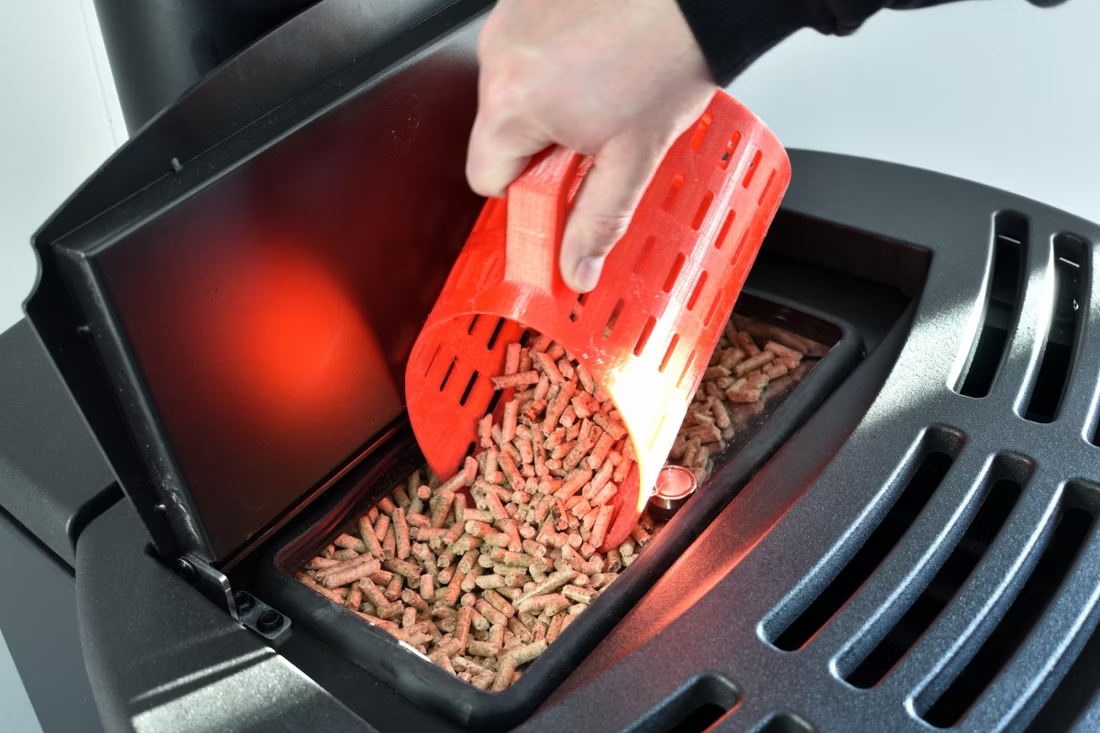
A clean pellet stove is a happy pellet stove. Plan on cleaning the burn pot about once a week when you're burning regularly—ash and clinkers gum up the air holes just like a pellet barbecue. Most pellet stove problems trace back to skipped cleaning that nobody explained up front. Some designs make it easy with a trapdoor burn pot: pull a lever and the gunk drops into the ash pan.
Does a fireplace add value to my home?
On average, a fireplace adds back to the home about the same amount you spent installing it. Add the monthly savings from heating the rooms you actually use instead of the whole house—often hundreds of dollars a year—and the value case is strong before you even count what a fire does for how your family uses the room.
What is an in-home preview and do I need one?
It's a visit where a hearth professional measures your space, confirms the model you picked actually works in your home, and walks the specs—framing, gas line, venting, finish work—before anything is ordered. Some details you just can't know until you see the house. Never make a down payment without one; it's the single most-skipped step that burns buyers.
Stove and Fireplace Dealers in Burke County
Pellet Brands Stocked Around Burke County
Manufacturers will point you to the nearest stocking dealer.
Find your pellet stove in Burke County.
Tell us a bit about your home and we'll put together a free Project Guide & Parts List—the right pellet stove or insert, the vent kit it needs, and a trusted local Burke County dealer to install it.
Find Your Fireplace →