
Instant warmth for Burke County's mild Georgia winters.
With winter lows averaging 34°F and a heating season that's short and mild, Burke County doesn't need a furnace running around the clock—but a gas fireplace still earns its keep on the cold fronts that push through Waynesboro, Girard, Midville, and Sardis every January. Find the right unit and connect with a trusted local dealer.
Every Project Starts From One of These Five Situations
Reliable warmth without the wood-splitting.
Burke County sits in climate zone 3A, one of the mildest heating climates in the country—for comparison, a place like Duluth, Minnesota has a winter heating season more than four times as demanding as Burke County's. Most of the roughly 8,160 residents spread across Waynesboro, Girard, Midville, Sardis, and Keysville have relied on wood heat for generations, with oak, pine, and hickory readily available from local timberland. But a real fire still takes splitting, stacking, and tending—and on the handful of nights each winter when temperatures actually drop into the 20s, a lot of homeowners here would rather flip a switch than build a fire.
That's where gas fireplaces have found a steady following in Burke County—mostly as a second hearth alongside an existing wood setup, or as the primary fireplace in newer homes and remodels. Natural gas service is limited mostly to in-town Waynesboro; homeowners in the more rural stretches of the county typically run on propane, either from an existing tank or a new one set by a regional supplier. Either fuel path gets you the same result: a fireplace that lights on demand, holds a steady flame through a cold front, and doesn't ask you to keep a woodpile dry.
Three steps. No salesperson until you're ready.
Tell us about your project
Your zip code, your situation, and the fuel you're leaning toward—or let the answers point you to one.
See what's actually available
The brands dealers within 100 miles genuinely carry—real options, never a catalog mirage.
Get your dealer & Project Guide
A trusted local dealer, plus the free Project Guide & Parts List that names every component of the job.
Frequently Asked Questions
How much does a gas fireplace installation cost in Burke County?
Most gas fireplace installations in Burke County run $3,500 to $9,000, with the spread driven by venting path and fuel source. A direct-vent insert going into an existing masonry fireplace with gas already run to the house sits at the low end. A new built-in unit in a remodel—with fresh gas line work, framing, and exterior venting—lands in the middle to upper end. If you're outside Waynesboro's in-town gas lines and need a propane tank set for the first time, budget for that tank installation on top of the fireplace cost. A local dealer will give you a firm number after seeing your home.
Can I convert my existing wood fireplace to gas?
Yes, and it's a common project for Burke County homes with an older masonry fireplace that's seen a lot of oak and hickory over the years. A gas insert typically slides into the existing firebox, using a stainless liner run up your current chimney for venting. Conversions usually run $3,500 to $7,000 depending on whether you're on propane or in-town natural gas, and whether new gas line work is needed. You keep the look of the original fireplace and get instant, consistent heat without giving up the option to still burn wood elsewhere on the property.
Natural gas or propane—which will I need in Burke County?
It depends on where you are in the county. Homes inside Waynesboro's city limits are the most likely to have access to natural gas service; most of the rest of Burke County—Girard, Midville, Sardis, Keysville, and the unincorporated county—runs on propane, either from an existing tank on the property or a new one installed by a regional propane supplier. Nearly every gas fireplace on the market can be set up for either fuel; your installer just configures the correct orifice and regulator for whichever you have.
Will my gas fireplace still work if the power goes out?
Most will. Gas fireplaces with intermittent pilot ignition (IPI) run on a small battery backup that kicks in automatically when power drops, so the unit lights and operates normally—just remember to keep fresh batteries in the compartment. Valor fireplaces skip the battery altogether: their pilot generates its own electricity through the thermocouple, so the fireplace works whether the power's on or not. That's worth asking about if you're on a rural line in Burke County where storm outages can run longer than they do in town.
What's the difference between a gas fireplace, gas insert, and gas stove?
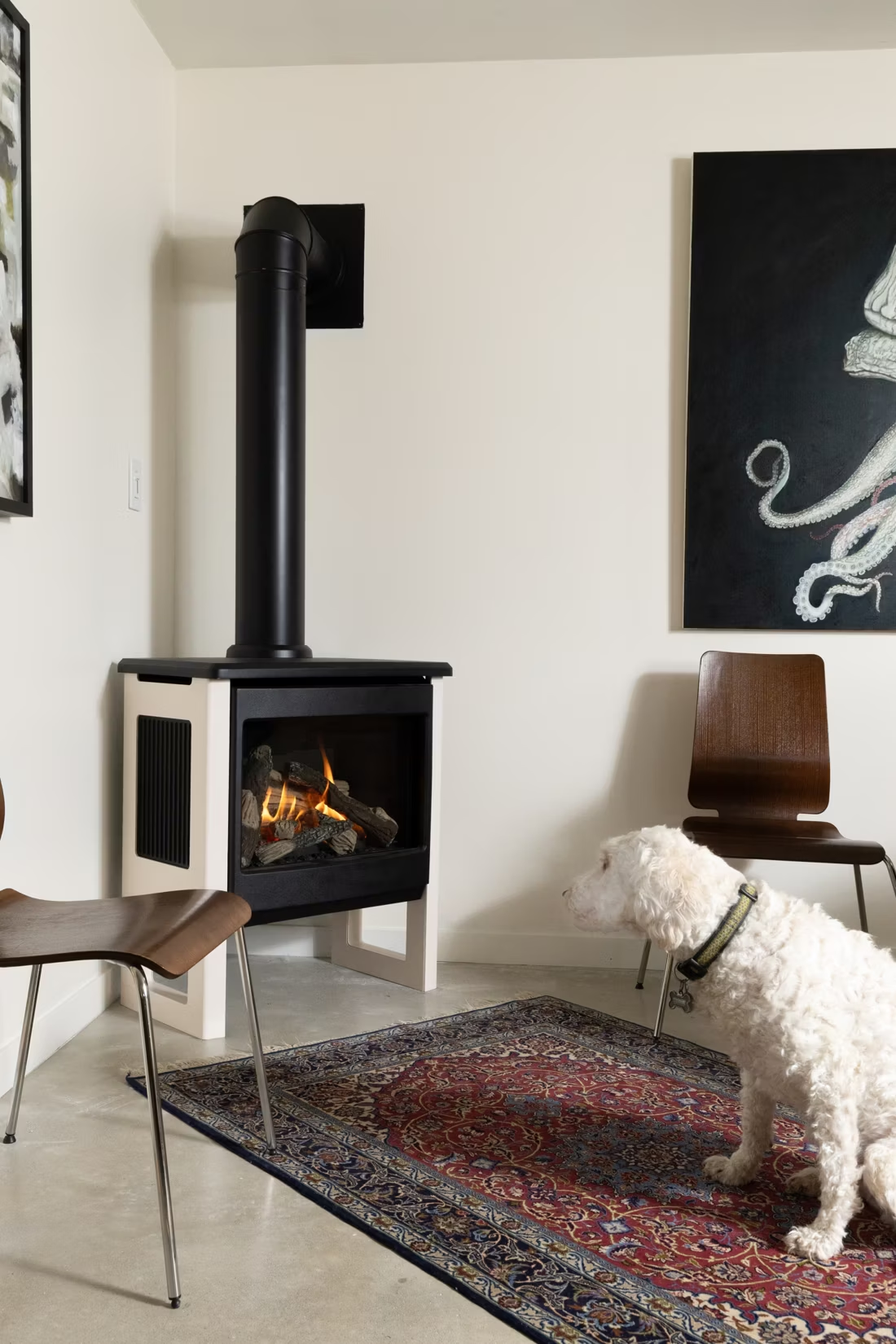
A gas fireplace is a fully built-in unit framed into a wall—the usual choice for new construction or a full remodel. A gas insert is built to drop into an existing masonry firebox, which is common in Burke County's older homes that were originally built around a wood fireplace. A gas stove is a freestanding cabinet unit, similar in footprint to a wood stove, that can go almost anywhere with the right clearances. For most homeowners here converting an old wood fireplace, an insert is the simplest and most cost-effective path.
Do I need a permit to install a gas fireplace in Burke County?
Yes. New gas fireplace installations require both a building permit and a gas line permit through the Burke County Building Inspection Department (or the City of Waynesboro if you're inside city limits). The gas line portion has to be run by a licensed gas-fitter, which is one reason it's worth using an established local hearth dealer—they coordinate the gas work, venting, and inspection instead of leaving you to line up separate trades.
Should I get a vented or vent-free gas fireplace?
Vented (direct-vent) units draw in outside combustion air and exhaust the byproducts back outside through sealed venting—they're the cleanest and most universally recommended option, and what most Burke County installers default to. Vent-free units burn directly into the room and are legal in Georgia, but they come with strict room-sizing rules and require an oxygen depletion sensor. Given how mild Burke County winters run, a lot of homeowners here are using the fireplace as much for ambiance and shoulder-season warmth as for hard heating—which makes a vented unit an easy call, since you're not depending on it to fight severe cold.
How often does a gas fireplace need to be serviced?
Plan on an annual inspection, ideally before the first cold front rolls through in late fall. A technician checks the burner, pilot assembly, gas connections, and venting, and cleans the glass and interior—a lighter job than chimney sweeping but just as important for safe operation. Most local gas appliance service providers charge in the $150 to $250 range for a standard annual visit.
Gas or wood—which makes more sense for a Burke County home?
With oak, pine, and hickory this abundant locally, wood heat has never stopped making sense in Burke County, and plenty of homes still burn it as their primary hearth fuel. But with a mild, short heating season and winter lows averaging in the mid-30s, a lot of the burning season here is really about ambiance and the occasional cold snap rather than round-the-clock heat—which is exactly the situation gas fireplaces are built for. Many homeowners end up with both: wood in a den or outdoor space for the ritual of a real fire, gas in the main living area for a flip-of-a-switch flame on a chilly evening.
Is my gas fireplace wasting gas?
If it was installed more than 15 years ago, probably. Older gas fireplaces keep a standing pilot light burning all the time, and that little flame can cost a couple hundred dollars a year. Newer models use pilot-on-demand ignition—the pilot lights only when you use the fireplace and goes out when you turn it off.
Why is my open fireplace making my house colder?
Open fireplaces suck—literally. As the fire burns, it consumes air your furnace already paid to heat and pulls it out through the chimney, so the house is actually colder after the fire goes out than before you lit it. An insert fixes this: it seals the chimney, puts fixed glass across the front, and turns that hole in your house into a real heat source.
Does a fireplace add value to my home?
On average, a fireplace adds back to the home about the same amount you spent installing it. Add the monthly savings from heating the rooms you actually use instead of the whole house—often hundreds of dollars a year—and the value case is strong before you even count what a fire does for how your family uses the room.
What is an in-home preview and do I need one?
It's a visit where a hearth professional measures your space, confirms the model you picked actually works in your home, and walks the specs—framing, gas line, venting, finish work—before anything is ordered. Some details you just can't know until you see the house. Never make a down payment without one; it's the single most-skipped step that burns buyers.
Stove and Fireplace Dealers in Burke County
Find your gas fireplace in Burke County.
Tell us a bit about your home and we'll match you with a trusted local dealer and send over a free Project Guide & Parts List—the exact parts, including the vent kit, for your gas fireplace project in Burke County.
Find Your Fireplace →