
Keep Your Family Warm and Safe—No Matter What
With just a short winter heating season and winter lows averaging around 40°F, Bryan County rarely needs a primary heat source. But some Richmond Hill and Pembroke homeowners still want the ambiance of a real fire—and a small number rely on it during hurricane-season power outages. Find the right unit and connect with a trusted local dealer.
Every Project Starts From One of These Five Situations
Coastal Georgia rarely asks for it.
Bryan County sits in climate zone 2A, on Georgia's coastal plain between Savannah and Fort Stewart, where the Ogeechee River winds through Richmond Hill, Pembroke, Black Creek, and Ellabell. With only a short winter heating season each year and average winter lows hovering near 40°F, this is a place where furnaces run a handful of weeks a year, not months. Compare that to a place like Duluth, Minnesota, which has a winter heating season more than five times as long—Bryan County's heating season barely registers by comparison. That's why wood stoves and fireplaces never became the default here the way they did further north.
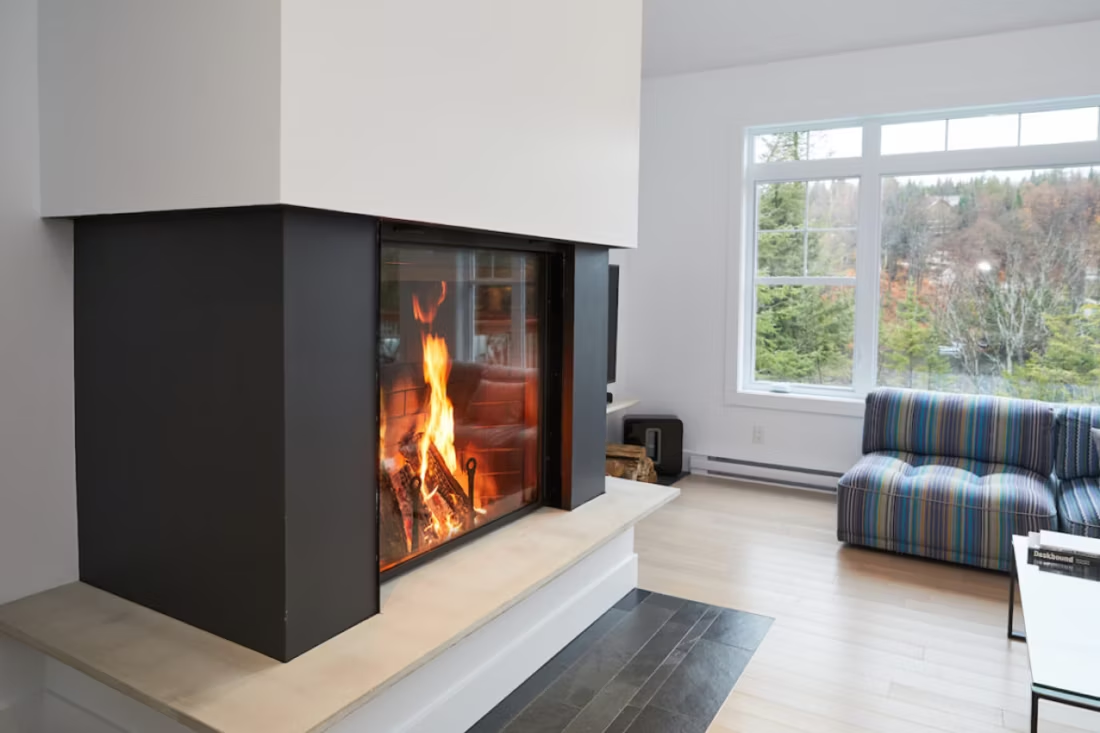
That said, a wood fireplace still shows up in Bryan County homes for reasons that have nothing to do with heating load. Some homeowners in older Richmond Hill or Pembroke houses want to preserve or restore a masonry fireplace for the look and feel of a real fire on the handful of genuinely cold nights each winter. Others—especially in more rural parts of the county near Fort Stewart and the timberland that surrounds it—want a wood stove as backup heat for the power outages that come with hurricane season, when the grid can be down for days. Local air quality is unrestricted (no non-attainment status, no burn bans), and regional hardwood—oak, hickory, and pine—is abundant from land-clearing and timber operations, so fuel supply is never the limiting factor. It's simply a matter of demand being low.
Three steps. No salesperson until you're ready.
Tell us about your project
Your zip code, your situation, and the fuel you're leaning toward—or let the answers point you to one.
See what's actually available
The brands dealers within 100 miles genuinely carry—real options, never a catalog mirage.
Get your dealer & Project Guide
A trusted local dealer, plus the free Project Guide & Parts List that names every component of the job.
Frequently Asked Questions
How much does a wood stove installation cost in Bryan County?
Because wood heat is a niche request here rather than a routine one, pricing varies more than it would in a colder market with dozens of installers competing for the work. A straightforward wood stove installation into an existing masonry fireplace typically lands in the $3,500–$7,500 range, depending on the stove and whether a stainless liner or chimney relining is needed. Homes without an existing chimney—common in newer Richmond Hill construction—cost more once Class A pipe and roof penetration are added. Because Bryan County's population is just over 24,000, you may find fewer specialty wood-hearth installers locally than you would in Savannah proper; expect to pull from the broader Savannah metro dealer network for quotes.
What size wood stove do I need for my home in Bryan County?
Given how short Bryan County's winter heating season is in a typical year, most homeowners here aren't sizing a stove to carry the whole house through January the way you would in a place like Fargo or Bismarck. A small to medium stove (rated for 1,000–1,500 square feet) is usually plenty, even in a larger home, because it's supplementing occasional cold snaps rather than running daily for months. If your goal is strictly backup heat during a hurricane-season outage, sizing can lean even smaller—the priority is a safe, code-compliant install rather than maximum BTU output.
Where can I find a wood stove dealer near me in Bryan County?
Wood-burning hearth specialists are thinner on the ground in Bryan County than they are in colder states, simply because demand is lower. Homeowners in Richmond Hill, Pembroke, and Black Creek typically end up working with a hearth dealer based in the broader Savannah metro area who serves the county as part of their regular install territory. Look for NFI (National Fireplace Institute) certification specifically for wood-burning appliances—some Savannah-area dealers lean heavily gas and may subcontract or refer out wood installs, so it's worth confirming they handle wood-burning units directly rather than just gas fireplaces.
Should I get a wood stove or a wood-burning fireplace insert?
If your Bryan County home already has an existing masonry fireplace—more common in older Richmond Hill and Pembroke housing stock—an insert is usually the better fit, since it uses the chimney you already have and turns an open hearth into something that actually holds heat. A freestanding stove makes more sense in newer construction without an existing chimney, or if you want the stove somewhere other than an existing fireplace footprint, like a converted garage or a detached workshop. Either way, given how rarely these units run here, most homeowners prioritize a clean, traditional look over maximum efficiency.
Do I need a permit to install a wood stove in Bryan County?
Yes—a building permit is required for a new wood-burning appliance installation through Bryan County's building department, and the stove needs to meet current EPA emissions standards. Most local installers handle the permit application as part of the job, so you're not usually filing it yourself. Because there's no air quality non-attainment designation in Bryan County, you won't run into curtailment periods or burn-ban restrictions the way homeowners in some Western states do—once it's installed and permitted, you can burn it whenever you like.
What's the best wood stove for Bryan County's climate?
Skip the large catalytic stoves built for 20-hour overnight burns at sub-zero temperatures—that engineering solves a problem Bryan County doesn't have, given winter lows averaging around 40°F. A smaller, EPA-certified non-catalytic stove from a brand like Pacific Energy or Lopi is a better match: efficient enough for occasional use, simpler to operate, and sized appropriately for a handful of genuinely cold nights and hurricane-season outages rather than a full winter of daily burning.
How often should my chimney be inspected if I only burn a few times a year?
Even with light use, the CSIA recommends an annual inspection before burning season starts—creosote and animal nesting can build up in a flue that sits unused for most of the year just as easily as one used daily. Given how infrequently wood stoves get used in Bryan County, an annual Level 1 sweep and inspection, timed for early fall ahead of any cold snaps or storm season, is usually all that's needed.
Where can I get firewood in Bryan County?
Firewood is not hard to come by locally—oak, hickory, and pine are all common species from the timberland and land-clearing operations around Fort Stewart and the rest of the county, and several regional suppliers deliver by the cord. Because wood isn't a primary heating fuel here, you're less likely to find a dedicated firewood cutting-permit program on public land the way you would in a Western national forest county; most residents source split, seasoned wood from a local supplier rather than cutting their own.
Wood stove vs. pellet stove—does either make sense in Bryan County?
Both are genuinely niche choices here, for the same reason: with only a short winter heating season each year, neither fuel is doing much heavy lifting. A wood stove has the edge for hurricane-season backup heat, since it works without electricity when the grid is down—a real consideration in coastal Georgia. A pellet stove, stocked regionally by brands like Lignetics, Hamer Pellet Fuel, and Greenway Renewable Energy, is cleaner and easier to operate but needs power to run the auger and blower, which defeats the outage-backup use case. For most Bryan County homeowners, if the goal is ambiance and occasional supplemental warmth, wood tends to win; if the goal is strictly convenience with reliable grid power, pellet is worth a look.
Why won't my new wood stove get going like my old one?
New wood stoves are 70%+ efficient, so far less heat goes up the flue—which also means less draft to get a fire established. The rule: build a genuinely hot fire for about 45 minutes before you choke it down. Skip that and you get smoke in the room, creosote in the chimney, and a fire that never takes off. Most performance complaints trace straight back to this.
Why is my open fireplace making my house colder?
Open fireplaces suck—literally. As the fire burns, it consumes air your furnace already paid to heat and pulls it out through the chimney, so the house is actually colder after the fire goes out than before you lit it. An insert fixes this: it seals the chimney, puts fixed glass across the front, and turns that hole in your house into a real heat source.
Can a fireplace actually lower my heating bill?
Yes—by creating a comfort zone. A furnace heats every square foot of the house just to warm the one room you're in; a gas fireplace on low burns roughly a sixth of the gas a typical furnace does. Set the furnace around 55–60 degrees as a baseline, then heat the rooms your family actually uses. Families who heat this way commonly save $20–$60 a month.
What is an in-home preview and do I need one?
It's a visit where a hearth professional measures your space, confirms the model you picked actually works in your home, and walks the specs—framing, gas line, venting, finish work—before anything is ordered. Some details you just can't know until you see the house. Never make a down payment without one; it's the single most-skipped step that burns buyers.
Stove and Fireplace Dealers in Bryan County
Find your wood fireplace in Bryan County.
Tell us a bit about your home and we'll match you with a local dealer who actually installs wood-burning units in Bryan County, plus a free Project Guide & Parts List with the exact parts—including the vent kit—for your project.
Find Your Fireplace →