
Pellet heat for Bryan County's occasional cold nights.
With only a mild winter heating load a year and winter lows averaging near 40°F, Bryan County rarely needs a dedicated wood-pellet heat source. For the homeowners who still want one—for ambiance, a sunroom, or the handful of hard-freeze nights each winter—we'll match you with a trusted local dealer who can tell you honestly whether it's worth it.
Every Project Starts From One of These Five Situations
A rare fit for Bryan County's subtropical winters.
Bryan County sits in climate zone 2A along Georgia's coastal plain, between Savannah and Fort Stewart, covering Richmond Hill, Pembroke, and the unincorporated communities in between. With a mild winter heating load a year, Bryan County's heating load is a fraction of what a cold-climate market like Duluth, MN carries—Duluth logs a winter heating load closer to six times as much. Most homes here rely on heat pumps for the handful of nights that dip into the 30s, and a dedicated wood-pellet heating appliance simply isn't something the climate demands.
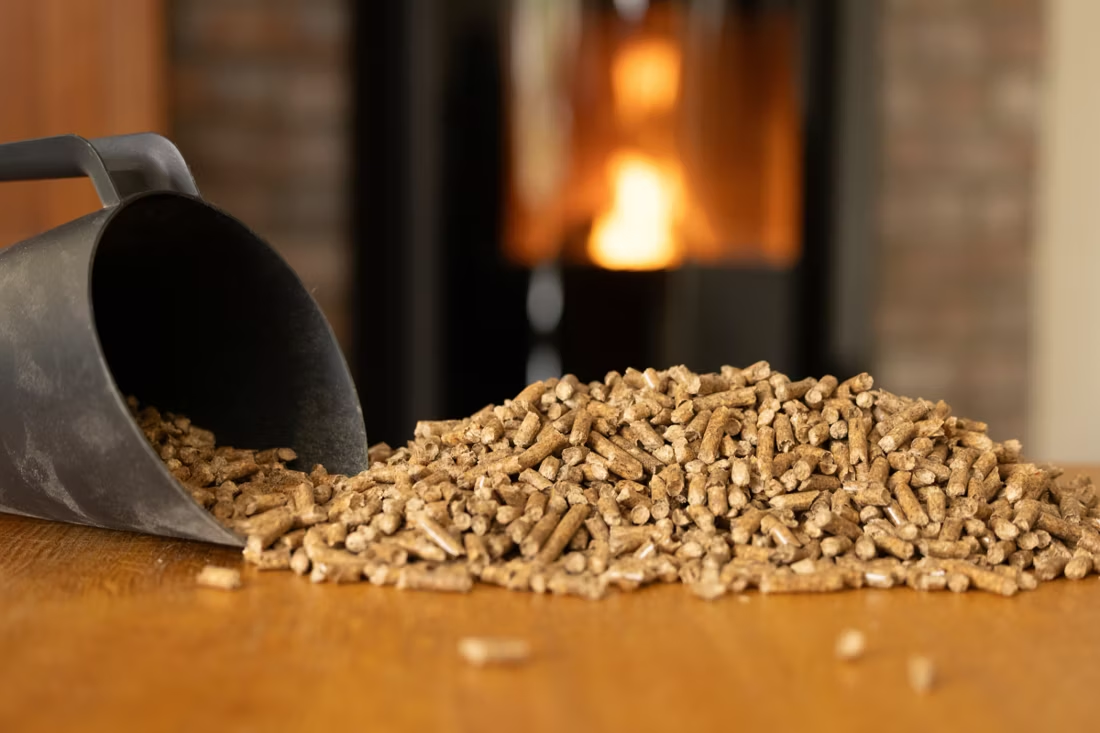
That said, pellet stoves aren't unheard of in Bryan County—they just serve a different purpose than they would in a northern state. A small number of local homeowners install one for the ambiance of a real flame without the bug and mess issues that come with stacking oak, pine, or hickory firewood in a humid coastal yard, or to add real heat to a sunroom or converted garage during the occasional January cold snap. If you go this route, regional pellet supply runs through brands like Lignetics, Hamer Pellet Fuel (a Georgia-based producer), and Greenway Renewable Energy—all of which move a fair amount of product through the Southeast even in markets where pellet heating isn't the norm.
Three steps. No salesperson until you're ready.
Tell us about your project
Your zip code, your situation, and the fuel you're leaning toward—or let the answers point you to one.
See what's actually available
The brands dealers within 100 miles genuinely carry—real options, never a catalog mirage.
Get your dealer & Project Guide
A trusted local dealer, plus the free Project Guide & Parts List that names every component of the job.
Frequently Asked Questions
How common are pellet stoves in Bryan County?
Not very. With average winter lows around 40°F and only a mild winter heating load overall, Bryan County's climate doesn't generate the kind of sustained cold that makes a pellet stove a practical primary or even supplemental heat source for most homes. Where you do see them, it's usually a homeowner who wants the look and feel of a real fire, someone converting a sunroom or bonus room into usable space during the occasional hard freeze, or a transplant from a colder state who's used to burning something in the winter. It's a legitimate choice—just not a mainstream one here the way it is in places with real winters.
What does a pellet stove installation cost in Bryan County?
Nationally, a typical pellet stove installation runs $3,000 to $6,000 depending on the unit, venting path, and whether it's going into an existing fireplace opening as an insert or freestanding on a hearth pad. Because pellet demand is low in coastal Georgia, fewer installers stock pellet units locally compared to gas fireplaces or electric inserts, and some jobs may involve a dealer who also services the Savannah market. Get a firm quote from a trusted local installer rather than relying on a national average—venting distance and hearth pad requirements can shift the number meaningfully.
Do I need a permit to install a pellet stove in Bryan County?
Yes—a building permit is typically required for a new pellet stove installation through Bryan County's building department (or the applicable city building department if you're inside Richmond Hill or Pembroke city limits), since the appliance needs proper venting and clearances even though pellet units vent through smaller-diameter pipe than wood stoves. Most installers who handle pellet appliances in this market will pull the permit as part of the job. Because there's no wood smoke non-attainment issue or winter inversion problem here, there are no curtailment restrictions to worry about—this is one area where Bryan County's mild, humid climate actually simplifies things.
What pellet brands can I get through local dealers?
Regional pellet supply in the Bryan County area runs through Lignetics, Hamer Pellet Fuel, and Greenway Renewable Energy. Hamer is a Georgia producer, which helps keep pellet costs and availability more stable here than in markets that have to ship fuel in from farther away. Given the region's pine, oak, and hickory timber industry, pellets sold locally are often softwood or hardwood blends sourced from Southeast mills rather than the fir-heavy pellets common out West.
Why would someone install a pellet stove in a climate this mild?
The honest answer: mostly for reasons other than heating necessity. Some homeowners want the visual and psychological comfort of a real flame in a living room or sunroom. Others are heating a converted garage, workshop, or bonus room that their central heat pump doesn't reach well during the county's occasional dips into the 30s. And some are simply transplants from colder states who miss having a stove to tend in the winter. None of these are bad reasons—they're just different from the primary-heat case that drives pellet stove sales in places with real winters, and a good local dealer will tell you that upfront rather than oversell the heating case.
Pellet vs. electric fireplace—which makes more sense in Bryan County?
For most Bryan County homes, an electric fireplace or insert is the more practical choice. Electric units deliver the ambiance of a flame with zero venting requirements, minimal installation cost, and no fuel to store or haul—a good fit for a climate where actual heat output matters less than the look. A pellet stove makes more sense if you specifically want real, radiant heat for a room your heat pump doesn't cover well, or you value the presence of an actual fire over a simulated one. Both are reasonable options here; the right one depends on whether you're solving for ambiance or for a genuine, if occasional, heating gap.
Will a pellet stove work during a hurricane power outage?
No—pellet stoves depend on an electric auger to feed fuel and a blower to distribute heat, so they shut down without power unless you have a battery backup or generator running. In Bryan County, hurricane season outages are far more common than winter cold-weather outages, and when the power goes out here it's typically in warm months when heat isn't the concern anyway—keeping the refrigerator and sump pump running matters more. If backup heat during a winter outage is genuinely a priority for you, a wood stove or a generator-fed electric unit is a more dependable choice than pellet.
What size pellet stove do I need in Bryan County?
Smaller than you'd think. Given the minimal heating demand—a light winter heating load by national standards—most Bryan County installations are sized to heat a single room, sunroom, or bonus space rather than an entire house. A small to mid-size stove (rated for 1,000–1,500 sq ft) is plenty for the vast majority of local use cases, and oversizing just means more time spent running the stove at a low, inefficient setting to avoid overheating the room.
Pellet vs. wood stove—which makes more sense in Bryan County?
Both are relatively rare choices in Bryan County given the mild climate, but if you're choosing between them, pellet has some real advantages here: no need to source, split, or store oak or hickory firewood in a humid coastal yard where insects and mold are a bigger concern than they'd be up north, less mess, and more consistent burn without babysitting the fire. Wood still appeals to homeowners who want the authentic experience of a real fire and don't mind the extra work. Given how infrequently either gets used for actual heating necessity here, the choice usually comes down to personal preference rather than performance.
What's the difference between an insert and a zero-clearance fireplace?
An insert is a fireplace that slides into a pre-existing wood-burning fireplace—if you don't have one, there's nothing to insert it into. A zero-clearance fireplace is built into a framed wall, which makes it the answer for remodels and new construction. Simple test: existing masonry fireplace means insert; blank or framed wall means zero-clearance.
How often does a pellet stove need cleaning?
A clean pellet stove is a happy pellet stove. Plan on cleaning the burn pot about once a week when you're burning regularly—ash and clinkers gum up the air holes just like a pellet barbecue. Most pellet stove problems trace back to skipped cleaning that nobody explained up front. Some designs make it easy with a trapdoor burn pot: pull a lever and the gunk drops into the ash pan.
Can a fireplace actually lower my heating bill?
Yes—by creating a comfort zone. A furnace heats every square foot of the house just to warm the one room you're in; a gas fireplace on low burns roughly a sixth of the gas a typical furnace does. Set the furnace around 55–60 degrees as a baseline, then heat the rooms your family actually uses. Families who heat this way commonly save $20–$60 a month.
What is an in-home preview and do I need one?
It's a visit where a hearth professional measures your space, confirms the model you picked actually works in your home, and walks the specs—framing, gas line, venting, finish work—before anything is ordered. Some details you just can't know until you see the house. Never make a down payment without one; it's the single most-skipped step that burns buyers.
Stove and Fireplace Dealers in Bryan County
Pellet Brands Stocked Around Bryan County
Manufacturers will point you to the nearest stocking dealer.
Find your pellet stove in Bryan County.
Tell us about your home and how you plan to use it, and we'll give you a straight answer on whether a pellet stove fits—then match you with a trusted local dealer and a free Project Guide & Parts List for your Bryan County project.
Find Your Fireplace →