
Efficient, Low-Maintenance Heat for Barrow County Homes.
Barrow County's mild Piedmont winters don't call for a wood-burning ritual—they call for a stove you can load, set, and forget. Find the right pellet stove or insert for your Winder, Auburn, Statham, or Bethlehem home, and connect with a trusted local dealer who can size and install it correctly.
Every Project Starts From One of These Five Situations
Clean-burning convenience built for mild Georgia winters.
Barrow County sits in the Georgia Piedmont northeast of Atlanta, home to Winder, Auburn, Statham, and Bethlehem, in climate zone 3A. Winters here average a low near 32°F, and the county has a mild, short heating season—just a fraction of the winter heating load a place like Duluth, Minnesota sees in a single winter. That mild profile means most Barrow County homes don't need wood heat to survive January; they want a supplemental heat source that's clean, controllable, and doesn't require splitting oak and hickory rounds every weekend.
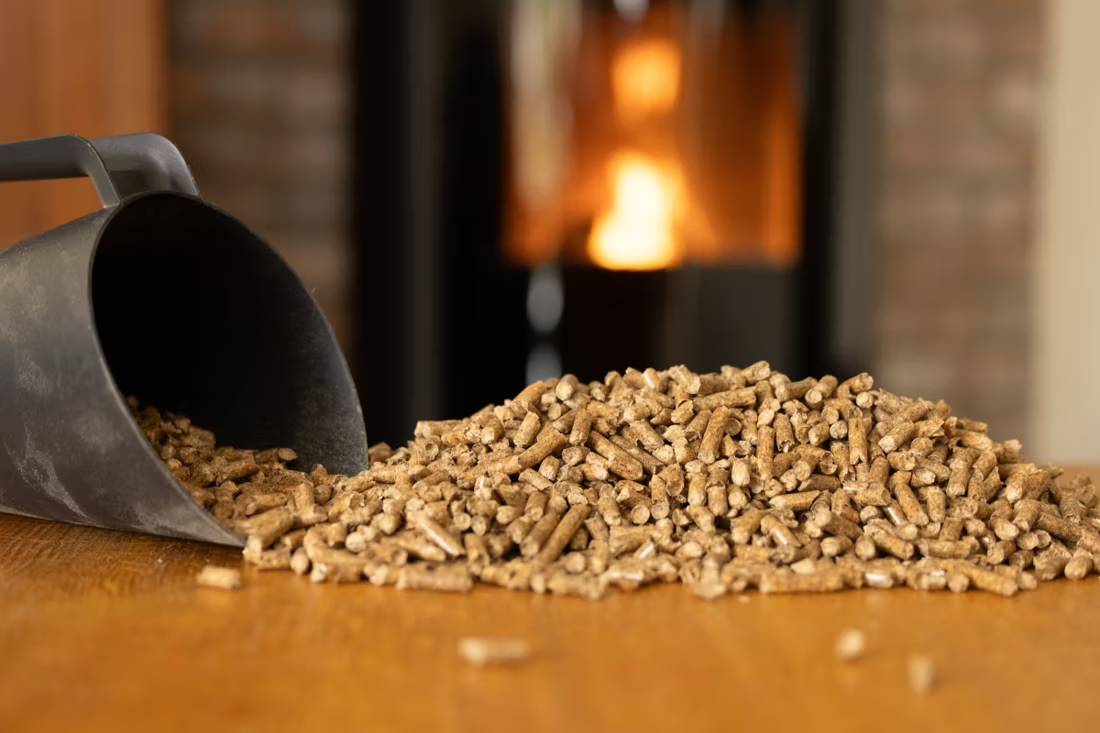
Pellet stoves fit that need well. Load the hopper, set the thermostat, and the auger and blower do the rest—no chimney sweep required the way a wood-burning setup demands, and no air-quality curtailment days to track, since Barrow County has no non-attainment or inversion concerns like parts of the West and Pacific Northwest. Regional pellet suppliers including Lignetics, Hamer Pellet Fuel, and Greenway Renewable Energy keep bags and bulk-ton pellets available across northeast Georgia, so fuel access isn't the constraint it can be in more rural regions.
Three steps. No salesperson until you're ready.
Tell us about your project
Your zip code, your situation, and the fuel you're leaning toward—or let the answers point you to one.
See what's actually available
The brands dealers within 100 miles genuinely carry—real options, never a catalog mirage.
Get your dealer & Project Guide
A trusted local dealer, plus the free Project Guide & Parts List that names every component of the job.
Frequently Asked Questions
How much does a pellet stove installation cost in Barrow County?
Installed cost depends mainly on the stove itself, the venting path (most pellet stoves use a simple through-wall vent rather than a full masonry chimney), and whether any hearth pad or clearance work is needed. Because pellet stoves vent through a small-diameter pipe rather than a full Class A chimney, installs in Barrow County are typically less involved—and less expensive—than a comparable wood stove or fireplace install. A local dealer will walk your home and give you a firm number based on your specific layout; ask about venting distance and electrical outlet proximity, since both affect the final quote.
What size pellet stove do I need for my Barrow County home?
Because winter lows in Barrow County average around 32°F and the county has a mild, short heating season, most homes here don't need a stove sized for whole-house primary heat the way a home in the upper Midwest would. A small to mid-size pellet stove (rated for 1,000–1,800 sq ft) is usually enough to heat a main living area in a Winder or Statham home, with central HVAC covering the rest of the house. If you're aiming for whole-home coverage in a larger, open-concept layout common in newer Auburn or Bethlehem construction, size up and ask your dealer about a stove with a larger hopper capacity for longer unattended run time.
Where can I find certified pellet stove installers near me?
Look for installers with NFI (National Fireplace Institute) certification, which covers pellet-burning appliance training specifically. Local hearth dealers serving Barrow County typically handle the full job—unit, venting, and electrical hookup—as a package, which keeps warranty coverage intact. Avoid piecing together a DIY install from a big-box stove purchase; pellet stoves still need a properly sized vent run and a dedicated outlet, and getting either wrong is the most common cause of nuisance shutdowns and service calls.
What's the difference between a pellet stove and a pellet insert?
A pellet stove is a freestanding unit that sits on a hearth pad and vents through a wall or existing chimney—it can go almost anywhere with the right clearances. A pellet insert is built to slide into an existing masonry fireplace opening, which is common in older homes around downtown Winder or established neighborhoods in Statham. If you already have a wood-burning fireplace you rarely use, an insert converts it into a low-maintenance heat source while keeping the existing chimney as part of the vent path. Homes without an existing fireplace opening are better suited to a freestanding stove.
Do I need a permit to install a pellet stove in Barrow County?
Most new pellet stove installations require a building permit through the Barrow County Building Department, and any new electrical circuit for the unit may need an electrical permit as well. There are no cutting or burning permits to worry about the way there are for wood heat, and Barrow County has no air-quality non-attainment designation, so there's no curtailment schedule to track during winter months. Most local dealers pull the permit as part of the installation, so it's rarely something homeowners have to manage themselves.
What's the best pellet stove for Barrow County's climate?
Because Barrow County's winters are mild by national standards, homeowners here generally don't need the largest-hopper, longest-burn-time units built for sub-zero climates. Mid-size stoves from brands like Harman, Quadra-Fire, or Englander cover most Winder, Auburn, and Statham homes comfortably as a supplemental heat source for the main living area. The one real limitation to flag: pellet stoves require electricity to run the auger, igniter, and blower, so they won't provide heat during a power outage the way a wood stove can—worth considering given how often ice storms knock out power in this part of Georgia. Some homeowners pair a pellet stove with a small battery backup or generator for exactly that reason.
Where can I buy pellets in Barrow County?
Regional pellet brands including Lignetics, Hamer Pellet Fuel, and Greenway Renewable Energy supply hearth retailers and hardware stores across northeast Georgia, and most Barrow County dealers can point you to the closest bagged or bulk-ton supplier. Buying by the ton ahead of the season is typically cheaper than buying bags one at a time through the winter, and local hardwood species like oak, pine, and hickory are common in the softwood and hardwood pellet blends sold regionally—ask your dealer which blend burns cleanest in your specific stove model.
How often does a pellet stove need cleaning or maintenance?
Plan on emptying and wiping down the ash pan weekly during regular use, and a full burn-pot and heat-exchanger cleaning monthly during the heating season—pellet stoves produce far less ash than wood but still need routine attention. An annual professional service, ideally before the season starts each fall, covers the auger motor, exhaust blower, and venting to make sure everything's running efficiently. Because Barrow County winters are short and mild, most homeowners here get by with lighter-duty seasonal use than a stove running as primary heat further north would need.
Pellet stove vs. gas fireplace—which is right for my Barrow County home?
Gas fireplaces offer instant on-off convenience and, with the right ignition system, can run without pellets or hopper loading—a plus if you want zero-maintenance heat. Pellet stoves burn a renewable fuel, produce a more visible, active flame than most gas units, and typically cost less per BTU than propane in areas without natural gas service. For a Barrow County home already on natural gas, a gas fireplace may be the simpler install; for a home relying on propane or looking for a lower ongoing fuel cost with a real flame, a pellet stove is often the better value. Either way, a local dealer can walk through the operating cost math for your specific home.
What's the difference between an insert and a zero-clearance fireplace?
An insert is a fireplace that slides into a pre-existing wood-burning fireplace—if you don't have one, there's nothing to insert it into. A zero-clearance fireplace is built into a framed wall, which makes it the answer for remodels and new construction. Simple test: existing masonry fireplace means insert; blank or framed wall means zero-clearance.
Why is a fireplace insert so efficient?
An insert does two things: it seals the chimney completely, so you stop losing air you already paid to heat, and it radiates warmth into the room through the firebox and glass. Most add a heat-exchange fan that pulls cool room air underneath, wraps it around the hot firebox, and pushes it back out warm. Your home is more efficient before you've even lit the first fire.
Does a fireplace add value to my home?
On average, a fireplace adds back to the home about the same amount you spent installing it. Add the monthly savings from heating the rooms you actually use instead of the whole house—often hundreds of dollars a year—and the value case is strong before you even count what a fire does for how your family uses the room.
Can I install a fireplace myself?
If you're putting a fire in your house on purpose, it's best to work with an expert. Unless you're genuinely experienced in framing, gas line, vent pipe, and the national code on clearances to combustibles, have a professional do it—and ideally the same company that sells you the fireplace, so warranty, service, and liability all live under one roof.
Pellet Brands Stocked Around Barrow County
Manufacturers will point you to the nearest stocking dealer.
Find your pellet stove in Barrow County.
Tell us about your home and heating goals, and we'll match you with a trusted local dealer and send over a free Project Guide & Parts List—the exact parts, including the vent kit, for your pellet stove project in Barrow County.
Find Your Fireplace →