
Find the right electric fireplace for your Barrow County home.
Mild Piedmont winters mean Barrow County homeowners often want ambiance and supplemental warmth more than a primary heat source. We match you with a local dealer who can size and install the right unit for your space.
Every Project Starts From One of These Five Situations
Mild winters, straightforward install.
Barrow County sits in climate zone 3A with an average winter low around 32°F and a mild, short winter heating season—a fraction of what a place like Duluth, MN or Fargo, ND sees in a single season. That's a mild-winter climate where a fireplace doesn't need to carry the whole heating load. In Winder, Statham, and Bethlehem, that reality shapes what homeowners actually want: an electric fireplace or insert that adds ambiance, zone-heats a den or bonus room on the occasional cold morning, and doesn't require a chimney, gas line, or Forest Service firewood permit to operate.
Electric units plug into standard household circuits (some larger built-ins need a dedicated 240V line), which keeps installation simple compared to venting a wood or gas appliance. There's no combustion, no annual chimney sweep, and no air quality concern—Barrow County has no wood-smoke non-attainment issues, but electric sidesteps that conversation entirely. For homeowners in older Winder homes without existing masonry fireplaces, or newer construction in Statham and Bethlehem subdivisions, electric is often the fastest and least invasive way to add a fireplace feature.
Three steps. No salesperson until you're ready.
Tell us about your project
Your zip code, your situation, and the fuel you're leaning toward—or let the answers point you to one.
See what's actually available
The brands dealers within 100 miles genuinely carry—real options, never a catalog mirage.
Get your dealer & Project Guide
A trusted local dealer, plus the free Project Guide & Parts List that names every component of the job.
Frequently Asked Questions
How much does an electric fireplace installation cost in Barrow County?
Most electric fireplace and insert installations in Barrow County run in the range typical for the fuel type nationally—generally $400 to $1,200 depending on whether it's a plug-in insert dropped into an existing space, a built-in wall unit requiring framing and a dedicated circuit, or a mantel package. A licensed electrician may be needed for larger built-ins that call for a 240V circuit, which adds a modest line item. Local dealers serving Winder, Statham, and Bethlehem typically bundle the unit, delivery, and basic setup into one quote.
Do I need a permit to install an electric fireplace in Barrow County?
In most cases, no separate fireplace permit is required for a plug-in or mantel-style electric unit since there's no venting or gas line involved. If a built-in electric fireplace requires new electrical wiring or a dedicated circuit, that electrical work typically falls under standard permitting through the local building department, and a licensed electrician handles the inspection. Because there's no combustion appliance, requirements are far lighter than what wood or gas installs in Barrow County require.
Will an electric fireplace actually heat my room in Barrow County?
Most electric units are rated to supplement heat in a room of 400 to 1,000 square feet, which works well for Barrow County's climate—winter lows average around 32°F, so a den, bonus room, or living area rarely needs more than a boost on the coldest mornings. Electric fireplaces won't replace a central HVAC system as primary heat, but for the mild Georgia Piedmont winter, that's rarely the goal. Homeowners looking for whole-room primary heat in a detached space or uninsulated addition should talk to a local dealer about wattage and square footage before buying.
What's the difference between an electric insert and a built-in electric fireplace?
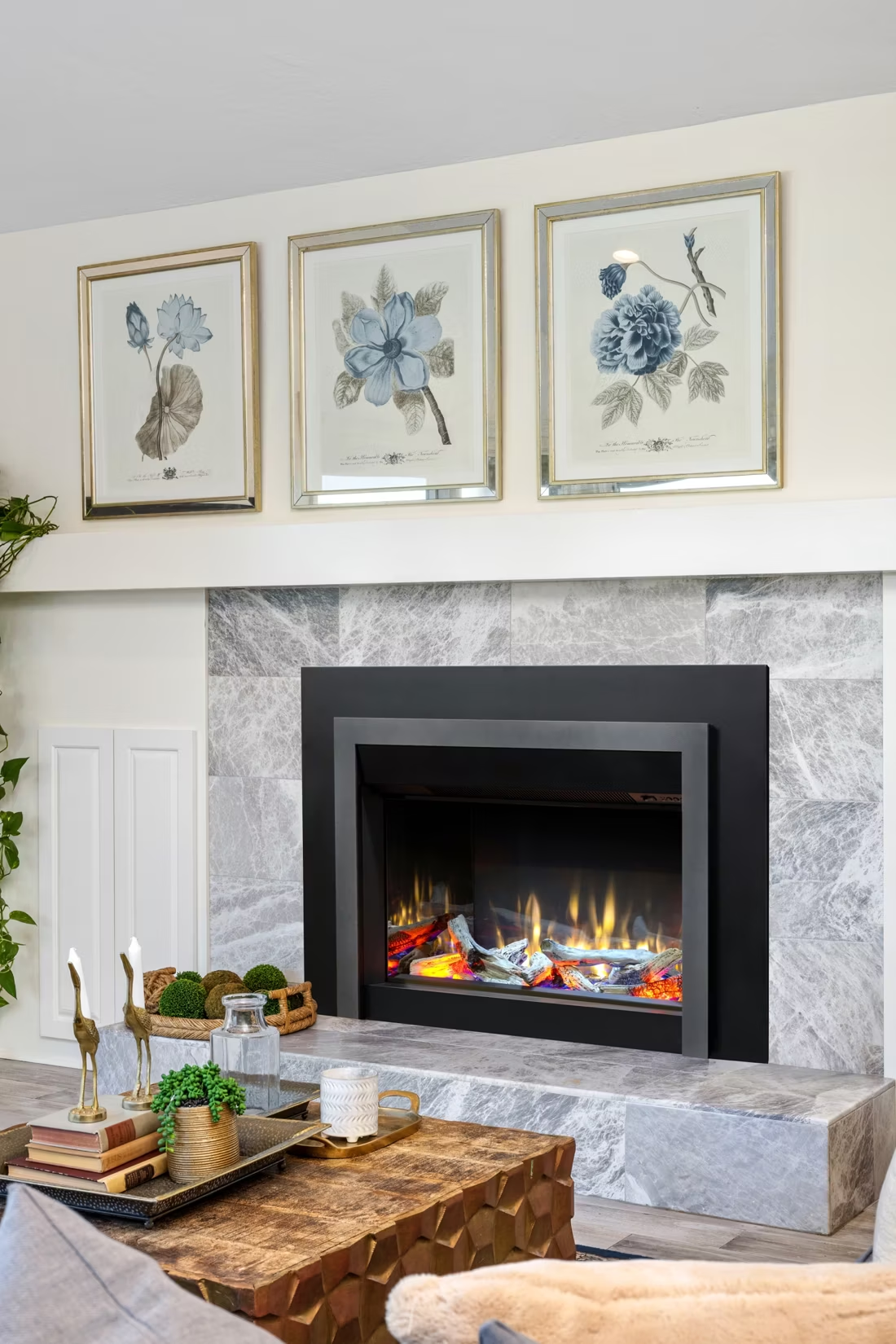
An electric insert is designed to slide into an existing masonry fireplace opening or a mantel surround, plugging into a standard outlet—it's the simplest retrofit for a Winder or Statham home with an old wood-burning fireplace that's gone unused. A built-in electric fireplace is installed into a framed wall cavity, often flush-mounted, and may require a dedicated circuit for larger models. For homes without an existing fireplace opening, built-ins or freestanding electric stoves are more common. A local dealer can walk through which fits your existing structure.
Can I convert my wood-burning fireplace to electric?
Yes, this is one of the more common projects for older homes in Barrow County with an unused masonry fireplace. An electric insert drops into the existing opening without needing the chimney for venting since there's no combustion. Some homeowners choose to cap the chimney afterward to improve the home's overall energy efficiency, since an open flue is a source of drafts even when the fireplace isn't in use. A local dealer can measure your firebox opening and recommend an insert that fits.
How does electric compare to gas or wood for a Barrow County home?
Wood offers real fire and works during power outages but requires cutting, seasoning, or buying oak, pine, or hickory cordwood common to this part of Georgia, plus chimney maintenance. Gas offers instant, higher-output heat and can be piped or run on propane, but needs venting and gas line work. Electric skips venting and combustion entirely, costs the least to install, and is the easiest retrofit—but it depends on grid power and won't function during an outage, and it heats a room rather than a whole house. Given Barrow County's mild, short winters, many homeowners choose electric specifically because they want the fireplace look and occasional warmth without the maintenance of a combustion appliance.
Does an electric fireplace work during a power outage?
No—electric fireplaces require grid power (or a generator) to run the heater and flame effect, so they won't provide backup heat during an outage. For Barrow County homeowners who want a fireplace that still works when the power's out, a wood-burning stove or insert is the more resilient choice, since it needs no electricity at all. Many homeowners choose electric specifically for its low-maintenance ambiance and pair it with a separate heat source for outage backup.
Are electric fireplaces energy efficient to run in Barrow County?
Most electric fireplace heaters draw around 1,500 watts on the heat setting, which costs a few cents per hour to run depending on your utility rate—inexpensive compared to running central HVAC to heat an entire house. Since Barrow County's heating season is relatively short and mild, running an electric unit for zone heating in one room a few hours a day during cold snaps is a low-cost way to avoid heating unused parts of the house. The flame-only mode (no heat) uses only a small fraction of that wattage, which is common for ambiance use outside of winter.
Where can I buy an electric fireplace in Barrow County?
Big-box stores carry basic units, but a local hearth dealer serving Winder, Statham, and Bethlehem will properly size the unit to your room, confirm whether your electrical panel can support a built-in model, and handle installation or coordinate the electrician if needed. That local sizing and install support is the main advantage over ordering a unit online sight-unseen—especially for built-in models where a miscalculated circuit or clearance issue means a return trip.
Can I put a TV above my fireplace?
Yes—with an asterisk. Fireplaces are hot and TVs don't like heat. Either put a mantel between them to deflect rising warmth, or choose a fireplace with heat-management technology that creates a cool zone on the wall above—the wall stays around 125 degrees, barely warm, while the room still gets full heat. If you like clean lines and don't want a mantel, heat management is the answer.
Does an electric fireplace need a vent or chimney?
No—that's its superpower. An electric fireplace needs a wall and an outlet, period. No vent pipe, no gas line, no clearances to design around, which is why it works in bedrooms, offices, apartments, and walls where venting a gas or wood unit would be impractical or impossible. Installation is typically the simplest and least expensive of any fireplace type.
Can a fireplace actually lower my heating bill?
Yes—by creating a comfort zone. A furnace heats every square foot of the house just to warm the one room you're in; a gas fireplace on low burns roughly a sixth of the gas a typical furnace does. Set the furnace around 55–60 degrees as a baseline, then heat the rooms your family actually uses. Families who heat this way commonly save $20–$60 a month.
Can I install a fireplace myself?
If you're putting a fire in your house on purpose, it's best to work with an expert. Unless you're genuinely experienced in framing, gas line, vent pipe, and the national code on clearances to combustibles, have a professional do it—and ideally the same company that sells you the fireplace, so warranty, service, and liability all live under one roof.
Get matched with an electric fireplace dealer in Barrow County.
Tell us about your home and we'll put together a free Project Guide & Parts List—the right electric fireplace or insert for your space, plus a trusted local dealer to install it.
Find Your Fireplace →