
Pellet heat for Baker County's occasional cold snap.
Baker County's mild, hot-humid climate means most homes here run on gas or electric heat—but a small number of lodges and cabins still want a pellet stove on hand. We'll help you find the right unit and a dealer who actually installs them in this part of southwest Georgia.
Every Project Starts From One of These Five Situations
A climate that rarely calls for supplemental heat.
Baker County sits in Georgia's Zone 2A climate band—hot, humid summers and winters mild enough that most homes never need a secondary heat source. With a population of roughly 500 spread across quail-hunting plantations, farmland, and the small county seat of Newton, the area's heating needs are handled almost entirely by central gas and electric systems, which is why both are rated standard fuels here while wood and pellet appliances are rated not-applicable. That's not a knock on pellet stoves—it's just an honest read on a place where a hard freeze is the exception, not the rule.
Where pellet stoves do show up in Baker County, it's usually at the region's famous plantation lodges and hunting camps—places where a bag of pellets and a thermostat-controlled stove is easier to manage between hunts than tending a wood fire, and where oak, pine, and hickory country makes wood-fired ambiance part of the appeal even if pellets do the actual heating. Regional suppliers like Lignetics, Hamer Pellet Fuel, and Greenway Renewable Energy serve dealers across southwest Georgia, so fuel isn't hard to find even though local demand is thin. If you're one of the exceptions—a cabin, a lodge, or a homeowner who just wants backup heat for the rare cold snap—a trusted local dealer can still make it work.
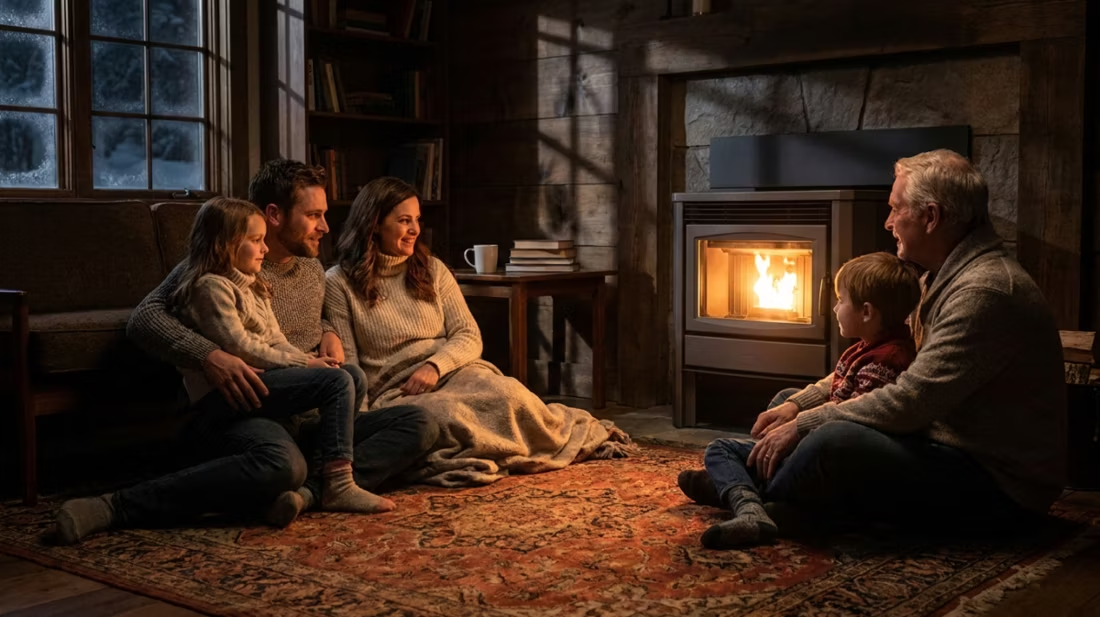
Three steps. No salesperson until you're ready.
Tell us about your project
Your zip code, your situation, and the fuel you're leaning toward—or let the answers point you to one.
See what's actually available
The brands dealers within 100 miles genuinely carry—real options, never a catalog mirage.
Get your dealer & Project Guide
A trusted local dealer, plus the free Project Guide & Parts List that names every component of the job.
Frequently Asked Questions
Are pellet stoves actually common in Baker County?
No, and it's worth saying plainly: Baker County's Zone 2A climate is hot and humid with short, mild winters, so the vast majority of homes here rely on central gas or electric heat and never install a wood-burning or pellet appliance. Pellet stoves in this county tend to show up at hunting lodges and plantation cabins around Newton and the Ichauway area, where owners want a low-maintenance fire feature or backup heat for the handful of nights each winter that actually get cold. If that describes your property, a pellet stove can absolutely work here—it's just a niche choice rather than the standard.
How much does a pellet stove installation cost?
Because pellet installs are infrequent in Baker County, most dealers who handle them travel in from larger service areas around Albany, Bainbridge, or Thomasville. Nationally, a freestanding pellet stove with a through-wall vent kit typically runs in the $3,000–$6,500 range installed, depending on the unit's hopper size and hearth pad needs; an insert into an existing masonry fireplace can run somewhat higher once a liner is factored in. Given how few installs happen locally, get a firm quote from a dealer who's actually willing to service the county—travel distance can affect the final number.
Where can I buy pellet fuel near Baker County?
Pellet fuel isn't stocked on every corner here the way it might be in a colder-climate county, but regional brands including Lignetics, Hamer Pellet Fuel, and Greenway Renewable Energy distribute through dealers across southwest Georgia. If you install a pellet stove at a lodge or cabin in Baker County, plan to either buy pellets by the pallet during a supply run to Albany or Bainbridge, or arrange delivery through your installing dealer—buying a season's worth at once is common practice in areas where pellet stoves are the exception rather than the rule.
Pellet stove or wood stove—does either make sense for a Baker County property?
Both are rated not-applicable for this climate for the same reason: Zone 2A winters rarely get cold enough to justify a full-time wood-burning appliance. That said, the choice between them comes down to how you'll actually use it. Wood stoves fit the county's oak, pine, and hickory country and suit hunting camps where tending a fire is part of the tradition. Pellet stoves trade that ritual for a hopper and thermostat—less hands-on, cleaner burning, and easier to leave unattended for a weekend between hunts. For an occasional-use lodge, pellet is often the lower-maintenance pick; for a camp that leans into the wood-fire experience, a wood stove still has its place.
Will a pellet stove work if the power goes out?
Not without a backup power source. Pellet stoves rely on an electric auger to feed fuel and a blower to circulate heat, so when the power drops, the stove stops—a real consideration for rural Baker County properties where storm-related outages can take longer to restore than in town. If your primary reason for wanting a stove is emergency backup heat, a small generator or battery backup for the stove's electronics is worth budgeting for alongside the unit itself. If backup heat during outages is the main goal, some homeowners in this situation lean toward a wood-burning option instead, precisely because it doesn't need electricity to run.
Do I need a permit to install a pellet stove in Baker County?
Yes—a new pellet stove installation typically requires a building permit through Baker County's building department, covering the appliance placement, clearances, and vent termination through an exterior wall. Because pellet installs are uncommon locally, it's worth confirming permit requirements directly with the county before work starts rather than assuming the process mirrors a more heavily-regulated county. A dealer experienced with rural southwest Georgia installs will typically handle this paperwork as part of the job.
What size pellet stove do I actually need in this climate?
Smaller than you'd need in a colder region. Because Baker County's winters are short and mild, most pellet stove installs here are sized for supplemental warmth in a single room—a den, a lodge common area, or a cabin's main living space—rather than for whole-home heating. A compact hopper (40 lbs or less) is usually plenty since you won't be running the stove around the clock the way a homeowner in a harder winter climate would. Oversizing a pellet stove for a mild-climate property just means more idle time and wasted capacity.
Does a pellet stove make sense for a hunting lodge or weekend cabin?
This is actually where pellet stoves earn their place in Baker County. The area's plantation lodges and hunting camps are often occupied intermittently through the season, and a pellet stove's set-it-and-forget-it operation—load the hopper, set the thermostat, walk away—suits a property that isn't staffed daily better than a wood stove that needs regular tending. It also sidesteps firewood storage and ash cleanup between visits, which matters for a camp that's locked up for weeks at a stretch between hunts.
Pellet, gas, or electric—what actually fits Baker County?
For nearly all year-round living space in Baker County, gas or electric heat is the standard, practical choice—both are rated for this climate and both handle the county's mild winters without issue. Pellet makes sense in the narrower case of a lodge, cabin, or ambiance feature where you want a real flame and don't mind the electricity dependence. If you're heating a primary residence, start with gas or electric; if you're outfitting a hunting camp or want a supplemental fire feature, a pellet stove is a reasonable and manageable option even in a climate that rarely demands it.
How often does a pellet stove need cleaning?
A clean pellet stove is a happy pellet stove. Plan on cleaning the burn pot about once a week when you're burning regularly—ash and clinkers gum up the air holes just like a pellet barbecue. Most pellet stove problems trace back to skipped cleaning that nobody explained up front. Some designs make it easy with a trapdoor burn pot: pull a lever and the gunk drops into the ash pan.
Are pellet stoves loud?
They make some noise—there are two fans running plus an auger motor that turns as it feeds pellets. But there's a real range: premium models are engineered quiet, and the best offer a whisper-quiet mode you can comfortably watch TV next to. If noise matters in your room, ask to hear a stove running before you buy—it's a five-minute test that saves years of annoyance.
How much should I budget for a fireplace?
For an average home—covering the fireplace, the vent pipe, and basic installation—a budget between $3,900 and $5,500 gives you a lot of options across wood, gas, and pellet. By the time you add finish work, gas line, and electrical, the average complete installation lands between $5,000 and $12,000 all-in. In a remodel or new build, a good rule is to put about 2.5% of the total project cost toward the fireplace.
Does a fireplace add value to my home?
On average, a fireplace adds back to the home about the same amount you spent installing it. Add the monthly savings from heating the rooms you actually use instead of the whole house—often hundreds of dollars a year—and the value case is strong before you even count what a fire does for how your family uses the room.
Pellet Brands Stocked Around Baker County
Manufacturers will point you to the nearest stocking dealer.
Find your pellet stove in Baker County.
Tell us about your lodge, cabin, or home and we'll match you with a dealer who actually installs pellet stoves in this part of Georgia—plus a free Project Guide & Parts List with the exact vent kit and parts your project needs.
Find Your Fireplace →