
Find your fireplace in Baker County, Georgia.
Fireplace resources for Newton, Milford, Elmodel, and every farm and homestead in between. Wood and pellet heat are uncommon this far south, but a trusted local dealer can still get you set up right.
Every Project Starts From One of These Five Situations
Warm-climate hearths in Baker County, Georgia.
Baker County sits in climate zone 2A—hot, humid summers and short, mild winters where overnight lows rarely stay below freezing for long. That's a world away from places like Duluth or Fargo, where a wood stove is a survival tool. Here, the oak, pine, and hickory stands that cover the county's farmland and river bottoms are mostly cut for timber, fencing, and the occasional outdoor fire pit—not for heating a home through winter. Wood stoves and pellet stoves exist in the county, but they're the exception, usually installed for ambiance on a hunting property or a farmhouse that likes the look of a real fire more than the BTUs.
What actually works here is gas and electric. Propane fireplaces and inserts are the practical choice for most Baker County homes, since natural gas lines are thin on the ground in a county this rural and this small—around 500 residents spread across Newton, Milford, and the unincorporated crossroads around Elmodel. Electric fireplaces cover the rest: supplemental warmth on the rare cold snap, and ambiance the other eleven months of the year. This hub focuses on the fuels that fit Baker County's climate—pick gas or electric below to see local dealers, install costs, and the resources for your project.
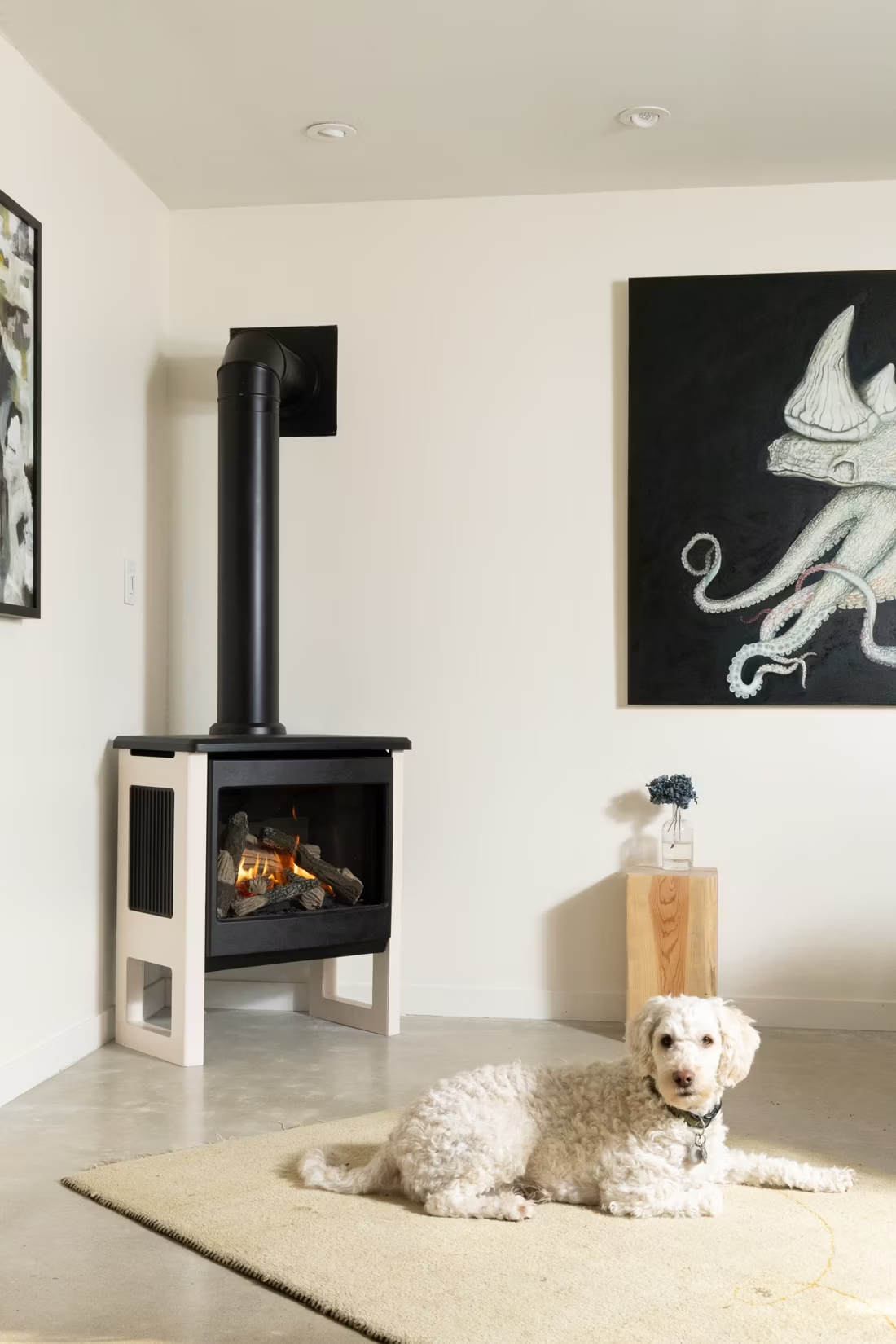
Four fuels. One honest answer for Baker County.
Three steps. No salesperson until you're ready.
Tell us about your project
Your zip code, your situation, and the fuel you're leaning toward—or let the answers point you to one.
See what's actually available
The brands dealers within 100 miles genuinely carry—real options, never a catalog mirage.
Get your dealer & Project Guide
A trusted local dealer, plus the free Project Guide & Parts List that names every component of the job.
Frequently Asked Questions
Which fuel works best in Baker County?
For most homes here, it's gas or electric—not wood or pellet. Baker County's climate zone (2A) means mild, short winters, and the oak, pine, and hickory that grow throughout the county rarely get burned for home heat the way they would in a colder climate. Propane fireplaces and inserts are the most common primary choice, since municipal natural gas service is limited in a county this rural. Electric fireplaces are popular as a secondary heat source and for the ambiance factor—no venting, no fuel storage, works in any room. Wood stoves show up occasionally on older farmhouses or hunting camps where someone wants the look and smell of a real fire, but they're the exception here, not the rule, and pellet stoves are essentially not sold or serviced locally at all.
Do I need a permit to install a fireplace in Baker County?
Generally yes, for gas installations and any built-in electric fireplace that requires new wiring. Propane fireplace and insert installs typically need a building permit plus a licensed gas-fitter for the propane line connection, handled through the Baker County building department. A simple plug-in electric fireplace usually doesn't require a permit, but a hardwired built-in unit does, since it involves a new electrical circuit. Most local dealers who serve the county—often based out of Albany or Bainbridge—handle the permit paperwork as part of the installation, so it's rarely something the homeowner has to manage alone.
Is wood heat practical in Baker County at all?
Not really, and it's worth saying plainly: this is climate zone 2A, with mild winters where a freeze is the exception rather than the rule. A wood stove sized for cold-climate heating—the kind that holds a 20-hour overnight burn in Bozeman or Burlington—is overkill for a Baker County winter. That said, oak, pine, and hickory are all abundant locally, and a handful of homeowners do install a wood-burning fireplace or stove purely for the ambiance, or to have a backup heat source during ice storms that occasionally knock out power. If you're one of them, expect a smaller local retailer footprint and a wood-appliance technician who covers a wide multi-county territory rather than staying local.
Are there hearth retailers actually located in Baker County?
With around 500 residents across Newton, Milford, and the surrounding farmland, Baker County doesn't have a standalone hearth showroom—the population simply doesn't support one. Homeowners here typically work with dealers based in Albany, about 30-40 minutes north, or Bainbridge to the southwest, both of which carry propane fireplaces, inserts, and electric units and are used to traveling into rural Baker County for consultations and installs. It's a normal setup for a county this size—you're not without options, you're just working with a slightly wider service radius.
How does fireplace service work in a county this rural?
Expect technicians to travel in from Albany, Bainbridge, or occasionally Americus, since Baker County's population doesn't support a full-time local service business. That's normal for propane fireplace inspections, gas-line checks, and electrical work on built-in units—most of these technicians already cover several rural Southwest Georgia counties. Scheduling ahead of the first cold snap in November or December tends to go faster than waiting for an emergency call in January. If your home is off a county road with limited signage, having clear directions ready speeds up the visit.
What's the typical cost range for gas and electric fireplace installation in Baker County?
Propane fireplace, insert, or stove installation typically runs $4,000-$9,000, depending on whether a new propane line and tank setup are needed versus tying into existing service. Electric fireplaces run $200-$2,500 for the unit itself, plus $300-$1,000 in labor for anything beyond a simple plug-in install—that covers most wall-mount and insert installations. Wood-burning installs, where someone chooses one anyway, tend to run higher once you factor in a technician traveling from outside the county for chimney work. For exact numbers tied to your project, the gas and electric fuel pages above break down costs by installation type.
Can a fireplace actually lower my heating bill?
Yes—by creating a comfort zone. A furnace heats every square foot of the house just to warm the one room you're in; a gas fireplace on low burns roughly a sixth of the gas a typical furnace does. Set the furnace around 55–60 degrees as a baseline, then heat the rooms your family actually uses. Families who heat this way commonly save $20–$60 a month.
Wood, gas, pellet, or electric—how do I choose?
Match the fuel to your life, not the other way around. Wood: lowest fuel cost and total power-outage independence, but you're hauling and stacking. Gas: press a button, set a thermostat, no maintenance to speak of. Pellet: wood economics with automatic feeding, in exchange for weekly cleaning and a need for electricity. Electric: plugs in anywhere with honest supplemental heat. Nobody regrets the fuel that fits how they actually live.
Can I install a fireplace myself?
If you're putting a fire in your house on purpose, it's best to work with an expert. Unless you're genuinely experienced in framing, gas line, vent pipe, and the national code on clearances to combustibles, have a professional do it—and ideally the same company that sells you the fireplace, so warranty, service, and liability all live under one roof.
How much should I budget for a fireplace?
For an average home—covering the fireplace, the vent pipe, and basic installation—a budget between $3,900 and $5,500 gives you a lot of options across wood, gas, and pellet. By the time you add finish work, gas line, and electrical, the average complete installation lands between $5,000 and $12,000 all-in. In a remodel or new build, a good rule is to put about 2.5% of the total project cost toward the fireplace.
Stove and Fireplace Dealers in Baker County
Listings include WhyFire partner dealers, dealers we have verified as authorized for the brands we recommend, and established local businesses that carry hearth products. Every listing shows which one it is. The ones marked Preferred run on WhyFire's software, so they can show you real pricing and book your appointment right here. No manufacturer pays for placement. How we verify dealers →
Ever-Glo Propane Propane Gas Service, Inc.
Driver Energies LLC
Plantation Propane Inc.
Conger Lp Gas Inc.
Find your fireplace fit in Baker County, Georgia.
Pick gas or electric below to see what's realistic for a Baker County home, then get matched with a local dealer and a free Project Guide & Parts List for your project.
Find Your Fireplace →