
Add gas warmth built for Williston's mild winters.
A direct-vent gas fireplace or insert sized for Levy County's short heating season—and for the nights the grid goes down. Find the right unit and connect with a trusted local dealer.
Every Project Starts From One of These Five Situations
Ambiance heat for a warm-winter town.
Williston sits at just 66 feet of elevation in Climate Zone 2A, where winter lows average 43°F and the heating season is short and mild, among the lightest in the country. Compare that to a place like Duluth, MN, where winters run long and brutally cold, with sub-zero nights routine—in Levy County, a gas fireplace isn't fighting to keep a house from freezing. It's there for the occasional 30-degree morning, the ambiance of real flame, and, increasingly, backup heat when a hurricane knocks out power for days at a time.
Williston is a small, rural town, and most homes here run on propane rather than a municipal natural gas main—Duke Energy Florida and Clay Electric Cooperative serve electric needs, but neither runs gas lines to most Levy County properties. That makes a gas fireplace here effectively a propane fireplace for the large majority of homeowners, fed by a tank rather than a buried gas main. The upside is real: a direct-vent propane fireplace with battery-backed ignition keeps producing heat and flame even when Duke Energy or Clay Electric's lines are down after a storm, which is worth more to a lot of Williston households than raw BTU output ever will be.
Three steps. No salesperson until you're ready.
Tell us about your project
Your zip code, your situation, and the fuel you're leaning toward—or let the answers point you to one.
See what's actually available
The brands dealers within 100 miles genuinely carry—real options, never a catalog mirage.
Get your dealer & Project Guide
A trusted local dealer, plus the free Project Guide & Parts List that names every component of the job.
Frequently Asked Questions
How much does a gas fireplace installation cost in Williston?
Most gas fireplace and insert installations in Williston run $3,500 to $8,500, and where you land in that range depends heavily on fuel source. Because most of Levy County isn't served by a natural gas main, a lot of installs include setting or connecting to a propane tank, which adds cost compared to a home that already has natural gas plumbed in from a builder-installed system. A direct-vent gas insert into an existing masonry fireplace, with propane already on-site, sits toward the lower end; a new built-in unit requiring venting, framing, and a first-time propane tank setup runs toward the higher end. A local dealer can give you a firm number after seeing your fireplace or the room you're building into.
Is natural gas available in Williston, or will I need propane?
For most Williston addresses, propane is the practical answer. Williston is a small town of under 3,000 people, and Levy County doesn't have the kind of citywide natural gas distribution you'd find in a larger metro. Duke Energy Florida and Clay Electric Cooperative both serve the area, but that's electric service, not gas. Unless your specific street happens to sit on an existing gas main, plan on a propane fireplace fed by a tank from a local propane supplier—most residential setups use a 100-gallon or larger tank set outside on a concrete pad, sized to the fireplace's BTU draw.
Do I really need a gas fireplace when Williston winters are this mild?
Plenty of Williston homeowners install one anyway, and it's usually for two reasons rather than raw heating need. First, ambiance—a real flame in the living room during the handful of genuinely cold weeks each winter is a big part of the appeal in a Zone 2A climate where central heat rarely runs hard. Second, and increasingly important in this part of Florida, storm resilience: a propane direct-vent fireplace with battery-backed ignition keeps working when Duke Energy or Clay Electric lines go down after a hurricane, giving you heat, light, and a functioning gathering spot without depending on the grid.
What size gas fireplace do I need for a home in Williston?
Because the heating need here is light—Williston's winter heating season is among the shortest and mildest in the country—sizing in Williston is driven more by room aesthetics than by BTU-per-square-foot math. A 20,000 to 30,000 BTU direct-vent unit comfortably heats a typical living or family room and provides genuine supplemental warmth on the coldest mornings without overwhelming a home that rarely needs much heat at all. Homes further from town on larger lots sometimes go bigger to cover an open great room, but true whole-home gas heating loads that Northern installers plan around simply don't apply here.
Do I need a permit to install a gas fireplace in Williston?
Yes—a building permit through the Levy County Building Department is required for a new gas fireplace or insert installation, covering the hearth, venting, and any gas line or propane connection work. If your install involves a new propane tank, the tank placement also has to meet NFPA 58 setback and clearance rules from structures and property lines. Most local hearth dealers and propane suppliers coordinate this permitting as part of the installation, so it's rarely something you have to manage yourself.
Vented vs. vent-free gas fireplaces—which fits a Williston home better?
Direct-vent units are the better fit for most homes here. Vent-free (ventless) gas fireplaces release combustion byproducts, including water vapor, directly into the room—and Williston's Zone 2A hot-humid climate already runs high ambient humidity for much of the year, which makes extra indoor moisture from a vent-free unit a real downside for mold and condensation risk. A sealed direct-vent fireplace or insert exhausts everything outside, which keeps your indoor air quality and humidity levels in check year-round. Florida does permit vent-free units, but most local installers will steer you toward direct-vent for this reason.
Will my gas fireplace still work if Duke Energy or Clay Electric power goes out?
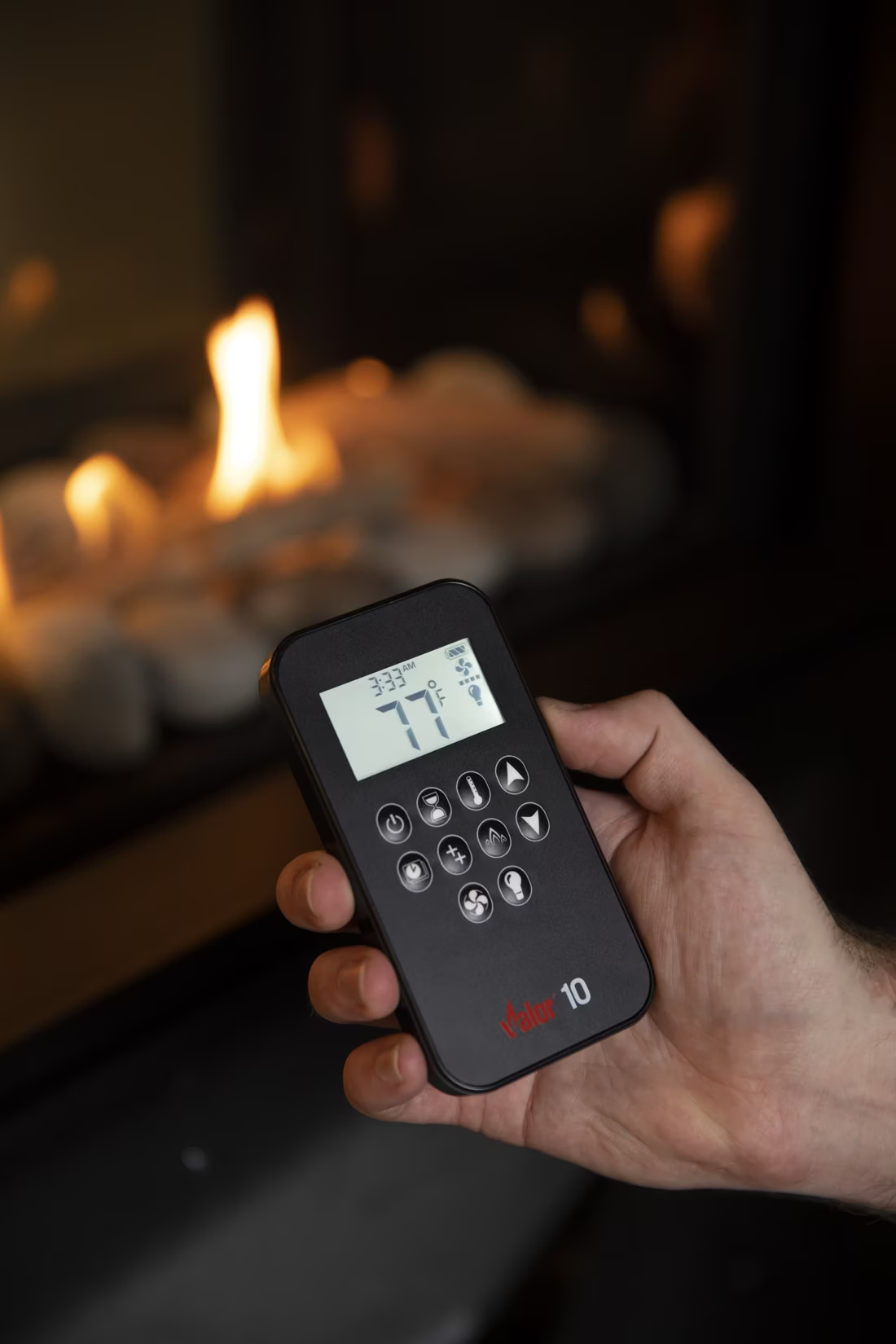
It can, and this is one of the strongest reasons Williston homeowners choose gas over electric. A propane direct-vent fireplace with intermittent pilot ignition (IPI) runs on small internal batteries rather than household power, so it keeps lighting and producing heat even during extended outages after a hurricane or tropical storm moves through Levy County. Some manufacturers, like Valor, go a step further with pilot-generated electricity that needs no batteries at all. If storm-season backup heat and light matter to you, ask your local dealer specifically about the ignition system on any unit you're considering—not all gas fireplaces are built the same way for outage performance.
How often should my gas fireplace be serviced in Williston's climate?
An annual inspection is still recommended even though the unit may only run occasionally through Williston's short, mild winter. Florida's warm, humid climate creates a specific local issue: vent terminations that sit unused for months at a time in warm weather are a common target for wasps and mud daubers, which can partially block venting before the next cold snap. A certified technician checking the burner, pilot assembly, venting, and propane connections once a year—typically before the first cool front in fall—catches that kind of blockage along with normal wear, and keeps the unit ready to run during a storm-related outage.
Gas vs. electric fireplace—which is right for my Williston home?
Electric fireplaces are cheaper to install (often $400 to $1,500), need no propane tank or venting, and run on power from Duke Energy Florida or Clay Electric Cooperative at a residential rate around 16.6 cents per kWh—a reasonable cost for occasional ambiance use. The catch is that electric units go dark exactly when you might want them most: during a grid outage after a storm. A propane gas fireplace costs more up front and needs a tank, but it keeps producing real heat and flame independent of the electric grid. For a primary living space where storm resilience matters, gas usually wins in Williston; for a bedroom or secondary room where you just want a cozy glow, electric is often the simpler, lower-cost choice.
What's the difference between an insert and a zero-clearance fireplace?
An insert is a fireplace that slides into a pre-existing wood-burning fireplace—if you don't have one, there's nothing to insert it into. A zero-clearance fireplace is built into a framed wall, which makes it the answer for remodels and new construction. Simple test: existing masonry fireplace means insert; blank or framed wall means zero-clearance.
Is my gas fireplace wasting gas?
If it was installed more than 15 years ago, probably. Older gas fireplaces keep a standing pilot light burning all the time, and that little flame can cost a couple hundred dollars a year. Newer models use pilot-on-demand ignition—the pilot lights only when you use the fireplace and goes out when you turn it off.
Does a fireplace add value to my home?
On average, a fireplace adds back to the home about the same amount you spent installing it. Add the monthly savings from heating the rooms you actually use instead of the whole house—often hundreds of dollars a year—and the value case is strong before you even count what a fire does for how your family uses the room.
What is an in-home preview and do I need one?
It's a visit where a hearth professional measures your space, confirms the model you picked actually works in your home, and walks the specs—framing, gas line, venting, finish work—before anything is ordered. Some details you just can't know until you see the house. Never make a down payment without one; it's the single most-skipped step that burns buyers.
Nearby Dealers
Hearth shops serving Williston and the surrounding area. Every listing shows whether it is a WhyFire partner, a dealer we have verified as authorized for the brands we recommend, or a local business carrying hearth products. No manufacturer pays for placement. How we verify dealers →
We’ve paused dealer listings for this connection today. Enter your zip or postal code above to find dealers near you, or come back tomorrow.
Popular Gas Brands
Where each brand came from, what's inside it today, and every current model. No brand pays to be here. Not every dealer carries every brand, so enter your zip code to see what's sold near Williston.
Kozy Heat
Kozy Heat was founded in 1976 by Dudley Hussong in Lakefield, Minnesota, and incorporated as Hussong Manufacturing Co., Inc. in 1978.
28 gas models →Fireplace Xtrordinair
Fireplace Xtrordinair, now often called FireplaceX, is the fireplace brand of Travis Industries, Inc., of Mukilteo, Washington.
25 gas models →Town & Country
Town & Country Fireplaces is the luxury gas fireplace brand of Pacific Energy Fireplace Products Ltd., of Duncan, British Columbia.
14 gas models →Lopi
Lopi is a wood, pellet, and gas stove brand founded by Kurt Rumens in Bellevue, Washington, in 1979.
7 gas models →Forge & Flame
Forge & Flame is the stove brand Hearth & Home Technologies introduced in August 2023 to bring Vermont Castings, Harman, and Quadra-Fire under one name.
6 gas models →Vermont Castings
Vermont Castings was founded in 1975 by Duncan Syme, the designer, and his brother-in-law Murray Howell, the business partner, in Randolph, Vermont.
6 gas models →Find your gas fireplace in Williston.
Tell us a bit about your home and propane setup, and we'll help you find a trusted local dealer and send over a free Project Guide & Parts List—the exact parts, including the vent kit, for your Williston gas fireplace project.
Find Your Fireplace →