
Fireplace and Stove Options for Every Levy County Home.
Wood, gas, pellet, and electric fireplace resources for every city and rural community in Levy County—from Bronson and Chiefland to Cedar Key and Yankeetown. Find the right unit and connect with a trusted local hearth retailer.
Every Project Starts From One of These Five Situations
Mild Winters, Strong Hearth Tradition Across Levy County, Florida.
Levy County sits on Florida's Nature Coast, a mostly rural stretch of oak hammocks, pine flatwoods, and Gulf marsh with about 20,700 residents spread across small towns like Bronson, Chiefland, Williston, and the fishing village of Cedar Key. This is climate zone 2A—winters average a low of 44°F and the county logs roughly 1,100 heating degree days a year, a fraction of what a place like Buffalo, NY racks up in a single January. There's no true 'heating season' here so much as a handful of cold fronts each winter that push overnight temperatures into the 30s. Even so, fireplaces are common in Levy County homes—not as survival equipment, but for ambiance, gathering space, and the occasional cold snap along the coast where humidity makes even 45°F feel colder than it sounds.
What you'll find on this hub: hearth retailers, service technicians, and fuel suppliers covering every community in the county—from the county seat in Bronson out to Inglis and Yankeetown on the Withlacoochee, north to Fanning Springs, and out to Cedar Key on the water. Pick your fuel below to see local dealers, typical installation costs, and the units that make sense for a Nature Coast home. Whether you're adding a wood-burning centerpiece with local oak or a low-maintenance electric unit for a screened Florida room, this is the starting point.
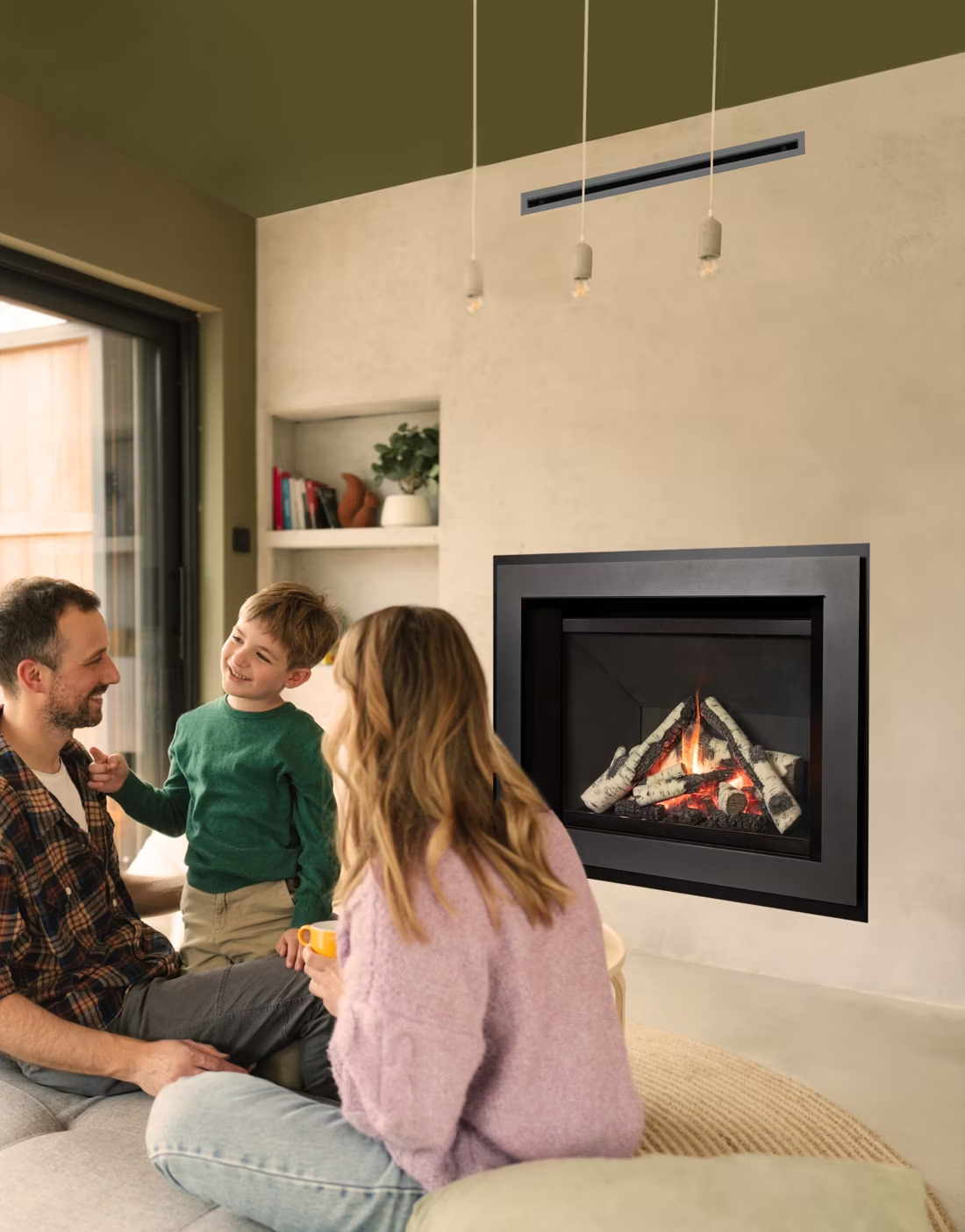
Four fuels. One honest answer for Levy County.
Three steps. No salesperson until you're ready.
Tell us about your project
Your zip code, your situation, and the fuel you're leaning toward—or let the answers point you to one.
See what's actually available
The brands dealers within 100 miles genuinely carry—real options, never a catalog mirage.
Get your dealer & Project Guide
A trusted local dealer, plus the free Project Guide & Parts List that names every component of the job.
Frequently Asked Questions
Which fuel works best in a mild climate like Levy County?
With only about 1,100 heating degree days a year, no Levy County home truly needs a fireplace to survive winter—but plenty of homeowners still want one. Wood remains a popular choice for the ambiance and the abundance of local oak and pine; a wood-burning fireplace or small stove gets real use during the county's occasional hard cold fronts and is a strong draw for buyers who grew up with one. Gas is the low-maintenance pick for homeowners who want instant flame without stacking firewood—propane is the common source here since natural gas mains are limited outside the larger towns. Pellet stoves are a middle-ground option, though given the short burn season most Levy County pellet buyers use them lightly rather than as a daily heat source. Electric fireplaces are genuinely practical here—no venting, no fuel storage, and enough visual warmth for a mild-climate living room or a screened addition. Most homes in the county end up choosing based on aesthetic and lifestyle fit rather than heating necessity.
Do I need a permit to install a fireplace in Levy County?
Generally yes for anything beyond a plug-in electric unit. New wood-burning fireplaces, wood stoves, gas fireplaces, gas inserts, and pellet stoves typically require a building permit through the Levy County Building Department, and gas installations need a separate permit and licensed gas contractor for the line work. Electric fireplaces usually skip the permit process unless you're hardwiring a built-in unit into a new circuit. Because Levy County is largely unincorporated, most permitting for towns like Bronson, Chiefland, and Williston runs through the county rather than a separate city office. Local hearth retailers here are used to handling the paperwork as part of a full installation, so most homeowners don't have to navigate it solo.
Are there air quality restrictions on wood burning in Levy County?
No—Levy County has no air quality non-attainment designation, no winter inversion pattern, and no wildfire-smoke advisories tied to wood-burning appliances the way you'd see in a mountain or high-desert county. Gulf breezes keep the air moving, so there's no local equivalent of a 'no-burn day' for indoor fireplaces. The one caveat: during periods of drought, the county or state Forestry Service may issue outdoor burn bans for brush piles and yard debris, but those restrictions target open burning, not fireplaces or stoves operating inside a home.
Can one local retailer handle all four fuel types?
In a rural county like Levy, this is more common than not. With a smaller customer base spread across towns like Chiefland and Williston, most local hearth dealers stock wood, gas, pellet, and electric units side by side rather than specializing in just one fuel—it's simply more efficient to serve the whole county from one or two showrooms. That works in your favor if you're not sure which fuel fits your home: a single visit lets you compare a wood-burning unit built for local oak against a low-maintenance electric option or a propane insert, side by side.
How does fireplace service work in rural parts of Levy County?
Most technicians serving Levy County are based out of the larger towns and travel to outlying areas—Cedar Key, Yankeetown, and Otter Creek included—sometimes crossing county lines from Gainesville or the Ocala area for specialty gas or pellet service. Expect a modest travel fee for the more remote coastal communities. Because heating season here is short and unpredictable, the best time to book annual chimney sweeping or gas inspection is late summer or early fall, before the first cold front of the season fills up local schedules.
What's the typical cost range for fireplace installation across all fuel types in Levy County?
Costs in Levy County tend to run toward the lower end of national ranges since most installs are smaller units built for occasional use rather than daily primary heat. Wood-burning fireplace or stove installation typically runs $3,500–$7,500, less if an existing masonry chimney just needs a liner and hearth work. Gas fireplace, insert, or stove installation runs $4,000–$9,000, with propane conversions usually cheaper than sites needing new gas line work. Pellet stove or insert installs run $4,000–$6,500. Electric fireplaces are the most affordable entry point—$200–$2,500 for the unit, with $300–$1,000 in labor for anything beyond a simple plug-in. See the county + fuel pages above for retailer-specific pricing.
How much should I budget for a fireplace?
For an average home—covering the fireplace, the vent pipe, and basic installation—a budget between $3,900 and $5,500 gives you a lot of options across wood, gas, and pellet. By the time you add finish work, gas line, and electrical, the average complete installation lands between $5,000 and $12,000 all-in. In a remodel or new build, a good rule is to put about 2.5% of the total project cost toward the fireplace.
Wood, gas, pellet, or electric—how do I choose?
Match the fuel to your life, not the other way around. Wood: lowest fuel cost and total power-outage independence, but you're hauling and stacking. Gas: press a button, set a thermostat, no maintenance to speak of. Pellet: wood economics with automatic feeding, in exchange for weekly cleaning and a need for electricity. Electric: plugs in anywhere with honest supplemental heat. Nobody regrets the fuel that fits how they actually live.
Does a fireplace add value to my home?
On average, a fireplace adds back to the home about the same amount you spent installing it. Add the monthly savings from heating the rooms you actually use instead of the whole house—often hundreds of dollars a year—and the value case is strong before you even count what a fire does for how your family uses the room.
Should the dealer who sells my fireplace also install it?
Ideally, yes. A fireplace project involves vent pipe, gas line, electrical, and often tile or stone. Hire three or four separate trades and you own the liability and the game of telephone between them. One company selling and installing means one accountable party, start to finish—ask about factory training, on-time completion records, and what happens if an inspection fails.
Stove and Fireplace Dealers in Levy County
Listings include WhyFire partner dealers, dealers we have verified as authorized for the brands we recommend, and established local businesses that carry hearth products. Every listing shows which one it is. The ones marked Preferred run on WhyFire's software, so they can show you real pricing and book your appointment right here. No manufacturer pays for placement. How we verify dealers →
Blossman Gas
Find your fireplace in Levy County.
Pick your fuel below and we'll match you with a trusted local dealer and send you a free Project Guide & Parts List—the exact parts, including the vent kit, for your project along with our recommended dealer near you.
Find Your Fireplace →