
Find the right gas fireplace for your Levy County home.
Instant, low-maintenance heat and ambiance for the Nature Coast—from Chiefland to Cedar Key. We'll match you with a trusted local dealer who knows propane setups and coastal installs.
Every Project Starts From One of These Five Situations
Warm-climate comfort, built for occasional chill and everyday ambiance.
Levy County sits squarely in climate zone 2A, with an average winter low around 44°F and a light winter heating load overall—just a fraction of what a place like Duluth, MN or Burlington, VT sees. That means heating isn't a survival issue here the way it is up north. But it does get genuinely cold a handful of nights each winter, when Arctic fronts push down through the Nature Coast and temperatures in Chiefland, Bronson, Williston, and out toward Cedar Key can dip into the 20s and 30s. A gas fireplace fills that gap—instant heat on the nights that call for it, and a warm focal point the rest of the year.
Most of unincorporated Levy County isn't served by a municipal natural gas utility, so propane is the standard fuel here—tank-fed systems supplied by regional propane companies rather than a piped gas line. That's a different install path than a natural-gas metro area, and it's exactly where a local dealer earns their keep: sizing the tank, running the gas line correctly, and making sure the unit is rated for propane from day one. For a county with a fair number of older homes built around wood-burning fireplaces using local oak and pine, converting to a clean-running gas insert is one of the more common upgrades we see requested.
Three steps. No salesperson until you're ready.
Tell us about your project
Your zip code, your situation, and the fuel you're leaning toward—or let the answers point you to one.
See what's actually available
The brands dealers within 100 miles genuinely carry—real options, never a catalog mirage.
Get your dealer & Project Guide
A trusted local dealer, plus the free Project Guide & Parts List that names every component of the job.
Frequently Asked Questions
How much does a gas fireplace installation cost in Levy County?
Most gas fireplace and insert installations in Levy County run roughly $3,500 to $8,500, with the spread driven mainly by whether you already have a propane tank and line in place. A gas insert going into an existing masonry fireplace with propane already run to the house sits on the lower end. New propane tank installation, longer line runs out to a detached structure, or a full direct-vent fireplace in new construction pushes toward the higher end. Coastal properties near Cedar Key or Yankeetown sometimes see slightly higher costs due to travel and elevated construction requirements. A local dealer can give you a firm number after seeing your home and current propane setup.
Is natural gas available in Levy County, or is it all propane?
Most of Levy County—including Bronson, Chiefland, Williston, and the rural areas around Gulf Hammock and Cedar Key—is not served by a piped natural gas utility. Propane is the standard fuel for gas fireplaces here, supplied by regional propane companies that deliver and maintain tanks. If you're not sure whether your address has natural gas access, your local hearth dealer can check before recommending a unit, but plan on propane as the default when budgeting your project.
Do I actually need a gas fireplace if Levy County winters are mild?
With such a light winter heating load overall and an average winter low near 44°F, Levy County isn't a heating-driven market the way a cold-climate county would be. Most homeowners here install a gas fireplace for ambiance and zone comfort rather than whole-home heat—something to flip on during the occasional January cold snap when temperatures drop into the 20s, or simply to have a warm gathering spot on cool evenings. It's a smaller-scale project than in a place with real winters, but the instant on-off convenience and resale appeal still make it worthwhile for a lot of local homes.
Can I convert my existing wood fireplace to gas?
Yes, and it's a common request in Levy County's older homes, many of which were built with a wood-burning fireplace using local oak or pine. A gas insert typically drops into that existing masonry opening, using a stainless liner run through the current chimney. Since most of the county runs on propane rather than piped gas, the conversion also usually involves running a propane line from a new or existing tank to the fireplace. Expect the project to land in the same $3,500 to $8,500 range as a standalone install, depending on tank and line work.
Will my gas fireplace work during a power outage?
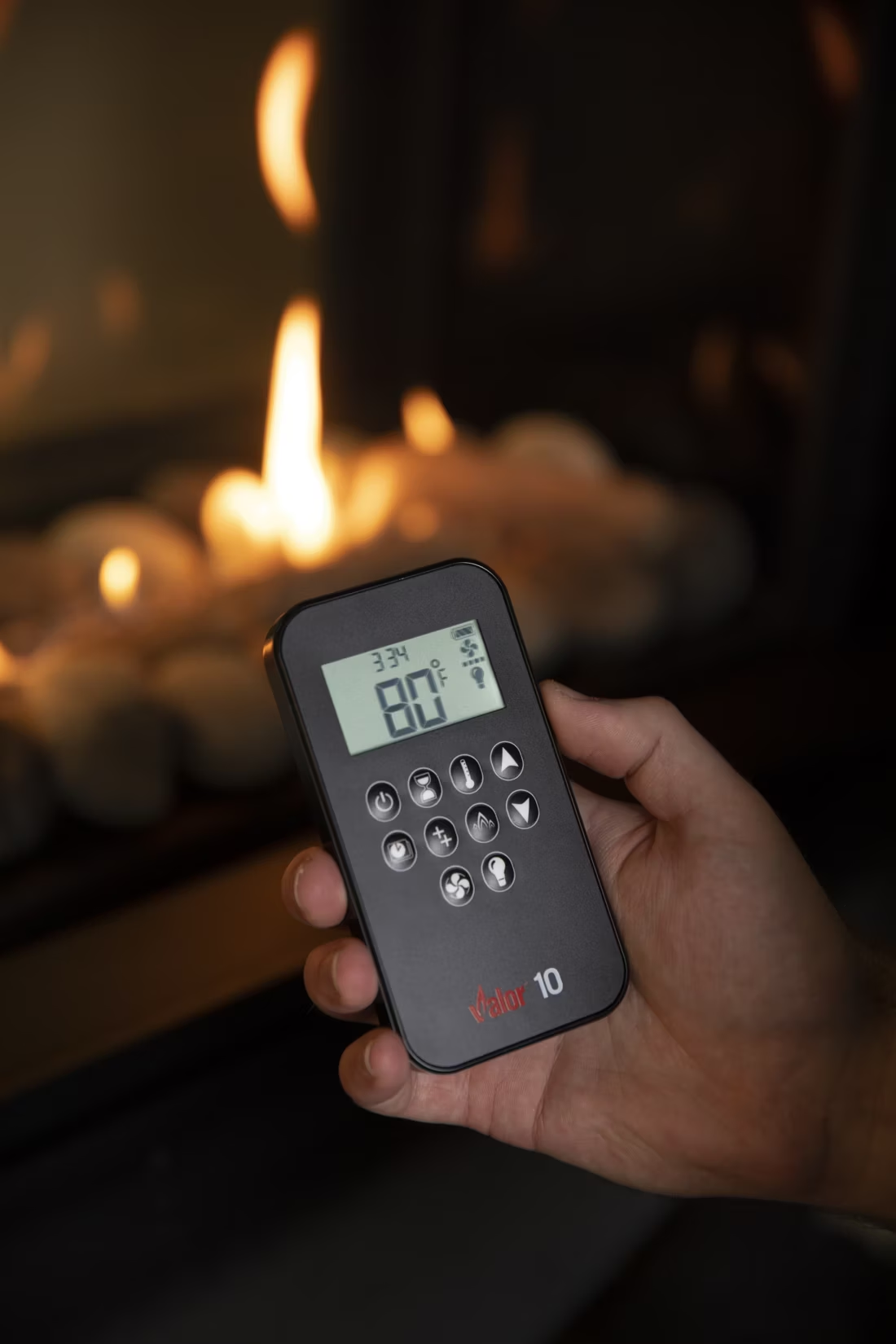
For a Gulf Coast county like Levy—where hurricane season brings real risk of extended outages in Cedar Key, Yankeetown, and other low-lying areas—this matters. Most modern gas fireplaces with intermittent pilot ignition include a battery backup that keeps the unit operable when the power drops. Valor fireplaces take a different approach, generating their own electricity through the pilot's thermocouple so there's no battery to remember at all. If storm-season reliability is a priority, ask your local dealer specifically about the ignition system on any unit you're considering.
Do I need a permit to install a gas fireplace in Levy County?
Yes—new gas fireplace and insert installations require a building permit through the Levy County Building Department in Bronson, along with a permit for the propane gas line work, which must be done by a licensed gas fitter. Most local hearth dealers coordinate the permitting and the gas line trade as part of the install, so you're not left managing multiple contractors on your own.
What's the difference between vented and vent-free gas fireplaces?
Vented (direct-vent) gas fireplaces draw combustion air from outside and exhaust it back outside through a sealed vent—they're the more universally recommended option and the one most local dealers install by default. Vent-free units burn directly into the room without external venting; they're legal in Florida under specific room-sizing and ventilation rules, but they add moisture and combustion byproducts to indoor air. Given Levy County's humid Gulf Coast climate, most dealers steer homeowners toward direct-vent units to avoid adding to an already humid indoor environment.
How often should my gas fireplace be serviced?
An annual inspection is recommended for any gas appliance, including propane-fed fireplaces and inserts. A technician checks the burner, pilot assembly, gas connections, and venting, and cleans the glass and interior—usually $150 to $250. In Levy County, it's worth scheduling that visit before hurricane season ramps up, so the unit is dependable if you need it during storm-related outages.
Gas vs. electric fireplace—which makes more sense for my Levy County home?
Electric fireplaces need no venting or gas line at all—just a standard outlet—which makes them a fast, low-cost option for manufactured and mobile homes, common throughout rural Levy County, or for renters and secondary rooms. Gas fireplaces cost more to install but deliver real radiant heat and an authentic flame, and with propane already the standard fuel here, many homeowners who already use propane for a water heater or range find adding a gas fireplace straightforward. For a primary living space where you want a genuine fire and reliable warmth on the occasional cold night, gas is usually the better fit; for a bonus room, mobile home, or budget-conscious ambiance upgrade, electric holds its own.
Is my gas fireplace wasting gas?
If it was installed more than 15 years ago, probably. Older gas fireplaces keep a standing pilot light burning all the time, and that little flame can cost a couple hundred dollars a year. Newer models use pilot-on-demand ignition—the pilot lights only when you use the fireplace and goes out when you turn it off.
Can I put a TV above my fireplace?
Yes—with an asterisk. Fireplaces are hot and TVs don't like heat. Either put a mantel between them to deflect rising warmth, or choose a fireplace with heat-management technology that creates a cool zone on the wall above—the wall stays around 125 degrees, barely warm, while the room still gets full heat. If you like clean lines and don't want a mantel, heat management is the answer.
Can a fireplace actually lower my heating bill?
Yes—by creating a comfort zone. A furnace heats every square foot of the house just to warm the one room you're in; a gas fireplace on low burns roughly a sixth of the gas a typical furnace does. Set the furnace around 55–60 degrees as a baseline, then heat the rooms your family actually uses. Families who heat this way commonly save $20–$60 a month.
What is an in-home preview and do I need one?
It's a visit where a hearth professional measures your space, confirms the model you picked actually works in your home, and walks the specs—framing, gas line, venting, finish work—before anything is ordered. Some details you just can't know until you see the house. Never make a down payment without one; it's the single most-skipped step that burns buyers.
Find your gas fireplace in Levy County.
Tell us about your home and your current propane setup, and we'll match you with a trusted local Levy County dealer—plus a free Project Guide & Parts List with the exact parts, vent kit, and recommended installer for your project.
Find Your Fireplace →