
Pellet Heat in a City That Rarely Needs It.
With winter lows averaging 58°F, Westchester isn't pellet-stove country—but if you want one for ambiance, a Florida room, or a second home up north, we'll connect you with a dealer who can do it right.
Every Project Starts From One of These Five Situations
Miami-Dade's climate makes pellet stoves the exception, not the rule.
Westchester sits in climate zone 1A at just 7 feet of elevation, logging roughly 142 heating degree days a year. Compare that to a place like Duluth, MN, which racks up over 9,000 HDD annually, and the gap explains everything: homes here simply don't need a supplemental heat appliance most winters. A pellet stove sized for a Minnesota basement would sit unused for 350+ nights a year in a Westchester living room.
That said, a small number of local homeowners still pursue pellet stoves—usually for the visual and ambient appeal of a real flame, for the rare cold snap when temperatures dip into the 40s, or because they split time between a Westchester property and a colder second home. Regional pellet brands like Lignetics, Hamer Pellet Fuel, and Greenway Renewable Energy do circulate in Florida through specialty retailers, but stock and installer experience are thinner here than in northern markets, which is exactly where a trusted local match matters most.
Three steps. No salesperson until you're ready.
Tell us about your project
Your zip code, your situation, and the fuel you're leaning toward—or let the answers point you to one.
See what's actually available
The brands dealers within 100 miles genuinely carry—real options, never a catalog mirage.
Get your dealer & Project Guide
A trusted local dealer, plus the free Project Guide & Parts List that names every component of the job.
Frequently Asked Questions
Does anyone actually install pellet stoves in Westchester, FL?
Yes, but it's uncommon. With an average winter low around 58°F and only about 142 heating degree days a year, almost no Westchester home needs a pellet stove for warmth. The handful of installs we see locally are usually decorative—a Florida room, a lanai conversion, or a homeowner who simply likes the look and sound of a real flame on the rare chilly evening. If that's you, a local dealer can still spec and vent a unit correctly; it's just a smaller, more specialized job than in a cold-climate market.
What does a pellet stove installation cost in Westchester?
Because pellet installs are rare here, there isn't a well-established local price benchmark the way there is for gas fireplaces or electric inserts. Nationally, a vented pellet stove install typically runs $3,000–$6,000 depending on the unit and venting path, but in Westchester that number can shift based on how far your matched dealer has to source the appliance and whether venting through an exterior wall or existing chase is feasible in your home's construction. Get a firm quote through your matched local dealer rather than relying on a generic estimate.
Why don't more homes in Westchester use pellet heat?
Miami-Dade County sits in climate zone 1A with essentially no sustained heating season—winter lows average 58°F, and hard freezes are practically nonexistent. Pellet stoves are built to deliver steady, thermostat-controlled heat over long cold stretches, the kind of demand you'd see in a Fargo, ND winter, not a South Florida one. Central air conditioning, not supplemental solid-fuel heat, is the dominant HVAC concern for Westchester homes, which is why pellet stoves stayed a niche product here rather than a mainstream one.
Are there local dealers in Miami-Dade who carry pellet stoves?
A limited number of hearth and patio retailers in the Miami-Dade area stock or special-order pellet units, often alongside gas and electric fireplace lines that see far more regular demand. Because the category is small here, dealer experience varies more than it would in a cold-climate city where pellet stoves are a routine sale. Find My Fireplace's role is matching you with the retailer in the area who genuinely has pellet installation experience, rather than one who's only installed a handful and is learning on your project.
Can I even buy pellet fuel in Westchester?
It's available, but not at the density you'd find in a Northeast or Upper Midwest market. Regional brands like Lignetics, Hamer Pellet Fuel, and Greenway Renewable Energy distribute into Florida, and some specialty hearth retailers or farm supply stores carry bagged pellets, but you may need to order ahead or buy in larger quantities rather than grabbing a bag on demand. If you install a pellet stove for occasional ambiance use, one or two pallets purchased in fall will likely cover you for the season.
I have a second home up north—should I install the pellet stove here or there?
If your northern property actually sees a real winter, that's almost always the better home for a pellet stove from a practical standpoint—it'll get real use, the local dealer network will have deeper install experience, and fuel will be easier to source. For your Westchester home, many homeowners in this situation choose a gas or electric fireplace instead for everyday ambiance, and save the pellet stove for the property where it'll actually carry heating load. We're happy to match you with a dealer in either location depending on what you're trying to accomplish.
Would a gas or electric fireplace make more sense for my Westchester home?
For most Westchester homeowners, yes. Both gas and electric fireplaces are rated standard fuel choices for this area, unlike pellet. Florida Power & Light serves electric customers here at roughly 13.7 cents per kWh, making a plug-in or hardwired electric fireplace an easy, no-venting option for ambiance. Gas fireplaces offer a more traditional flame and are common in newer Westchester construction. Either avoids the fuel-sourcing and venting complications that come with a pellet stove in a market where pellet installs are the exception.
Do I need a permit to install a pellet stove in Westchester?
Yes. Miami-Dade County requires a building permit for any solid-fuel or vented appliance installation, including pellet stoves, even when the unit is installed primarily for decorative use. A licensed local installer will typically pull this permit as part of the job and make sure the venting and clearances meet county code, which matters more here than in cold climates simply because inspectors see so few of these installs and will scrutinize the work closely.
Pellet vs. electric fireplace—which is right for my Westchester home?
Electric fireplaces require no venting, no fuel storage, and no combustion byproducts—they plug into an existing outlet or get hardwired, and Florida Power & Light's residential rate keeps running costs modest for occasional use. Pellet stoves deliver a real flame and genuine heat output but need venting, a fuel supply chain that's thinner in South Florida, and periodic maintenance suited to regular burning. For a Westchester home where the goal is ambiance rather than heating load, electric is usually the simpler, lower-maintenance choice. If you specifically want the look and feel of a pellet fire, it's absolutely doable—it just takes the right dealer.
What's the difference between an insert and a zero-clearance fireplace?
An insert is a fireplace that slides into a pre-existing wood-burning fireplace—if you don't have one, there's nothing to insert it into. A zero-clearance fireplace is built into a framed wall, which makes it the answer for remodels and new construction. Simple test: existing masonry fireplace means insert; blank or framed wall means zero-clearance.
How often does a pellet stove need cleaning?
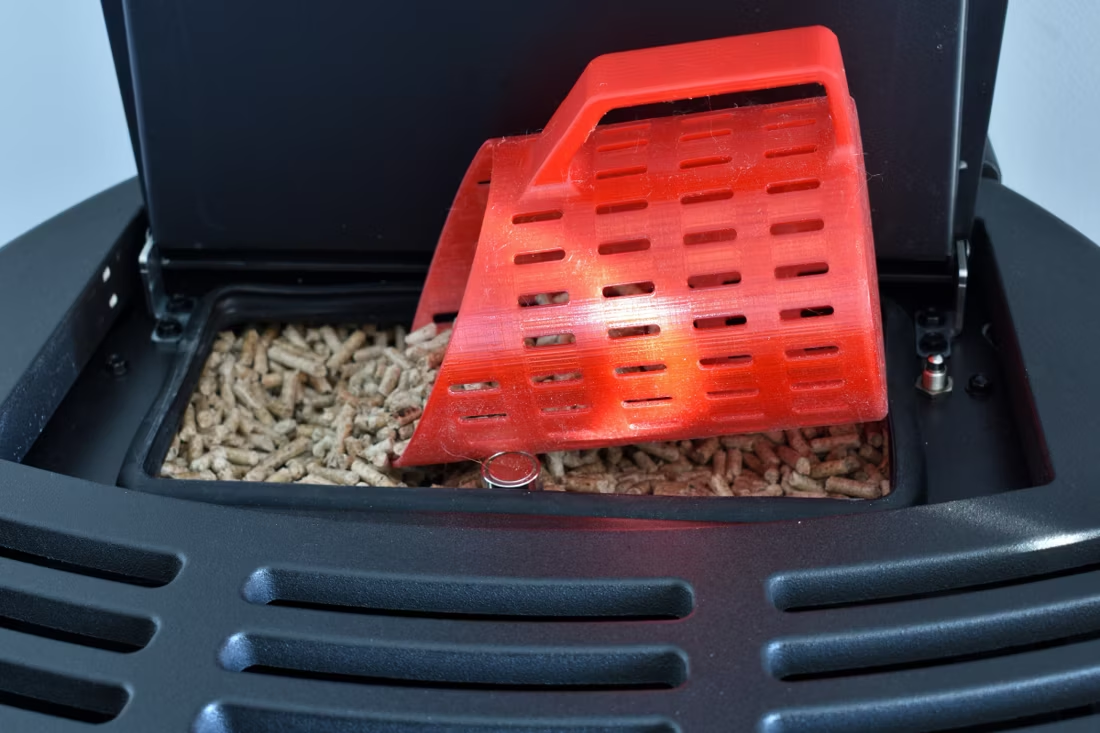
A clean pellet stove is a happy pellet stove. Plan on cleaning the burn pot about once a week when you're burning regularly—ash and clinkers gum up the air holes just like a pellet barbecue. Most pellet stove problems trace back to skipped cleaning that nobody explained up front. Some designs make it easy with a trapdoor burn pot: pull a lever and the gunk drops into the ash pan.
Can a fireplace actually lower my heating bill?
Yes—by creating a comfort zone. A furnace heats every square foot of the house just to warm the one room you're in; a gas fireplace on low burns roughly a sixth of the gas a typical furnace does. Set the furnace around 55–60 degrees as a baseline, then heat the rooms your family actually uses. Families who heat this way commonly save $20–$60 a month.
How much should I budget for a fireplace?
For an average home—covering the fireplace, the vent pipe, and basic installation—a budget between $3,900 and $5,500 gives you a lot of options across wood, gas, and pellet. By the time you add finish work, gas line, and electrical, the average complete installation lands between $5,000 and $12,000 all-in. In a remodel or new build, a good rule is to put about 2.5% of the total project cost toward the fireplace.
Nearby Dealers
Hearth shops serving Westchester and the surrounding area.
Pellet Brands Stocked Around Westchester
Manufacturers will point you to the nearest stocking dealer.
See if a pellet stove makes sense for your Westchester home.
Tell us about your home and how you'd use a pellet stove, and we'll match you with a local dealer who actually has pellet installation experience—plus a free Project Guide & Parts List with the exact venting and parts your project needs.
Find Your Fireplace →