
Built for winters that barely arrive in West Palm Beach.
West Palm Beach logs about 202 heating degree days a year—Duluth, Minnesota can rack up that many in a single cold week. Pellet stoves aren't a heating necessity here, but if you want one for the right reasons, I'll match you with a trusted local dealer who can install it correctly.
Every Project Starts From One of These Five Situations
Pellet stoves exist here—but heating demand nearly doesn't.
West Palm Beach sits at just 16 feet of elevation in climate zone 2A, with winter lows averaging 58°F and roughly 202 heating degree days a year—a fraction of what a place like Duluth or Fargo logs in a single winter month, let alone a full season. There's essentially no sustained cold stretch here, and no local building code assumes a home needs supplemental solid-fuel heat to get through January. That reality shapes almost everything about how—or whether—a pellet stove fits into a West Palm Beach home.
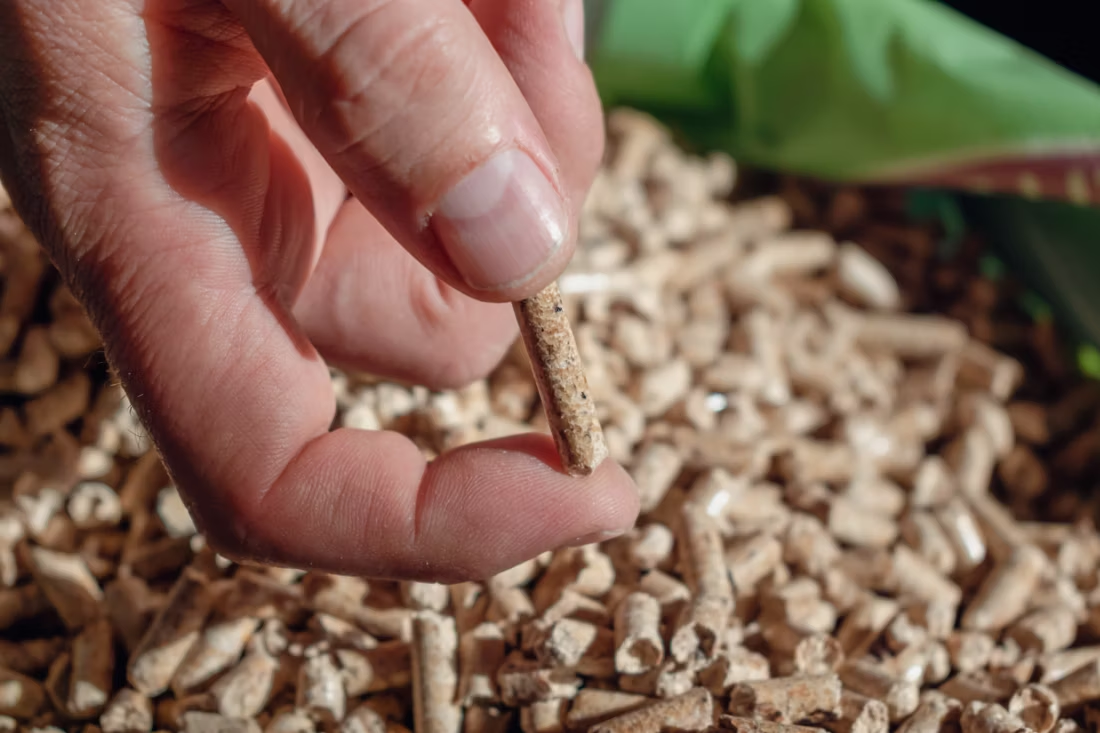
Local hardwoods like oak, mahogany, and pine are common in yards and lumber here, but that has little to do with pellet fuel, which is manufactured and trucked in rather than sourced locally. Regional brands like Lignetics, Hamer Pellet Fuel, and Greenway Renewable Energy supply much of the Southeast, though their distribution leans toward inland and northern markets where pellet heat solves a real problem, not coastal Palm Beach County. When a pellet insert does go into a West Palm Beach home, it's almost always for the flame and the look—a fireplace surround someone wants activated, or a second-home owner replicating what they run up north—rather than for BTUs the house actually needs. It's a legitimate project a trusted local dealer can still spec correctly, just not a mainstream heating decision the way it is across most of the country.
Three steps. No salesperson until you're ready.
Tell us about your project
Your zip code, your situation, and the fuel you're leaning toward—or let the answers point you to one.
See what's actually available
The brands dealers within 100 miles genuinely carry—real options, never a catalog mirage.
Get your dealer & Project Guide
A trusted local dealer, plus the free Project Guide & Parts List that names every component of the job.
Frequently Asked Questions
Do people actually install pellet stoves in West Palm Beach?
Some do, but it's a small slice of the local fireplace market. With winter lows averaging 58°F and only about 202 heating degree days a year, almost no West Palm Beach home needs supplemental heat to get through winter. The owners who do install a pellet stove or insert are usually after the look of a real flame, a specific room aesthetic, or a fireplace surround they already have and want to activate—not heat output to survive a cold snap. It's an uncommon project, but a legitimate one, and a local dealer can still install it correctly.
How much does a pellet stove installation cost in West Palm Beach?
Because pellet stoves are rare enough in Palm Beach County that there isn't a deep local cost benchmark the way there is in colder markets, pricing here tracks national averages: roughly $3,500 to $6,500 for a freestanding stove or insert with venting, depending on whether pipe runs through an exterior wall or up an existing masonry chase. Since a given dealer may only do a handful of these installs a year, it's worth getting more than one quote—labor pricing on infrequent jobs varies more than it does for common gas or electric work.
What's the difference between a pellet stove and a wood stove for a South Florida home?
Both are minority choices in West Palm Beach for the same underlying reason—there's almost no heating season to justify either—but pellet stoves have a practical edge here: no splitting or seasoning cordwood from oak, mahogany, or pine, cleaner combustion, and venting that can often run smaller PVC intake/exhaust pipe rather than a full masonry chimney. That last point matters in a market where most homes were never built with a working flue to begin with.
Can I get pellets locally in West Palm Beach?
Not off every shelf. Regional brands like Lignetics, Hamer Pellet Fuel, and Greenway Renewable Energy supply much of the Southeast, but their distribution leans toward inland and northern areas where pellet heat is a genuine necessity, not coastal Palm Beach County. Most West Palm Beach owners order pellets online or through a specialty hearth dealer and arrange delivery once or twice a season rather than picking bags up at a hardware store the way you would in a colder climate.
Would an electric fireplace make more sense than pellet in West Palm Beach?
For most homeowners here, yes. Electric units need no venting, no fuel storage, and no combustion permit, and Florida Power & Light's residential rate of about 13.7 cents per kWh keeps the flame-effect running cost low given how few hours a year you'd actually want any heat output. West Palm Beach's zip codes, from 33401 to 33417, sit in climate zone 2A, a region built around air conditioning rather than heating—which is exactly why an electric insert delivering ambiance without real thermal load often fits better than a pellet appliance sized for a heating job the house doesn't have.
Do I need a permit for a pellet stove in West Palm Beach?
Yes—a building permit through the City of West Palm Beach Building Division, or the Palm Beach County Building Division if you're in unincorporated pockets like parts of 33411 or 33412, is required no matter how uncommon the appliance is locally. The permit covers venting penetration and clearances much the way it would for a gas insert; a dealer who handles the occasional pellet job in the county will know how to walk it through inspection.
Is there a market for pellet stoves among second-home owners in West Palm Beach?
A modest one. Some owners who split time between West Palm Beach and a colder home up north install a pellet stove here purely to replicate the look and feel of the fireplace they actually rely on elsewhere—it's an aesthetic choice more than a heating one. Others convert an unused fireplace surround into a working pellet insert as part of a renovation. Either way, it's worth telling your dealer upfront that heat output isn't the priority, since that changes which unit and venting setup actually makes sense.
What maintenance does a pellet stove need in a humid climate like West Palm Beach?
More attention to pellet storage than an owner in a drier climate would need. South Florida humidity causes bagged pellets to absorb moisture, swell, and jam the auger feed if they're not kept sealed and off a damp garage floor. Beyond that, the hopper, burn pot, and exhaust vent still need standard seasonal cleaning—but since most West Palm Beach installs see light, occasional use rather than daily winter burns, ash buildup is rarely the issue here; moisture control is the bigger local variable.
Pellet vs. gas—which makes more sense in West Palm Beach?
Gas, for most homeowners. It's a standard, well-supported fuel option in West Palm Beach with established local dealers and straightforward permitting, and it delivers instant ambiance without the pellet-storage and humidity concerns that come with solid fuel in a coastal climate. Pellet stoves remain a niche, appearance-driven choice here—fine if that specific look and burn profile is what you want, but gas is the fuel most West Palm Beach hearth dealers actually stock and service routinely.
How often does a pellet stove need cleaning?
A clean pellet stove is a happy pellet stove. Plan on cleaning the burn pot about once a week when you're burning regularly—ash and clinkers gum up the air holes just like a pellet barbecue. Most pellet stove problems trace back to skipped cleaning that nobody explained up front. Some designs make it easy with a trapdoor burn pot: pull a lever and the gunk drops into the ash pan.
Why is my open fireplace making my house colder?
Open fireplaces suck—literally. As the fire burns, it consumes air your furnace already paid to heat and pulls it out through the chimney, so the house is actually colder after the fire goes out than before you lit it. An insert fixes this: it seals the chimney, puts fixed glass across the front, and turns that hole in your house into a real heat source.
Can I install a fireplace myself?
If you're putting a fire in your house on purpose, it's best to work with an expert. Unless you're genuinely experienced in framing, gas line, vent pipe, and the national code on clearances to combustibles, have a professional do it—and ideally the same company that sells you the fireplace, so warranty, service, and liability all live under one roof.
Can a fireplace actually lower my heating bill?
Yes—by creating a comfort zone. A furnace heats every square foot of the house just to warm the one room you're in; a gas fireplace on low burns roughly a sixth of the gas a typical furnace does. Set the furnace around 55–60 degrees as a baseline, then heat the rooms your family actually uses. Families who heat this way commonly save $20–$60 a month.
Nearby Dealers
Hearth shops serving West Palm Beach and the surrounding area.
Gas Fire Distributors
Gas Utility Service
Pellet Brands Stocked Around West Palm Beach
Manufacturers will point you to the nearest stocking dealer.
Get your free Project Guide & Parts List for a pellet project in West Palm Beach.
Pellet heat is a niche choice in West Palm Beach, but if it's the look and function you're after, I'll match you with a trusted local dealer who installs them correctly and send a free Project Guide & Parts List—the exact vent kit and parts your project needs, sized honestly for a home that doesn't actually need the BTUs.
Find Your Fireplace →