
Real Flame Look, Built for Florida Living.
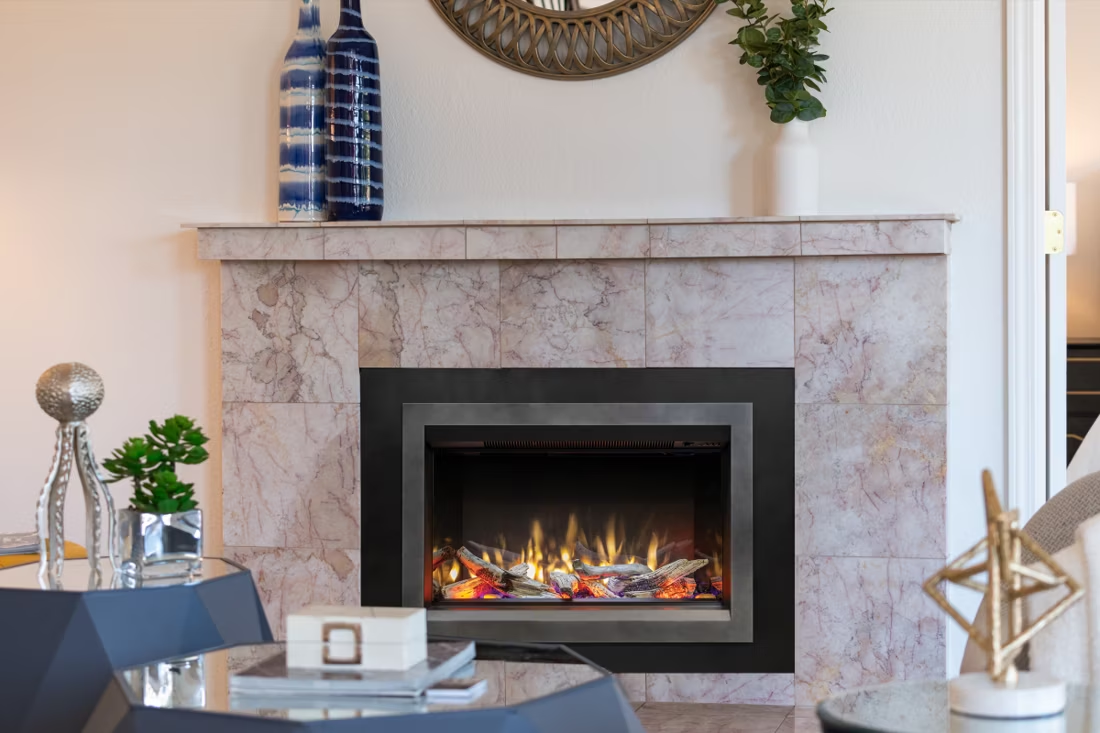
With a 58-degree average winter low and almost no real heating need, West Palm Beach homes want the look of fire without the venting, the gas line, or the wood mess. Electric delivers exactly that.
Every Project Starts From One of These Five Situations
Heat isn't really the point down here.
West Palm Beach sits in climate zone 2A at 16 feet above sea level, with a winter heating need so light it barely registers—for comparison, a city like Duluth, MN faces a heating season nearly 50 times as demanding. Winter lows here average 58°F, and a stretch of nights actually near freezing is rare enough to make local news. Wood stoves and pellet stoves have essentially no functional role in a house like this—there's no cutting season, no permit office to visit, and no cold snap long enough to justify feeding a firebox. That's precisely why electric has become the practical, popular choice: it delivers the visual warmth of a fire—oak, mahogany, and pine-look log sets included—without asking your house to actually need the heat.
Florida Power & Light serves the city, and at roughly $0.137 per kWh, running a 1,500-watt electric fireplace costs about 20 cents an hour—a rounding error most residents never notice on the bill. Because there's no combustion, no flue, and no gas line, electric units are also the easiest option for the condos and high-rises that line Flagler Drive and South Dixie Highway, many of which restrict open-flame appliances entirely under their HOA or building rules. A wall-mounted or built-in electric unit sidesteps that problem completely.
Three steps. No salesperson until you're ready.
Tell us about your project
Your zip code, your situation, and the fuel you're leaning toward—or let the answers point you to one.
See what's actually available
The brands dealers within 100 miles genuinely carry—real options, never a catalog mirage.
Get your dealer & Project Guide
A trusted local dealer, plus the free Project Guide & Parts List that names every component of the job.
Frequently Asked Questions
How much does an electric fireplace installation cost in West Palm Beach?
Plug-in electric inserts or freestanding units that use a standard 120V outlet typically run $300 to $1,200 installed, since there's no wiring or venting work involved—just placement and, in some cases, a mantel surround. Built-in or wall-mounted units that require a dedicated circuit, in-wall electrical work, or a custom surround usually land between $1,500 and $4,500, depending on whether an electrician needs to run new wiring and whether you're finishing the wall around it. Compare that to a gas fireplace install here, which often needs a new gas line run through a slab-on-grade home—electric is almost always the cheaper, faster project.
Does West Palm Beach ever actually get cold enough to need the heat?
Rarely, and only briefly. With a winter heating need so light it barely registers and average winter lows around 58°F, most West Palm Beach homes never run a heating system at all. But a handful of nights each January can dip into the high 30s or low 40s, especially inland toward zip codes like 33411 and 33412. A 1,500-watt electric fireplace puts out roughly 5,000 to 9,000 BTUs, which is more than enough to take the chill off a living room or bedroom on those nights—it's a nice bonus, not the reason most people buy one.
Why don't more West Palm Beach homes use wood or pellet stoves?
With almost no sustained heating season, wood and pellet appliances just don't have a job to do here—there's no cutting permit season, no local firewood culture, and pellet stoves would sit unused most of the year. A small number of homeowners with vacation properties up north still burn wood or pellets there, but for a primary residence in West Palm Beach, the appliance that makes sense is one built for ambiance rather than BTUs—which is exactly what pushes most local buyers toward electric or, for those who want a visible flame, a gas unit.
Do I need a permit to install an electric fireplace in West Palm Beach?
Plug-in units generally don't require any permit—you're just plugging into an existing outlet. If you're having a built-in or wall-mounted unit hardwired, or having an electrician add a new dedicated circuit, that electrical work typically does require a permit through the City of West Palm Beach Building Division (or Palm Beach County if you're outside city limits). Most hearth dealers who handle built-in electric installs coordinate this permitting as part of the job, so you're not chasing it down yourself.
What types of electric fireplaces are available for West Palm Beach homes?
Wall-mounted electric fireplaces are popular in the condos and townhomes common throughout zip codes like 33401 and 33405, since they hang like a piece of art and need zero clearance to combustibles. Electric inserts can drop into an existing masonry fireplace shell in older homes near El Cid or Flamingo Park that were built with a wood-burning firebox. Freestanding electric stoves work well for renters or condo owners who can't modify walls. Built-in linear units are the go-to for new construction and remodels wanting a modern, furniture-flush look.
How much does it cost to run an electric fireplace in West Palm Beach?
At Florida Power & Light's residential rate of about $0.137 per kWh, a typical 1,500-watt electric fireplace costs roughly $0.20 per hour to run on the heater setting, and just a fraction of a cent per hour with the heater off and only the flame effect running. Even used a few hours a night through the mild winter months, most households see the impact on their FPL bill as negligible—a big part of why electric appeals to buyers who mainly want ambiance.
Electric vs. gas fireplace—which is right for my West Palm Beach home?
Gas fireplaces produce real, adjustable heat and a genuine flame, which some homeowners want for the occasional cool evening or for resale appeal, but they require a gas line and venting work that adds real cost and complexity, especially in slab-on-grade construction. Electric units need none of that—no gas line, no venting, no combustion byproducts—which makes them dramatically simpler to install and the default choice in condos and high-rises where open-flame appliances are often restricted by the HOA. For a primary residence where heat output genuinely matters even a few nights a year, gas is worth considering; for pure ambiance in a Florida living room, electric is usually the more sensible fit.
Can I install an electric fireplace in a West Palm Beach condo or high-rise?
Yes, and it's one of the most common electric fireplace installs in the city given how many residents live in condos and high-rises along the waterfront. Because electric units don't need a chimney, flue, or gas line, they sidestep the restrictions many condo associations place on open-flame appliances. A wall-mounted or recessed linear unit is typically the easiest approved option—check with your HOA on any drywall modifications before installation, but the fireplace itself is rarely the sticking point.
Do electric fireplaces actually look like real fire?
Modern LED flame technology has come a long way from the orange-light-behind-plastic units of a decade ago. Brands like Dimplex and Amantii use layered LED and mirrored-glass effects to produce a flame that reads as convincingly real from across a room, with adjustable brightness, color, and even ember-bed effects that work independently of the heater. Most units also come with a remote and thermostat, so you can run the flame effect year-round in West Palm Beach without ever switching on the heat.
Do electric fireplaces actually produce heat?
Yes—most put out around 4,800–5,000 BTUs from a standard outlet, which comfortably warms a bedroom, office, or den as a comfort-zone heater. What they won't do is carry a whole house the way wood, gas, or pellet can. Think of electric as ambiance-first with honest supplemental heat: flames on with no heat in July, flames plus warmth in January.
Can I put a TV above my fireplace?
Yes—with an asterisk. Fireplaces are hot and TVs don't like heat. Either put a mantel between them to deflect rising warmth, or choose a fireplace with heat-management technology that creates a cool zone on the wall above—the wall stays around 125 degrees, barely warm, while the room still gets full heat. If you like clean lines and don't want a mantel, heat management is the answer.
Can a fireplace actually lower my heating bill?
Yes—by creating a comfort zone. A furnace heats every square foot of the house just to warm the one room you're in; a gas fireplace on low burns roughly a sixth of the gas a typical furnace does. Set the furnace around 55–60 degrees as a baseline, then heat the rooms your family actually uses. Families who heat this way commonly save $20–$60 a month.
How much should I budget for a fireplace?
For an average home—covering the fireplace, the vent pipe, and basic installation—a budget between $3,900 and $5,500 gives you a lot of options across wood, gas, and pellet. By the time you add finish work, gas line, and electrical, the average complete installation lands between $5,000 and $12,000 all-in. In a remodel or new build, a good rule is to put about 2.5% of the total project cost toward the fireplace.
Nearby Dealers
Hearth shops serving West Palm Beach and the surrounding area.
Gas Fire Distributors
Gas Utility Service
Electric Service in West Palm Beach
An electric fireplace's heater draws about 1,500 watts—pennies per hour at local rates.
Florida Power & Light Co
Find your electric fireplace in West Palm Beach.
Tell us about your home—condo, townhome, or single-family—and we'll match you with a trusted local dealer and send over a free Project Guide & Parts List for your West Palm Beach electric fireplace project.
Find Your Fireplace →