
A Pellet Stove in South Florida? Here's the Honest Answer.
West Little River barely has a heating season, so pellet stoves aren't a mainstream purchase here. If you still want one—for ambiance, a rare cold front, or a second property—we'll connect you with a dealer who can actually get it installed correctly.
Every Project Starts From One of These Five Situations
Pellet stoves make little sense in a climate this warm.
West Little River sits at 7 feet above sea level in Miami-Dade County, in climate zone 1A—the hottest, most humid zone in the ASHRAE system. The area has a barely-there heating season and an average winter low near 59°F. For comparison, Duluth, MN faces a long, brutal winter heating season lasting most of the year. Homes here are built to shed heat and humidity, not hold it in, and most winters bring only a handful of nights where any supplemental heat is even noticeable.
That's why pellet stoves show up as a genuinely uncommon request in this zip code range (33147, 33150, 33247). When homeowners here do want one, it's usually for a specific reason: real-fire ambiance in a den or Florida room, backup warmth for the occasional cold front that drops temperatures into the 30s and 40s, or a stove destined for a second home or cabin up north. Regional pellet suppliers like Lignetics, Hamer Pellet Fuel, and Greenway Renewable Energy do serve Florida, but they're stocking distributors and retailers, not evidence of local installation demand. If a pellet stove is still the right call for your situation, we'll match you with a dealer who installs them correctly and can be honest with you about whether it's the best option for your actual goals.
Three steps. No salesperson until you're ready.
Tell us about your project
Your zip code, your situation, and the fuel you're leaning toward—or let the answers point you to one.
See what's actually available
The brands dealers within 100 miles genuinely carry—real options, never a catalog mirage.
Get your dealer & Project Guide
A trusted local dealer, plus the free Project Guide & Parts List that names every component of the job.
Frequently Asked Questions
Does a pellet stove actually make sense in West Little River?
For most homes here, not as a primary heat source—with only a barely-there heating season, there's rarely enough cold to justify running one. Where it can make sense is ambiance (a real flame effect that electric inserts can't fully replicate), occasional warmth during South Florida's cold fronts when overnight lows dip into the 30s and 40s a few times a winter, or a unit intended for use at a second property in a colder climate. If your goal is everyday supplemental heat, an electric fireplace insert is usually the more practical and far less expensive answer for this climate.
What does a pellet stove installation cost in West Little River?
Because pellet installs are uncommon this far south, there isn't a deep local pricing history the way there is in the Midwest or Northeast. Nationally, a freestanding pellet stove with through-wall venting typically runs $3,000 to $6,000 installed; a pellet insert into an existing masonry fireplace runs similarly once you factor in a liner. In Miami-Dade, expect costs to land at or slightly above that range, since fewer installers specialize in solid-fuel appliances and travel/labor factors in. Get a firm quote from a trusted local dealer before assuming a number.
What permits does Miami-Dade require for a pellet stove?
Any new solid-fuel appliance installation requires a building permit through Miami-Dade's permitting process, and because West Little River falls within Miami-Dade's High-Velocity Hurricane Zone (HVHZ), the venting termination and any wall penetration must use HVHZ-rated components—not the standard vent kit sold in most other states. This is one of the more overlooked details in a South Florida pellet install, and it's exactly the kind of thing a local, code-familiar dealer catches that a big-box install crew often misses.
How does venting work for a pellet stove in a coastal Florida home?
Pellet stoves vent through a small-diameter wall or roof vent using a power exhaust fan, which is more forgiving on clearances than a masonry wood chimney. In West Little River, the venting hardware itself needs to be rated for HVHZ wind-load and impact standards, and placement has to account for how close the termination sits to windows, soffits, and property lines under Florida Building Code. A dealer familiar with HVHZ installs will size and place the vent correctly the first time rather than requiring a rework after inspection.
Where do you even get pellets in West Little River?
Pellet fuel isn't stocked on end caps at every hardware store here the way it is in colder states—demand is too low. Homeowners typically order bags or pallets through a regional distributor (Lignetics and Hamer Pellet Fuel both serve Florida) or have a local dealer arrange delivery when the unit is installed. Storage is the bigger local concern: South Florida's humidity can cause bagged pellets to absorb moisture and swell or crumble if they're not kept in a sealed container in a dry, air-conditioned or dehumidified space—an outdoor shed or garage often isn't dry enough long-term.
How much maintenance does a pellet stove need if I'm barely using it?
Less frequent use doesn't mean no maintenance. Pellet stoves have a firebox, ash pan, auger, and combustion blower that all benefit from a pre-season check even if the unit only runs a handful of nights a year. In West Little River's humidity, the bigger risk is actually corrosion and moisture buildup in mechanical components during the long stretches the stove sits idle—annual servicing before the winter's first cold front is worth doing even on a lightly used unit.
Would an electric fireplace make more sense than a pellet stove here?
For most West Little River homes, yes. Electric fireplaces and inserts need no venting, no fuel storage, no permits for combustion appliances, and no HVHZ-rated hardware—you're mainly dealing with a standard outlet or, for larger built-ins, a licensed electrician on a dedicated circuit. Florida Power & Light's residential rate runs about 13.71 cents per kWh, so running one occasionally for ambiance and light heat costs very little. Pellet stoves win on authentic flame and radiant heat output; electric wins on simplicity and fit for a climate that rarely needs real heat.
Are there any rebates for installing a pellet stove in Florida?
Florida doesn't offer state-level rebates for biomass or pellet appliances the way some northern states do through programs like Oregon's DEQ Heat Smart. However, the federal biomass stove tax credit under IRC Section 25(C) still applies nationwide—a qualifying pellet stove with at least 75% thermal efficiency can claim 30% of the cost (equipment and installation) as a tax credit, regardless of climate zone. Ask your dealer for the manufacturer's efficiency certification when you buy, since you'll need it for your tax filing.
What size pellet stove do I actually need in a climate like this?
Sizing here is about ambiance and occasional supplemental warmth, not whole-home heating load. A small unit in the 40,000 to 50,000 BTU range is more than enough for a den, Florida room, or single living area—oversizing is a real risk, since a stove rated for a 2,000-square-foot cold-climate home will overheat a small, well-insulated South Florida room almost immediately. It's also worth notifying your homeowners insurance carrier before installation; some policies require a permit and inspection record on file for any solid-fuel appliance, pellet stoves included.
Why is my open fireplace making my house colder?
Open fireplaces suck—literally. As the fire burns, it consumes air your furnace already paid to heat and pulls it out through the chimney, so the house is actually colder after the fire goes out than before you lit it. An insert fixes this: it seals the chimney, puts fixed glass across the front, and turns that hole in your house into a real heat source.
How often does a pellet stove need cleaning?
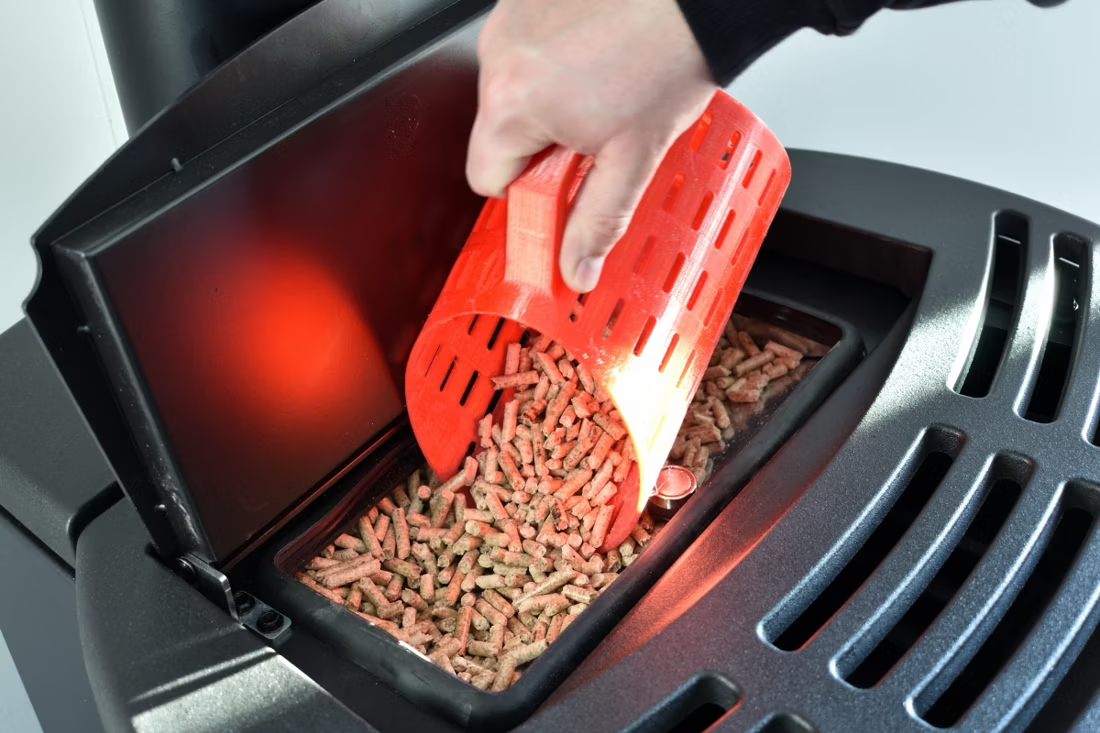
A clean pellet stove is a happy pellet stove. Plan on cleaning the burn pot about once a week when you're burning regularly—ash and clinkers gum up the air holes just like a pellet barbecue. Most pellet stove problems trace back to skipped cleaning that nobody explained up front. Some designs make it easy with a trapdoor burn pot: pull a lever and the gunk drops into the ash pan.
Does a fireplace add value to my home?
On average, a fireplace adds back to the home about the same amount you spent installing it. Add the monthly savings from heating the rooms you actually use instead of the whole house—often hundreds of dollars a year—and the value case is strong before you even count what a fire does for how your family uses the room.
How much should I budget for a fireplace?
For an average home—covering the fireplace, the vent pipe, and basic installation—a budget between $3,900 and $5,500 gives you a lot of options across wood, gas, and pellet. By the time you add finish work, gas line, and electrical, the average complete installation lands between $5,000 and $12,000 all-in. In a remodel or new build, a good rule is to put about 2.5% of the total project cost toward the fireplace.
Nearby Dealers
Hearth shops serving West Little River and the surrounding area.
Pellet Brands Stocked Around West Little River
Manufacturers will point you to the nearest stocking dealer.
Find your pellet stove in West Little River.
Tell us about your home and what you're actually trying to solve—ambiance, backup warmth, or a second-property project—and we'll send a free Project Guide & Parts List with the right unit, venting components, and a trusted local dealer who installs pellet appliances correctly in Miami-Dade's HVHZ code zone.
Find Your Fireplace →