
Keep Your Family Warm and Safe—No Matter What
With Sumter County winters that average a low of just 49°F, wood heat here is mostly about ambiance and occasional use, not survival warmth. We'll connect you with a local dealer who can install one the right way.
Every Project Starts From One of These Five Situations
A climate that rarely calls for wood heat.
The Villages sits in climate zone 2A at just 52 feet of elevation, with a winter heating load that's just a fraction of what a place like Duluth, MN racks up in a single hard winter. Winter lows average 49°F, and most homes here are built and equipped around cooling, not heating. Wood-burning stoves and fireplaces simply aren't part of the standard local building stock the way they are in colder regions, and most hearth retailers in Sumter and Marion Counties lean their inventory toward gas and electric.
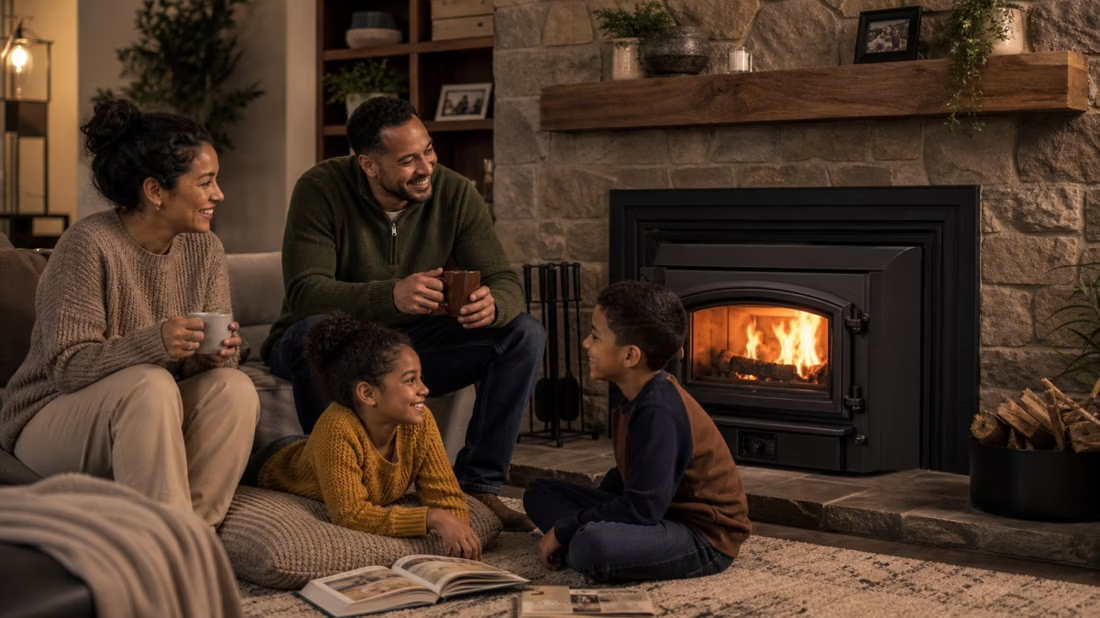
That doesn't mean wood heat has no place here. Plenty of transplants from colder states—a group well represented among The Villages's retirement community—still want the look, smell, and ritual of a real wood fire on the handful of genuinely chilly nights each winter, or in a screened lanai used mostly for ambiance. Local oak, mahogany, and pine are all available as firewood species if you go this route, though sourcing and installers take more legwork than in a wood-heating region. If a wood fireplace is what you actually want, we'll find you a dealer who does this work well rather than one who treats it as an afterthought.
Three steps. No salesperson until you're ready.
Tell us about your project
Your zip code, your situation, and the fuel you're leaning toward—or let the answers point you to one.
See what's actually available
The brands dealers within 100 miles genuinely carry—real options, never a catalog mirage.
Get your dealer & Project Guide
A trusted local dealer, plus the free Project Guide & Parts List that names every component of the job.
Frequently Asked Questions
Does a wood-burning fireplace even make sense in The Villages?
For most homes here, no—not as a primary heat source. With winter lows averaging 49°F and only a light winter heating load, a wood stove would sit unused most of the year and could even encourage residents to overheat a well-insulated Florida home when it is used. Where wood does make sense is ambiance: a masonry fireplace in a great room, a small stove on a screened lanai, or a home built by a transplant who simply wants the fire they grew up with. If that's your goal, it's a legitimate project—just go in expecting a smaller pool of local installers than you'd find in a colder climate.
What does a wood fireplace installation cost in The Villages?
Because demand is low in Central Florida, fewer hearth dealers stock wood-burning units, and pricing tends to track general national averages rather than a deep local market: a basic wood stove or insert with straightforward venting typically runs $3,500-$7,000 installed, with masonry fireplace conversions or new chimney chases running higher. Get quotes from at least two dealers who actually carry wood units—some Villages-area retailers will steer every customer toward gas or electric by default, which isn't wrong for most homes, but isn't what you asked for either.
What firewood is available locally if I install a wood stove?
Oak, mahogany, and pine are the common species around Sumter County. Oak is the best choice for a stove if you can find well-seasoned rounds—it burns hot and long. Pine is more available but burns faster and produces more resin buildup, so it needs more frequent chimney attention. One thing to plan for in this climate: Florida's humidity means firewood takes noticeably longer to season properly than it would in a drier climate, so buy wood well ahead of when you plan to burn it and store it covered, off the ground, with airflow on all sides.
Do I need a permit for a wood stove in Sumter County?
Yes. Any new wood-burning appliance installation requires a building permit through your local jurisdiction's building division, and the unit needs to meet current EPA emissions standards regardless of climate. Because wood stoves are uncommon here, it's worth confirming your installer has actually pulled permits for a solid-fuel appliance before—not every licensed contractor in a retirement-heavy market like this one has recent experience with wood-specific clearance and venting requirements.
Are there air quality restrictions on wood burning in The Villages?
No—Sumter County has no non-attainment designation and no winter inversion issues the way some mountain and high-desert regions do, so there are no seasonal burn curtailments to worry about. The bigger practical concern in this climate is humidity, not air quality: creosote and moisture can build up differently in a subtropical environment than in a dry cold climate, so annual chimney inspection matters even though you'll likely burn far fewer hours per year than a stove in the Northeast or Upper Midwest.
Should I get a wood, gas, or electric fireplace instead?
For most homes in The Villages, gas and electric are the more practical choices—both are common here, supported by Duke Energy Florida and Sumter Electric Cooperative service territory, and don't require firewood storage or chimney maintenance in a climate that barely needs supplemental heat. Gas gives you instant, realistic flame with none of the upkeep; electric fireplaces are the simplest option and cost very little to run given the residential rates in this area (roughly $0.13-$0.17 per kWh depending on your utility). Wood is the right call only if the wood-burning experience itself—the crackle, the smell, the ritual—is the actual point for you, not just heat.
What type of wood-burning unit fits a Florida home best?
Zero-clearance wood-burning fireplaces or smaller freestanding stoves tend to fit Villages-area homes better than large cast-iron workhorse stoves built for all-day, all-winter heating. You're not trying to heat through a January cold snap for months on end—you're looking for occasional evening use. A smaller-capacity unit with a simpler, shorter chimney run is usually easier to permit, cheaper to install, and better matched to how often it'll actually get used.
Can I install a wood stove on my screened lanai?
It depends on the structure. Most screened lanais aren't built with the fire-rated wall clearances or roof penetration allowances a wood-burning unit needs, so this usually requires either an outdoor-rated wood-burning fireplace designed for open-air use, or reframing part of the lanai to meet clearance-to-combustibles code. A local installer will need to evaluate your specific structure—this is one of those projects where an in-home visit matters more than it would for a standard indoor installation.
Wood vs. pellet—does either make sense here?
Both are genuinely uncommon in The Villages given how little heating this climate requires, and neither should be assumed to be readily stocked by every local dealer the way it would be up north. If you do want a solid-fuel option, wood generally has an edge here because it doesn't depend on a steady pellet supply chain—regional brands like Lignetics and Hamer Pellet Fuel serve Florida but distribution is thinner than in pellet-heavy heating markets. If ambiance and the wood-fire experience matter to you more than fuel logistics, wood is the more sensible of the two.
Why won't my new wood stove get going like my old one?
New wood stoves are 70%+ efficient, so far less heat goes up the flue—which also means less draft to get a fire established. The rule: build a genuinely hot fire for about 45 minutes before you choke it down. Skip that and you get smoke in the room, creosote in the chimney, and a fire that never takes off. Most performance complaints trace straight back to this.
What's the difference between an insert and a zero-clearance fireplace?
An insert is a fireplace that slides into a pre-existing wood-burning fireplace—if you don't have one, there's nothing to insert it into. A zero-clearance fireplace is built into a framed wall, which makes it the answer for remodels and new construction. Simple test: existing masonry fireplace means insert; blank or framed wall means zero-clearance.
Can I install a fireplace myself?
If you're putting a fire in your house on purpose, it's best to work with an expert. Unless you're genuinely experienced in framing, gas line, vent pipe, and the national code on clearances to combustibles, have a professional do it—and ideally the same company that sells you the fireplace, so warranty, service, and liability all live under one roof.
Does a fireplace add value to my home?
On average, a fireplace adds back to the home about the same amount you spent installing it. Add the monthly savings from heating the rooms you actually use instead of the whole house—often hundreds of dollars a year—and the value case is strong before you even count what a fire does for how your family uses the room.
Nearby Dealers
Hearth shops serving The Villages and the surrounding area.
Find your wood fireplace in The Villages.
Tell us about your home and how you'd actually use a wood-burning fireplace, and we'll match you with a local dealer plus a free Project Guide & Parts List—the exact parts, vent kit included, for your project in The Villages.
Find Your Fireplace →