
Pellet Heat for the Occasional Florida Cold Snap.
With winter lows averaging 53°F and only a short, mild winter heating season, Temple Terrace rarely needs supplemental heat—but if you still want a pellet stove for ambiance or the odd freeze warning, we'll connect you with a local dealer who can do it right.
Every Project Starts From One of These Five Situations
Pellet stoves are rare here—and that's honest to say.
Temple Terrace sits at just 56 feet of elevation in climate zone 2A, on the humid subtropical edge of Tampa Bay. With such a short, mild winter heating season—compare that to a place like Duluth, MN, which has a long, brutal one lasting most of the year—most homes here run central air conditioning nine or ten months of the year and barely touch a thermostat's heat setting the rest of the time. Winter lows average 53°F, and a hard freeze is a newsworthy event, not a season.
That's the honest context for a pellet stove purchase in Temple Terrace: it isn't a primary heating decision the way it would be in the upper Midwest or mountain West. The handful of local homeowners who do install one are usually after the look and ambiance of a real flame, a small backup heat source for the rare January cold snap, or a unit for a second home or cabin further north. Regional pellet brands like Lignetics, Hamer Pellet Fuel, and Greenway Renewable Energy do distribute into Florida, but supply and stocking dealers are thinner here than in cold-climate states, so sourcing fuel and service takes a bit more planning.
Three steps. No salesperson until you're ready.
Tell us about your project
Your zip code, your situation, and the fuel you're leaning toward—or let the answers point you to one.
See what's actually available
The brands dealers within 100 miles genuinely carry—real options, never a catalog mirage.
Get your dealer & Project Guide
A trusted local dealer, plus the free Project Guide & Parts List that names every component of the job.
Frequently Asked Questions
Are pellet stoves actually common in Temple Terrace?
No, and we'd rather tell you that upfront than pretend otherwise. With Temple Terrace's short, mild winter heating season and winter lows averaging in the low 50s, whole-home heating demand here is minimal—most residents rely on their existing central heat pump or air handler for the handful of chilly nights each winter. Pellet stoves show up in a small number of local homes, almost always for the ambiance of a real fire, as a decorative focal point, or as backup for a second property somewhere with actual winters. If that's your goal, it's still a perfectly workable project—just don't expect it to be a mainstream local category the way it is in Minneapolis or Bozeman.
Why doesn't a pellet stove make sense as primary heat here?
The math doesn't favor it. A pellet stove is a meaningful investment in equipment, venting, and an electrical circuit for the auger and blower motor—costs that make far more sense when you're offsetting thousands of dollars in winter heating bills. In Temple Terrace, where Tampa Electric and Duke Energy Florida customers pay roughly $0.15–$0.17 per kWh and heating season is measured in days rather than months, most homeowners get more value from a gas or electric fireplace insert used a few nights a year than from a pellet appliance sized for sustained cold-climate output.
What does a pellet stove installation involve if I still want one in Temple Terrace?
The mechanics are the same anywhere: the unit needs a dedicated electrical outlet for the auger and combustion blower, a hearth pad, and a vent run through an exterior wall or existing chimney. Because installations are infrequent in the Tampa Bay area, we don't have a reliable local cost range to quote you—pricing depends heavily on which dealer you find and how far they have to travel. That's exactly the kind of variability we sort out for you: we match you with a local, trusted installer who will size the job and give you a firm quote rather than a guess.
Where can I buy pellet fuel near Temple Terrace?
Pellets aren't stocked on every corner here the way they are in cold-climate states, but they are available. Lignetics and Hamer Pellet Fuel both distribute into Florida and are carried by some farm supply and feed stores in the Tampa Bay region, and Greenway Renewable Energy serves as a regional source as well. Because local demand is lower, expect to order ahead of the season rather than pick up a few bags on a whim—your dealer can point you to the closest reliable supplier when you're matched.
Will a pellet stove work during a hurricane power outage?
No—this is worth knowing before you buy. Pellet stoves depend on electricity to run the auger that feeds fuel and the blower that pushes heat into the room; without power, the stove won't ignite or run. For a hurricane-prone area like Temple Terrace, if backup heat or ambiance during an outage is part of your goal, a battery-free option like a wood-burning appliance or a gas unit with millivolt ignition is a more reliable fit than pellet.
What heating options make more sense for a Temple Terrace home?
Given how little actual heating this climate requires, most local homeowners are better served by a gas fireplace or a small electric fireplace insert—both are standard, well-supported options here, unlike pellet. Gas units running on propane or natural gas service in the area give instant, controllable heat for the few genuinely cold nights each winter. Electric fireplaces, run through Tampa Electric or Duke Energy Florida service, need no venting at all and are the simplest way to add a real-looking flame and light supplemental warmth to a room.
Is wood heat a better fit than pellet for my home here?
Not really—wood heat faces the same climate mismatch pellet does in Temple Terrace, since neither is needed for meaningful whole-home warmth. That said, local wood species like oak, mahogany, and pine are readily available and burn well in a decorative wood-burning fireplace if you want the traditional look and crackle of a real fire on the rare cold evening. If your interest in pellet was really about the ambiance of a flame rather than heat output, it's worth comparing both against a simple gas log set, which needs no fuel storage at all.
Can I install a pellet stove just for looks, not for heat?
Yes, and that's honestly the most common reason it comes up in a place like Temple Terrace. A pellet stove used lightly—a few evenings a month in cooler weather—still needs the same electrical hookup and exterior venting as one used for daily heat, but you won't be running through fuel or logging major heating savings. If ambiance is the real goal, some homeowners find a gas insert or a simple electric unit delivers a similar look with far less venting complexity and no need to store bags of pellets in a Florida garage.
Pellet vs. electric fireplace—which fits a mild-winter home like mine?
For Temple Terrace's climate, electric usually wins on practicality. An electric fireplace needs no venting, no fuel storage, and no dedicated combustion air—it plugs into a standard outlet and runs on Tampa Electric or Duke Energy Florida service at roughly $0.15–$0.17 per kWh, with installs typically far simpler and less expensive than a vented pellet appliance. A pellet stove offers a more authentic flame and the smell of a real fire, which matters if that's specifically what you're after, but it comes with fuel sourcing, venting work, and an appliance sized for a heating need this area rarely has. For most local homeowners, electric is the lower-friction choice; pellet is the choice for those set on the real-fire experience regardless of climate.
How often does a pellet stove need cleaning?
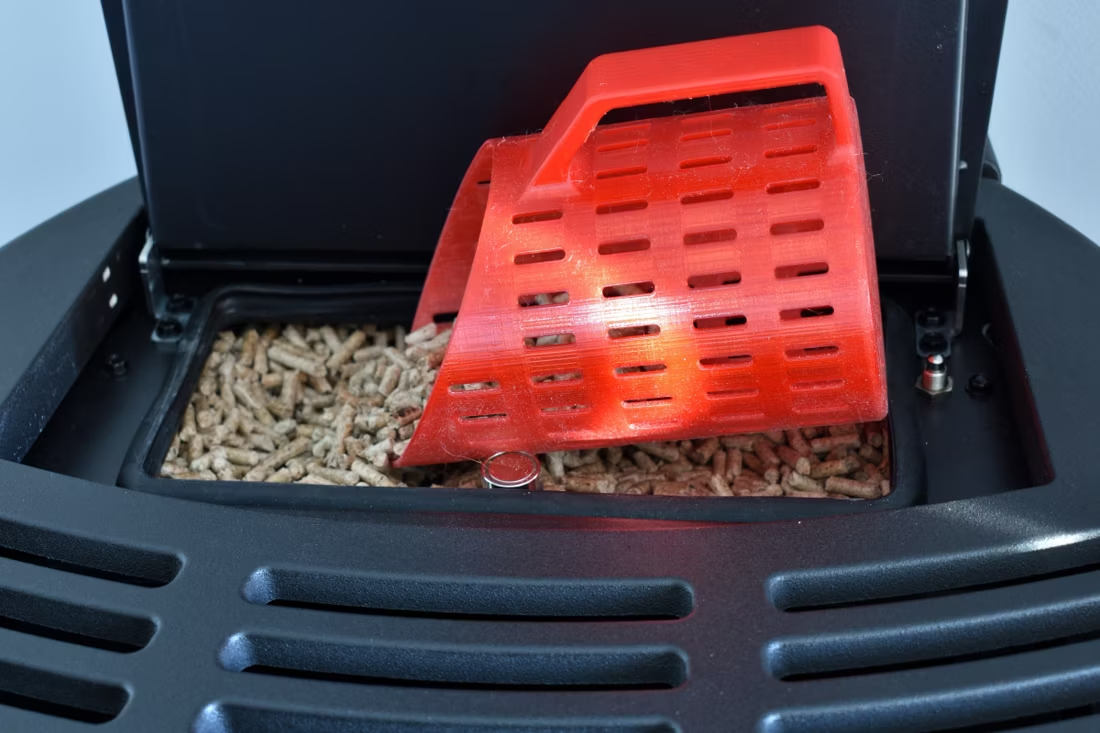
A clean pellet stove is a happy pellet stove. Plan on cleaning the burn pot about once a week when you're burning regularly—ash and clinkers gum up the air holes just like a pellet barbecue. Most pellet stove problems trace back to skipped cleaning that nobody explained up front. Some designs make it easy with a trapdoor burn pot: pull a lever and the gunk drops into the ash pan.
Why is my open fireplace making my house colder?
Open fireplaces suck—literally. As the fire burns, it consumes air your furnace already paid to heat and pulls it out through the chimney, so the house is actually colder after the fire goes out than before you lit it. An insert fixes this: it seals the chimney, puts fixed glass across the front, and turns that hole in your house into a real heat source.
Can I install a fireplace myself?
If you're putting a fire in your house on purpose, it's best to work with an expert. Unless you're genuinely experienced in framing, gas line, vent pipe, and the national code on clearances to combustibles, have a professional do it—and ideally the same company that sells you the fireplace, so warranty, service, and liability all live under one roof.
Does a fireplace add value to my home?
On average, a fireplace adds back to the home about the same amount you spent installing it. Add the monthly savings from heating the rooms you actually use instead of the whole house—often hundreds of dollars a year—and the value case is strong before you even count what a fire does for how your family uses the room.
Nearby Dealers
Hearth shops serving Temple Terrace and the surrounding area.
Pellet Brands Stocked Around Temple Terrace
Manufacturers will point you to the nearest stocking dealer.
Find your pellet fireplace in Temple Terrace.
Tell us a bit about your home and goals—ambiance, backup heat, or something else—and we'll connect you with a trusted local dealer along with a free Project Guide & Parts List built for your Temple Terrace project.
Find Your Fireplace →