
Bring the Glow of a Fireplace to Temple Terrace—No Chimney Required.
With winter lows averaging 53°F, Temple Terrace doesn't need a furnace substitute—it needs ambiance and the occasional cool-night boost. An electric fireplace does both without venting, gas lines, or a mason.
Every Project Starts From One of These Five Situations
Built for Tampa Bay's mild winters, not a cold-climate fight.
Temple Terrace sits along the Hillsborough River in climate zone 2A at just 56 feet of elevation, where winter lows average 53°F and the whole heating season adds up to only 434 heating degree days a year. For comparison, Duluth, Minnesota racks up more than 9,000—a homeowner there needs a stove that can hold a fire through a subzero night, while a homeowner here mostly wants a warm-looking focal point that can take the edge off a rare 30-degree front.
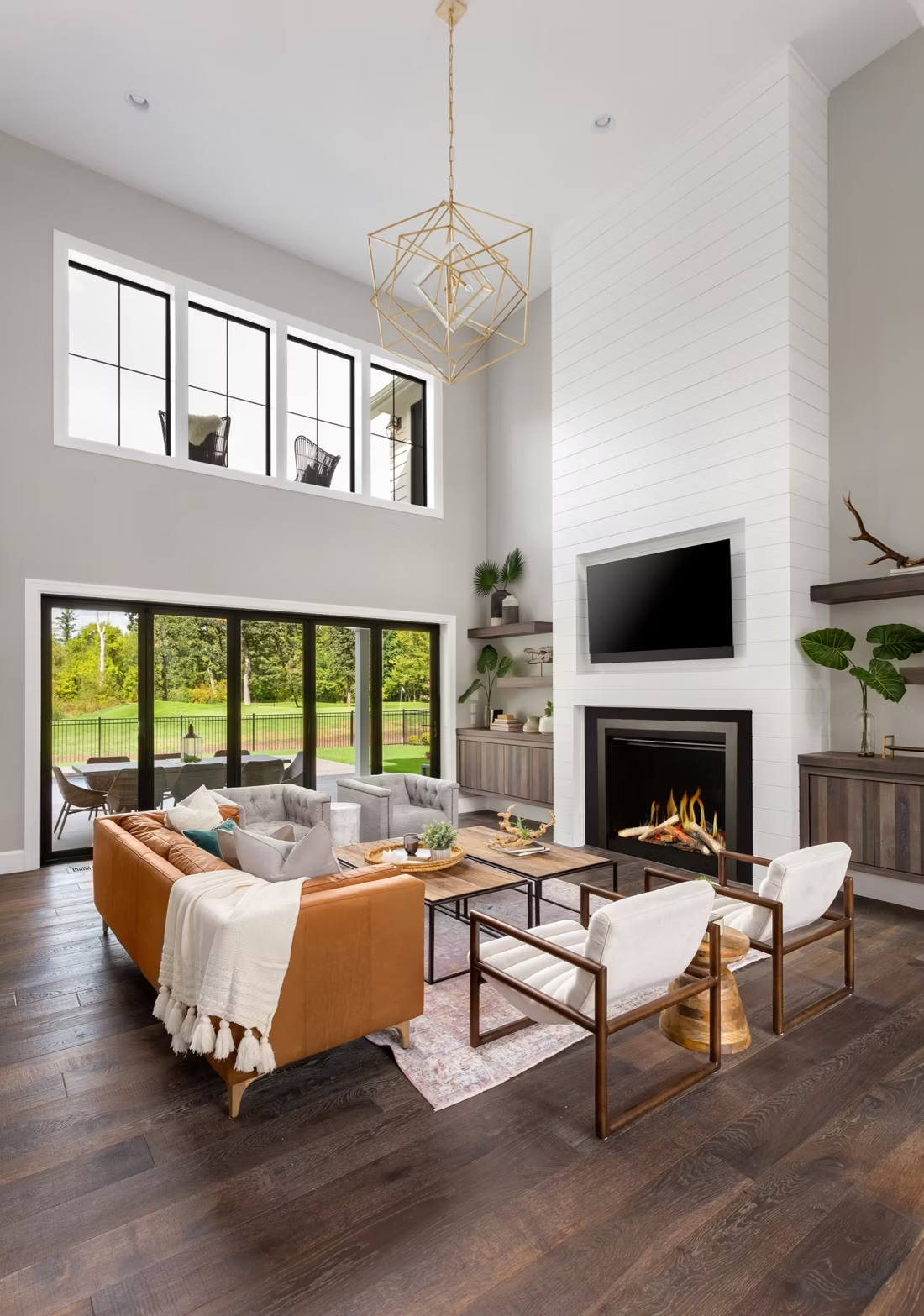
That's exactly the gap electric fireplaces fill. Wood stoves and pellet stoves are genuinely uncommon here—most Temple Terrace homes have never had a chimney, and the ones that do rarely burn more than a handful of nights a season. Electric units skip that problem entirely: no venting, no combustion air, no permit for a plug-in unit, and both Tampa Electric and Duke Energy Florida serve the area with plenty of capacity for a built-in unit's dedicated circuit. The result is a fireplace that works in a condo, a 1970s ranch, or a new-construction great room, delivering real supplemental heat on the handful of nights you actually want it.
Three steps. No salesperson until you're ready.
Tell us about your project
Your zip code, your situation, and the fuel you're leaning toward—or let the answers point you to one.
See what's actually available
The brands dealers within 100 miles genuinely carry—real options, never a catalog mirage.
Get your dealer & Project Guide
A trusted local dealer, plus the free Project Guide & Parts List that names every component of the job.
Frequently Asked Questions
How much does an electric fireplace installation cost in Temple Terrace?
It depends heavily on the unit type. A freestanding or wall-mounted plug-in electric fireplace typically costs $300 to $1,200 for the unit itself, and "installation" is really just placement near an existing outlet—no electrician needed. A built-in linear electric fireplace or insert with a surround runs $800 to $3,000 for the unit, plus $500 to $1,500 for an electrician to run a dedicated 120V or 20-amp circuit if your wall doesn't already have one. Most Temple Terrace homeowners land in the $1,500 to $4,500 range for a full built-in installation with mantel or surround work. A local dealer will give you a firm number after seeing your wall and existing wiring.
Do I need a permit for an electric fireplace in Temple Terrace?
A plug-in freestanding or wall-mount unit generally doesn't require any permit—it's treated like any other appliance. A built-in unit that requires new wiring or a dedicated circuit typically does need an electrical permit, and here's the local wrinkle: Temple Terrace's zip codes (33637, 33617, 33687) span both the incorporated city and unincorporated Hillsborough County, so which office handles your permit—City of Temple Terrace or Hillsborough County Development Services—depends on your exact address. A licensed local electrician or your installing dealer will already know which jurisdiction your property falls under and pull the right permit.
Will an electric fireplace actually heat my home?
Not your whole home, and it isn't meant to. With only 434 heating degree days a year and winter lows averaging 53°F, Temple Terrace rarely has a heating problem that needs solving—central HVAC already handles the occasional cold front. What an electric fireplace does well is zone heat a specific room: most inserts put out 4,000 to 5,000 BTU (roughly 1,500 watts), enough to noticeably warm a living room or bedroom on the handful of nights each winter when temperatures dip into the 30s or 40s. Think supplemental comfort and ambiance first, heat second.
What's the difference between an electric fireplace, insert, and stove?
A built-in electric fireplace is installed into a wall cavity or framed enclosure, often with a shiplap or tile surround—common in new construction and remodels around Temple Terrace's newer developments. An electric insert is sized to slide into an existing masonry firebox, which matters for the smaller share of older homes here that do have a wood-burning fireplace shell but no interest in burning wood. A freestanding electric stove sits on the floor like a traditional wood stove but plugs into a standard outlet—a good fit for renters or anyone who doesn't want to alter a wall. All three use the same basic heating element; the difference is purely how they're mounted.
Is wood or gas a better option than electric in Temple Terrace?
Wood is genuinely uncommon here—a small number of older homes still have a masonry fireplace where someone occasionally burns oak or pine for atmosphere, but it's not something the climate calls for, and most owners of those fireplaces eventually convert or stop using them. Natural gas is a more realistic alternative if you want real flame: it's standard in the area, delivers instant heat with no batteries or charging, and a direct-vent gas insert can go into an existing firebox or a new wall. Electric wins on install simplicity, running cost, and safety (no open flame, no CO risk), while gas wins if you want the visual and heat output of a real fire. For most Temple Terrace homes chasing ambiance with a hedge against the rare cold night, electric is the lower-friction choice.
Which electric utility serves Temple Terrace, and does it affect running costs?
Temple Terrace is served by both Tampa Electric Company (TECO) and Duke Energy Florida, depending on your specific address. The rate difference is real: TECO residential customers pay roughly 14.7 cents per kWh, while Duke Energy Florida customers average closer to 16.6 cents per kWh. For an electric fireplace that's a small gap in absolute terms—most units draw around 1,500 watts on the heat setting—but it's worth checking your bill to see which utility you're on before comparing running-cost estimates from a dealer.
Can I convert my existing wood-burning fireplace to electric?
Yes, and it's a common request from owners of Temple Terrace's older homes with an unused masonry firebox. An electric insert slides into the existing opening, and because there's no combustion, you don't need a functioning chimney, damper, or flue—it can even work in a firebox that's been bricked up or has a deteriorating chimney, which is a real issue in some of the area's 1960s and 70s construction. The main job is running power to the firebox, either through the existing damper opening or via a new outlet behind the unit, which a licensed electrician can usually handle in a single visit.
How much does it cost to run an electric fireplace in Temple Terrace?
A typical 1,500-watt unit on its heat setting draws 1.5 kWh per hour. At Tampa Electric's roughly 14.7 cents per kWh, that's about 22 cents an hour; at Duke Energy Florida's roughly 16.6 cents, closer to 25 cents an hour. Run it for a typical 3 to 4 hour evening on a cool night, and you're looking at under a dollar. On flame-only mode with the heater off, the draw drops to 30-50 watts—essentially the cost of a light bulb—which is how most Temple Terrace owners run theirs most of the year.
What size electric fireplace do I need for my Temple Terrace home?
Since heat output is rarely the deciding factor here, sizing usually comes down to the wall or firebox opening and the look you want. A 30 to 40-inch linear unit suits a standard living room wall in the area's ranch and split-level homes; 50-inch-plus units are popular in the open-concept great rooms common in newer Temple Terrace construction near USF and Bullard Parkway. If you're converting an existing masonry firebox, the insert needs to match that opening's dimensions exactly—a local dealer will measure before recommending a model.
Can I put a TV above my fireplace?
Yes—with an asterisk. Fireplaces are hot and TVs don't like heat. Either put a mantel between them to deflect rising warmth, or choose a fireplace with heat-management technology that creates a cool zone on the wall above—the wall stays around 125 degrees, barely warm, while the room still gets full heat. If you like clean lines and don't want a mantel, heat management is the answer.
How much does an electric fireplace cost to run?
With the heater on, a typical unit draws about 1,500 watts—at average electric rates that's roughly 20 cents an hour. Run the flame effect alone and it costs pennies; the flames are LED-driven and use about as much power as a light bulb. There's no pilot light, no fuel delivery, and essentially no maintenance.
What is an in-home preview and do I need one?
It's a visit where a hearth professional measures your space, confirms the model you picked actually works in your home, and walks the specs—framing, gas line, venting, finish work—before anything is ordered. Some details you just can't know until you see the house. Never make a down payment without one; it's the single most-skipped step that burns buyers.
Can I install a fireplace myself?
If you're putting a fire in your house on purpose, it's best to work with an expert. Unless you're genuinely experienced in framing, gas line, vent pipe, and the national code on clearances to combustibles, have a professional do it—and ideally the same company that sells you the fireplace, so warranty, service, and liability all live under one roof.
Nearby Dealers
Hearth shops serving Temple Terrace and the surrounding area.
Electric Service in Temple Terrace
An electric fireplace's heater draws about 1,500 watts—pennies per hour at local rates.
Tampa Electric Co
Duke Energy Florida, LLC
Find your electric fireplace in Temple Terrace.
Tell us about your room and your home's wiring, and we'll match you with a trusted local dealer plus a free Project Guide & Parts List—the exact unit, mounting or insert kit, and electrical requirements for your Temple Terrace project.
Find Your Fireplace →