
Keep Your Family Warm and Safe—No Matter What
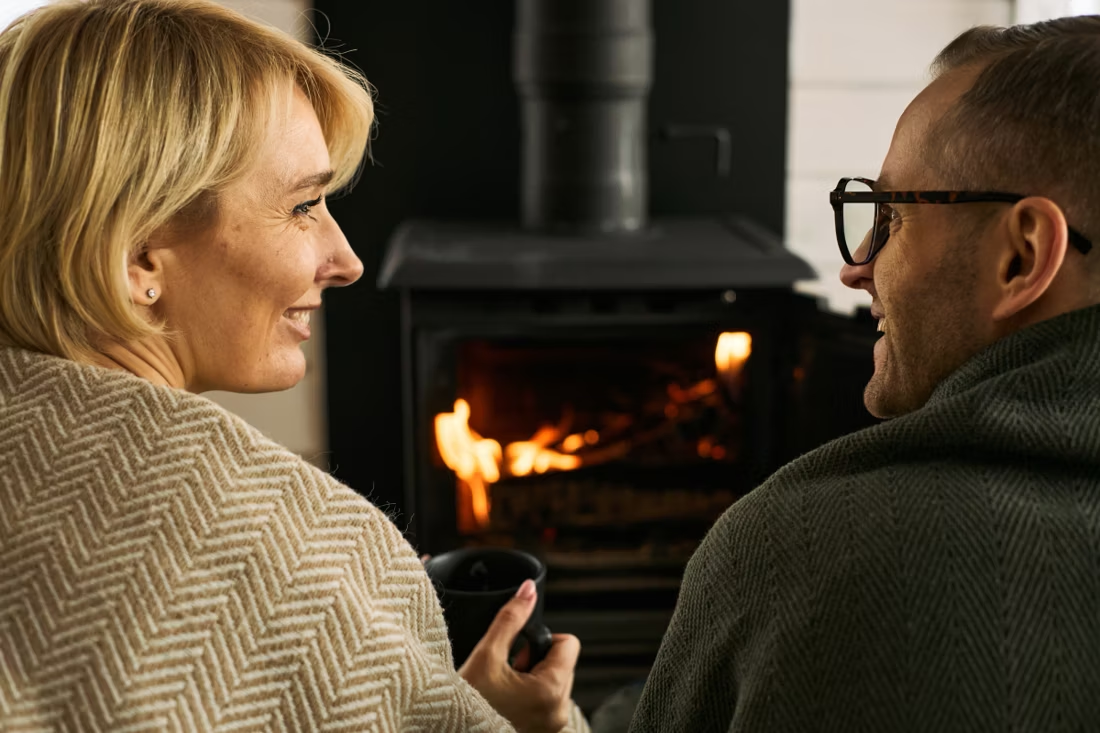
Winters in Taylor County are mild—an average low near 43°F—but cold fronts off the Gulf still bring real chill, and Foley Cellulose country has never lacked for firewood. Find the right stove or insert and connect with a trusted local dealer.
Every Project Starts From One of These Five Situations
Wood heat with deep roots in timber country.
Taylor County sits in Florida's Big Bend, home to just over 7,000 residents and one of the state's largest working timber economies—Perry has long been known as the Tree Capital of the South, anchored by the Foley Cellulose pulp mill and surrounded by pine plantations, oak hammocks, and mixed hardwood stands. The climate here is Zone 2A, hot-humid, with only a light winter heating load—a fraction of what a place like Duluth, MN racks up each winter. Nobody in Taylor County is heating a home through a six-month freeze, but overnight lows do drop toward or below freezing several times most winters, and cold fronts off the Gulf can turn a warm afternoon into a genuinely cold night by dark.
That's why wood stoves and fireplaces remain a real, standard choice here rather than a novelty—just used differently than they are up north. Most Taylor County households run wood heat as supplemental warmth for cold snaps, as the centerpiece of a rural or hunting camp, or as backup heat that doesn't depend on the grid—a meaningful consideration in a county that took a direct hit from Hurricane Idalia in 2023 and lost power for days. With oak and pine abundant and inexpensive thanks to the local timber industry, and no air quality nonattainment issues or burn curtailment periods to work around, wood heat here is about resilience and ambiance more than survival.
Three steps. No salesperson until you're ready.
Tell us about your project
Your zip code, your situation, and the fuel you're leaning toward—or let the answers point you to one.
See what's actually available
The brands dealers within 100 miles genuinely carry—real options, never a catalog mirage.
Get your dealer & Project Guide
A trusted local dealer, plus the free Project Guide & Parts List that names every component of the job.
Frequently Asked Questions
How much does a wood stove installation cost in Taylor County?
A typical wood stove or insert installation in Taylor County runs roughly $3,500 to $8,000, depending on the unit, whether you're installing into an existing masonry fireplace or starting from scratch, and how much Class A chimney pipe is needed. Because most homes here don't have an existing wood-burning setup, new installs often need full chimney construction, which pushes toward the higher end. Taylor County's building department handles permitting for new installations, and most local or regional installers who service Perry and the surrounding area will fold that into the install price.
What size wood stove do I need for a home in Taylor County?
Because Taylor County's winters are mild—average lows around 43°F with only occasional dips near or below freezing—most homes here do fine with a small to mid-size stove rated for a single large room or open living area rather than a whole-house heater. A stove sized for 800 to 1,500 square feet handles supplemental heating duty for most Taylor County homes, including cold-front nights and post-storm power outages. If you're heating a hunting camp or a smaller rural cabin near Steinhatchee or the Econfina area, an even smaller unit is often plenty. A local dealer can size it based on your specific room, ceiling height, and how you plan to use it.
Where can I find certified wood stove installers near Taylor County?
Look for NFI (National Fireplace Institute) or CSIA (Chimney Safety Institute of America) certified installers. Given Taylor County's small, rural population, dedicated hearth dealers are limited within the county itself, and some installers serving Perry and the surrounding Big Bend area travel from Tallahassee or Lake City. That travel is worth it—proper clearances and venting matter as much in a mild climate as a cold one, and improper chimney work is still the leading cause of residential chimney fires regardless of how often the stove gets used.
What's the difference between a wood stove and a wood insert?
A wood stove is a freestanding unit on a hearth pad that vents through its own chimney and can go almost anywhere with the right clearances. A wood insert slides into an existing masonry fireplace and uses that chimney, converting an open, inefficient hearth into a sealed, higher-output heat source. Older homes in and around Perry with an existing masonry fireplace are often good insert candidates; newer homes or camps without an existing chimney typically go with a freestanding stove instead.
Do I need a permit to install a wood stove in Taylor County?
Yes—new wood stove and insert installations require a building permit through the Taylor County Building Department, and the unit needs to meet current EPA 2020 NSPS emissions standards. Most installers handle the permit paperwork as part of the job. Unlike parts of the country with winter inversion or nonattainment issues, Taylor County has no air quality curtailment periods or burn bans tied to wood smoke, so once your stove is installed and permitted, there's no seasonal restriction on when you can use it.
What's the best wood stove for Taylor County's climate?
Since Taylor County doesn't need the 20-plus-hour overnight burn times that a catalytic stove provides in a place like Bozeman, MT, most homeowners here do well with a smaller or mid-size non-catalytic stove from a brand like Pacific Energy, Vermont Castings, or Lopi—units built for efficient, clean-burning heat rather than marathon cold-snap survival. The priority in this climate is a stove that lights easily, heats a room quickly during a cold front, and doesn't overheat a small space. If the stove is also meant to serve as post-hurricane backup heat, ask your local dealer about models that don't rely on electricity to operate.
How often should my chimney be inspected and cleaned in Taylor County?
An annual inspection is still the right standard even with lighter, supplemental use—the CSIA recommends it for any wood-burning appliance regardless of climate. Taylor County's humid subtropical air means firewood needs longer, more careful seasoning than it would in a drier climate, and unseasoned wood burns dirtier and builds creosote faster. If your stove only sees regular use during a handful of winter cold fronts, a once-a-year sweep before the season starts is generally enough; camp or cabin stoves used more heavily during hunting season may need a mid-season check.
Where can I get firewood in Taylor County?
Firewood is genuinely abundant here—Taylor County's economy is built on timber, with oak, pine, and hardwood stands throughout the county and the Foley Cellulose operation in Perry supporting a steady local wood supply. Most of the county's timberland is privately held rather than federal forest, so there isn't a Forest Service cutting-permit system the way there is out west; instead, most residents source firewood through local sellers, land-clearing operations, or arrangements with private landowners. Whatever the source, plan on seasoning oak or hardwood for at least six months to a year in Florida's humidity before burning it—unseasoned wood is a common cause of smoky, inefficient fires here.
Wood stove vs. pellet stove—which makes more sense in Taylor County?
Wood stoves run on cordwood, work without electricity, and pair naturally with the abundant local timber supply around Perry—a real advantage after storms like Hurricane Idalia knocked out power across the county for days in 2023. Pellet stoves, using bagged pellets from suppliers like Lignetics, Hamer Pellet Fuel, or Greenway Renewable Energy, are more convenient to load and burn cleaner, but they need electricity to run the auger and blower, so they go dark in an outage. For a Taylor County home that wants heat and ambiance during normal cold fronts, either works well. For a home that specifically wants backup heat capability after a hurricane or grid outage, wood is the more resilient choice.
What's the difference between an insert and a zero-clearance fireplace?
An insert is a fireplace that slides into a pre-existing wood-burning fireplace—if you don't have one, there's nothing to insert it into. A zero-clearance fireplace is built into a framed wall, which makes it the answer for remodels and new construction. Simple test: existing masonry fireplace means insert; blank or framed wall means zero-clearance.
What do I measure to size a fireplace insert?
Four numbers tell you what fits: the front width, the front height, the back width, and the overall depth of your existing fireplace opening. Grab a tape measure, jot those down, and snap a photo of the wall—those two things do more to move your project forward than anything else you can do today.
What is an in-home preview and do I need one?
It's a visit where a hearth professional measures your space, confirms the model you picked actually works in your home, and walks the specs—framing, gas line, venting, finish work—before anything is ordered. Some details you just can't know until you see the house. Never make a down payment without one; it's the single most-skipped step that burns buyers.
Does a fireplace add value to my home?
On average, a fireplace adds back to the home about the same amount you spent installing it. Add the monthly savings from heating the rooms you actually use instead of the whole house—often hundreds of dollars a year—and the value case is strong before you even count what a fire does for how your family uses the room.
Find your wood stove in Taylor County.
Tell us a bit about your home and we'll match you with the right wood stove or insert for Taylor County's mild winters and cold fronts—plus a free Project Guide & Parts List with the exact parts, vent kit, and a trusted local dealer to install it.
Find Your Fireplace →