
Fireplace Options for Every Home in Taylor County, Florida.
Wood, gas, pellet, and electric fireplace resources for Perry, Steinhatchee, and the unincorporated communities that make up most of Taylor County. Find the right unit for a mild Gulf-coast climate and connect with a trusted local hearth retailer.
Every Project Starts From One of These Five Situations
Mild winters, hurricane season, and hearth heat along Florida's Big Bend.
Taylor County sits on Florida's Big Bend coast, where the Fenholloway and Steinhatchee Rivers cut through pine flatwoods and oak hammocks toward the Gulf. With an average winter low of 43°F and only about 1,186 heating degree days a year, this is nowhere near the cold-climate demands of a place like Duluth or Bismarck—most homes here run air conditioning far more months than they run heat. The county's identity is tied to timber: Georgia-Pacific's mill in Perry has anchored the local economy for decades, and the oak, pine, and mahogany that fill the surrounding woods are the same species that end up in local wood stoves and fireplaces. For most of Taylor County's roughly 7,400 residents, a fireplace isn't the primary heat source—it's ambiance on the rare cold front, and for a meaningful number of households, it's backup heat and cooking capability when Gulf hurricanes knock out power for days, as happened when Idalia made landfall near Keaton Beach in 2023.
What you'll find on this hub: hearth retailers, service technicians, and fuel suppliers covering the whole county—from Perry, the only incorporated city and county seat, out to Steinhatchee on the coast and the rural crossroads communities like Shady Grove and Salem. Given the county's small population, most retailers and techs serve Taylor County from a base in Perry or drive in from Tallahassee, Lake City, or Gainesville. Pick your fuel below to see local dealers, typical installation costs, and the units that make sense for a short, mild heating season with real hurricane-season stakes.
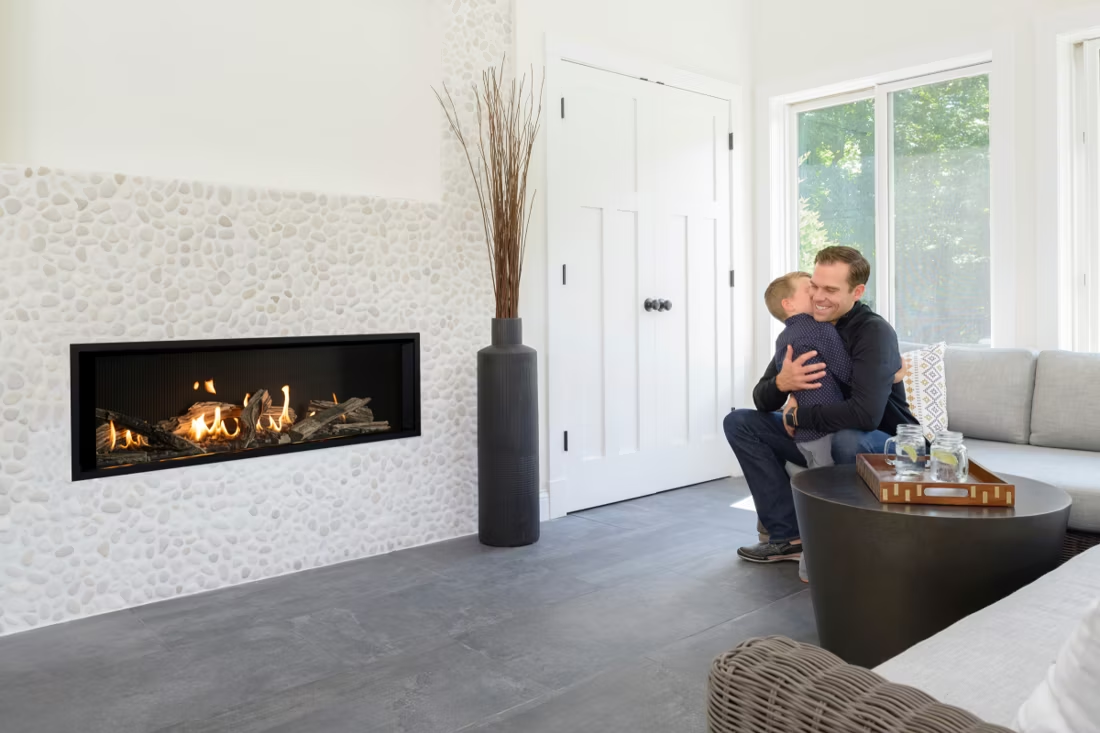
Four fuels. One honest answer for Taylor County.
Three steps. No salesperson until you're ready.
Tell us about your project
Your zip code, your situation, and the fuel you're leaning toward—or let the answers point you to one.
See what's actually available
The brands dealers within 100 miles genuinely carry—real options, never a catalog mirage.
Get your dealer & Project Guide
A trusted local dealer, plus the free Project Guide & Parts List that names every component of the job.
Frequently Asked Questions
Which fuel works best in Taylor County?
It depends on what you're solving for. Wood is well-suited here mainly as hurricane-season backup and cool-evening ambiance—oak and pine from the surrounding timberland are locally abundant and inexpensive, and a wood stove keeps working when the grid doesn't, which matters on a coast that takes regular hurricane hits. Gas, almost always propane rather than piped natural gas out here, is the low-labor convenience choice for the handful of genuinely cold nights each winter. Pellet stoves are a reasonable middle ground and have real regional supply through brands like Lignetics, Hamer Pellet Fuel, and Greenway Renewable Energy, though with only about 1,186 heating degree days a year, most owners burn far less than a customer in a colder state would. Electric fireplaces are common as supplemental, ambiance-focused units in a county where heat pumps already handle the bulk of winter heating—nobody in Taylor County is relying on an electric insert as their only heat source.
Do I need a permit to install a fireplace in Taylor County?
In most cases, yes. New wood stoves, wood inserts, gas fireplaces, gas inserts, gas stoves, and pellet stoves typically require a building permit through the Taylor County Building Department (or the City of Perry's permitting process if you're inside city limits). Wood-burning appliances need to meet current EPA 2020 NSPS emissions standards, and any propane line work should be done by a licensed gas-fitter as part of a separate gas permit. Electric fireplaces usually don't require a permit unless you're doing a hardwired built-in with new circuit work. Most local retailers handle the permitting process as part of the installation, which is especially useful given how few standalone permitting offices serve a county this size.
Are there air quality restrictions on wood burning in Taylor County?
No—Taylor County has no wood-smoke non-attainment designation, no winter inversion pattern, and no wildfire-smoke advisories that restrict burning the way you'd see in a basin community out West. You can burn a wood stove or fireplace without curtailment days or advisory restrictions. That said, new wood-burning installations still need to meet federal EPA 2020 NSPS certification, and the coastal humidity and salt air here mean chimney and flue components corrode faster than they would inland—annual inspection matters more for equipment longevity than for any local air-quality rule.
Can one local hearth retailer handle all four fuel types?
Given Taylor County's population of around 7,400, the retailer footprint is thin, and it's common for a homeowner in Perry to end up working with a dealer based farther out in Tallahassee, Lake City, or Gainesville for a wider selection or a specific fuel type. Some local and regional dealers carry wood, gas, and electric together; pellet stove selection specifically tends to track with the regional pellet suppliers—Lignetics, Hamer Pellet Fuel, and Greenway Renewable Energy—that already move product through the Big Bend. If you're cross-shopping fuels, expect to compare a couple of options rather than a large local showroom, and don't be surprised if your best-fit dealer is 60 to 90 minutes away.
How does service work in rural areas of Taylor County?
Most chimney sweeps, gas technicians, and pellet stove servicers covering Taylor County are based out of Tallahassee, Lake City, or Gainesville and travel in for appointments, so expect to schedule further in advance than you would in a denser market—and expect a modest travel fee for stops out toward Steinhatchee or the more remote parts of the county. Given how directly hurricane season affects this coast, the smart move is scheduling annual service in late spring or early summer, before storm season and before the fall service rush, rather than waiting until a cold front is already forecast.
What's the typical cost range for fireplace installation across all fuel types in Taylor County?
Wood stove or insert installation: roughly $4,000–$8,500 for a typical setup, with chimney or full flue work at the higher end. Propane fireplace, insert, or stove: roughly $4,000–$10,000, with cost driven mainly by tank setup, gas line routing, and venting rather than by climate demands. Pellet stove or insert: roughly $4,000–$7,000 for most installs. Electric fireplace: $200–$3,000 for the unit itself, plus $400–$1,200 in labor for anything beyond a simple plug-and-play wall unit. Because so few installers are based directly in the county, ask upfront whether a travel fee applies—it's often the biggest variable in the final number here.
Wood, gas, pellet, or electric—how do I choose?
Match the fuel to your life, not the other way around. Wood: lowest fuel cost and total power-outage independence, but you're hauling and stacking. Gas: press a button, set a thermostat, no maintenance to speak of. Pellet: wood economics with automatic feeding, in exchange for weekly cleaning and a need for electricity. Electric: plugs in anywhere with honest supplemental heat. Nobody regrets the fuel that fits how they actually live.
What is an in-home preview and do I need one?
It's a visit where a hearth professional measures your space, confirms the model you picked actually works in your home, and walks the specs—framing, gas line, venting, finish work—before anything is ordered. Some details you just can't know until you see the house. Never make a down payment without one; it's the single most-skipped step that burns buyers.
Can a fireplace actually lower my heating bill?
Yes—by creating a comfort zone. A furnace heats every square foot of the house just to warm the one room you're in; a gas fireplace on low burns roughly a sixth of the gas a typical furnace does. Set the furnace around 55–60 degrees as a baseline, then heat the rooms your family actually uses. Families who heat this way commonly save $20–$60 a month.
Can I install a fireplace myself?
If you're putting a fire in your house on purpose, it's best to work with an expert. Unless you're genuinely experienced in framing, gas line, vent pipe, and the national code on clearances to combustibles, have a professional do it—and ideally the same company that sells you the fireplace, so warranty, service, and liability all live under one roof.
Stove and Fireplace Dealers in Taylor County
Listings include WhyFire partner dealers, dealers we have verified as authorized for the brands we recommend, and established local businesses that carry hearth products. Every listing shows which one it is. The ones marked Preferred run on WhyFire's software, so they can show you real pricing and book your appointment right here. No manufacturer pays for placement. How we verify dealers →
Allweather Insulation
Owens Propane
Southern Quality Propane
Akins LLC
All Star Garage Doors
Hearth And Patio Sales And Service LLC
Capital City Fireplace & Grill
Get matched with a Taylor County hearth dealer.
Tell us about your home and your fuel preference and we'll match you with a trusted local dealer and send you a free Project Guide & Parts List—the exact parts, including the vent kit, and the local pro who can install it right for Taylor County's climate and hurricane-season realities.
Find Your Fireplace →