
Ambiance and warmth, built for St. Cloud's mild winters.
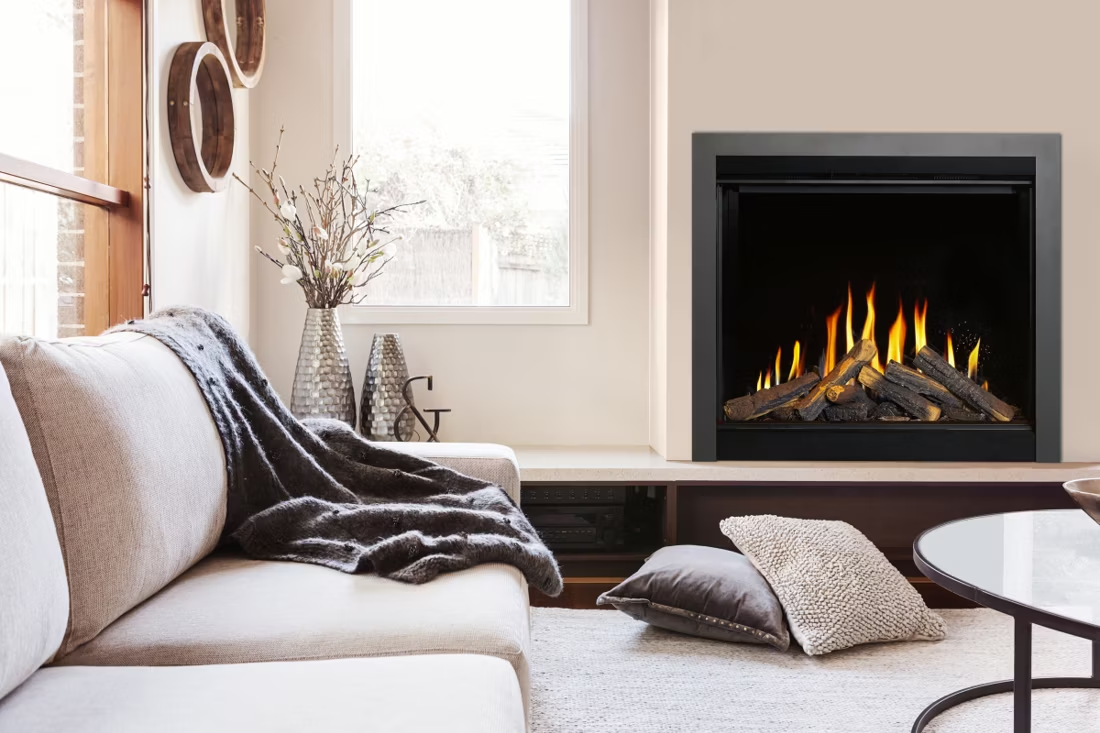
Electric fireplaces bring the glow of a real fire to Osceola County homes without the venting, chimney, or heat load a Central Florida winter rarely calls for. Find the right unit and connect with a trusted local dealer.
Every Project Starts From One of These Five Situations
A climate that asks for ambiance, not BTUs.
St. Cloud sits at just 75 feet of elevation in Climate Zone 2A, where the average winter low hovers around 48 degrees and the entire winter heating load is only about as light as a couple of chilly weeks strung together—compare that to a place like Duluth, Minnesota, which faces a winter heating load more than fifteen times heavier. Wood stoves and pellet stoves are effectively absent here; there's simply no sustained cold to justify a chimney, a hopper, or a cord of oak in the garage. Electric is a different story. It's the one heating appliance that makes sense in almost every Osceola County home, precisely because it doesn't need to work hard.
With Duke Energy Florida and, in parts of the area, Reedy Creek Improvement District supplying power at roughly 16.6 cents per kWh, an electric fireplace or insert costs pennies an hour to run—cheap enough to flip on for atmosphere on a January evening or for the occasional 40-degree morning snap without touching the central air. No gas line, no venting, no combustion byproducts. That makes electric units the default choice for Florida rooms, lanais, primary suites, and newer St. Cloud subdivisions built without a masonry fireplace shell to begin with.
Three steps. No salesperson until you're ready.
Tell us about your project
Your zip code, your situation, and the fuel you're leaning toward—or let the answers point you to one.
See what's actually available
The brands dealers within 100 miles genuinely carry—real options, never a catalog mirage.
Get your dealer & Project Guide
A trusted local dealer, plus the free Project Guide & Parts List that names every component of the job.
Frequently Asked Questions
How much does an electric fireplace installation cost in St. Cloud?
Plug-in electric fireplaces and stoves—the kind that simply plug into a standard 120V outlet—typically run $300 to $1,200 installed, since there's no venting or gas line involved. Built-in wall units and linear electric fireplaces designed to look flush-mounted in a media wall or new construction run higher, generally $1,500 to $4,000, and often require a licensed electrician to run a dedicated 120V or 240V circuit depending on the model's wattage. For homes in newer St. Cloud subdivisions without an existing fireplace opening, a built-in unit framed into drywall is the most common project local dealers handle.
Will an electric fireplace actually heat my room in St. Cloud?
For supplemental warmth, yes—most electric fireplaces put out around 4,600 to 5,000 BTUs, enough to take the edge off a bedroom or den on the handful of mornings each winter when St. Cloud dips into the high 40s. But with such a light winter heating load here, almost nobody is relying on an electric fireplace as a primary heat source the way a homeowner in a cold-climate state would. Most local buyers are choosing electric fireplaces first for the look and ambiance, with the heat function as a nice bonus for the two or three genuinely chilly weeks each winter.
Do I need a permit to install an electric fireplace in St. Cloud?
A simple plug-in unit that uses an existing outlet doesn't require a permit. If your project involves a built-in fireplace with new electrical work—a dedicated circuit, a new outlet behind drywall, or a 240V hookup for a larger linear unit—that electrical work falls under the Osceola County Building Division's permitting process, and it needs to be pulled by a licensed electrician. Most hearth dealers who install built-in units either handle this directly or coordinate with an electrician as part of the job.
Are gas or wood fireplaces an option in St. Cloud instead?
Wood-burning stoves and fireplaces are essentially not part of the local market—the mild climate and lack of any real heating demand mean almost no one installs one here, and a growing number of newer Osceola County homes don't even have a masonry chimney. Gas fireplaces do show up, particularly in higher-end St. Cloud homes, but since piped natural gas isn't widely available across the area, gas units here typically run on propane with a tank installed on the property. For most homeowners weighing ambiance versus practicality, electric wins on cost, simplicity, and the fact that it doesn't need fuel deliveries or venting.
What type of electric fireplace works best in a Florida room or lanai?
For enclosed Florida rooms and bonus rooms common in St. Cloud floor plans, a built-in linear electric fireplace set into a media wall or accent wall is the most popular choice—it reads as a real architectural feature rather than an appliance. For screened lanais or spaces without interior walls to build into, a freestanding electric stove or a mantel-style unit is more practical since it doesn't require the same framing. If your home happens to have an existing decorative fireplace shell (more common in older St. Cloud neighborhoods near the historic downtown), a zero-clearance electric insert can drop into that opening with minimal modification.
How much does it cost to run an electric fireplace in St. Cloud?
At Duke Energy Florida's residential rate of roughly 16.6 cents per kWh, a typical 1,500-watt electric fireplace costs about 25 cents an hour to run on the heat setting, or a fraction of that with the heater off and just the flame effect running. Leaving one on for a few hours most evenings during the cooler months adds maybe $10 to $15 to a monthly bill—a small fraction of what running central air conditioning costs the rest of the year in this climate.
What's the difference between a wall-mounted, mantel, and insert electric fireplace?
A wall-mounted electric fireplace hangs on the wall like a TV and works well in living rooms or primary suites where floor space is tight. A mantel-style unit is freestanding with a surrounding cabinet and works as a standalone furniture piece, popular in St. Cloud homes without a built-in fireplace feature at all. An insert is sized to slot into an existing fireplace opening—masonry or zero-clearance—and is the right call if your home already has a fireplace shell you want to convert away from decorative-only use. Local dealers will measure your specific opening or wall space before recommending a model.
Are electric fireplaces safe for homes with kids or pets?
Generally, yes—electric fireplaces use LED flame effects rather than an open flame, so there's no combustion, no soot, and no hot glass in most models (many use cool-touch glass fronts specifically for this reason). That makes them a common choice for St. Cloud families with young kids or pets who want the visual warmth of a fire without the burn risk or the need for a hearth gate. It's still worth checking the specific model's surface temperature rating if you have curious toddlers or pets that like to lean against furniture.
Electric vs. gas fireplace—which is right for my St. Cloud home?
Electric wins on installation simplicity and cost—no venting, no gas line, no propane tank, and a fraction of the install price of a gas unit. Gas wins on real heat output if you ever want a fireplace that can genuinely warm a room during a rare cold front, and it gives a more authentic flame appearance. But since piped natural gas isn't broadly available around St. Cloud and gas typically means adding a propane tank, most homeowners here choose electric for everyday ambiance in living rooms, bedrooms, and Florida rooms, and treat central HVAC as the actual heating system for the few weeks a year it's needed.
Can I put a TV above my fireplace?
Yes—with an asterisk. Fireplaces are hot and TVs don't like heat. Either put a mantel between them to deflect rising warmth, or choose a fireplace with heat-management technology that creates a cool zone on the wall above—the wall stays around 125 degrees, barely warm, while the room still gets full heat. If you like clean lines and don't want a mantel, heat management is the answer.
Does an electric fireplace need a vent or chimney?
No—that's its superpower. An electric fireplace needs a wall and an outlet, period. No vent pipe, no gas line, no clearances to design around, which is why it works in bedrooms, offices, apartments, and walls where venting a gas or wood unit would be impractical or impossible. Installation is typically the simplest and least expensive of any fireplace type.
Can I install a fireplace myself?
If you're putting a fire in your house on purpose, it's best to work with an expert. Unless you're genuinely experienced in framing, gas line, vent pipe, and the national code on clearances to combustibles, have a professional do it—and ideally the same company that sells you the fireplace, so warranty, service, and liability all live under one roof.
How much should I budget for a fireplace?
For an average home—covering the fireplace, the vent pipe, and basic installation—a budget between $3,900 and $5,500 gives you a lot of options across wood, gas, and pellet. By the time you add finish work, gas line, and electrical, the average complete installation lands between $5,000 and $12,000 all-in. In a remodel or new build, a good rule is to put about 2.5% of the total project cost toward the fireplace.
Electric Service in St. Cloud
An electric fireplace's heater draws about 1,500 watts—pennies per hour at local rates.
Duke Energy Florida, LLC
Reedy Creek Improvement Dist
Find your electric fireplace in St. Cloud.
Tell us about your room and what you're hoping for—ambiance, supplemental warmth, or both—and we'll match you with a trusted local dealer plus a free Project Guide & Parts List: the exact unit, mounting or framing hardware, and circuit requirements for your St. Cloud home.
Find Your Fireplace →