
Warm Evenings, Even in Central Florida's Mild Winters.
St. Cloud winters rarely demand serious heat, but a gas fireplace still earns its keep on cool January nights and during storm-season outages. Get matched with a local dealer who knows what's actually installable here.
Every Project Starts From One of These Five Situations
Ambiance first, real heat when a cold snap hits.
St. Cloud sits in climate zone 2A with an average winter low around 48°F and just a light, short winter heating season—a fraction of what a place like Fargo, ND racks up in a single January. Nobody here is heating a home through a Minnesota-style winter. But that doesn't mean gas fireplaces are a novelty: they're a standard feature in a lot of St. Cloud living rooms and lanais, installed mainly for ambiance, resale appeal, and the occasional 30-degree cold snap that does roll through Osceola County most winters.
Natural gas mains are limited in this part of Osceola County—Duke Energy Florida and the Reedy Creek Improvement District serve the area primarily as electric utilities, not gas. As a result, most gas fireplace installs in St. Cloud run on propane rather than piped natural gas, with a tank set outside and a dedicated line run to the unit. The right setup gives you instant flame at the flip of a switch, a backup heat source if a storm knocks out power, and a look that upgrades a great room or screened lanai without the mess of wood.
Three steps. No salesperson until you're ready.
Tell us about your project
Your zip code, your situation, and the fuel you're leaning toward—or let the answers point you to one.
See what's actually available
The brands dealers within 100 miles genuinely carry—real options, never a catalog mirage.
Get your dealer & Project Guide
A trusted local dealer, plus the free Project Guide & Parts List that names every component of the job.
Frequently Asked Questions
How much does a gas fireplace installation cost in St. Cloud?
Most St. Cloud installations run $3,500 to $8,500, and the range is driven almost entirely by whether propane infrastructure already exists at the home. If there's a propane tank and line already serving a range or water heater, adding a direct-vent fireplace or insert is on the lower end. If you need a new propane tank installed and a line run from scratch, plan for the higher end. Elaborate installs—a built-in unit with a custom stone surround for a lanai or great room—can push past $10,000. A local dealer will give you a firm number after seeing the space.
Is natural gas available in St. Cloud, or do I need propane?
For most of St. Cloud, propane is the practical answer. Duke Energy Florida and the Reedy Creek Improvement District serve this area primarily as electric providers, and natural gas mains don't reach most residential streets in the 34769/34771/34772 zips. That means the majority of gas fireplace installs here are propane, with a tank installed by a local propane supplier. If your specific street does have gas service, a dealer can confirm during the site visit—but plan on propane as the default when budgeting.
Do I really need a gas fireplace if St. Cloud winters are this mild?
It depends on what you want it for. With an average winter low of 48°F and a light, short winter heating season, St. Cloud doesn't require a fireplace to keep a house livable the way a Duluth, MN home does. Most local buyers install one for the look, for resale value, and for the handful of nights each winter when it dips into the 30s and central AC-and-heat systems feel like overkill for a single chilly evening. If you're after a design feature that also does real work a few nights a year, gas fits well. If you never expect to use it, a simpler electric unit may be the more sensible spend.
Should I get a vented or vent-free gas fireplace in St. Cloud?
Vent-free units are legal in Florida and popular here for exactly the reason you'd expect—many St. Cloud installs go into rooms without an existing chimney or easy roof access, and a vent-free unit skips that problem entirely. That said, they come with room-size and ventilation requirements, and Florida's humidity means moisture byproducts from a vent-free unit can be more noticeable in a tightly sealed, air-conditioned home. Direct-vent units solve that by exhausting outside, and they're the better fit for enclosed living rooms. For screened lanais and open-air spaces, either option typically works—a local dealer will steer you based on the specific room.
Do I need a permit to install a gas fireplace in St. Cloud?
Yes. Depending on your address, permitting runs through either the City of St. Cloud Building Department or the Osceola County Building Division, and a propane installation also requires sign-off from a licensed gas contractor for the line work. Most hearth retailers and their installation crews pull these permits as part of the job, so you generally don't have to coordinate it yourself. Skipping the permit is a real risk in Florida specifically—insurers and home inspectors flag unpermitted gas work during resale, which matters in a fast-turnover market like St. Cloud.
Will my gas fireplace still work if a hurricane knocks out power?
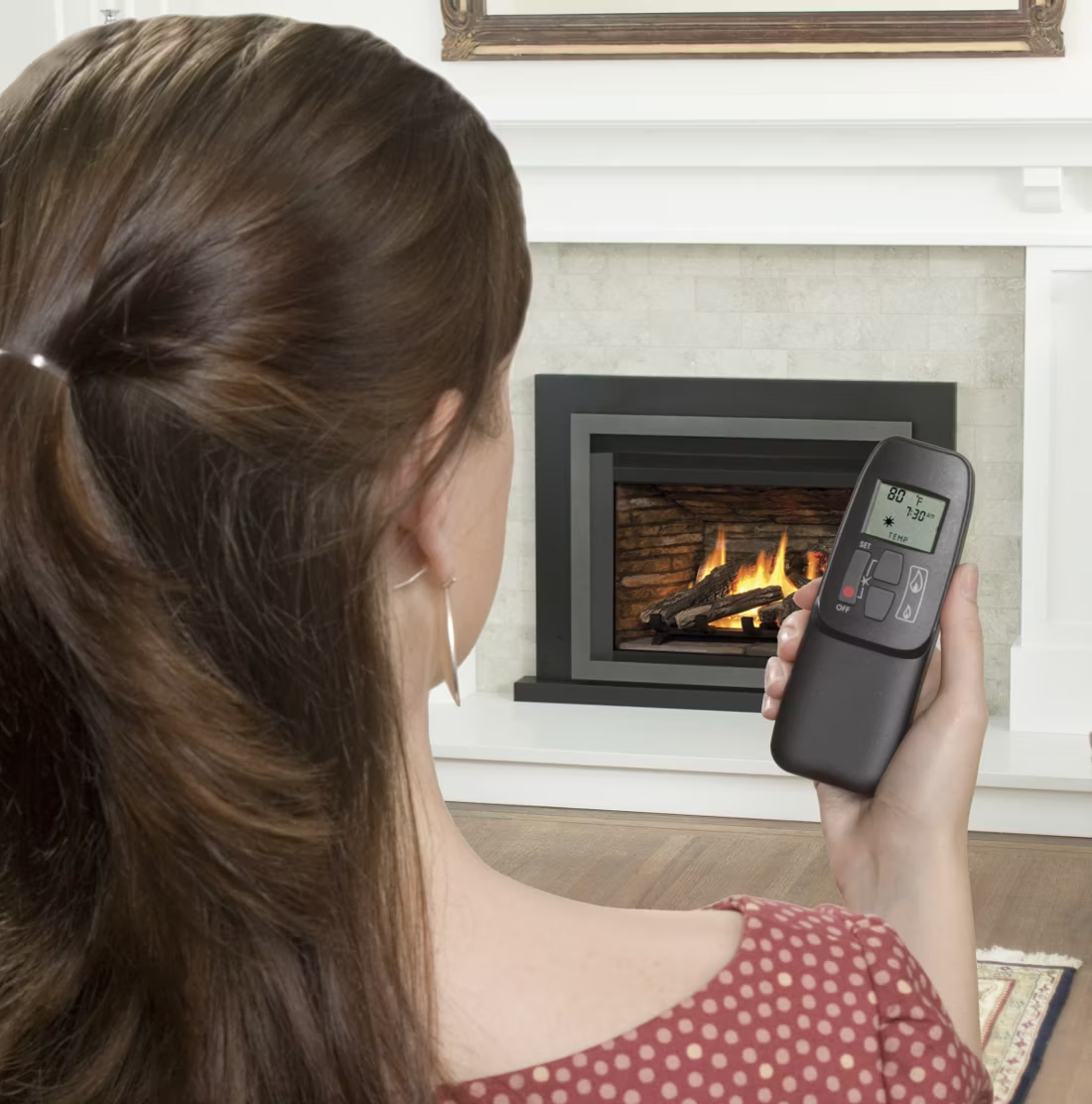
This is one of the more practical reasons St. Cloud homeowners choose gas over electric. Units with intermittent pilot ignition (IPI) run on battery backup and will light on demand even with the grid down—useful during the multi-day outages that follow a direct hurricane hit in Osceola County. Valor fireplaces take it a step further: their pilot generates its own electricity through the thermocouple, so there's no battery to remember to replace before storm season. Whatever model you choose, ask your dealer about the ignition system specifically—it's the detail that matters most here, more than in most parts of the country.
Can I install a gas fireplace on my screened lanai or outdoor living space?
Yes, and it's a common request in St. Cloud given how much time people spend on lanais year-round. Outdoor-rated gas fireplaces and fire features are built to handle Florida humidity and are typically run on propane with the tank set discreetly nearby. The main considerations are proper clearance to any screen enclosure material and confirming the unit is rated for outdoor or semi-outdoor use—an indoor unit installed outside won't hold up to the moisture. A local dealer can walk the lanai with you and confirm what's code-compliant for an open or screened space.
Can I convert an existing wood-burning fireplace to gas?
If your St. Cloud home has an older wood-burning fireplace—more common in homes built before the 1990s building boom in this part of Osceola County—a gas insert can usually be fitted into the existing masonry opening using a liner run up the current chimney. This is a straightforward project for a local installer and typically falls in the $4,000 to $7,500 range, with propane line work being the main cost variable. It's a popular upgrade because it keeps the existing look of the fireplace while eliminating the ash, smoke, and upkeep that don't make much sense to deal with in a climate this mild.
Gas vs. electric fireplace—which makes more sense for St. Cloud?
Electric fireplaces plug into a standard outlet, need no venting or gas line, and cost far less to install—typically a few hundred dollars versus several thousand for gas. They run on Duke Energy Florida's residential rate of roughly 16.6 cents per kWh, which for occasional evening use is inexpensive either way. Gas delivers a more realistic flame, real radiant heat, and—critically for this area—the ability to run during a hurricane-related power outage if you choose an IPI or Valor model. For a primary living room feature or a home that wants storm-season backup, gas is usually worth the extra cost. For a bedroom, rental property, or secondary room where ambiance is the only goal, electric is often the more sensible choice.
Why is my open fireplace making my house colder?
Open fireplaces suck—literally. As the fire burns, it consumes air your furnace already paid to heat and pulls it out through the chimney, so the house is actually colder after the fire goes out than before you lit it. An insert fixes this: it seals the chimney, puts fixed glass across the front, and turns that hole in your house into a real heat source.
What's the difference between an insert and a zero-clearance fireplace?
An insert is a fireplace that slides into a pre-existing wood-burning fireplace—if you don't have one, there's nothing to insert it into. A zero-clearance fireplace is built into a framed wall, which makes it the answer for remodels and new construction. Simple test: existing masonry fireplace means insert; blank or framed wall means zero-clearance.
What is an in-home preview and do I need one?
It's a visit where a hearth professional measures your space, confirms the model you picked actually works in your home, and walks the specs—framing, gas line, venting, finish work—before anything is ordered. Some details you just can't know until you see the house. Never make a down payment without one; it's the single most-skipped step that burns buyers.
Can I install a fireplace myself?
If you're putting a fire in your house on purpose, it's best to work with an expert. Unless you're genuinely experienced in framing, gas line, vent pipe, and the national code on clearances to combustibles, have a professional do it—and ideally the same company that sells you the fireplace, so warranty, service, and liability all live under one roof.
Start your gas fireplace project in St. Cloud.
Tell us about your home and we'll match you with a trusted local dealer and send over a free Project Guide & Parts List—the exact parts, including the vent kit, for your St. Cloud gas fireplace project.
Find Your Fireplace →