
Find your electric fireplace in Osceola County.
With winter lows averaging 48°F and barely 592 heating degree days a year, Osceola County homes want ambiance and accent heat, not a furnace replacement. Find the right unit and connect with a trusted local dealer.
Every Project Starts From One of These Five Situations
Warmth on the rare cold night, style every night.
Osceola County sits in climate zone 2A, where central Florida's mild winters mean actual heating need is minimal—592 heating degree days is a fraction of what a home in Bismarck, ND or Minneapolis, MN racks up before Thanksgiving. From Kissimmee and St. Cloud to Celebration and the newer communities pushing south toward the county line, homeowners here aren't buying a fireplace to survive winter. They're buying one for the look, the glow, and the occasional 40-degree evening when a little supplemental heat is genuinely welcome.
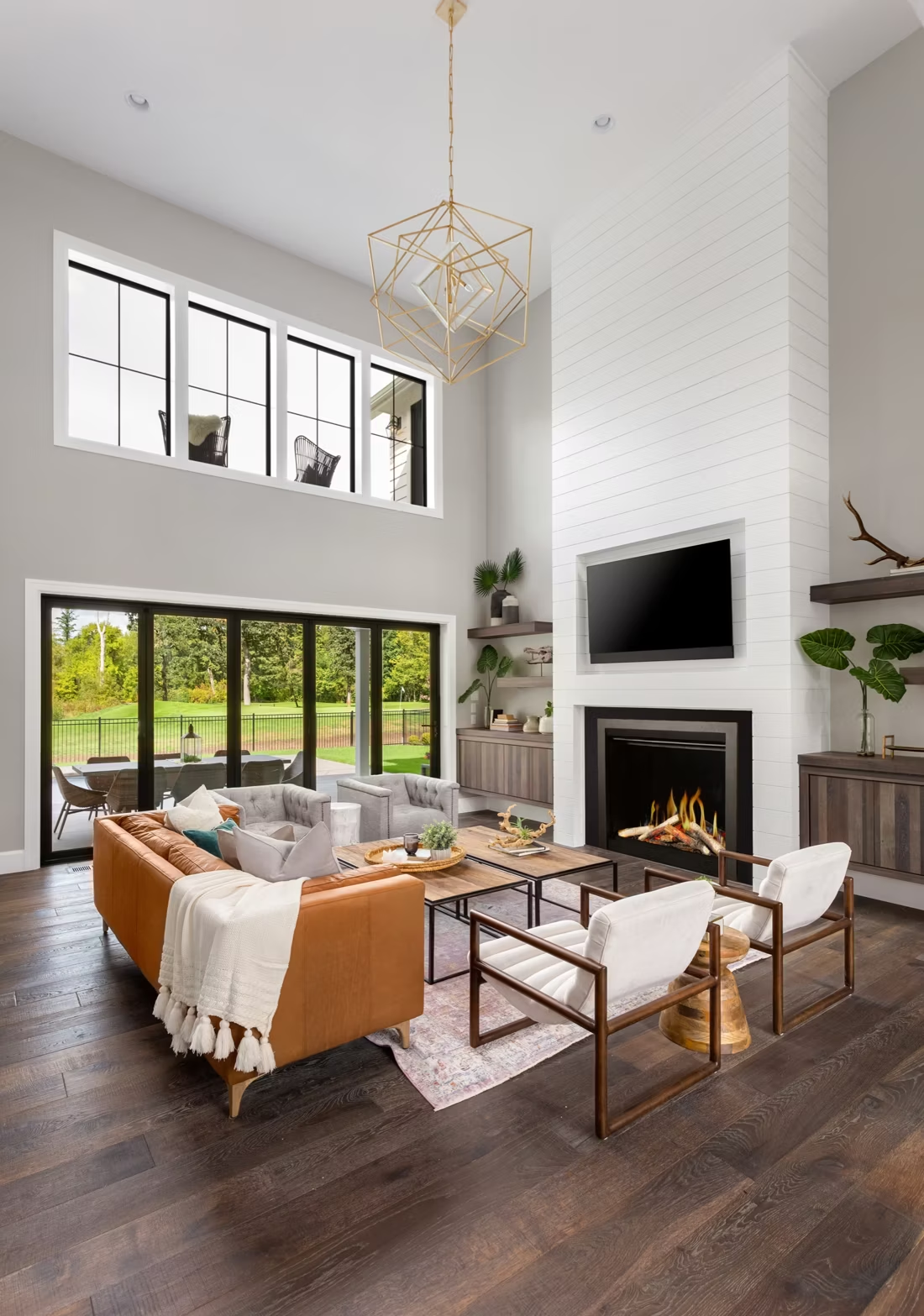
That's exactly the profile electric fireplaces are built for. A wall-mounted or built-in electric unit gives a home the visual centerpiece of a fireplace—real flame-effect technology, a mantel or media-wall installation—without a chimney, without gas line work, and without the standby heat load of a wood or gas appliance that would go mostly unused in a county this warm. It's a straightforward electrical installation, which is also why the cost and complexity are so much lower here than in colder-climate counties: no venting, no permit gymnastics, just a dedicated circuit and a clean install.
Three steps. No salesperson until you're ready.
Tell us about your project
Your zip code, your situation, and the fuel you're leaning toward—or let the answers point you to one.
See what's actually available
The brands dealers within 100 miles genuinely carry—real options, never a catalog mirage.
Get your dealer & Project Guide
A trusted local dealer, plus the free Project Guide & Parts List that names every component of the job.
Frequently Asked Questions
How much does an electric fireplace installation cost in Osceola County?
A typical electric fireplace installation in Osceola County runs $400 to $1,200. A plug-in unit on an existing outlet sits at the low end and can often be self-installed, though many homeowners still bring in a local dealer for a clean built-in look. A recessed or wall-mounted unit that requires a dedicated 120V or 240V circuit, drywall work, or a media-wall build sits toward the higher end. Because there's no chimney, gas line, or venting involved, electric installs in Osceola County are consistently the least expensive fireplace project a local dealer handles.
Do electric fireplaces actually put out real heat, or are they just for looks?
Most electric fireplaces include a built-in fan heater, typically rated around 1,500 watts, that can take the chill off a room—genuinely useful on the handful of nights each winter when Osceola County dips into the 40s. But given the county's average of 592 heating degree days a year, almost no one here is relying on an electric unit as a primary heat source the way a homeowner in a place like Duluth, MN would depend on a wood stove. The realistic use case locally is ambiance most of the year with a welcome heat boost on the occasional cold front.
Is a wood or pellet stove ever a good fit in Osceola County?
It's uncommon, and for good reason—with winter lows averaging 48°F and virtually no sustained cold, wood and pellet stoves aren't a practical heat source for the vast majority of Osceola County homes. A small number of homeowners still install a wood-burning fireplace for the ambiance of a real fire, particularly in larger custom homes in areas like Celebration, or for a rustic look using local oak or pine. But if warmth and low maintenance are the goals, electric is the far more sensible choice for this climate, and it's why we point most Osceola County homeowners toward electric or gas rather than wood or pellet.
Do I need a permit to install an electric fireplace in Osceola County?
It depends on the scope of the work. A plug-in, freestanding electric fireplace generally doesn't require a permit since it's not a permanent electrical alteration. A built-in or recessed unit that requires a new dedicated circuit or panel work typically does require an electrical permit through the applicable building department—Osceola County's for unincorporated areas, or the City of Kissimmee or St. Cloud building department if you're inside those city limits. A local dealer handling the install will know which jurisdiction applies to your address and will pull the permit as part of the job.
What size electric fireplace do I need for my Osceola County home?
Since heating capacity isn't the driving factor in this climate, sizing an electric fireplace here is mostly about the visual scale of the room and the wall or media-wall space available—a 40-50 inch unit suits a standard living room, while great rooms in the larger new-construction homes common around Celebration and south Kissimmee often call for 60-inch or wider linear units to fill the wall properly. A local dealer will look at your room dimensions and viewing distance and recommend a size that looks proportional rather than oversized or lost on the wall.
What's the difference between an electric fireplace, insert, and stove?
An electric fireplace is typically a built-in or wall-mounted unit designed for a media wall or a framed opening. An electric insert is sized to slide into an existing masonry or wood fireplace opening, letting a homeowner retire an unused wood-burning firebox without ripping it out. An electric stove is a freestanding cabinet-style unit that mimics a wood stove's look. For Osceola County homes with an older masonry fireplace that never gets used, an insert is often the simplest upgrade—instant flame-effect ambiance with none of the chimney maintenance.
Will an electric fireplace work during a power outage?
No—electric fireplaces require power to operate, both the flame effect and any heat function, so they won't run during an outage. This matters more in central Florida than the mild winters might suggest, since Osceola County does see hurricane-season power interruptions. If backup heat during an outage is a real priority for your household, that's one scenario where a homeowner might pair an electric fireplace for daily ambiance with a smaller gas appliance for outage resilience—worth discussing with a local dealer if it's a concern.
Gas vs. electric—which is right for my Osceola County home?
Gas fireplaces offer a more realistic flame and meaningful heat output, and propane or natural gas service is available across much of Osceola County for homeowners who want that option. Electric fireplaces cost less to install, require no venting or gas line work, and are simpler to place anywhere in the home since they only need an outlet or circuit. Given the county's mild 2A climate and low heating need, most homeowners here choose electric for secondary rooms, bedrooms, or media walls, and reserve gas for a primary living space where a stronger flame presence and heat output matter more.
Can I install an electric fireplace myself, or should I hire a local dealer?
A basic plug-in electric fireplace is genuinely a DIY-friendly project—set it on its stand or mount it per the manual and plug it in. Where local expertise pays off is a built-in or recessed installation: getting the framing right, running a dedicated circuit safely, and finishing the surround so it looks intentional rather than retrofitted. A local dealer serving Osceola County will handle the electrical work correctly, pull permits where required, and make sure the finished install matches the scale of the room.
Can I put a TV above my fireplace?
Yes—with an asterisk. Fireplaces are hot and TVs don't like heat. Either put a mantel between them to deflect rising warmth, or choose a fireplace with heat-management technology that creates a cool zone on the wall above—the wall stays around 125 degrees, barely warm, while the room still gets full heat. If you like clean lines and don't want a mantel, heat management is the answer.
Do electric fireplaces actually produce heat?
Yes—most put out around 4,800–5,000 BTUs from a standard outlet, which comfortably warms a bedroom, office, or den as a comfort-zone heater. What they won't do is carry a whole house the way wood, gas, or pellet can. Think of electric as ambiance-first with honest supplemental heat: flames on with no heat in July, flames plus warmth in January.
Can a fireplace actually lower my heating bill?
Yes—by creating a comfort zone. A furnace heats every square foot of the house just to warm the one room you're in; a gas fireplace on low burns roughly a sixth of the gas a typical furnace does. Set the furnace around 55–60 degrees as a baseline, then heat the rooms your family actually uses. Families who heat this way commonly save $20–$60 a month.
Should the dealer who sells my fireplace also install it?
Ideally, yes. A fireplace project involves vent pipe, gas line, electrical, and often tile or stone. Hire three or four separate trades and you own the liability and the game of telephone between them. One company selling and installing means one accountable party, start to finish—ask about factory training, on-time completion records, and what happens if an inspection fails.
Get your free Osceola County electric fireplace Project Guide.
Tell us a bit about your home and we'll send a free Project Guide & Parts List built for your space, plus a match with a trusted local dealer serving Osceola County.
Find Your Fireplace →