
A Pellet Stove in Spring Hill Is the Exception, Not the Rule.
With winter lows averaging 47°F and only a light, short winter heating season, Spring Hill doesn't generate real pellet-heat demand. If you still want one—for a rare cold snap, a vacation property up north, or the look of a live-flame stove—we'll match you with a dealer who genuinely stocks them.
Every Project Starts From One of These Five Situations
Spring Hill's climate doesn't create pellet-stove demand.
Hernando County sits in climate zone 2A at just 43 feet of elevation, with a very light, mild winter heating season and a winter low averaging 47°F. Compare that to International Falls, Minnesota, which has a heating season roughly fourteen times as demanding—pellet stoves there run nearly around the clock from October through April. In Spring Hill, most winters bring only a handful of nights cold enough to want supplemental heat at all, which is exactly why we flag pellet as not-applicable for this market the same way we flag wood: the fuel exists, but the climate rarely asks for it.
The homeowners who do install a pellet stove here tend to fall into a few categories: people who owned one at a previous home up north and like the look and feel, second-home owners splitting time between Spring Hill and a colder state, and folks who want supplemental warmth for the occasional hard freeze that dips into the 20s and worries the citrus growers. One thing worth knowing upfront: pellet stoves need electricity to run the auger and blower, so they're not a hurricane-outage heat source the way a wood stove is. Duke Energy Florida and Withlacoochee River Electric Cooperative both serve Spring Hill, and post-storm outages here are typically about restoring air conditioning, not heat—so pellet's biggest advantage in cold climates just doesn't apply. Regional pellet brands like Lignetics, Hamer Pellet Fuel, and Greenway Renewable Energy are manufactured in the Southeast, but few Hernando County hearth shops keep bags in stock year-round given how little local demand there is.
Three steps. No salesperson until you're ready.
Tell us about your project
Your zip code, your situation, and the fuel you're leaning toward—or let the answers point you to one.
See what's actually available
The brands dealers within 100 miles genuinely carry—real options, never a catalog mirage.
Get your dealer & Project Guide
A trusted local dealer, plus the free Project Guide & Parts List that names every component of the job.
Frequently Asked Questions
Does a pellet stove actually make sense for a Spring Hill home?
For most homes, no—not as a primary or even reliable supplemental heat source. Spring Hill has only a light, brief winter heating season and winter lows average 47°F, nowhere close to the sustained cold of a place like International Falls, Minnesota, where pellet stoves are genuinely earning their keep most of the winter. Here, a gas or electric fireplace (both standard, common installs in Hernando County) covers the handful of cool evenings most homeowners actually want heat for. Pellet stoves in Spring Hill are almost always a lifestyle or ambiance choice rather than a heating necessity, and it's worth going in with that expectation.
How much does a pellet stove installation cost in Spring Hill?
Nationally, pellet stove installs typically run $3,000 to $6,500 depending on the unit and venting path. In Spring Hill specifically, expect costs to land toward the higher end of that range—not because the equipment costs more, but because so few local installers regularly work with pellet appliances. That often means special-ordering a venting kit and a longer lead time compared to a gas insert, which is a far more common install in this market. Get quotes from a couple of local hearth dealers before assuming a number; pricing varies a lot when a product is this uncommon locally.
Will a pellet stove keep my home warm during a hurricane power outage?
No—and this is worth understanding before you buy. Pellet stoves rely on an electric auger to feed fuel and a blower to circulate heat, so they shut down the moment the power does. Duke Energy Florida and Withlacoochee River Electric Cooperative both serve Spring Hill, and outages after a major storm can stretch for days. If backup heat during an outage is part of your reasoning, a pellet stove won't deliver it—a wood-burning appliance or a generator paired with electric heat would serve that purpose better. Most Spring Hill outages are an air-conditioning problem anyway, not a heating one.
Where can I buy pellet fuel in Spring Hill?
Regional producers like Lignetics, Hamer Pellet Fuel, and Greenway Renewable Energy manufacture pellets across the Southeast, but demand in Hernando County is low enough that few local retailers keep pallets (a ton) in stock year-round. Most Spring Hill owners special-order through hearth shops in Tampa, Brooksville, or Ocala, or buy online and have it shipped. If you're installing a pellet stove here, it's smart to buy your season's supply in the fall rather than assume you can grab a few bags in December when a cold snap hits.
What size pellet stove do I need for occasional use in Spring Hill?
Since you're heating for the occasional 30s-and-40s night rather than fighting a real winter, you don't need to size the way a homeowner in a place like Duluth, Minnesota would. A small pellet stove or insert rated for 1,000 to 1,500 square feet is plenty for supplemental heat or ambiance in most Spring Hill homes, and running it on a lower setting keeps it comfortable rather than overheating a room that doesn't need much help staying warm to begin with.
Do I need a permit to install a pellet stove in Spring Hill?
Yes. Regardless of how uncommon the appliance is locally, the Hernando County Building Division requires a permit for any new hearth appliance that involves a wall or roof penetration for venting, along with an inspection to confirm clearances and vent termination are up to code. Because pellet installs are rare here, it's worth confirming your installer has actually pulled this type of permit before—not every local contractor has, even if they're experienced with gas or electric units.
Pellet stove vs. gas fireplace—which fits Spring Hill better?
For most homeowners here, gas wins on practicality. Gas fireplaces and inserts are a standard, well-supported install throughout Hernando County, with local installers who work on them regularly, no fuel storage or ash cleanup, and instant on-off operation that suits Spring Hill's short, mild cool season. Pellet stoves require pellet storage, an electric hopper and auger, and periodic ash removal—a lot of ongoing upkeep for a fuel source that might only run a few dozen nights a year here. Pellet still has a place if you specifically want that appliance's look and burn characteristics, but gas is the more common, easier-to-service choice locally.
Pellet stove vs. electric fireplace—which is right for a Spring Hill home?
Electric is usually the simpler match for how Spring Hill actually uses supplemental heat. Electric fireplaces need no venting, no fuel storage, and no ash cleanup, and they run on either Duke Energy Florida or Withlacoochee River Electric Cooperative service—at roughly 16.6 cents or 12.4 cents per kWh depending on which utility serves your address. For a winter low averaging 47°F, an electric unit can comfortably handle the ambiance and occasional chill most homeowners are after. Pellet makes more sense only if you specifically want the visual and feel of a live pellet flame and don't mind the extra maintenance for a fuel source your climate barely calls for.
Are pellets made from local Spring Hill wood?
Not really. Pellets are manufactured from compressed sawdust and mill residue, and Southeast producers like Lignetics, Hamer Pellet Fuel, and Greenway Renewable Energy typically source pine and oak waste from regional lumber operations—species that do grow throughout Hernando County's pine flatwoods and oak hammocks. But there's no pellet manufacturing facility in Spring Hill itself, so bagged pellets are trucked in from elsewhere in the region rather than produced locally. Mahogany, another common ornamental species around Spring Hill properties, isn't used in pellet production at all.
How often does a pellet stove need cleaning?
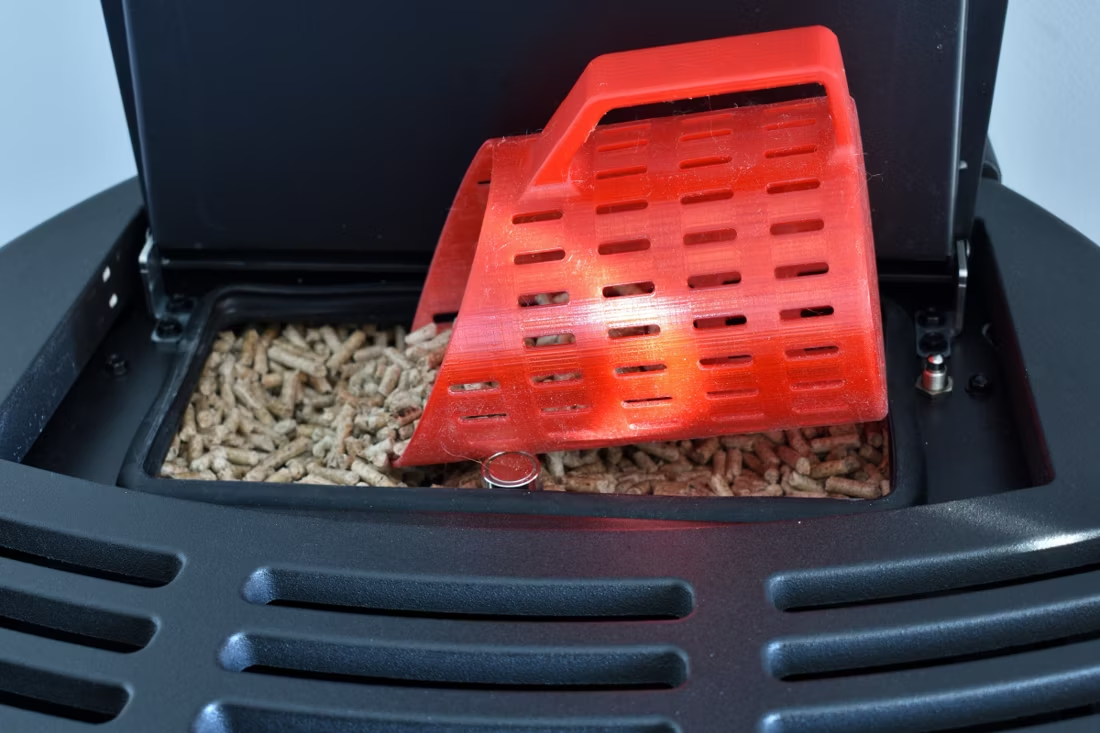
A clean pellet stove is a happy pellet stove. Plan on cleaning the burn pot about once a week when you're burning regularly—ash and clinkers gum up the air holes just like a pellet barbecue. Most pellet stove problems trace back to skipped cleaning that nobody explained up front. Some designs make it easy with a trapdoor burn pot: pull a lever and the gunk drops into the ash pan.
Why is a fireplace insert so efficient?
An insert does two things: it seals the chimney completely, so you stop losing air you already paid to heat, and it radiates warmth into the room through the firebox and glass. Most add a heat-exchange fan that pulls cool room air underneath, wraps it around the hot firebox, and pushes it back out warm. Your home is more efficient before you've even lit the first fire.
Can a fireplace actually lower my heating bill?
Yes—by creating a comfort zone. A furnace heats every square foot of the house just to warm the one room you're in; a gas fireplace on low burns roughly a sixth of the gas a typical furnace does. Set the furnace around 55–60 degrees as a baseline, then heat the rooms your family actually uses. Families who heat this way commonly save $20–$60 a month.
How much should I budget for a fireplace?
For an average home—covering the fireplace, the vent pipe, and basic installation—a budget between $3,900 and $5,500 gives you a lot of options across wood, gas, and pellet. By the time you add finish work, gas line, and electrical, the average complete installation lands between $5,000 and $12,000 all-in. In a remodel or new build, a good rule is to put about 2.5% of the total project cost toward the fireplace.
Pellet Brands Stocked Around Spring Hill
Manufacturers will point you to the nearest stocking dealer.
Get matched with a Spring Hill dealer who actually stocks pellet stoves.
Tell us about your Spring Hill home and we'll put together a free Project Guide & Parts List—the exact venting kit, hearth pad, and pellet stove options a local dealer can realistically install, along with who to call to get it done right.
Find Your Fireplace →