
Bring real flame comfort to Florida's Nature Coast.
Clean-burning ambiance and backup heat for Hernando County homes—even where winters barely dip below 50. Find the right gas fireplace and connect with a trusted local dealer.
Every Project Starts From One of These Five Situations
Ambiance first, backup heat second—and that's the point.
Spring Hill sits in climate zone 2A at just 43 feet above sea level, with an average winter low around 47°F and only a light winter heating load a year—a fraction of what a place like Duluth, Minnesota logs in a single month. Nobody in Hernando County is heating a home through a Fargo-style winter. But La Niña cold snaps still push overnight lows into the 30s a handful of nights each year, and most homeowners here want a fireplace for the glow, the resale value, and the occasional real need for supplemental warmth—not as their main heat source.
Natural gas mains don't reach much of unincorporated Hernando County, so most gas fireplace installations in Spring Hill actually run on propane, delivered and serviced by local propane suppliers rather than a city gas utility. Electric service comes from Duke Energy Florida or Withlacoochee River Electric Cooperative depending on your neighborhood, but that's for your HVAC and appliances—the fireplace itself typically draws from its own propane tank. A trusted local dealer sizes the tank, runs the line, and pulls the Hernando County Building Division permit so the whole project is code-compliant from day one.
Three steps. No salesperson until you're ready.
Tell us about your project
Your zip code, your situation, and the fuel you're leaning toward—or let the answers point you to one.
See what's actually available
The brands dealers within 100 miles genuinely carry—real options, never a catalog mirage.
Get your dealer & Project Guide
A trusted local dealer, plus the free Project Guide & Parts List that names every component of the job.
Frequently Asked Questions
How much does a gas fireplace installation cost in Spring Hill?
Most gas fireplace installations in Spring Hill run $3,000 to $7,500, with the low end covering a direct-vent unit installed against an exterior wall in an existing living room and the high end covering a full built-in fireplace with a new propane tank, buried line, and finished surround. Because Hernando County has limited natural gas infrastructure, plan on a propane tank installation or lease as part of the project unless your home already has one for a range or water heater. Local dealers will walk the site and give you a firm number before any work starts.
Do I need natural gas, or does my Spring Hill fireplace run on propane?
Almost certainly propane. Natural gas mains are limited in unincorporated Hernando County, so the large majority of gas fireplaces installed in Spring Hill run on propane from a dedicated tank rather than a municipal gas line. Your electric utility—Duke Energy Florida or Withlacoochee River Electric Cooperative, depending on your neighborhood—has nothing to do with fireplace fuel; that's a separate propane account. Most fireplace models sold today can be configured for propane with the correct orifice kit, so fuel choice rarely limits which unit you can buy.
Does a gas fireplace even make sense with Spring Hill's mild winters?
It makes sense for most of the year as ambiance and for the handful of nights when it doesn't. With only a light winter heating load annually and average lows around 47°F, nobody in Spring Hill is running a fireplace as primary heat. But cold snaps tied to La Niña winters can drop overnight temperatures into the 30s, and a gas fireplace gives you real, on-demand warmth for those nights plus the visual appeal of a real flame the other 350 days a year—something a space heater can't offer.
Will my gas fireplace work during a hurricane-related power outage?
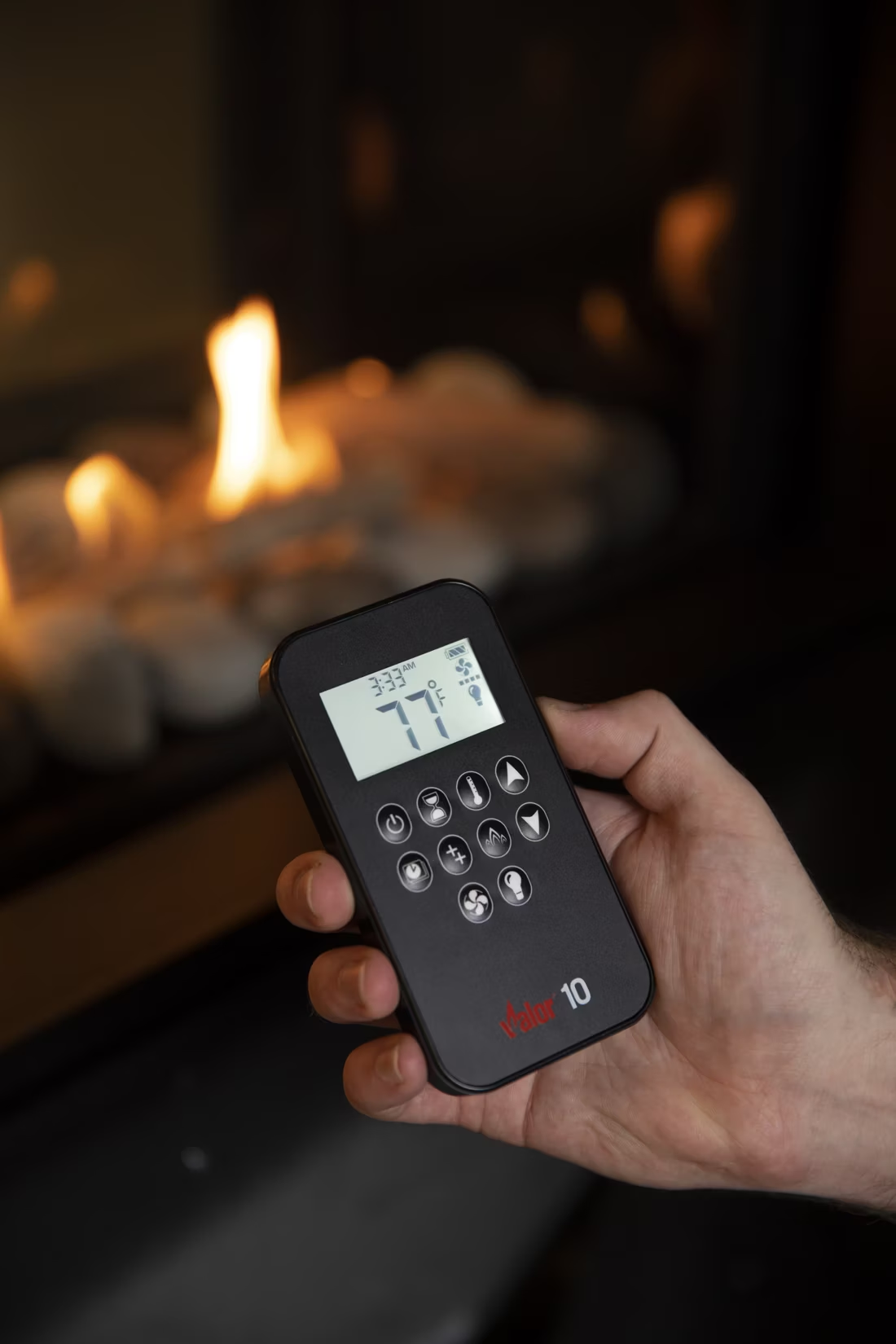
Most modern gas fireplaces will, which matters in a hurricane-prone county like Hernando. Units with IPI (intermittent pilot ignition) run on a small battery backup that keeps the igniter working when the power drops, so the fireplace lights on demand just like normal. Valor fireplaces go a step further—their pilot assembly generates its own electricity through the thermocouple, so there's no battery to forget to replace before storm season. Either option gives you a source of light and heat if a summer or fall hurricane knocks out Duke Energy or Withlacoochee power for days.
Do I need a permit to install a gas fireplace in Spring Hill?
Yes. Since Spring Hill is unincorporated, permitting runs through the Hernando County Building Division, which requires a building permit and, for propane installations, sign-off from a licensed gas fitter on the tank and line work. Most local hearth dealers handle the permit application and inspections as part of the installation, so you're not coordinating multiple trades yourself.
Should I choose a vented or vent-free gas fireplace in Florida's humidity?
For most Spring Hill homes, vented (direct-vent) is the better call. Vent-free units release combustion byproducts—including water vapor—directly into the room, and Hernando County's already-humid, air-conditioned climate doesn't need more moisture added indoors; it can contribute to condensation and mold risk in a sealed, AC-cooled house. Direct-vent units exhaust everything outside through a sealed pipe, which keeps indoor air quality and humidity levels unaffected. Vent-free units are legal in Florida and cost less to install, but ask your local dealer to walk through the tradeoffs for your specific room.
What's the difference between a gas fireplace, insert, and gas stove?
A gas fireplace is a built-in unit, framed into a wall—the standard choice in Spring Hill's newer construction and open-concept great rooms. A gas insert fits into an existing masonry or prefab wood-burning firebox, which shows up occasionally in older Hernando County homes built with a wood fireplace decades ago. A gas stove is a freestanding cabinet-style unit, less common here but sometimes used in a Florida room or lanai conversion. Most Spring Hill projects are new built-in fireplaces since relatively few homes in this area were built with a working wood fireplace to convert.
How often should a gas fireplace be serviced in Spring Hill?
Plan on an annual inspection, and don't skip it here—Hernando County's humidity and proximity to the Gulf can accelerate corrosion on burner components and gas connections faster than in a drier climate. A certified technician should check the pilot assembly, burner, venting, and gas fittings, and clean the glass. Most local gas appliance technicians charge in the $150-$250 range for a standard annual inspection.
Gas vs. wood—why do so few Spring Hill homes burn wood?
Wood fireplaces are genuinely uncommon in Spring Hill—with average winter lows around 47°F, there's rarely enough sustained cold to justify the wood handling, ash cleanup, and chimney maintenance a wood-burning setup requires. A small number of older homes have existing wood fireboxes that could burn regional species like oak or pine, but most owners either convert them to gas inserts or use them a few nights a year for atmosphere. Gas wins for the vast majority of Hernando County homeowners: instant on-off operation, no smoke or ash, and reliable performance whether you're using it for backup heat during a cold snap or just ambiance on a Tuesday night.
Can I put a TV above my fireplace?
Yes—with an asterisk. Fireplaces are hot and TVs don't like heat. Either put a mantel between them to deflect rising warmth, or choose a fireplace with heat-management technology that creates a cool zone on the wall above—the wall stays around 125 degrees, barely warm, while the room still gets full heat. If you like clean lines and don't want a mantel, heat management is the answer.
What's the difference between an insert and a zero-clearance fireplace?
An insert is a fireplace that slides into a pre-existing wood-burning fireplace—if you don't have one, there's nothing to insert it into. A zero-clearance fireplace is built into a framed wall, which makes it the answer for remodels and new construction. Simple test: existing masonry fireplace means insert; blank or framed wall means zero-clearance.
How much should I budget for a fireplace?
For an average home—covering the fireplace, the vent pipe, and basic installation—a budget between $3,900 and $5,500 gives you a lot of options across wood, gas, and pellet. By the time you add finish work, gas line, and electrical, the average complete installation lands between $5,000 and $12,000 all-in. In a remodel or new build, a good rule is to put about 2.5% of the total project cost toward the fireplace.
Can a fireplace actually lower my heating bill?
Yes—by creating a comfort zone. A furnace heats every square foot of the house just to warm the one room you're in; a gas fireplace on low burns roughly a sixth of the gas a typical furnace does. Set the furnace around 55–60 degrees as a baseline, then heat the rooms your family actually uses. Families who heat this way commonly save $20–$60 a month.
Find your gas fireplace in Spring Hill.
Tell us a bit about your home and we'll match you with the right gas fireplace or insert—plus a free Project Guide & Parts List and a trusted local Hernando County dealer to install it.
Find Your Fireplace →