
Real heat for Hernando County's rare cold nights.
From Spring Hill to Brooksville to Weeki Wachee, a gas fireplace gives Hernando County homes instant ambiance year-round and genuine backup warmth on the handful of nights each winter when a cold front actually drops in. Find the right unit and connect with a trusted local dealer.
Every Project Starts From One of These Five Situations
Ambiance most of the year, real warmth when a front rolls through.
Hernando County sits in ASHRAE climate zone 2A, with an average winter low around 47°F and just 676 annual heating degree days—a fraction of what a cold-climate state sees. Homes here, from the karst spring country around Weeki Wachee to the growing subdivisions of Spring Hill and the historic core of Brooksville, aren't built around heating loads. But Gulf Coast cold fronts still push overnight temperatures into the 30s and occasionally the 20s several times most winters, and those snaps are exactly when a gas fireplace earns its keep—instant heat with no warm-up lag, no wood to manage, and no chimney to maintain in a climate that otherwise never asks for one.
Natural gas service in Hernando County is limited to pockets served by Peoples Gas (TECO), generally concentrated along parts of the Spring Hill and Brooksville corridors; most of the county—including Hernando Beach, Ridge Manor, and unincorporated areas—relies on propane from regional suppliers. Either fuel works fine for a fireplace once a tank or line is in place. Wood-burning fireplaces are uncommon in new Hernando County construction given the mild climate, so most homeowners here are either installing their first fireplace outright or replacing an old builder-grade unit—and a gas insert or built-in delivers year-round curb appeal plus real heat for the storm-season outages the Gulf Coast is no stranger to.
Three steps. No salesperson until you're ready.
Tell us about your project
Your zip code, your situation, and the fuel you're leaning toward—or let the answers point you to one.
See what's actually available
The brands dealers within 100 miles genuinely carry—real options, never a catalog mirage.
Get your dealer & Project Guide
A trusted local dealer, plus the free Project Guide & Parts List that names every component of the job.
Frequently Asked Questions
How much does a gas fireplace installation cost in Hernando County?
Most gas fireplace installations in Hernando County run $3,500 to $8,000, depending on the unit, whether you're on natural gas through Peoples Gas or propane, and how much venting or gas line work is involved. A direct-vent insert going into an existing masonry opening with gas already run to that wall sits toward the low end. New construction, remodels, or homes needing a fresh gas line pulled from the meter or a new propane tank set typically land in the middle to upper end. Coastal installs near Hernando Beach sometimes carry a modest premium for corrosion-resistant venting components given the salt air exposure.
Can I convert my existing wood fireplace to gas?
Yes, though it's a less common project here than in colder states simply because fewer Hernando County homes were built with wood-burning fireplaces to begin with—the mild 2A climate never made wood heat a necessity the way it is in places like Duluth or Bozeman. Older homes around historic Brooksville and some established Spring Hill neighborhoods do have masonry wood fireplaces, and converting one to a gas insert is straightforward: a stainless liner runs through the existing chimney, and the insert connects to either a new gas line or a propane supply. Expect $3,500 to $7,000 for a typical conversion, with the gas line run being the main cost swing factor.
Do I need natural gas, or can I use propane?
Either works, and in Hernando County propane is actually the more common choice outside the Peoples Gas service pockets in the Spring Hill and Brooksville corridors. If your home already runs on propane for a water heater or range, adding a fireplace to that same tank is simple. Homes in areas without natural gas infrastructure—including most of Hernando Beach, Ridge Manor, and the unincorporated county—will need either an existing propane tank or a new tank set by a local supplier. Nearly every gas fireplace model on the market can be configured for either fuel; your installer sets the correct orifice and regulator for whichever you have.
Will my gas fireplace work during a power outage?
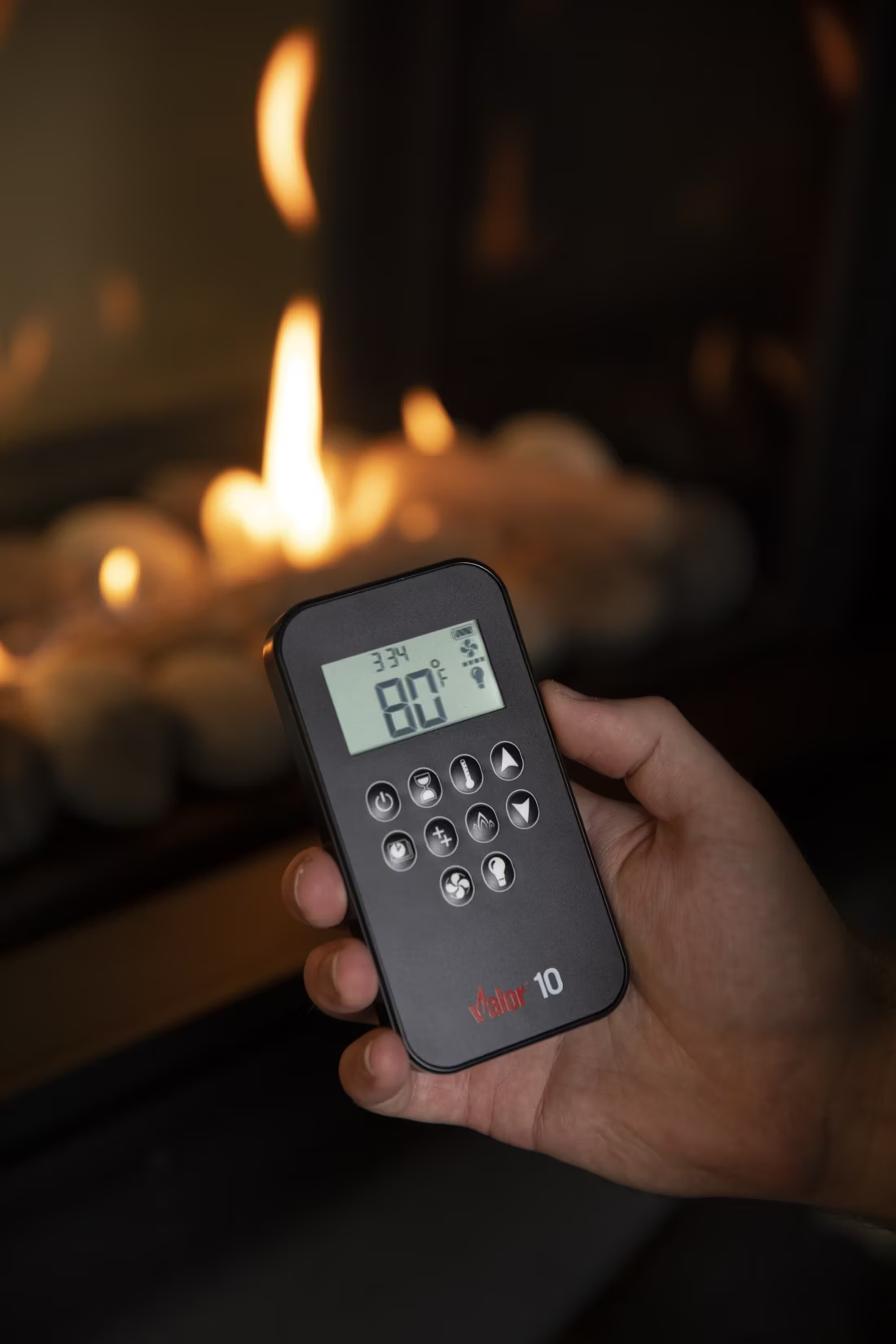
Most will, which matters in a hurricane-prone county like Hernando where outages can stretch for days after a named storm. Units with IPI (intermittent pilot ignition) include a battery backup that automatically takes over when grid power drops, letting the fireplace light on demand off AA batteries alone. Valor fireplaces go a step further—their pilot assembly generates its own electricity through the thermocouple, so there are no batteries to remember or replace. For a Gulf Coast home stocking up ahead of storm season, that kind of no-fuss backup heat and light source is worth asking your local dealer about directly.
What's the difference between a gas fireplace, gas insert, and gas stove?
A gas fireplace is a fully built-in unit framed into a wall—the standard choice for new construction and full remodels throughout Spring Hill and newer Hernando County developments. A gas insert drops into an existing masonry fireplace opening and uses the chimney as its vent path, which is the right call for the older wood-fireplace homes around Brooksville. A gas stove is a freestanding unit on its own hearth pad, often chosen for smaller spaces or a more traditional look without the framing work of a built-in.
Do I need a permit to install a gas fireplace in Hernando County?
Yes—Hernando County requires a building permit and a separate gas permit for new gas fireplace installations, and any gas line work must be performed by a licensed gas contractor. Most established local hearth dealers handle the permitting and inspection scheduling as part of the installation, so you're not coordinating separately with the building division. This is one of the clearest reasons to avoid a big-box or handyman install for gas work—a licensed installer keeps the line pressure, venting, and inspection sign-off all in order.
What's the difference between vented and vent-free gas fireplaces?
Vented (direct-vent) gas fireplaces pull combustion air from outside and exhaust all byproducts back outside through sealed venting. Vent-free units burn directly into the room without external venting, releasing water vapor and trace combustion gases indoors. Vent-free is legal in Florida, but it's worth thinking twice about in Hernando County specifically: the 2A climate already runs high humidity most of the year, and adding a vent-free unit's moisture output to an already humid home can aggravate condensation and mold issues, especially in closed-up rooms. Direct-vent units are the more common and more broadly recommended choice locally for that reason.
How often should my gas fireplace be serviced?
An annual inspection is recommended for any gas appliance, and local service techs typically charge $150 to $250 to check the burner, pilot, gas connections, and venting, plus clean the glass. Homes near the coast—Hernando Beach and the Weeki Wachee River corridor in particular—should be a little more attentive to this schedule, since salt-laden air can accelerate corrosion on venting components and glass seals faster than it would further inland around Brooksville.
Gas vs. wood vs. electric—which is right for my Hernando County home?
Wood-burning stoves are rare in Hernando County; with only 676 heating degree days a year, there's simply not enough sustained cold to justify cordwood heat, though a few older homes keep an existing masonry fireplace for occasional ambiance. Electric fireplaces are a fine low-cost option if you want the visual of a fire with zero heat output concerns—useful in a climate where you rarely need supplemental warmth. Gas splits the difference: it delivers real, on-demand heat for the cold fronts and storm-related outages that do come through, plus year-round flame ambiance the rest of the time, which is why it's the standard choice among the three for most homeowners here.
What's the difference between an insert and a zero-clearance fireplace?
An insert is a fireplace that slides into a pre-existing wood-burning fireplace—if you don't have one, there's nothing to insert it into. A zero-clearance fireplace is built into a framed wall, which makes it the answer for remodels and new construction. Simple test: existing masonry fireplace means insert; blank or framed wall means zero-clearance.
Is my gas fireplace wasting gas?
If it was installed more than 15 years ago, probably. Older gas fireplaces keep a standing pilot light burning all the time, and that little flame can cost a couple hundred dollars a year. Newer models use pilot-on-demand ignition—the pilot lights only when you use the fireplace and goes out when you turn it off.
Does a fireplace add value to my home?
On average, a fireplace adds back to the home about the same amount you spent installing it. Add the monthly savings from heating the rooms you actually use instead of the whole house—often hundreds of dollars a year—and the value case is strong before you even count what a fire does for how your family uses the room.
How much should I budget for a fireplace?
For an average home—covering the fireplace, the vent pipe, and basic installation—a budget between $3,900 and $5,500 gives you a lot of options across wood, gas, and pellet. By the time you add finish work, gas line, and electrical, the average complete installation lands between $5,000 and $12,000 all-in. In a remodel or new build, a good rule is to put about 2.5% of the total project cost toward the fireplace.
Get your Hernando County gas fireplace project moving.
Tell us about your home and we'll match you with a trusted local Hernando County dealer and send over a free Project Guide & Parts List—the exact parts, including the vent kit, for your specific gas fireplace or insert project.
Find Your Fireplace →