
Pellet heat is a rare fit in Seminole County—here's when it still makes sense.
With winter lows averaging 49°F and only about 609 heating degree days a year, most Seminole County homes never need supplemental heat. A small number of homeowners still add a pellet stove for ambiance, a second-home connection up north, or the rare hard freeze—and we'll match you with a local dealer who can tell you honestly whether it's worth it.
Every Project Starts From One of These Five Situations
Seminole County's climate rarely asks for a heat source.
Seminole County sits in climate zone 2A, with an average winter low of 49°F and roughly 609 heating degree days per year—a fraction of what a cold-climate stove buyer in, say, Duluth or Fargo would rack up in a single month. Across Sanford, Oviedo, Altamonte Springs, Casselberry, Winter Springs, and Lake Mary, most homes rely on central HVAC for the handful of nights each winter that dip into the 30s or 40s. A pellet stove is not a necessity here in the way it is farther north, and we won't pretend otherwise.
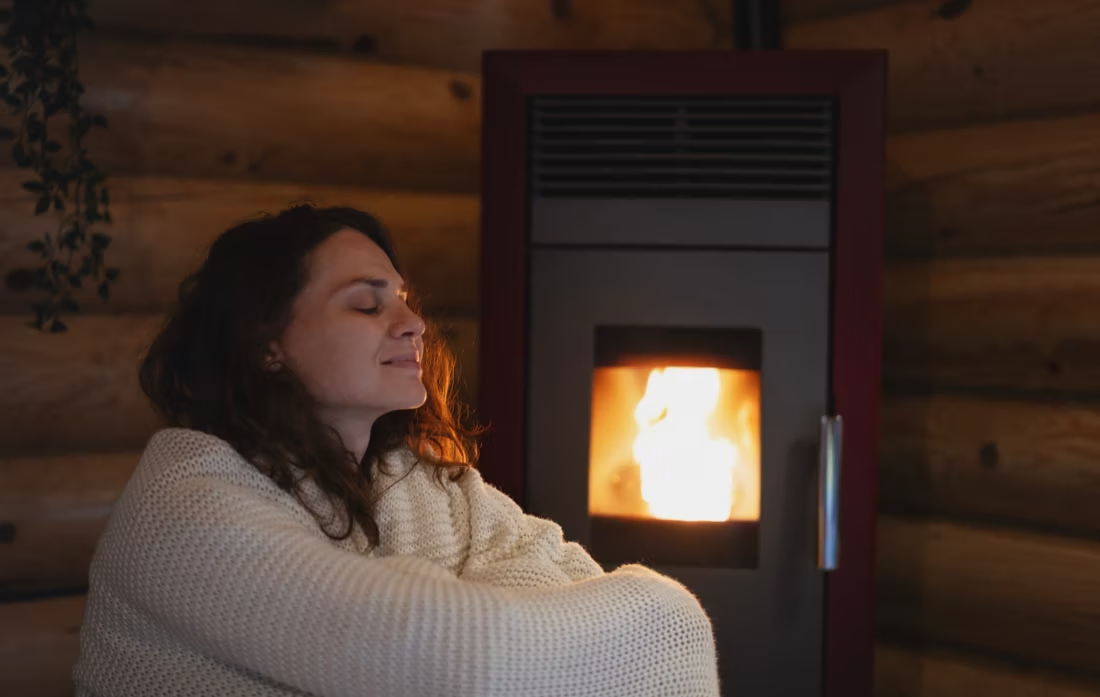
That said, pellet appliances still show up in Seminole County—usually in homes that want the look and feel of a real fire without the smoke and ash of cordwood, in properties with a second home in a colder state, or in the rare year with an extended January freeze. Regional pellet suppliers including Lignetics, Hamer Pellet Fuel, and Greenway Renewable Energy do serve the broader Central Florida market, so fuel sourcing isn't the obstacle—the obstacle is simply that most Seminole County homes don't need the BTUs. If you're set on the ambiance and convenience of a pellet stove, a local dealer can help you size a unit correctly for occasional use rather than for a heating season that barely exists here.
Three steps. No salesperson until you're ready.
Tell us about your project
Your zip code, your situation, and the fuel you're leaning toward—or let the answers point you to one.
See what's actually available
The brands dealers within 100 miles genuinely carry—real options, never a catalog mirage.
Get your dealer & Project Guide
A trusted local dealer, plus the free Project Guide & Parts List that names every component of the job.
Frequently Asked Questions
How much does a pellet stove installation cost in Seminole County?
Nationally, pellet stove installations typically run $3,000 to $6,000 depending on the unit, venting path, and whether an existing chimney or masonry fireplace is being converted into a pellet insert. Because pellet heat is uncommon in Seminole County, fewer local dealers stock a wide range of models, so pricing tends to reflect a smaller, more curated selection rather than big-box competition. A trusted local dealer can give you a firm number once they know whether you're installing into an existing fireplace opening or need new venting run through an exterior wall.
Do I actually need supplemental heat in Seminole County?
For most homes, no. With only about 609 heating degree days a year and winter lows averaging 49°F, Seminole County's central HVAC systems handle the cold snaps just fine. A pellet stove here is almost always a lifestyle choice—for the visual of a real flame, for a room that runs cold under the AC, or for a homeowner who grew up with wood or pellet heat elsewhere and wants that feel in Florida. If you're chasing lower utility bills through supplemental heat, the math rarely pencils out this far south; if you want the ambiance and don't mind that it's mostly decorative, that's a reasonable reason to move forward.
Where can I buy pellets in Seminole County?
Pellet fuel isn't sold on every corner in Central Florida the way it is in northern states, but regional suppliers including Lignetics, Hamer Pellet Fuel, and Greenway Renewable Energy distribute through hearth retailers and some home improvement stores serving the Orlando metro area, which covers Seminole County. Because local demand is low, expect to buy a season's worth of bags at once rather than restocking casually—a local dealer can point you to the closest active supplier and give you a realistic sense of per-ton pricing for occasional-use burning.
What size pellet stove do I need for occasional use in Seminole County?
Since almost no Seminole County home is heating through a real winter, sizing here is less about square footage and more about the room you actually want to warm—a family room, a den, or a single living space where the stove will run on cool evenings. A small to mid-size unit (rated for 1,000–1,500 sq ft) is typically more than enough, even oversized, for the handful of nights a year it will see real use. A local dealer can walk through your specific room and insulation and steer you away from a unit built for a Minnesota heating season you'll never experience.
Can any local installer handle a pellet stove, or does it need to be a specialist?
Pellet stoves require correct venting (typically direct-vent through an exterior wall, not a full chimney), a dedicated electrical outlet for the auger and blower, and proper clearances—the same code requirements as anywhere else, even though pellet installs are less common in Seminole County. Look for a dealer with NFI (National Fireplace Institute) certification specifically in pellet appliances rather than a general contractor. Because pellet volume is lower here than in colder markets, it's worth confirming your installer has actually done a pellet venting job recently, not just gas or electric units.
Do I need a permit to install a pellet stove in Seminole County?
Most pellet stove installations require a building permit through your local jurisdiction's building department, covering the venting penetration, electrical connection, and hearth clearances. Seminole County has no air quality restrictions on solid-fuel appliances—unlike some Western states with wintertime burn curtailments—so the permitting here is strictly a construction and life-safety matter, not an emissions issue. A local dealer who regularly installs pellet units will typically pull the permit as part of the job.
Pellet stove vs. gas fireplace—which makes more sense in Seminole County?
Gas is the standard heating-appliance choice across Seminole County, and for good reason: it requires no fuel storage, ignites instantly, and needs almost no maintenance—a good fit for a climate where the appliance runs occasionally rather than daily. Pellet stoves require a hopper to be loaded, ash to be emptied, and a stored supply of bagged fuel that's harder to source locally than it would be up north. If you want a real flame without the upkeep, gas is usually the more practical choice here. If the specific appeal is the pellet stove's look, sound, and slow-burning heat—and you're fine with occasional-use maintenance—it's still a legitimate option, just a niche one.
How much maintenance does a pellet stove need if I barely use it?
Pellet stoves need their burn pot and ash pan cleaned regularly during use, and the venting and hopper mechanisms should be inspected annually regardless of how many hours the unit has run—components can seize up or gaskets can degrade from disuse just as easily as from heavy use. For a Seminole County home where the stove might only run a dozen nights a year, an annual service check before the cool season starts is more important than it would be for a stove running constantly, since problems tend to surface the first time you fire it up after months of sitting idle.
Is a pellet stove a good idea for a Seminole County home with a cabin or second property up north?
This is actually one of the more common reasons Seminole County homeowners look into pellet stoves—not for the primary residence, but because they're already familiar with the appliance from a cabin, mountain property, or family home in a colder state and want the same experience here for ambiance. In that case, sizing and use expectations should be set for decorative, occasional burning rather than a real heating load. A local dealer can help you pick a unit that looks and feels like the one you're used to without oversizing for a Florida winter that isn't coming.
How often does a pellet stove need cleaning?
A clean pellet stove is a happy pellet stove. Plan on cleaning the burn pot about once a week when you're burning regularly—ash and clinkers gum up the air holes just like a pellet barbecue. Most pellet stove problems trace back to skipped cleaning that nobody explained up front. Some designs make it easy with a trapdoor burn pot: pull a lever and the gunk drops into the ash pan.
Why is my open fireplace making my house colder?
Open fireplaces suck—literally. As the fire burns, it consumes air your furnace already paid to heat and pulls it out through the chimney, so the house is actually colder after the fire goes out than before you lit it. An insert fixes this: it seals the chimney, puts fixed glass across the front, and turns that hole in your house into a real heat source.
How much should I budget for a fireplace?
For an average home—covering the fireplace, the vent pipe, and basic installation—a budget between $3,900 and $5,500 gives you a lot of options across wood, gas, and pellet. By the time you add finish work, gas line, and electrical, the average complete installation lands between $5,000 and $12,000 all-in. In a remodel or new build, a good rule is to put about 2.5% of the total project cost toward the fireplace.
Should the dealer who sells my fireplace also install it?
Ideally, yes. A fireplace project involves vent pipe, gas line, electrical, and often tile or stone. Hire three or four separate trades and you own the liability and the game of telephone between them. One company selling and installing means one accountable party, start to finish—ask about factory training, on-time completion records, and what happens if an inspection fails.
Stove and Fireplace Dealers in Seminole County
Pellet Brands Stocked Around Seminole County
Manufacturers will point you to the nearest stocking dealer.
Find your pellet stove in Seminole County.
Tell us about your home and how you'd actually use a pellet stove, and we'll match you with a trusted local dealer and send over a free Project Guide & Parts List—the exact parts, including the vent kit, for your Seminole County project.
Find Your Fireplace →