
Pellet heat is a rare need in Sanford's subtropical winters.
With only 609 heating degree days a year and winter lows averaging 49°F, most Sanford homes never need a dedicated heat appliance—but for the few who want one, we'll connect you with a dealer who can do it right.
Every Project Starts From One of These Five Situations
Central Florida rarely gets cold enough to need one.
Sanford sits at just 39 feet of elevation in climate zone 2A, where winter lows average 49°F and the entire heating season adds up to about 609 heating degree days. Compare that to a place like Duluth, Minnesota, which racks up close to 10,000 heating degree days a year, and it's clear why pellet stoves—designed to hold a steady burn through long, brutal cold—simply don't have a job to do here. Most Seminole County homes rely on heat pumps for the handful of nights each winter when temperatures dip into the 30s or 40s.
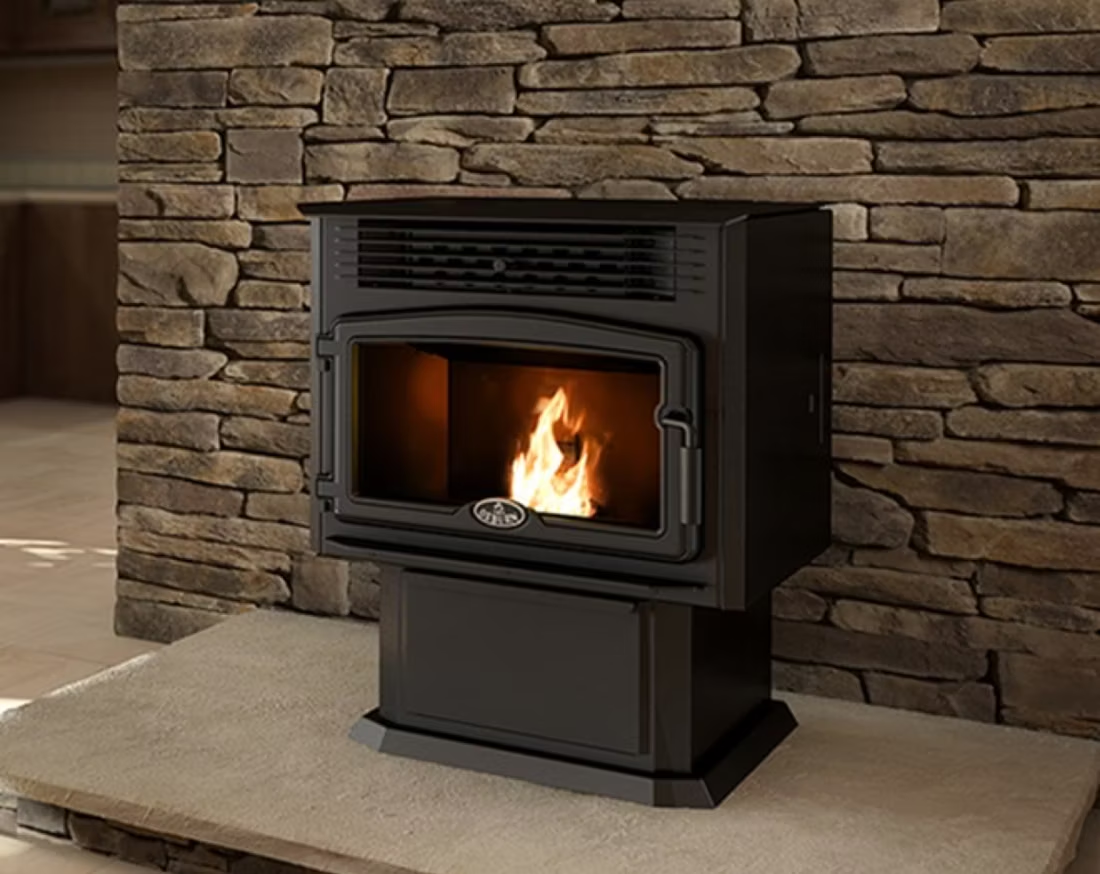
That said, a small number of Sanford homeowners still install pellet stoves—often for the ambiance of a real flame on the occasional cold front, as a design feature in a Florida room or lanai conversion, or because they split time between here and a colder second home up north and want the same appliance in both places. Regional pellet fuel is available locally through brands like Lignetics, Hamer Pellet Fuel, and Greenway Renewable Energy, typically stocked at feed stores and home improvement retailers rather than dedicated pellet depots. If you're one of the homeowners who wants one anyway, we'll still match you with a trusted local dealer who can size and install it correctly.
Three steps. No salesperson until you're ready.
Tell us about your project
Your zip code, your situation, and the fuel you're leaning toward—or let the answers point you to one.
See what's actually available
The brands dealers within 100 miles genuinely carry—real options, never a catalog mirage.
Get your dealer & Project Guide
A trusted local dealer, plus the free Project Guide & Parts List that names every component of the job.
Frequently Asked Questions
Does it even make sense to install a pellet stove in Sanford?
For most homes, no—Sanford's winter lows average 49°F and the heating season is short enough that a heat pump or space heater covers the handful of chilly nights. Pellet stoves are built for climates that need sustained heat output for months at a time, which isn't the reality in Seminole County. Where it does make sense is for homeowners who want a real-flame focal point in a den or lanai, or who specifically enjoy the ritual of a pellet stove regardless of how often it actually runs. We're upfront about this because a dealer chasing a sale won't always be.
How much does a pellet stove installation cost in Sanford?
Because pellet stove installs are uncommon in Central Florida, pricing here tends to track national averages rather than a well-established local market rate—typically $3,000 to $6,000 for the unit, venting, and installation, depending on the model and whether it's a freestanding stove or an insert. Expect less competition among installers than you'd find in a market like Bozeman, Montana, where pellet stoves are a routine winter purchase, so it's worth getting more than one local quote before committing.
If pellet isn't a great fit, what do most Sanford homeowners use instead?
Gas and electric are the standard choices here. Natural gas or propane fireplaces give you a real flame with zero fuel storage or maintenance, which suits Sanford's brief cool season well. Electric fireplaces and inserts are even simpler—Florida Power & Light and Duke Energy Florida both serve Seminole County, with residential rates in the 13.7 to 16.6 cents per kWh range, and an electric insert can be running the same day it's delivered with no venting or gas line required. Both options make more sense than pellet for a climate this mild.
Where can I buy pellet fuel in Sanford if I already have a stove?
Bagged pellets from brands like Lignetics, Hamer Pellet Fuel, and Greenway Renewable Energy show up seasonally at farm supply stores and home improvement retailers in the Orlando metro area rather than through dedicated pellet distributors, since local demand is low. Because turnover is slower here than in colder markets, it's worth calling ahead to confirm stock before making a special trip, and buying a season's supply in the fall when it first arrives rather than waiting until a cold snap hits.
Do I need a permit to install a pellet stove in Sanford?
Yes—any new solid-fuel or pellet-burning appliance typically requires a building permit through the City of Sanford or Seminole County Building Department, along with inspection of the vent termination and hearth clearances. Because these installs are infrequent locally, it's worth confirming with the permitting office directly rather than assuming the process works the same way it would in a state where pellet stoves are common. A dealer who regularly pulls Seminole County permits will know the current requirements.
What kind of venting does a pellet stove need?
Pellet stoves vent through a small-diameter PL (pellet vent) pipe, which is simpler and less expensive than the full masonry or Class A chimney a wood stove requires. In a Sanford home without an existing chimney, this usually means running vent pipe through an exterior wall—a straightforward job for an installer, but one that still needs to meet manufacturer clearance specs and pass inspection. This is one advantage pellet has over wood if you do want a real-flame appliance without chimney construction.
Will a pellet stove work during a power outage, like after a hurricane?
No—this is worth knowing before you buy. Pellet stoves rely on an electric auger to feed fuel and a blower to circulate heat, so they shut down the moment power fails. That's a real consideration in Seminole County, where Duke Energy Florida and FPL service can go out for days after a hurricane. If backup heat during outages is actually the goal, a battery-backed gas fireplace or a wood-burning option is more resilient—pellet is best thought of as a convenience appliance here, not an emergency one.
Pellet vs. wood—does either make sense in Sanford?
Both are unusual choices for this climate, and for similar reasons: Sanford's mild winters and 609 annual heating degree days mean neither is doing real heavy lifting. Wood has the edge if you want a fireplace that works without electricity, though sourcing seasoned oak or pine locally isn't set up the way it is in a wood-heavy market. Pellet has the edge for cleaner burning and easier day-to-day operation, but needs power to run. Most homeowners who want either are chasing ambiance or a specific aesthetic rather than solving a real heating problem, and that's a fine reason to pick one—just go in with clear expectations.
Are there rebates or efficiency incentives for pellet stoves in Florida?
Florida doesn't offer state-level rebates for pellet stoves the way states like Oregon or Vermont do, since there's no state interest in incentivizing solid-fuel heating in a climate that barely needs it. The federal biomass stove tax credit (26 U.S. Code Section 25(D), when active) can still apply to a qualifying high-efficiency pellet stove regardless of location, so it's worth asking your installer whether the specific model you're considering qualifies—that's often the only incentive on the table here.
What's the difference between an insert and a zero-clearance fireplace?
An insert is a fireplace that slides into a pre-existing wood-burning fireplace—if you don't have one, there's nothing to insert it into. A zero-clearance fireplace is built into a framed wall, which makes it the answer for remodels and new construction. Simple test: existing masonry fireplace means insert; blank or framed wall means zero-clearance.
How often does a pellet stove need cleaning?
A clean pellet stove is a happy pellet stove. Plan on cleaning the burn pot about once a week when you're burning regularly—ash and clinkers gum up the air holes just like a pellet barbecue. Most pellet stove problems trace back to skipped cleaning that nobody explained up front. Some designs make it easy with a trapdoor burn pot: pull a lever and the gunk drops into the ash pan.
Can I install a fireplace myself?
If you're putting a fire in your house on purpose, it's best to work with an expert. Unless you're genuinely experienced in framing, gas line, vent pipe, and the national code on clearances to combustibles, have a professional do it—and ideally the same company that sells you the fireplace, so warranty, service, and liability all live under one roof.
Should the dealer who sells my fireplace also install it?
Ideally, yes. A fireplace project involves vent pipe, gas line, electrical, and often tile or stone. Hire three or four separate trades and you own the liability and the game of telephone between them. One company selling and installing means one accountable party, start to finish—ask about factory training, on-time completion records, and what happens if an inspection fails.
Nearby Dealers
Hearth shops serving Sanford and the surrounding area.
Pellet Brands Stocked Around Sanford
Manufacturers will point you to the nearest stocking dealer.
Find your pellet fireplace in Sanford.
Tell us a bit about your home and, even for a niche fit like pellet heat in Sanford, we'll match you with a trusted local dealer and send over a free Project Guide & Parts List for your project.
Find Your Fireplace →