
Keep Your Family Warm and Safe—No Matter What
Sebastian averages just 350 heating degree days a year and winter lows around 54°F. Wood heat isn't a necessity on the Treasure Coast—but if you want the real thing, we'll connect you with a local dealer who can install it right.
Every Project Starts From One of These Five Situations
Sebastian's climate just doesn't demand it.
Sebastian sits at 21 feet of elevation on Florida's Treasure Coast, squarely in climate zone 2A, where the average winter low hovers around 54°F and the city logs only about 350 heating degree days a year. For comparison, a place like Duluth, MN racks up more than 9,000 HDD annually—Sebastian sees roughly a month's worth of Duluth's heating demand spread across an entire winter. There's no cold-climate case for wood as a primary or even meaningful supplemental heat source here, and that shapes what's actually available and installable locally.
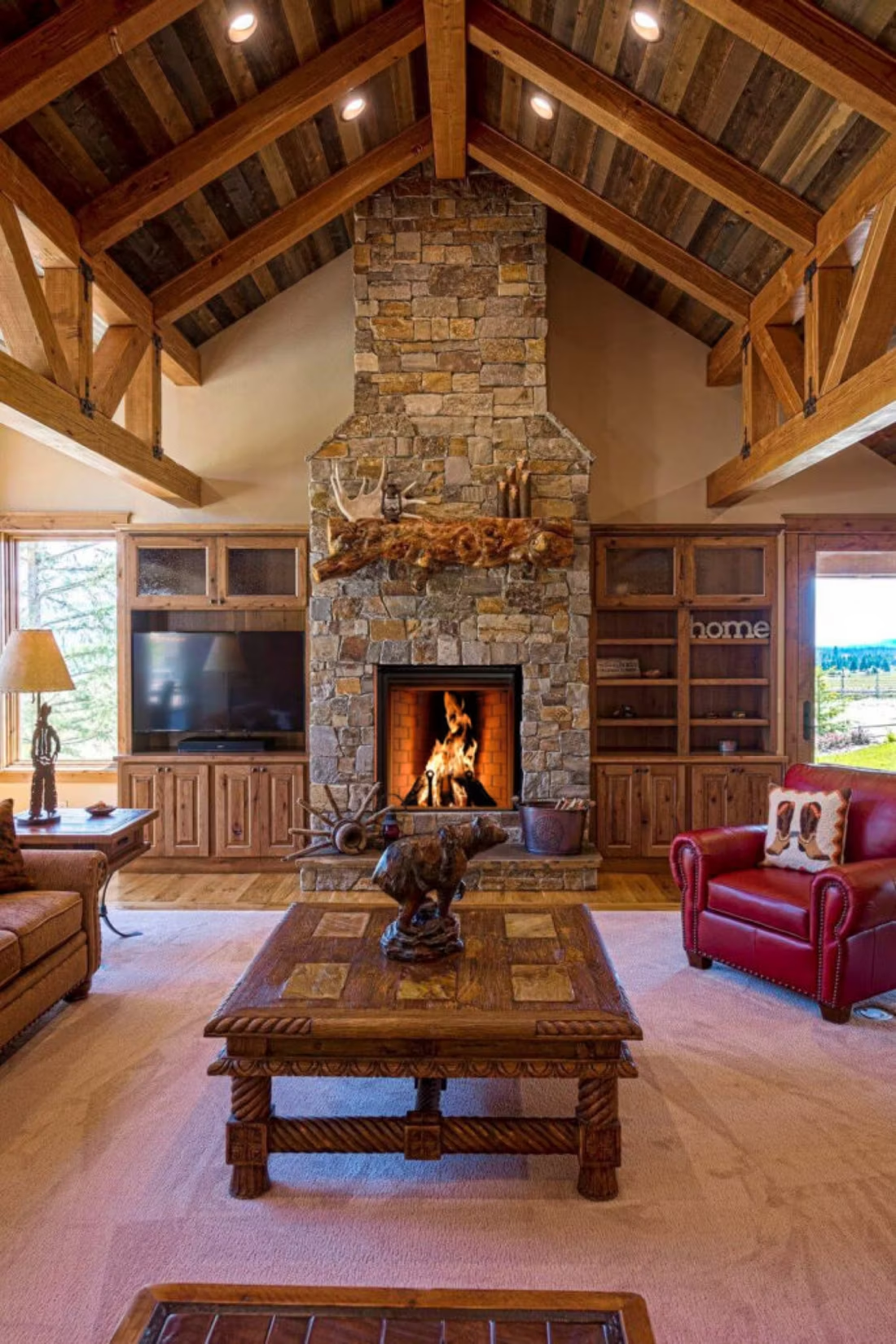
That said, a small number of Sebastian homeowners do install wood-burning fireplaces or stoves—usually for the ambiance of a real fire on the handful of nights each January when temperatures dip into the 40s, or because they grew up with wood heat elsewhere and want that experience in a Florida room or lanai-adjacent great room. Local yards and storm cleanup (oak, mahogany, and pine are common here, and hurricane-downed limbs are a frequent source of firewood) can supply fuel, though Florida's humidity makes proper seasoning slower than in drier climates. Air quality isn't a constraint—Sebastian has no non-attainment status or wood-smoke ordinances—so if you want a wood-burning unit, the barrier isn't regulation, it's simply that few local dealers stock them as a core product line.
Three steps. No salesperson until you're ready.
Tell us about your project
Your zip code, your situation, and the fuel you're leaning toward—or let the answers point you to one.
See what's actually available
The brands dealers within 100 miles genuinely carry—real options, never a catalog mirage.
Get your dealer & Project Guide
A trusted local dealer, plus the free Project Guide & Parts List that names every component of the job.
Frequently Asked Questions
How much does a wood fireplace or stove installation cost in Sebastian?
Because wood-burning installs are uncommon in Sebastian, most local hearth dealers don't publish set pricing the way they would for gas or electric units—pricing gets quoted per project. As a general reference point, a freestanding EPA-certified wood stove with new Class A chimney venting typically runs $4,000 to $8,500 nationally, with the low end applying to smaller stoves in simple installs and the high end for masonry chimney work or vaulted ceilings. Since so few installers here do this work regularly, getting matched with a dealer who actually has wood-burning experience matters more than it would in a colder market—that's exactly what we help with.
Do I actually need a wood stove for heat in Sebastian?
Almost certainly not as your primary or even backup heat source. With only about 350 heating degree days a year and winter lows averaging 54°F, Sebastian homes are built and heated around air-conditioning-first HVAC systems, not wood. Most homeowners who install a wood fireplace here are after the visual and experiential draw of a real fire on cool evenings, not BTU output. If you want genuine cold-night heat redundancy, an electric fireplace or space heater—backed by Florida Power & Light's grid—is usually the more practical companion.
Where can I find a wood stove installer near Sebastian?
Because wood-burning installs are a niche request on the Treasure Coast, not every hearth shop in Indian River County stocks or installs them regularly. Look for a dealer with NFI (National Fireplace Institute) wood-burning certification specifically, not just a general hearth retailer—the venting, clearance-to-combustible, and hearth-pad requirements for wood units differ meaningfully from gas or electric. We match Sebastian homeowners with dealers in the Vero Beach and Melbourne area who actually carry and install wood-burning product, rather than sending you to a shop that will try to upsell you into gas.
What's the difference between a wood stove and a wood-burning fireplace?
A wood stove is a freestanding, airtight steel or cast-iron unit that sits on a hearth pad and vents through a straight chimney pipe—it's efficient and produces real, sustained heat output. A traditional open wood-burning fireplace is built into the wall, radiates far less heat, and loses most of its warmth up the flue. In a climate like Sebastian's, where heat output isn't really the goal, many homeowners lean toward a factory-built wood fireplace for the visual and acoustic experience of a real fire without the higher heat output (or upkeep) of a full wood stove.
Do I need a permit to install a wood-burning fireplace in Sebastian?
Yes. New wood-burning fireplace or stove installations require a building permit through the City of Sebastian Building Department (or Indian River County Building Division if your property sits outside city limits), and the unit needs to meet current EPA emissions standards if it's a stove insert. Most established hearth dealers handle the permit application and inspection scheduling as part of the installation—given how uncommon these projects are locally, it's worth confirming your installer has actually pulled a wood-burning permit before, not just a gas one.
What's the best wood stove for a mild climate like Sebastian's?
Since heat output isn't the priority, a smaller EPA-certified stove—in the 1.0 to 1.8 cubic foot firebox range from brands like Jøtul or Vermont Castings—is usually plenty. These units are sized for occasional-use ambiance rather than 20-hour overnight burns, which fits how a Sebastian household would actually run one: lit on the rare cool evening, not as daily heat. A local dealer can also walk you through factory-built wood fireplace options if you're leaning toward look over function.
How often should a wood-burning fireplace be inspected in Sebastian?
Even with light, occasional use, the CSIA still recommends an annual inspection before burning season—which in Sebastian's case might mean before the first cool front rolls through in December. Florida's humidity actually complicates chimney maintenance in its own way: moisture combined with infrequent use can accelerate liner corrosion and creosote glazing even at low burn volumes. If you're only lighting a fire a handful of times a winter, don't assume that means you can skip the annual sweep.
Where can I get firewood in Sebastian?
There's no organized public-land cutting-permit system near Sebastian the way there is out west—this is private land and suburban lots, not national forest. Most local firewood comes from storm cleanup (oak and pine are common casualties after tropical storms and hurricanes) or tree-service companies clearing lots, plus a handful of seasonal roadside vendors. Oak and pine season reasonably well once split and stacked, though Florida's humidity means it takes longer to dry to a usable moisture content than it would in a drier climate—plan on 9-12 months of covered seasoning rather than the 6 months common further north.
Wood fireplace vs. electric fireplace—which makes more sense in Sebastian?
For most Sebastian homes, electric is the more practical choice. Florida Power & Light serves the area reliably at roughly $0.137 per kWh, and electric fireplaces install in a fraction of the time and cost of a wood-burning unit—no chimney, no venting, no permit complexity, and no firewood storage in a climate where pests and humidity make that a real consideration. Wood still wins if what you actually want is the smell, sound, and ritual of a real fire—that's a legitimate reason to choose it here, just don't expect it to move the needle on your heating bill.
Why is a fireplace insert so efficient?
An insert does two things: it seals the chimney completely, so you stop losing air you already paid to heat, and it radiates warmth into the room through the firebox and glass. Most add a heat-exchange fan that pulls cool room air underneath, wraps it around the hot firebox, and pushes it back out warm. Your home is more efficient before you've even lit the first fire.
Why is my open fireplace making my house colder?
Open fireplaces suck—literally. As the fire burns, it consumes air your furnace already paid to heat and pulls it out through the chimney, so the house is actually colder after the fire goes out than before you lit it. An insert fixes this: it seals the chimney, puts fixed glass across the front, and turns that hole in your house into a real heat source.
Can a fireplace actually lower my heating bill?
Yes—by creating a comfort zone. A furnace heats every square foot of the house just to warm the one room you're in; a gas fireplace on low burns roughly a sixth of the gas a typical furnace does. Set the furnace around 55–60 degrees as a baseline, then heat the rooms your family actually uses. Families who heat this way commonly save $20–$60 a month.
How much should I budget for a fireplace?
For an average home—covering the fireplace, the vent pipe, and basic installation—a budget between $3,900 and $5,500 gives you a lot of options across wood, gas, and pellet. By the time you add finish work, gas line, and electrical, the average complete installation lands between $5,000 and $12,000 all-in. In a remodel or new build, a good rule is to put about 2.5% of the total project cost toward the fireplace.
Nearby Dealers
Hearth shops serving Sebastian and the surrounding area.
Find your wood fireplace in Sebastian.
Tell us a bit about your home and we'll match you with a local dealer who actually installs wood-burning units in Sebastian—plus a free Project Guide & Parts List with the exact vent kit and components your project needs.
Find Your Fireplace →