
In Sebastian, a gas fireplace is about ambiance, not necessity.
With only a handful of genuinely cold days a year on the Treasure Coast, nobody in Sebastian is heating their home with a fireplace. But plenty of homeowners still want the glow, the focal point, and a hedge against the occasional cold snap—and we'll match you with a local pro who installs it right.
Every Project Starts From One of These Five Situations
Mild winters, but plenty of homeowners still want the glow.
Sebastian sits at 21 feet of elevation along the Indian River Lagoon in climate zone 2A, where the average winter low is a mild 54 degrees and the city has only a light dusting of genuinely cold days each year. For comparison, a place like Duluth, MN faces a long, brutal winter heating season. Heating simply isn't a line item on the FPL bill here—air conditioning is. So a gas fireplace in Sebastian isn't solving a heat problem; it's a design and comfort decision for the handful of genuinely chilly nights each winter, or for the ambiance homeowners want regardless of temperature.
There's also a fuel-source wrinkle worth knowing upfront: Indian River County doesn't have widespread natural gas main service, so nearly every gas fireplace installed in Sebastian runs on propane, not piped natural gas. That's not unusual here—many Sebastian homes already have a propane tank for a pool heater, outdoor kitchen, or whole-home generator (a common addition after hurricane seasons), so adding a propane line for a fireplace is often a straightforward extension rather than a new system. A trusted local dealer will know exactly how to size that tank and run the line correctly, which matters more in a propane market than in a natural-gas one.
Three steps. No salesperson until you're ready.
Tell us about your project
Your zip code, your situation, and the fuel you're leaning toward—or let the answers point you to one.
See what's actually available
The brands dealers within 100 miles genuinely carry—real options, never a catalog mirage.
Get your dealer & Project Guide
A trusted local dealer, plus the free Project Guide & Parts List that names every component of the job.
Frequently Asked Questions
How much does a gas fireplace cost to install in Sebastian?
Because almost every installation here runs on propane rather than piped natural gas, expect a typical direct-vent propane fireplace or insert to run somewhere in the $3,500 to $8,500 range installed, depending on the unit and whether new venting or framing is needed. If you don't already have a propane tank on the property—say, for a pool heater or generator—add the cost of a tank installation from a propane supplier on top of that. Homes with an existing tank and gas line are on the lower end; new construction or a first-time propane setup pushes toward the higher end. A local dealer will give you a firm number after seeing the space.
Is a gas fireplace even a common choice for Sebastian homes?
Not especially, and it's worth being upfront about that. Given how few genuinely cold days Sebastian sees, most homeowners here who want a fireplace lean toward electric units, which need no gas line, no propane tank, and no venting—just an outlet on FPL's grid. Gas fireplaces show up more selectively: in custom homes along the river with a great-room focal point in mind, in Sebastian Riverfront District renovations aiming for a specific look, or with owners who remember an arctic outbreak dropping temps into the 30s and want real heat on hand, not just a screen glow.
Can I get a natural gas fireplace in Sebastian, or is it propane only?
For nearly all Sebastian addresses, it's propane. Indian River County doesn't have a natural gas utility running mains through most residential areas, so gas fireplace installers here are set up to work with propane as the default fuel. The good news is that propane burns just as cleanly and most fireplace models are simply configured with a different orifice and regulator for propane use—you're not giving up performance, just sourcing the fuel from a tank instead of a pipe.
Will a gas fireplace still work if the power goes out during a hurricane?
Yes, and this is actually one of the better reasons to consider one on the Treasure Coast. Most propane fireplaces with intermittent pilot ignition include a battery backup that keeps the unit firing on demand even when FPL power is down after a storm. Valor units go a step further—their pilot generates its own electricity through the thermocouple, so there's no battery to remember at all. After a named storm knocks out power for days, a propane fireplace that lights without the grid is a real amenity, not just a design feature.
What's the difference between a gas fireplace, insert, and stove for a Sebastian home?
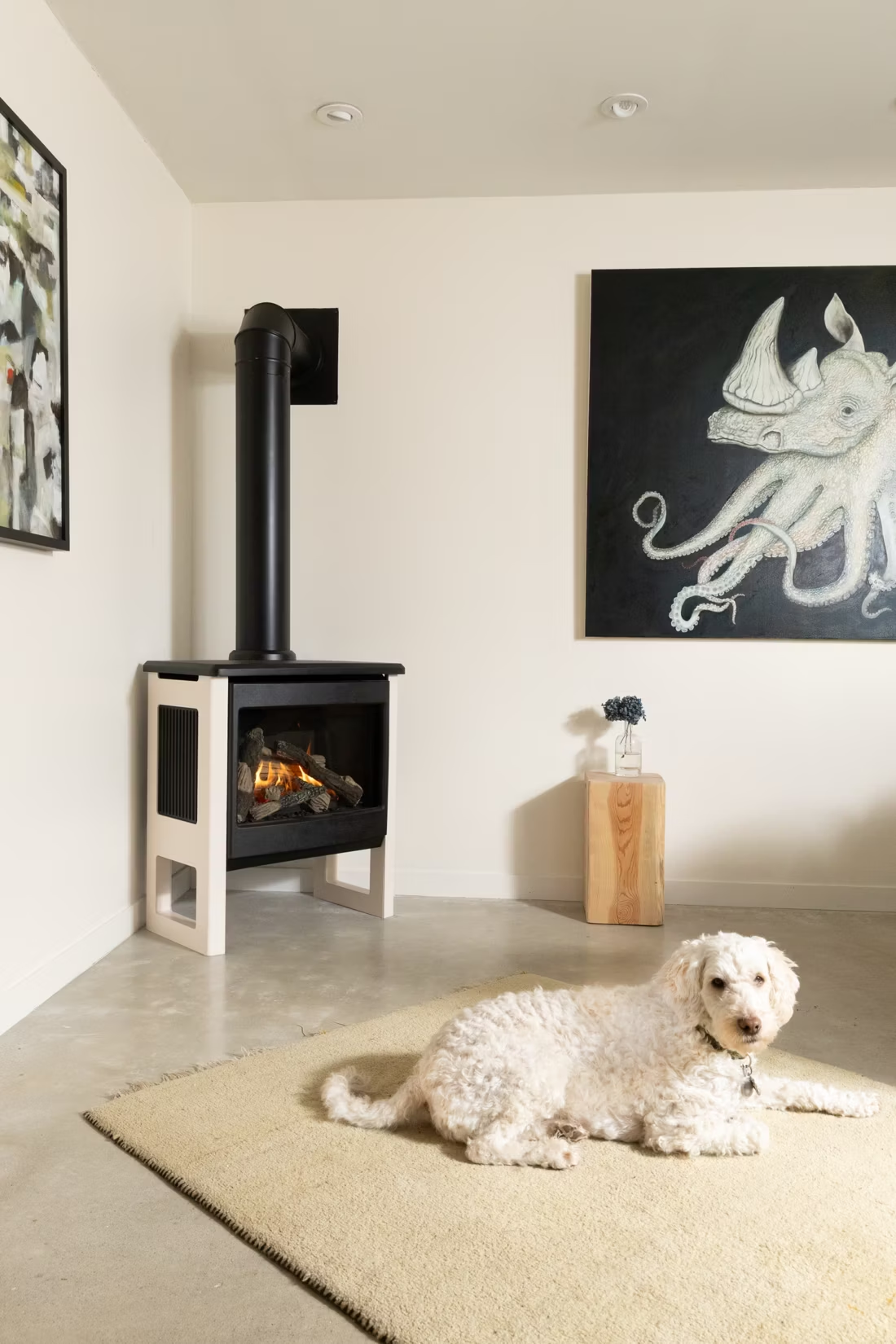
A gas fireplace is a built-in unit framed into a wall, typically chosen for new construction or a remodel where there's no existing masonry fireplace to work with—common in Sebastian's newer coastal builds. A gas insert fits into an existing masonry firebox, which matters less here since most Sebastian homes were never built with wood-burning fireplaces to begin with. A freestanding gas stove sits on the floor and vents through a wall or roof, which can be a good fit for a lanai or Florida room addition. Most Sebastian projects end up being direct-vent built-ins since so few homes have an existing chimney to retrofit.
Do I need a permit to install a gas fireplace in Sebastian?
Yes—both a building permit and a gas/propane line permit are required, handled through the City of Sebastian Building Department if you're inside city limits, or the Indian River County Building Division for unincorporated areas. If a new propane tank is part of the project, its placement is also subject to setback requirements from the house and property lines. A licensed installer coordinates all of this as part of the job, which is one of the main reasons to avoid a DIY propane hookup—the inspection and setback rules aren't intuitive.
Should I consider a vent-free gas fireplace given Sebastian's humidity?
Vent-free units are legal in Florida, but I'd think twice before installing one in Sebastian specifically. Vent-free fireplaces release combustion byproducts—including water vapor—directly into the room, and Sebastian's baseline humidity is already high for most of the year. Adding more moisture indoors isn't ideal for mold-sensitive coastal construction. Direct-vent units solve this by drawing outside air in and exhausting everything back outside through a sealed system, which is the option most local installers recommend here regardless of the modest heat need.
How often should a gas fireplace be serviced in Sebastian?
Once a year, same as anywhere, but coastal salt air makes it a bit more important here than inland. The salt content in the air near the Indian River Lagoon accelerates corrosion on metal components—burner ports, venting caps, and gas fittings—faster than it would in a drier inland climate. An annual inspection from a certified gas technician, usually $150 to $250, catches corrosion or pilot issues before they become a bigger repair.
Should I get a gas fireplace or just go electric?
In Sebastian, electric is genuinely the more common answer, and it's worth considering seriously. With FPL power at roughly $0.137 per kWh and no gas line or propane tank to install, an electric fireplace or insert is cheaper to add, requires no venting, and can go in almost any room. Gas wins on authenticity—real flame, real warmth, and backup heat during a hurricane-driven outage if you have battery or thermocouple ignition. If ambiance and a genuine flame matter more to you than cost and simplicity, gas is worth the extra install complexity. If you mainly want the visual and don't care about actual heat output, electric covers it for a fraction of the investment.
Why is my open fireplace making my house colder?
Open fireplaces suck—literally. As the fire burns, it consumes air your furnace already paid to heat and pulls it out through the chimney, so the house is actually colder after the fire goes out than before you lit it. An insert fixes this: it seals the chimney, puts fixed glass across the front, and turns that hole in your house into a real heat source.
Why is a fireplace insert so efficient?
An insert does two things: it seals the chimney completely, so you stop losing air you already paid to heat, and it radiates warmth into the room through the firebox and glass. Most add a heat-exchange fan that pulls cool room air underneath, wraps it around the hot firebox, and pushes it back out warm. Your home is more efficient before you've even lit the first fire.
Does a fireplace add value to my home?
On average, a fireplace adds back to the home about the same amount you spent installing it. Add the monthly savings from heating the rooms you actually use instead of the whole house—often hundreds of dollars a year—and the value case is strong before you even count what a fire does for how your family uses the room.
What is an in-home preview and do I need one?
It's a visit where a hearth professional measures your space, confirms the model you picked actually works in your home, and walks the specs—framing, gas line, venting, finish work—before anything is ordered. Some details you just can't know until you see the house. Never make a down payment without one; it's the single most-skipped step that burns buyers.
Nearby Dealers
Hearth shops serving Sebastian and the surrounding area.
Find your gas fireplace in Sebastian.
Tell us about your home and your propane setup, and we'll put together a free Project Guide & Parts List—the right unit, the vent kit, and a trusted local Sebastian-area dealer who can install it correctly.
Find Your Fireplace →