
Pellet heat for Putnam County's occasional cold snaps.
With winter lows averaging 47°F and only about 938 heating degree days a year, Putnam County rarely needs a pellet stove for survival—but for cabins along the St. Johns River, hunting camps, and homeowners who want radiant ambiance on the few genuinely cold nights, the right unit and a trusted local dealer still matter.
Every Project Starts From One of These Five Situations
A mild climate makes pellet heat a niche fuel.
Putnam County sits in Florida's climate zone 2A, where the annual heating load—about 938 heating degree days—is a small fraction of what a cold-climate market like Duluth, Minnesota logs in a single winter (often 8,000-plus). Winter lows here average 47°F, and hard freezes around Palatka, Crescent City, and the rest of the county are the exception, not the rule. That reality shapes the local hearth market: gas and electric fireplaces cover most of the supplemental-heat and ambiance demand in Putnam County, and pellet stoves are genuinely uncommon.
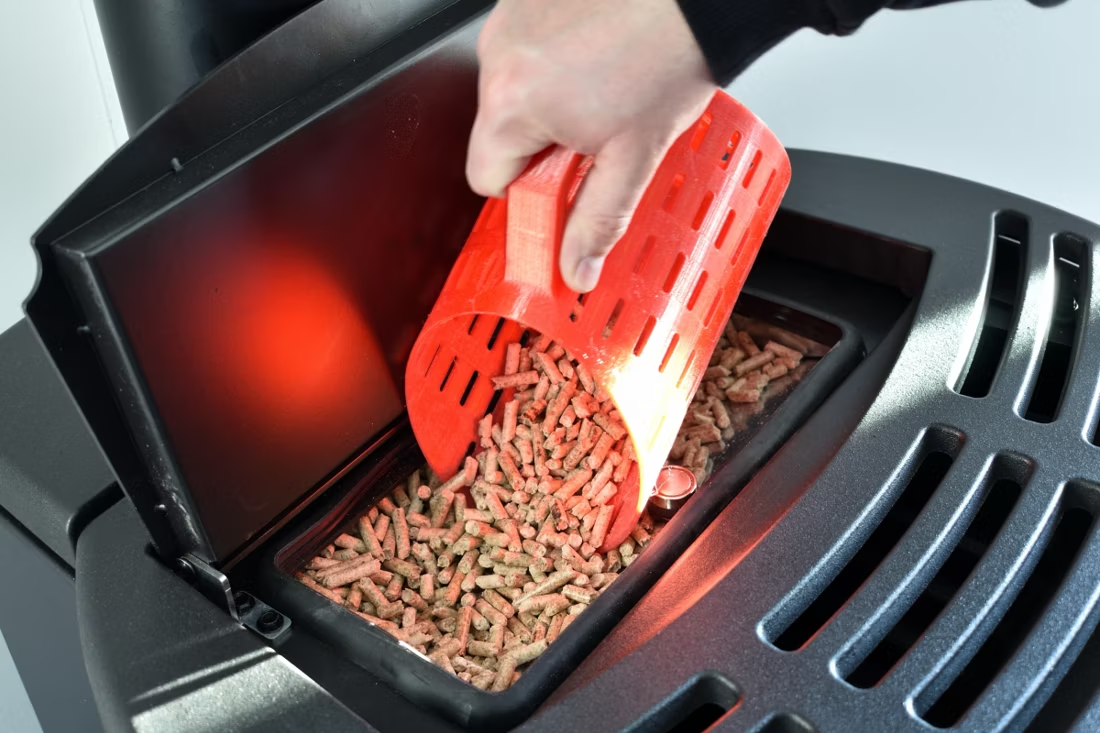
That doesn't mean pellet heat has no place here. A handful of homeowners install pellet stoves in cabins and camps along the St. Johns River, in older Palatka homes with existing masonry fireplaces looking for a cleaner supplemental option than open-hearth wood, or simply because they like the steady radiant warmth on the occasional 30-degree night. Regional pellet supply comes primarily through brands like Lignetics, Hamer Pellet Fuel, and Greenway Renewable Energy—dealers typically carry them alongside more mainstream gas and electric inventory, so expect to special-order rather than find pallets sitting on a showroom floor.
Three steps. No salesperson until you're ready.
Tell us about your project
Your zip code, your situation, and the fuel you're leaning toward—or let the answers point you to one.
See what's actually available
The brands dealers within 100 miles genuinely carry—real options, never a catalog mirage.
Get your dealer & Project Guide
A trusted local dealer, plus the free Project Guide & Parts List that names every component of the job.
Frequently Asked Questions
Does a pellet stove make sense in Putnam County's climate?
For most homes, no—not as a primary heat source. With winter lows averaging 47°F and roughly 938 heating degree days a year, Putnam County simply doesn't have the sustained cold that pellet stoves are built for. Where they do make sense is supplemental heat in older homes, ambiance in a den or family room, or off-grid-style setups at river camps and hunting cabins where a homeowner wants radiant heat without a full wood-burning setup. If you're weighing pellet against gas or electric for everyday comfort, gas and electric units are far more common locally and usually the better fit.
How much does a pellet stove installation cost in Putnam County?
Because pellet stoves are a low-volume product here, published cost ranges swing more than they would in a cold-climate market—freestanding units commonly land in the $3,000 to $6,000 range installed nationally, but the actual number depends heavily on venting, whether you're converting an existing masonry fireplace, and which dealer is stocking the unit you want. With so few installs happening county-wide, getting a firm, home-specific quote from a trusted local dealer matters more here than it would in a place like Burlington, Vermont, where installers quote pellet jobs every week.
What size pellet stove do I need for a Putnam County home?
Given the mild climate, most Putnam County pellet installs are sized for supplemental heat rather than whole-home output—a small to mid-size unit rated for roughly 800 to 1,500 square feet is plenty for a den, a river cabin, or a single living area. Very few homes here need a large-capacity stove, since even during the county's coldest stretches, temperatures rarely stay low long enough to demand it. A local dealer can confirm sizing based on your room's insulation and layout.
Where can I buy pellets in Putnam County?
Supply is thinner than in cold-climate states, but pellets from brands like Lignetics, Hamer Pellet Fuel, and Greenway Renewable Energy are available through regional hearth dealers, some of whom special-order by the ton rather than stocking pallets year-round. Because Putnam County's pellet-burning population is small, it's worth confirming with your dealer how far in advance you should order before the handful of cold weeks each winter, rather than assuming pellets will be sitting on a shelf in November.
Do I need a permit to install a pellet stove in Putnam County?
Yes—a building permit is required for a new pellet stove installation, typically through the Putnam County Building Department for unincorporated areas, or the applicable city office if you're inside Palatka or Crescent City limits. Most hearth dealers who handle the installation will pull the permit as part of the job, which is one more reason to work with an established local installer rather than a handyman install.
Pellet stove vs. wood stove—which is right for Putnam County?
Both are uncommon here, but they solve different problems. A wood stove works without electricity, which matters in a hurricane-prone county where extended power outages are a real possibility. A pellet stove burns cleaner and is easier to load and control, but its auger and blower need power to run—so it won't help during a storm-related outage unless you've got a generator or battery backup. For most Putnam County homeowners considering either, gas or electric usually covers daily supplemental heat better, and wood is the more resilient backup option if outages are the real concern.
Will my pellet stove work during a power outage?
No—not without a backup power source. Pellet stoves depend on an electric auger to feed fuel and a blower to distribute heat, so a standard unit shuts down the moment the power does. That's an important consideration in Putnam County, where hurricane season can knock out power for days at a time. If backup heat during outages is a priority, a wood stove or a battery-backed generator setup paired with your pellet stove are the two realistic paths—a local dealer can walk you through both.
Pellet stove vs. gas fireplace for a Putnam County home?
Gas is the more natural fit for most homes in the county—it's a standard, widely installed option here, works instantly with no fuel storage or loading, and many dealers carry a deep gas lineup. Pellet stoves are the right call for homeowners who specifically want the look and radiant feel of a solid-fuel fire, or who are heating a detached cabin or camp without gas service. If you're simply looking for reliable supplemental warmth in a Palatka or Crescent City living room, most local dealers will point you toward gas first and reserve pellet recommendations for a specific reason.
What wood species and pellet types are typically used locally?
Putnam County's native forest cover leans oak, mahogany, and pine, but pellet fuel itself is manufactured, not locally cut—most pellets sold through regional suppliers like Lignetics, Hamer Pellet Fuel, and Greenway Renewable Energy are compressed hardwood or softwood blends sourced from mill waste elsewhere in the Southeast. Softwood pellets tend to burn a bit hotter with more ash; hardwood blends burn cleaner with less clinker buildup. A local dealer can tell you which blend performs best in the specific stove model you're considering.
Why is my open fireplace making my house colder?
Open fireplaces suck—literally. As the fire burns, it consumes air your furnace already paid to heat and pulls it out through the chimney, so the house is actually colder after the fire goes out than before you lit it. An insert fixes this: it seals the chimney, puts fixed glass across the front, and turns that hole in your house into a real heat source.
Why is a fireplace insert so efficient?
An insert does two things: it seals the chimney completely, so you stop losing air you already paid to heat, and it radiates warmth into the room through the firebox and glass. Most add a heat-exchange fan that pulls cool room air underneath, wraps it around the hot firebox, and pushes it back out warm. Your home is more efficient before you've even lit the first fire.
Can I install a fireplace myself?
If you're putting a fire in your house on purpose, it's best to work with an expert. Unless you're genuinely experienced in framing, gas line, vent pipe, and the national code on clearances to combustibles, have a professional do it—and ideally the same company that sells you the fireplace, so warranty, service, and liability all live under one roof.
How much should I budget for a fireplace?
For an average home—covering the fireplace, the vent pipe, and basic installation—a budget between $3,900 and $5,500 gives you a lot of options across wood, gas, and pellet. By the time you add finish work, gas line, and electrical, the average complete installation lands between $5,000 and $12,000 all-in. In a remodel or new build, a good rule is to put about 2.5% of the total project cost toward the fireplace.
Pellet Brands Stocked Around Putnam County
Manufacturers will point you to the nearest stocking dealer.
Find your pellet stove in Putnam County.
Tell us about your home—a cabin on the St. Johns River, a Palatka den, or a Crescent City camp—and we'll match you with a trusted local dealer and put together a free Project Guide & Parts List with the exact parts, vent kit, and recommended installer for your pellet project.
Find Your Fireplace →