
Add Instant Warmth to Cool Putnam County Nights.
Winters along the St. Johns River in Putnam County are short and mild, but the occasional cold front and hurricane-season power outage make a gas fireplace more than decoration. Find the right unit and get matched with a trusted local dealer.
Every Project Starts From One of These Five Situations
A mild climate that still gets cold enough to matter.
Putnam County sits in climate zone 2A, with only about 938 heating degree days a year and an average winter low near 47°F. That's a fraction of what a northern town like Duluth, MN sees in a single January week. Most of the year, a fireplace in Palatka, Crescent City, or Interlachen is about ambiance, not survival. But this stretch of north-central Florida—home to the ferneries and potato fields that built the local economy—still gets hit by real cold snaps, and the same fronts that drop temperatures into the 30s often arrive alongside the kind of storms that knock out power for days.
Natural gas infrastructure is limited outside pockets of Palatka, so most Putnam County homeowners run on propane delivered by regional suppliers rather than a piped utility line. That changes the install conversation—tank placement and gas line routing matter as much as the fireplace itself. Done right, a gas fireplace or insert gives a Putnam County home instant, controllable heat on the handful of genuinely cold nights each winter, plus a real backup heat source when Atlantic storms take the grid down—all without asking anyone to split, stack, or dry out firewood in a climate that rarely calls for it.
Three steps. No salesperson until you're ready.
Tell us about your project
Your zip code, your situation, and the fuel you're leaning toward—or let the answers point you to one.
See what's actually available
The brands dealers within 100 miles genuinely carry—real options, never a catalog mirage.
Get your dealer & Project Guide
A trusted local dealer, plus the free Project Guide & Parts List that names every component of the job.
Frequently Asked Questions
How much does a gas fireplace installation cost in Putnam County?
Most gas fireplace and insert installations in Putnam County run somewhere between $3,500 and $8,500. The low end covers a direct-vent insert going into an existing masonry fireplace where propane service is already run to the house. The high end covers new construction or a remodel where a propane tank has to be set, a gas line run to the fireplace location, and venting framed in from scratch. Homes in Palatka with an existing gas appliance (a water heater or range) are often cheaper to convert since the fuel supply is already on site.
Can I convert my existing wood fireplace to gas?
Yes, and it's a common project on the older masonry fireplaces found throughout Palatka and the surrounding county—many originally built to burn local oak or pine. A direct-vent gas insert typically drops into that existing firebox, uses a stainless liner through the existing chimney, and runs $3,500 to $7,000 depending on the insert and whether new propane line work is needed. Given how rarely wood actually gets burned in a climate with under 1,000 heating degree days a year, converting to gas is often the more practical long-term choice for a fireplace that mostly sees use during cold fronts and holiday gatherings.
Do I need natural gas, or is propane the standard here?
Propane is the standard fuel for most of Putnam County. Piped natural gas service is limited to portions of Palatka, so homes in Crescent City, Interlachen, San Mateo, and the rural stretches between them typically run on propane delivered and serviced by regional suppliers. Nearly every gas fireplace and insert sold locally can be configured for propane with the correct orifice and regulator, so fuel availability shouldn't limit your model choice—it just determines whether your installer coordinates with a propane provider on tank sizing and placement.
Will my gas fireplace work during a power outage?
Most will, which matters in a county that sees regular tropical-system power outages. Units with intermittent pilot ignition (IPI) run on AA battery backup, so the fireplace lights and operates normally even with the grid down—as long as the batteries are fresh. Valor fireplaces go a step further: the pilot's thermocouple generates the small amount of electricity the unit needs, so there's no battery to remember at all. For a Putnam County household riding out a post-hurricane outage, that self-powered ignition is worth asking about specifically when you talk to a local dealer.
What's the difference between a gas fireplace, gas insert, and gas stove?
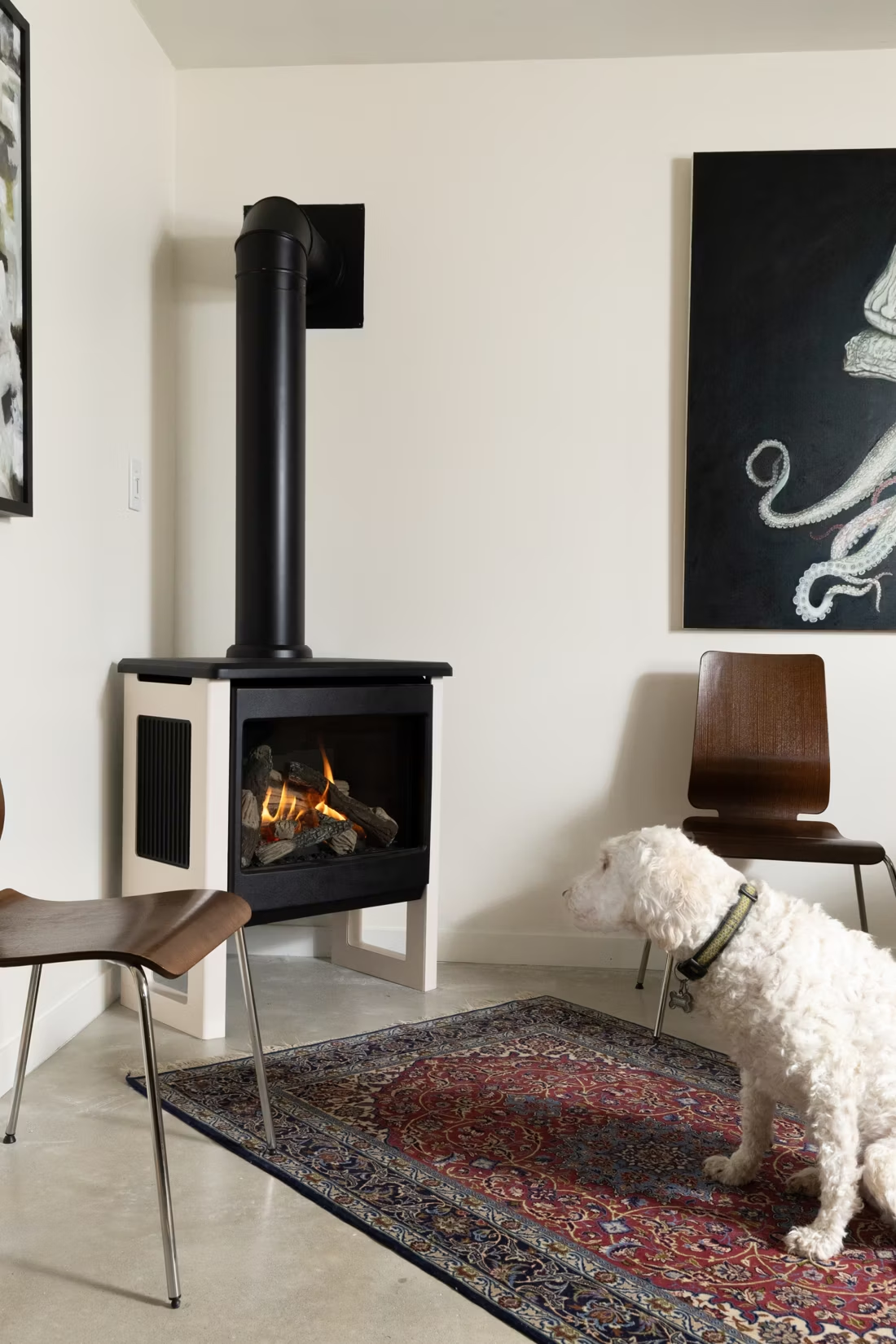
A gas fireplace is a fully built-in unit framed into a wall—the right call for new construction or a remodel without an existing firebox. A gas insert slides into an existing masonry fireplace, which describes a lot of older homes around Palatka, and turns that opening into a sealed, efficient heat source using the existing chimney as a chase. A gas stove is a freestanding cabinet unit that doesn't require an existing fireplace opening at all, which can work well in a Florida room or converted porch. For most Putnam County homeowners upgrading an existing hearth, an insert is the simplest path.
Do I need a permit to install a gas fireplace in Putnam County?
Yes. New gas fireplace installations require both a building permit and a gas line permit through the Putnam County Building Department, and any propane line work needs to be handled by a licensed gas-fitter. A certified local hearth dealer will typically pull these permits as part of the installation and coordinate the propane supplier's tank work with the venting and framing inspection, so you're not left managing multiple trades on your own.
Should I get a vented or vent-free gas fireplace in Florida's humidity?
Vented (direct-vent) units draw combustion air from outside and exhaust it back outside through sealed venting—they're the safer, more universally recommended choice anywhere, and especially in a climate like Putnam County's where indoor humidity is already high most of the year. Vent-free units release water vapor and small amounts of combustion byproducts directly into the room, which is the last thing a humid north Florida home needs during summer shoulder months. Vent-free models are legal in Florida with proper room sizing and an oxygen depletion sensor, but most local dealers steer homeowners here toward direct-vent for both air quality and long-term comfort.
How often should a gas fireplace be serviced in Putnam County?
An annual inspection is recommended, even though a Putnam County fireplace typically sees far less use than one in a colder climate. A technician checks the burner, pilot assembly, gas connections, and any battery-backup ignition system, and cleans the glass and interior. Because units here often sit unused for long stretches through the humid summer months, that yearly check is what catches corrosion or pilot issues before the first real cold front of the season arrives. Local service providers typically charge $150 to $250 for the visit.
Gas vs. wood—which fits Putnam County's climate?
Wood fireplaces are genuinely rare as a primary or even regular supplemental heat source in Putnam County—with under 1,000 heating degree days a year and winter lows averaging 47°F, there's simply not enough cold to justify the ritual of splitting and stacking oak, mahogany, or pine for most households. A small number of homeowners still keep a wood-burning fireplace for atmosphere or occasional bonfire-style use, but gas is the far more practical choice locally: it lights instantly on the rare cold night, requires no fuel storage in a humid climate prone to termites and rot, and—with the right ignition system—keeps working through the power outages that follow tropical storms.
Can I put a TV above my fireplace?
Yes—with an asterisk. Fireplaces are hot and TVs don't like heat. Either put a mantel between them to deflect rising warmth, or choose a fireplace with heat-management technology that creates a cool zone on the wall above—the wall stays around 125 degrees, barely warm, while the room still gets full heat. If you like clean lines and don't want a mantel, heat management is the answer.
Why is my open fireplace making my house colder?
Open fireplaces suck—literally. As the fire burns, it consumes air your furnace already paid to heat and pulls it out through the chimney, so the house is actually colder after the fire goes out than before you lit it. An insert fixes this: it seals the chimney, puts fixed glass across the front, and turns that hole in your house into a real heat source.
Can a fireplace actually lower my heating bill?
Yes—by creating a comfort zone. A furnace heats every square foot of the house just to warm the one room you're in; a gas fireplace on low burns roughly a sixth of the gas a typical furnace does. Set the furnace around 55–60 degrees as a baseline, then heat the rooms your family actually uses. Families who heat this way commonly save $20–$60 a month.
How much should I budget for a fireplace?
For an average home—covering the fireplace, the vent pipe, and basic installation—a budget between $3,900 and $5,500 gives you a lot of options across wood, gas, and pellet. By the time you add finish work, gas line, and electrical, the average complete installation lands between $5,000 and $12,000 all-in. In a remodel or new build, a good rule is to put about 2.5% of the total project cost toward the fireplace.
Find your gas fireplace in Putnam County.
Tell us a bit about your home and we'll match you with the right gas fireplace, insert, or stove—plus a free Project Guide & Parts List with the exact parts, vent kit, and your recommended local Putnam County dealer.
Find Your Fireplace →